



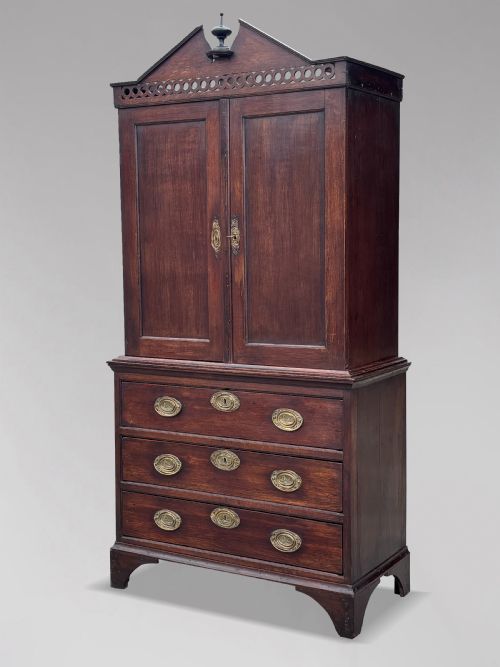
Georgian Oak Linen Cupboard
When you search for a georgian oak linen cupboard, you are tracking down a robust piece of vernacular storage built to last centuries.
Georgian Oak Linen Cupboard
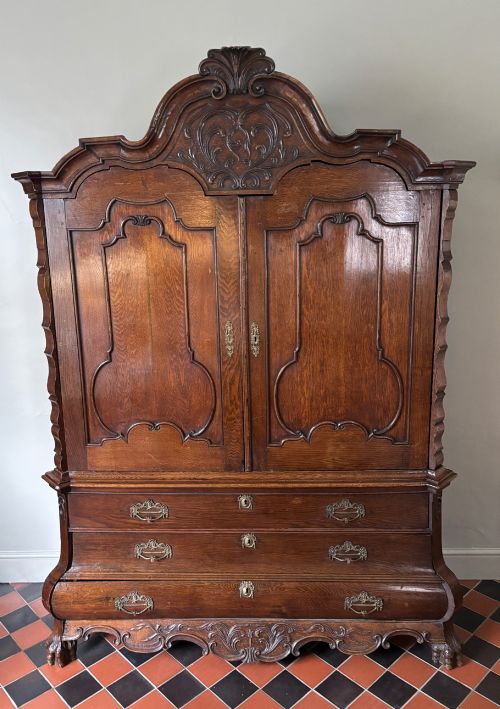
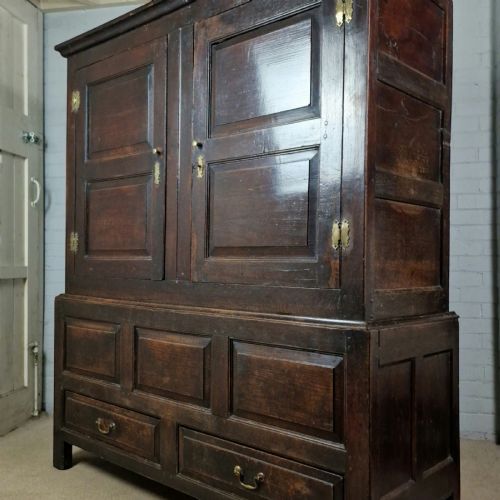
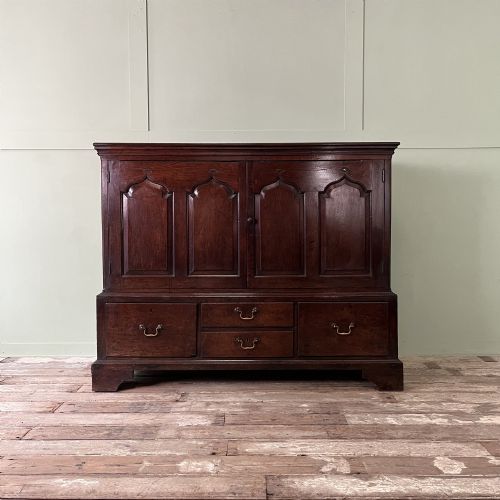
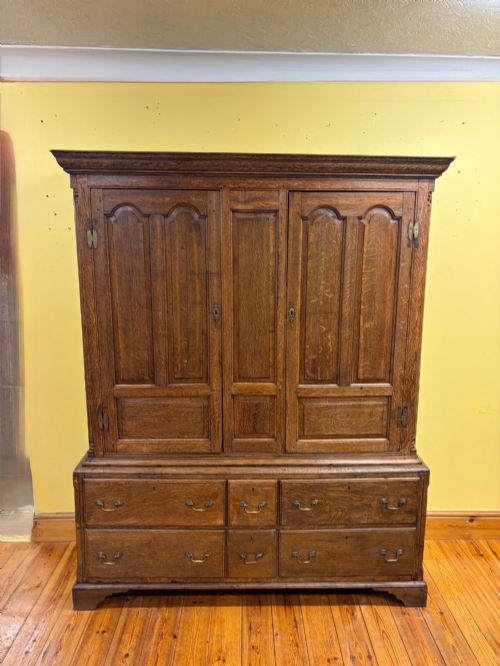
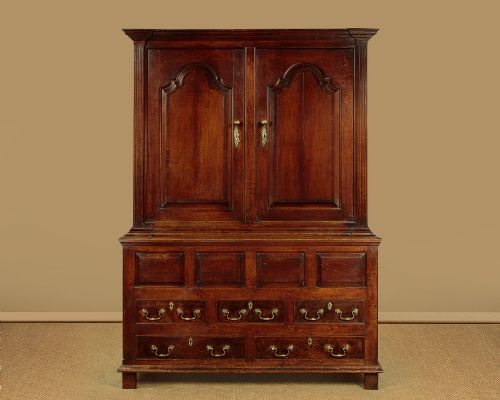
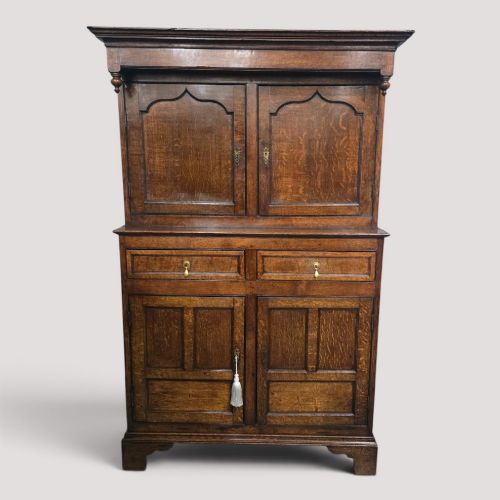
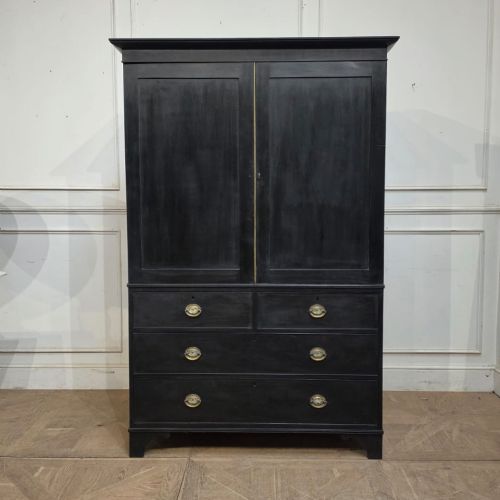
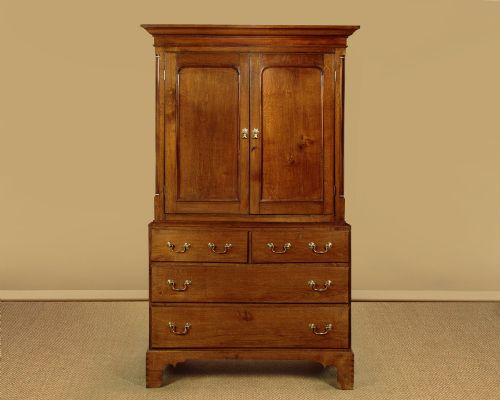
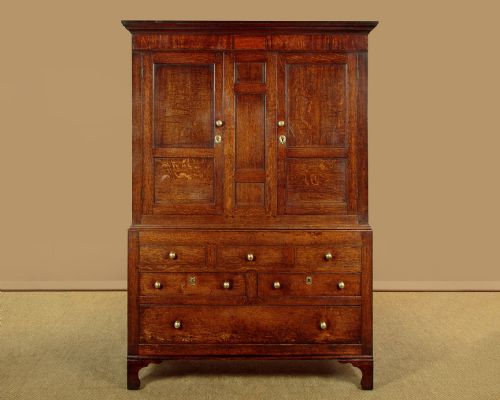
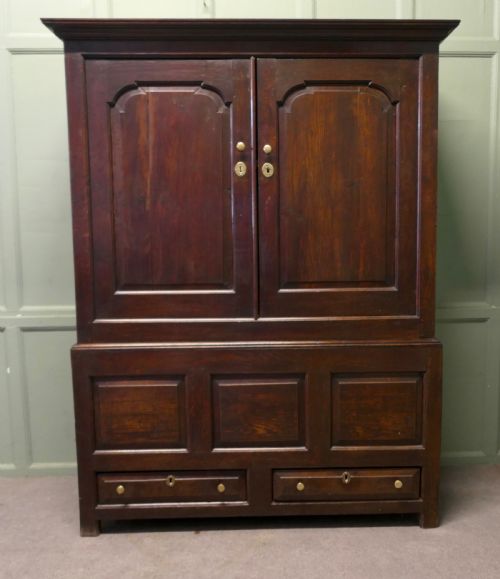
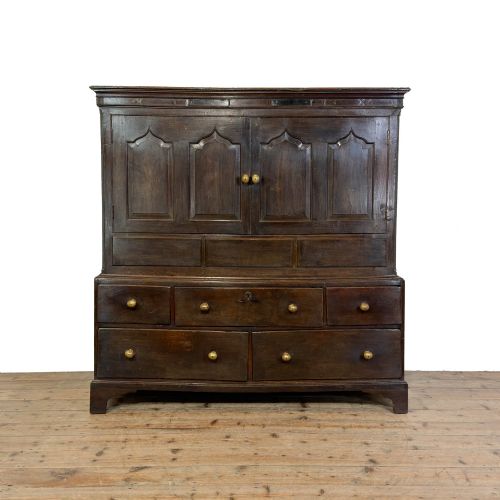
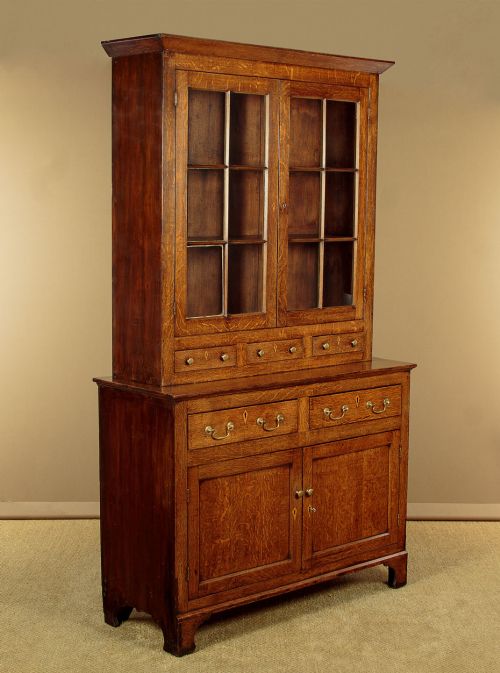
A georgian oak linen cupboard is a substantial timber storage piece designed to keep household textiles and garments dry and orderly. The examples on this page span vernacular forms such as Welsh country dressers, livery cupboards, and housekeeper's presses from the eighteenth and nineteenth centuries.
Buyers will encounter various formats ranging from low press cupboards and dwarf housekeeper's units to towering Dutch styles and Welsh cwpwrdd deuddarn. These pieces typically combine enclosed upper shelving with lower drawers or compartment bases tailored for domestic utility.
Originating largely from English and Welsh rural workshops, these cupboards reflect regional building traditions rather than courtly excess. Their primary function was domestic organisation, storing household linen, blankets, and provisions in damp climates.
How they were made
Makers relied on solid oak as the primary structural timber, often supplemented by secondary woods like pine for internal partitions and drawer linings. Joinery techniques such as panel and frame construction allowed the timber to expand and contract naturally with seasonal humidity changes.
Hardware details such as brass hinges, iron latches, and occasional marquetry inlay or ebonised accents provide functional contrast to the warm grain of the oak. Surface finishes evolved from bare waxed timber to historic painted layers and rich golden patinas developed through generations of polishing.
Some harness and tack cupboards on display were once tasked with storing stable gear rather than parlour linens.
What varies in quality
The architectural proportion and timber selection set the better examples apart from standard utility pieces, with tighter grain and deeper golden patinas marking superior output. Originality of brass pulls, hinges, and internal sliding trays or shelves heavily influences the integrity of the piece.
Regional vernacular craftsmanship displays varying degrees of sophistication, from vernacular rustic joinery with exposed peg construction to more refined urban Georgian cabinet work. The retention of original backboards, feet, and unaltered cornices distinguishes well-preserved survivors from heavily adapted cupboards.
The Georgian Oak Linen Cupboard Glossary
- Linen Press
- A tall piece of furniture featuring upper doors enclosing sliding trays for folded textiles, mounted above a chest of drawers. This design kept household linen flat and protected from dust before modern wardrobes became common.
- Livery Cupboard
- An early form of ventilated storage originally used for food, candles, or small items of clothing. These often feature turned spindles or pierced panels to allow air circulation.
- Cwpwrdd Deuddarn
- A traditional Welsh two-part cupboard featuring an open or enclosed upper stage resting on a larger base cupboard. These regional pieces are staples of Welsh vernacular furniture.
- Housekeeper's Cupboard
- A large utility press traditionally utilised in country houses for storing heavy linens, provisions, and household accounts. They are prized by collectors for their expansive storage capacity and honest country aesthetic.
- Panel and Frame
- A method of wooden construction where a central floating panel sits within a grooved outer frame. This technique accommodates the natural movement of solid oak without splitting the timber.
Georgian Oak Linen Cupboard: Frequently Asked Questions
What is a georgian oak linen cupboard used for?
These pieces were originally designed for storing household textiles, blankets, and garments in country houses and farmsteads. Today, collectors utilise them for contemporary clothes storage, linen organisation, or as striking freestanding display units in period and modern interiors alike.
Their deep internal compartments and sturdy shelving accommodate bulky items easily. They serve well in bedrooms, hallways, or kitchens where substantial wooden storage is required.
How do I identify a genuine georgian piece?
Authentic pieces display traditional joinery methods such as hand-cut dovetails on the drawer boxes and wooden pegged joints in the frame. Look for natural patination, timber shrinkage lines, and historic tool marks that indicate eighteenth or early nineteenth-century hand tools were used.
Examining the secondary woods inside, such as pine or deal backboards, also helps confirm the period of construction. Modern fixings or machine-sawn timber point towards later reproductions or significant alterations.
What is the difference between a press and a wardrobe?
A traditional press contains sliding internal trays or shelves behind its upper doors, specifically designed for stacking folded linen. Wardrobes, by contrast, are built primarily with hanging space and a full-length rail for garments.
Many period pieces have been adapted over time to include hanging rails instead of trays. Buyers should check the interior configuration if preserving the original linen-storage layout matters to them.
How do I care for antique oak furniture?
Maintain oak surfaces by applying natural beeswax sparingly and buffing with a soft cloth to preserve the historic patina. Avoid placing timber furniture near direct heat sources, radiators, or in strong sunlight, which can dry out the wood and cause panels to split.
Keep the room environment stable regarding humidity to protect the ancient joinery. Gentle dusting with a dry cloth prevents dirt build-up without harming the finish.