
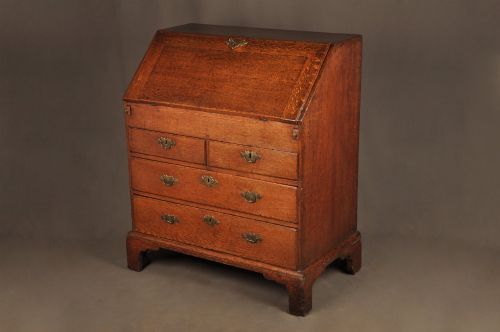
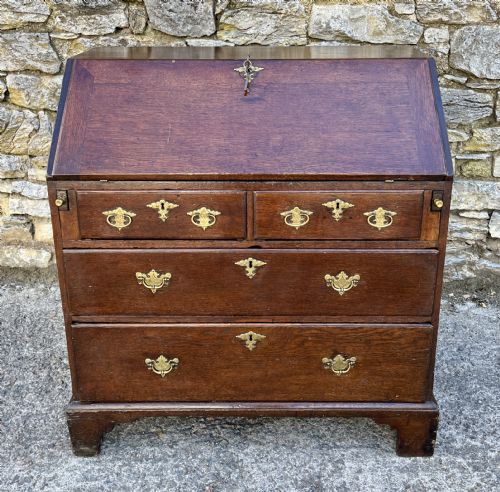
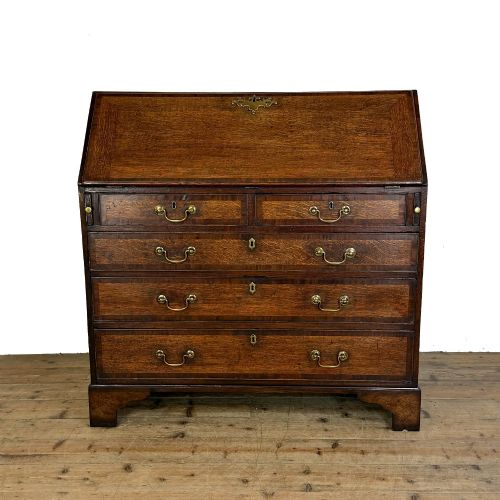


Georgian Oak Fall Front Bureau
A georgian oak fall front bureau provides a sturdy writing surface and concealed compartments, combining practical storage with classic eighteenth-century cabinetwork.
Georgian Oak Fall Front Bureau
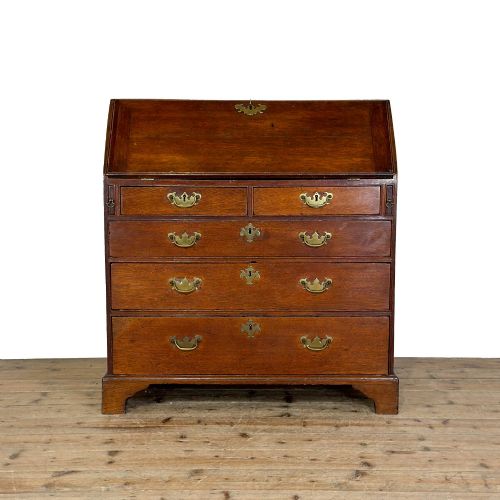
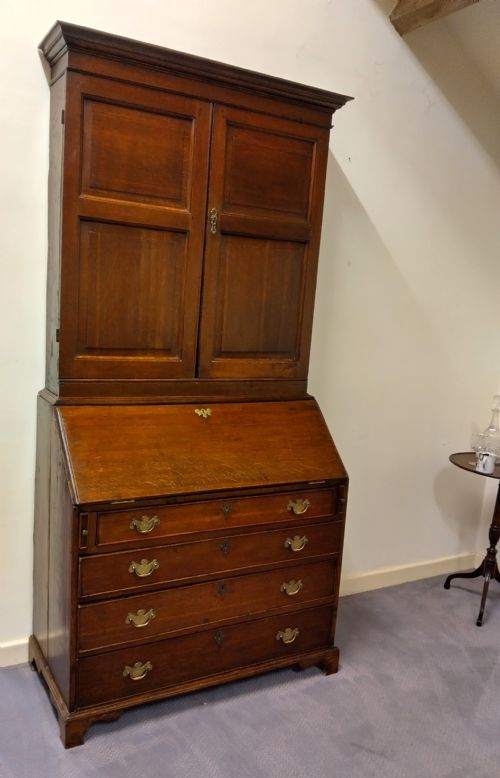
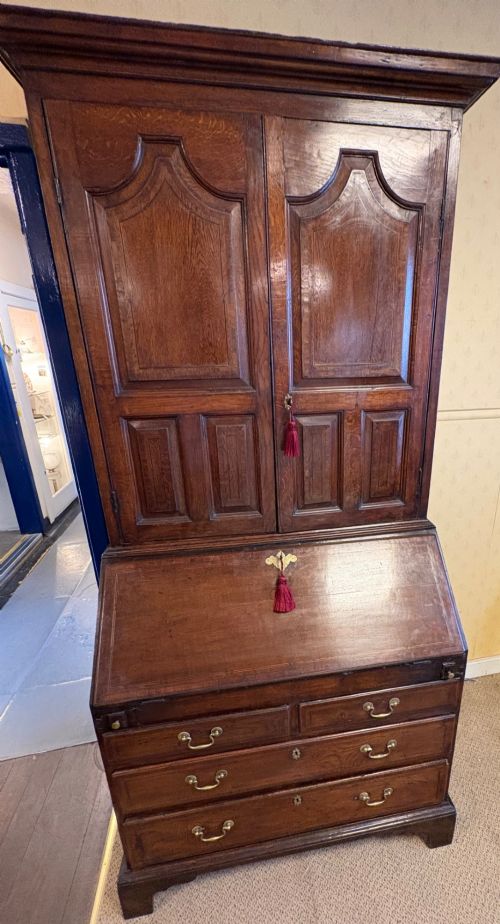
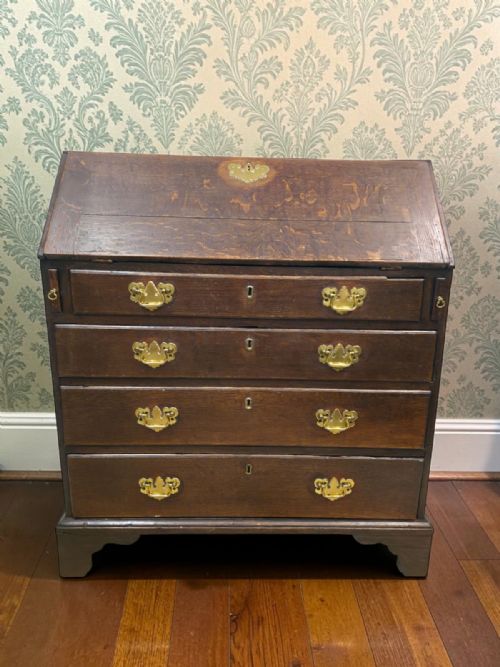
A georgian oak fall front bureau stands as a primary workspace of the eighteenth century, offering a hinged writing flap that drops down to reveal internal pigeonholes and small drawers. These pieces range from compact domestic desks to large bureau bookcases designed for both writing and storage.
The examples found here centre primarily on the Georgian period, including pieces from the early eighteenth century through to the early nineteenth century. Buyers will encounter simple writing desks as well as grander upright cabinets topped with glazed shelving.
How they were made
Cabinetmakers built these bureaus predominantly in solid oak, occasionally incorporating mahogany or walnut for contrast, alongside decorative wood inlay. Internal fittings often feature green baize or plain baize lining the writing surface.
Hardware typically consists of brass for handles and escutcheons, securing the drawers and fall front flaps. Construction relied on traditional joinery methods suited to dense timbers, ensuring durability across centuries of daily use.
One early bureau traded its original paperwork for television cables, proving antique timber adapts to modern entertainment.
What varies in quality
The refinement of the stepped interior separates standard writing desks from superior cabinetwork, particularly when drawers and pigeonholes display intricate arrangement or secret compartments. Proportions also dictate value, with smaller bureau forms commanding distinct attention.
Timber selection and the preservation of original brass fittings influence the character of each piece. Alterations, such as adaptations for modern domestic technology, change the original structural integrity.
The Georgian Oak Fall Front Bureau Glossary
- Fall front
- A hinged writing flap that drops to a horizontal position to serve as a desk surface. When closed, it conceals the interior compartments.
- Stepped interior
- An arrangement of internal pigeonholes and small drawers tiered in receding rows. This feature provides structured storage for papers and stationery.
- Bureau bookcase
- A combination furniture form featuring a writing bureau base with an upper section enclosed by doors, often glazed for book storage.
- Escutcheon
- A protective plate surrounding a keyhole, usually cast in brass. It prevents the wood around the lock from sustaining wear.
Georgian Oak Fall Front Bureau: Frequently Asked Questions
What is a fall front bureau?
A fall front bureau is a writing cabinet with a hinged panel that folds down to create a flat desk surface. This design keeps writing materials concealed when not in use.
Inside the drop front, makers constructed small compartments and drawers known as the interior fitments. These kept correspondence and valuables an organised part of daily domestic life.
How do I date an oak bureau?
Dating relies on examining construction methods, timber choice, and hardware styles across the piece. Early eighteenth-century examples often display simpler lines and solid proportions.
Later Georgian pieces incorporate refined bracket feet or bracket bases alongside changing handle designs. Comparing these structural clues with known period styles clarifies the timeline.
Were these used as desks?
These pieces served as the primary home office desks of the Georgian era. Merchants and landowners utilised the fold-down surface for letter writing and managing accounts.
The enclosed drawers and pigeonholes provided secure storage for household documents. They functioned as private writing stations before dedicated library tables became common.
How do I fit one in a room?
A bureau requires floor space that accommodates the lowered fall front flap during writing. Positioning the cabinet against a sturdy wall ensures stable daily operation of the drop leaf.
Consider the clearance needed for a chair pulled up to the writing height. Their vertical storage capacity allows them to occupy a compact footprint while offering substantial drawer space.