
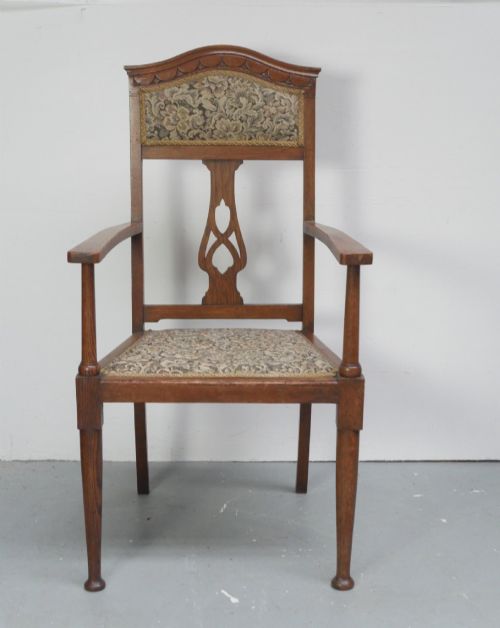
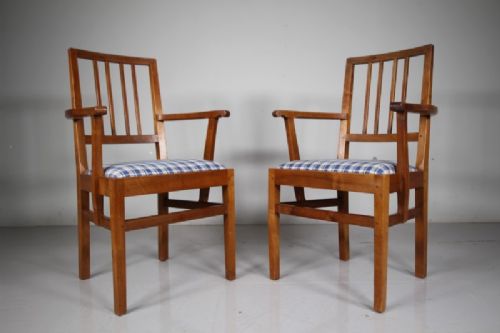
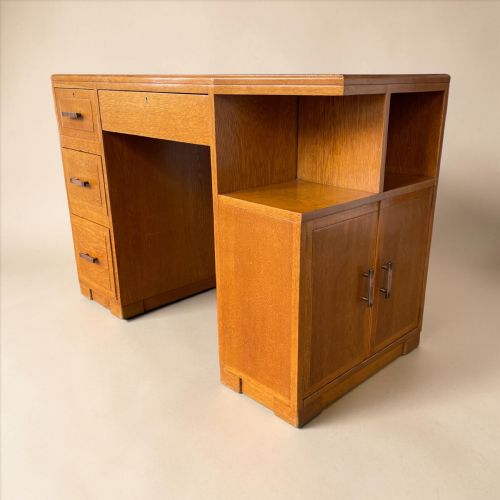
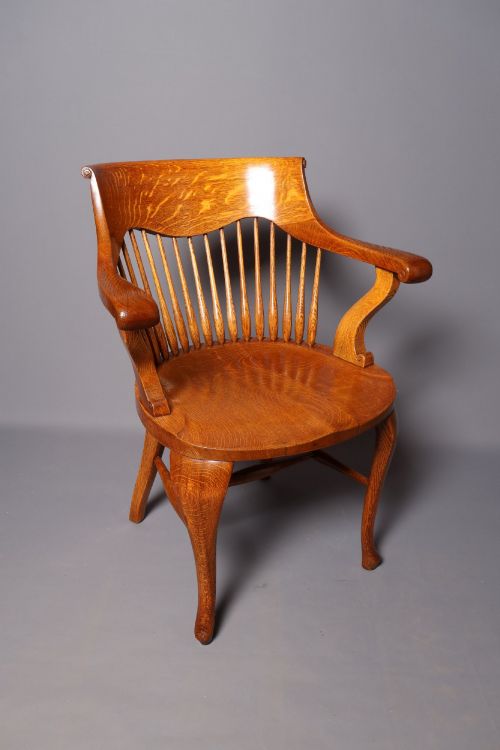
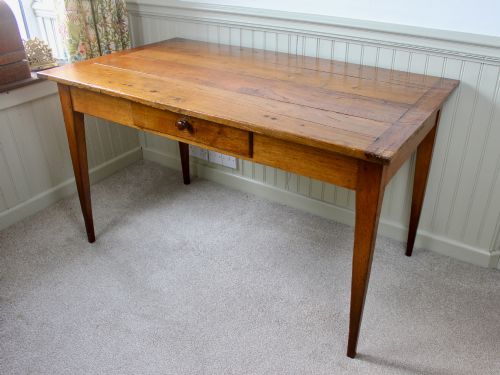


Warm Oak Desk
A warm oak desk brings solid timber grain and centuries of working history directly into a study or library.
Warm Oak Desk
When you search for a warm oak desk, you are looking at practical writing furniture spanning the Georgian, Victorian, and Edwardian periods. These tables and bureaus were built for daily service, offering sturdy drawers and writing surfaces shaped by generations of use.
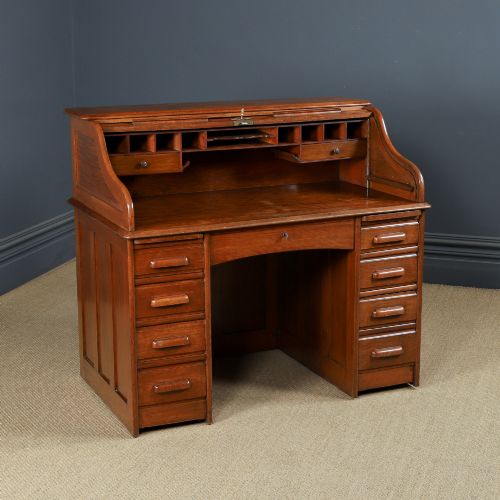
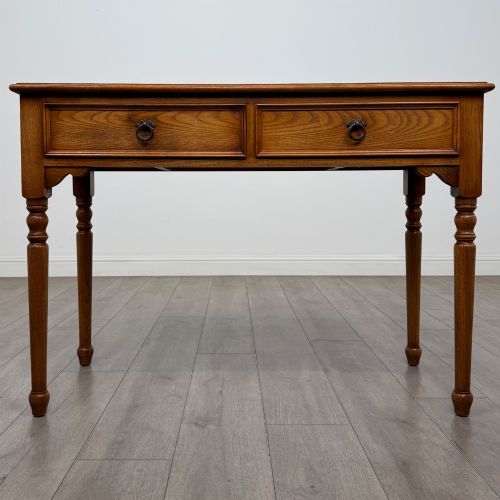
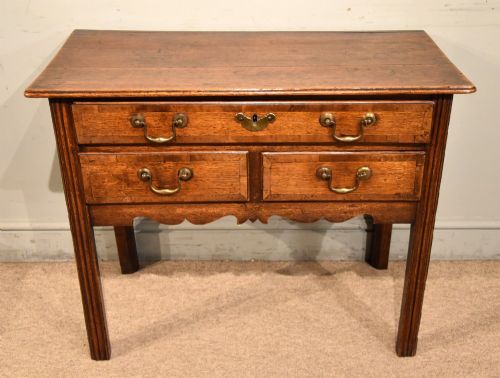
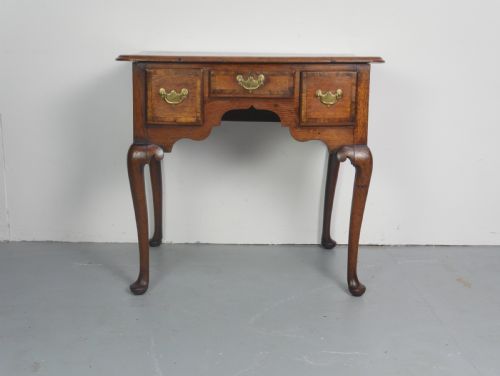
The pieces you are most likely to meet on this page include 18th-century lowboys, writing tables, and rolltop office desks. Oak predominates, often paired with elm, fruitwood, and brass hardware to create durable workspaces.
Makers ranged from country workshops to urban cabinet makers, producing both simple farmhouse boards and formal pedestal designs. Each item carries the distinct patina of its era, from carved cabriole legs to panelled rolltops.
How they were made
Cabinet makers relied primarily on solid oak, selected for its density and prominent grain, frequently combining secondary timbers such as elm and beech for drawer linings and internal framing. Fruitwood and pollard oak added contrasting tones and intricate figuring to drawer fronts and tabletops.
Joinery techniques involved traditional mortise and tenon frames, hand-cut dovetails for drawer construction, and pegged joints designed to withstand heavy daily use. Brass handles, escutcheons, and occasional glass elements completed the structural assembly without relying on modern adhesives.
Listings feature oak alongside elm, beech, and fruitwood across the Georgian, Victorian, and Edwardian periods.
What varies in quality
Quality rests in the selection of timber and the precision of the hand-cut joinery. Superior desks display tightly figured oak grain, straight-running drawers with hand-cut dovetails, and well-balanced proportions that respect their period style.
Lesser examples show hurried construction, mismatched timber repairs, or unsympathetic modern replacements of original brass hardware. The integrity of the structural frame and the preservation of the original surface finish determine the standing of each piece.
Edward Barnsley·Pennington of Camberwell
The Warm Oak Desk Glossary
- Lowboy
- A small side table with drawers, typically produced during the 18th century in oak or fruitwood. These versatile pieces often double as writing tables.
- Pollard oak
- Timber taken from trees that were pollarded, resulting in highly decorative, knotted grain patterns. It was favoured for formal Regency tables and clocks.
- Escutcheon
- A protective brass plate surrounding a keyhole on a drawer or cupboard door. Period examples are fixed with small pins.
- Cabriole leg
- A furniture leg that curves out and then in, resembling an animal's leg in motion. Georgian makers carved these from solid oak and fruitwood.
Warm Oak Desk: Frequently Asked Questions
How do I date an antique oak desk?
Examine the construction methods visible in the drawers and frame, such as hand-cut dovetails and pegged joints. Tool marks and timber selection also point towards specific decades.
Compare the overall style, hardware, and foot design against known period examples. Georgian, Victorian, and Edwardian pieces each employ distinct proportions and decorative motifs.
Can I use a lowboy as a desk?
Many 18th-century lowboys served multipurpose roles in country houses and studies. Their single or triple drawer layouts provide adequate clearance for modern writing tasks.
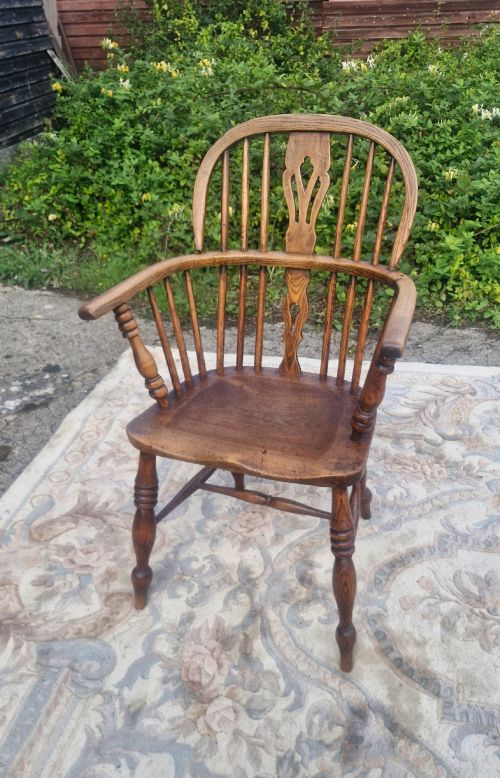
Check the kneehole height and drawer depth before daily use to ensure comfortable seating posture. Pair the table with an appropriate period chair.
How should I care for antique oak?
Keep wooden furniture away from direct heat sources and dramatic humidity fluctuations to prevent splitting. Dust gently with a dry or slightly damp cloth.
Apply traditional beeswax periodically to nourish the grain and protect the finish. Avoid silicone-based sprays that damage aged patina.
What is pollard oak?
Pollard oak is timber harvested from trees cut back close to the trunk to encourage dense branching. This process creates distinctive, swirling grain patterns highly prized by Regency cabinet makers.
It appears on statement pieces such as drum tables and bracket clocks. The rich figuring contrasts with standard straight-grained oak.