
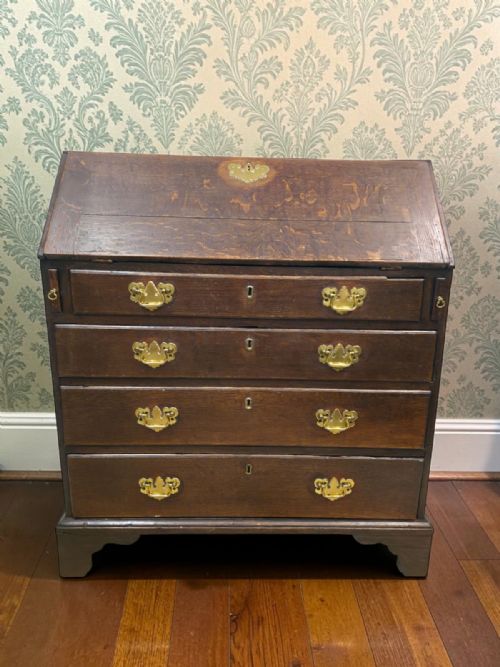

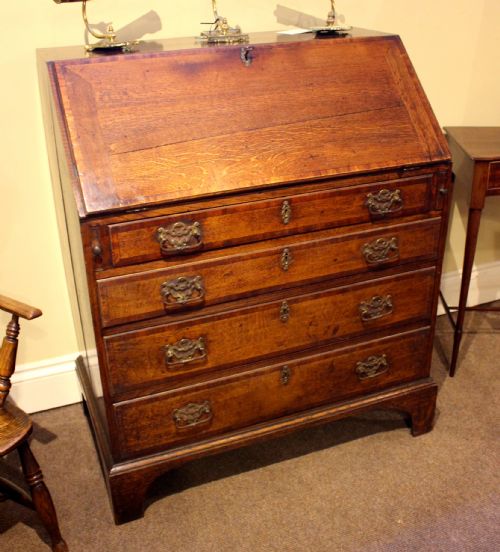


Georgian Oak Drop Front Desk
A georgian oak drop front desk is a sturdy writing cabinet offering fitted interior drawers behind a sloping writing surface.
Georgian Oak Drop Front Desk
A georgian oak drop front desk typically appears as a traditional writing bureau or bureau bookcase originating from the eighteenth century. These practical pieces combine a hinged writing flap with multiple drawers below and internal compartments for papers.
The selection ranges from compact vernacular examples to taller bureau bookcases and secretaire chests incorporating mahogany and brass details. Oak remains the primary timber across the diverse regional and period pieces shown on this page.
Materials and Construction
Makers utilised solid oak timbers, occasionally pairing them with mahogany veneers or oak linings to construct the carcasses and drawers. Brass handles and escutcheons secure the drawer fronts and fall flaps against daily wear.
Leather inserts occasionally line the writing surfaces, while glass panels feature in the upper doors of taller bureau bookcases. Traditional joinery methods unite the drawer frames and internal pigeonholes without modern fasteners.
The listings span from the seventeenth century through the nineteenth century, uniting vernacular oak pieces with Georgian and Regency styles.
Distinctions in Quality
The distinction between standard examples and superior pieces rests upon timber selection, surface patination, and the complexity of the interior fitments. Finely figured oak grain and undisturbed original brass hardware elevate a piece significantly.
Proportion and scale dictate the desirability of smaller desks, whereas larger bureau bookcases rely on balanced glazing bars and well-executed bracket feet to demonstrate superior cabinetmaking skill.
The Georgian Oak Drop Front Desk Glossary
- Bureau
- A writing cabinet featuring a sloping fall front that opens to reveal a fitted interior of drawers and pigeonholes. This form provides a concealed workspace above standard storage drawers.
- Fall Front
- The hinged writing flap on a desk that drops down to a horizontal position for writing. It often rests on lopers when lowered.
- Secretaire
- A piece of furniture incorporating a writing drawer or compartment disguised as a standard drawer. These often appear within larger chests or press cupboards.
- Pigeonhole
- A small open compartment within the interior of a desk used for sorting letters and documents. These sit above small secret drawers in many eighteenth-century examples.
- Patina
- The surface sheen and mellow colour developed on timber through decades of handling and polishing. This quality indicates age and authenticity in antique oak furniture.
Georgian Oak Drop Front Desk: Frequently Asked Questions
What is a drop front desk?
A drop front desk is a writing cabinet with a hinged lid that lowers to create a flat writing surface.
Behind this flap lie small drawers and compartments designed for storing correspondence and writing materials.
How do I date an oak bureau?
Dating relies on examining construction methods, timber choice, and hardware styles across the piece.
Earlier examples from the seventeenth and early eighteenth centuries often display simpler vernacular framing and distinct drawer jointing.
Where should I place an oak desk?
These desks suit studies, living rooms, or bedrooms where their compact depth fits against a wall.
Keep them away from direct heat sources and strong sunlight to protect the oak timber and original polish.
What is the difference between a bureau and a bureau bookcase?
A standard bureau consists of the lower writing section and drawer base alone.
A bureau bookcase adds an upper shelved cabinet with panelled or glass doors for storing books and display items.