



Georgian Oak Corner Unit
A georgian oak corner unit makes use of overlooked domestic space while bringing warmth to a room through dense timber.
Georgian Oak Corner Unit
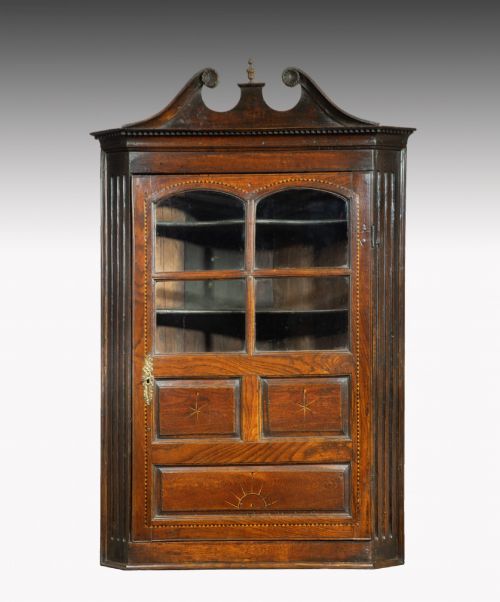
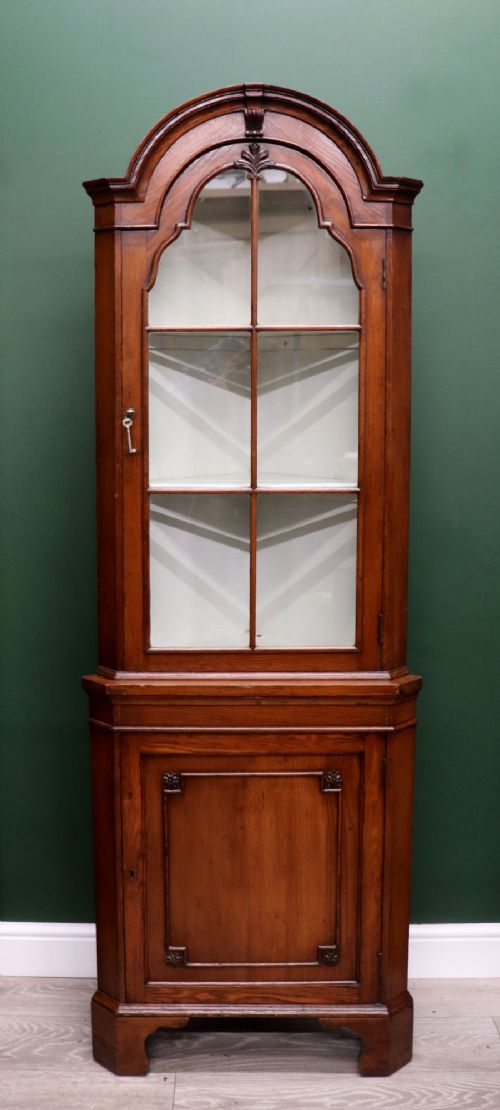
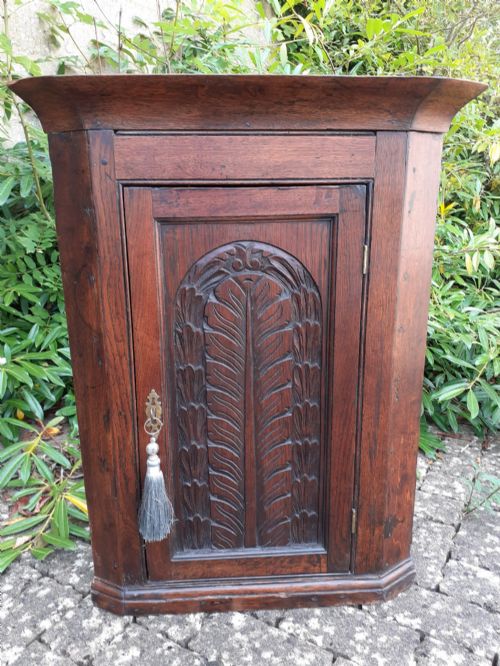
When you search for a georgian oak corner unit, you encounter practical storage solutions designed to fit neatly into the ninety-degree angles of period rooms. The pieces appearing here span wall-hanging formats, floor-standing two-part designs, and occasional corner cupboards on stands.
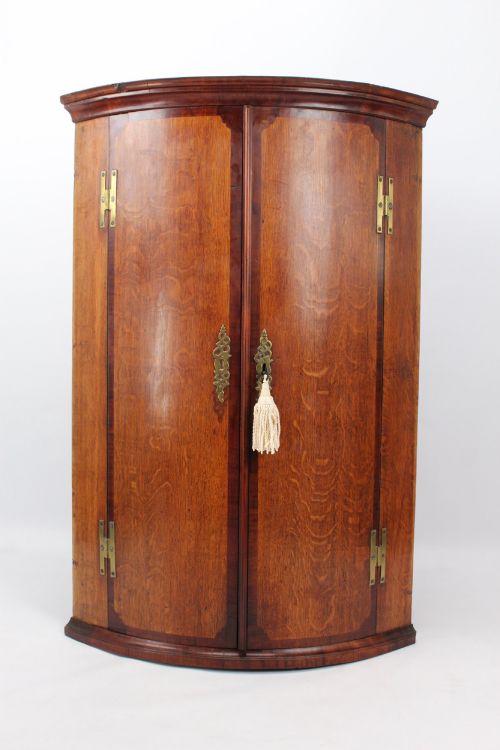
Most examples originate from the eighteenth century or reflect later Georgian revivals, often originating from regional workshops including Welsh country makers. You will find variations featuring bow fronts, glazed doors, and panelled construction built to maximise small footprints.
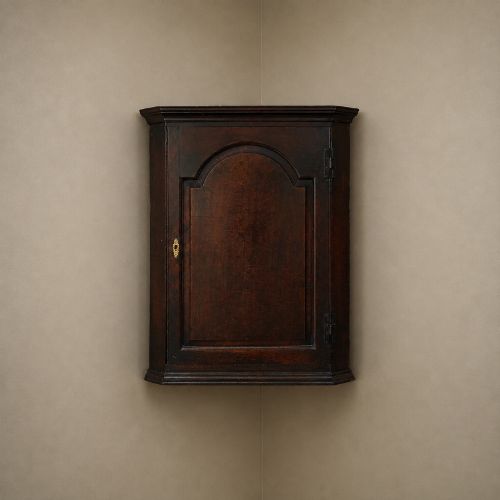
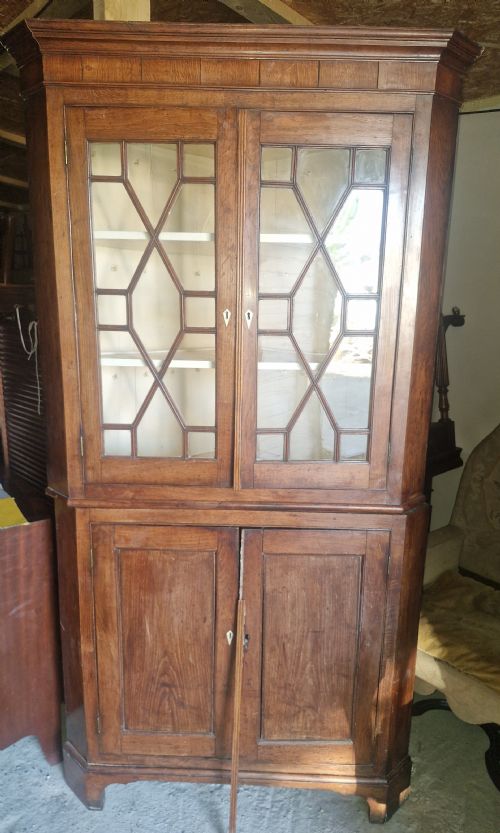
Forms range from simple single-door wall cabinets to tall freestanding cupboards divided into distinct upper and lower sections. These items served dining rooms and parlours historically to display glassware or store provisions out of the way.
Materials and construction
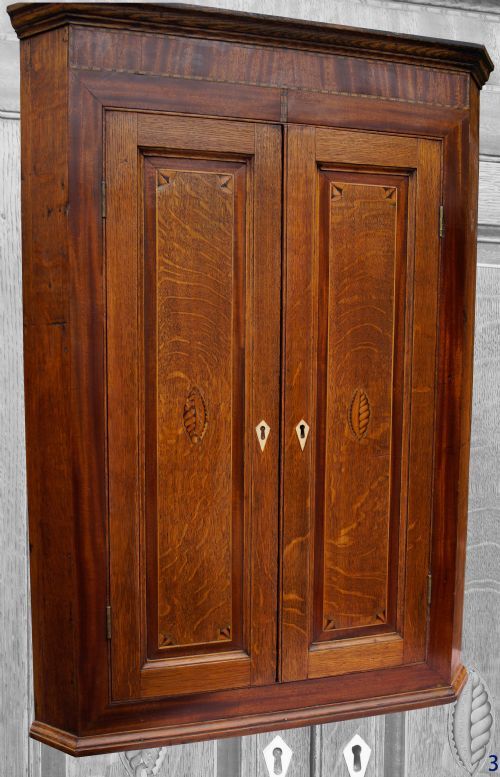
Makers built these cabinets primarily using solid oak, occasionally combining it with secondary softwoods like pine or incorporating decorative wood inlays, walnut, and satinwood. Brass hardware such as H-hinges, escutcheons, and working locks provides both structural support and visual contrast against the dark timber.
Surface treatments vary from polished natural grain to painted finishes or simulated oak effects applied to pine carcasses. Glazed panels and glass doors appear on select pieces intended for display purposes, requiring careful framing within the sturdy wooden framework.
Some tall cupboards arrive in two separate parts, proving that even eighteenth-century homeowners struggled with narrow staircases.
Assessing quality in these units
Quality shows in the selection of the timber and the precision of the joinery, particularly where panels meet and where crossbanding or inlays are applied. Finer items exhibit thoughtful proportion, harmonious grain matching, and well-preserved original brass fixtures rather than later replacements.
The division between simpler provincial pieces and higher-status examples rests on architectural detailing, such as moulded cornices, panelled doors, and whether the cabinet stands independently on its own base or hangs securely from a wall.
The Georgian Oak Corner Unit Glossary
- Bow front
- A convex curved cabinet face that projects forward from the corner walls. This curved profile requires skilled joinery to shape the timber and doors properly.
- Crossbanding
- A decorative border technique where thin strips of veneer are laid perpendicular to the grain of the surrounding wood. It frames the primary panels on more polished examples.
- Etagere
- A set of open shelves designed for displaying small objects or books. These occasional pieces share the corner footprint of heavier enclosed cupboards.
- Panelled
- A method of construction using solid wooden frames fitted with floating central panels that expand and contract with humidity. This technique prevents the wood from splitting over centuries.
- H-hinge
- A surface-mounted strap hinge shaped like the letter H, commonly found on earlier wall-hanging cupboards. They fasten directly to the door face and frame.
Georgian Oak Corner Unit: Frequently Asked Questions
How do I hang a wall cabinet?
Wall-hanging corner cupboards require secure fixing to solid masonry or internal wall studs using appropriate brackets and screws. Because these oak units carry considerable weight, the mounting must support the load safely.
Professional installation ensures the cabinet stays level and the doors open smoothly without straining the antique hinges.
Are these cabinets one piece or two?
Many smaller cupboards are built as a single hanging unit, while taller floor-standing examples often come in two separate sections. Two-part cupboards stack a top display case onto a lower base cabinet.
This modular construction made moving bulky furniture through narrow eighteenth-century doorways much easier.
Where should I place one?
These units fit directly into empty room corners, turning awkward dead space into functional storage or display areas. They work well in dining rooms, hallways, and studies where floor space is limited.
Positioning them away from direct sunlight and radiators helps protect the dry oak timber from splitting.
How do I spot an eighteenth-century piece?
Eighteenth-century examples typically show hand-cut joinery marks, traditional pegged joints, and timber patination developed over generations of use. Examining the backboards and interior construction reveals the age of the materials.
Later revival pieces from the early twentieth century often use machine-cut screws and standardised fixings instead.