



Georgian Natural History Illustrations
Georgian natural history illustrations record birds, beasts and botanicals with scientific precision and decorative power.
Georgian Natural History Illustrations
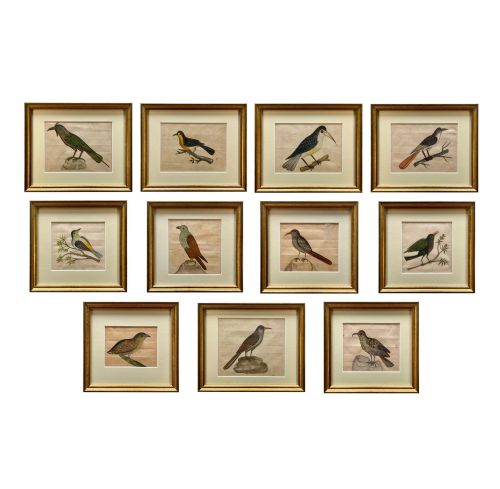
Georgian natural history illustrations comprise framed prints, engravings and watercolours created to document animals, birds, fish and plants. The selection here centres heavily on eighteenth-century and nineteenth-century works, often presented in framed formats ranging from single studies to cohesive sets.
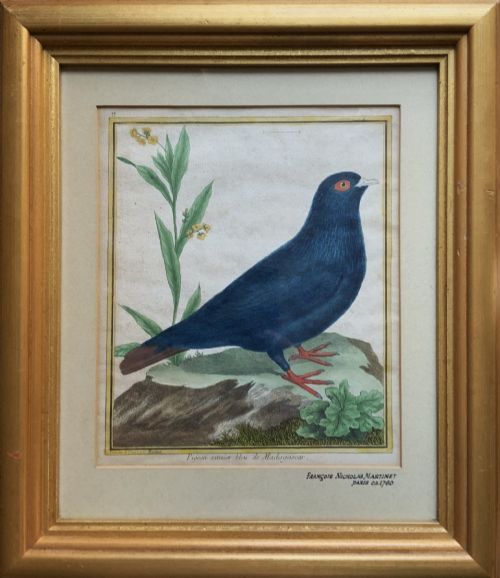
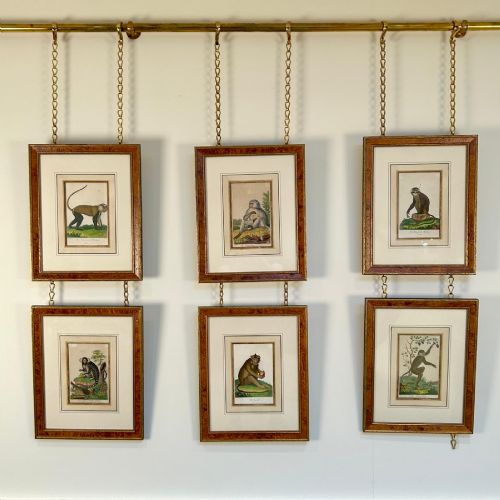
Subjects span ornithological engravings of birds and ducks, detailed serpent and animal portraits, monkey prints and botanical studies featuring insects and plants. These pieces bridge scientific study and interior decoration, capturing natural subjects through hand-coloured plates and works on paper.
Makers and artists represented across the listings include François-Nicolas Martinet, Buffon, William Andrews Nesfield, George Edwards, John Curtis, William Swainson and Eleazor Albin. Pieces appear from the eighteenth century into the nineteenth century, reflecting periods such as the Georgian, Regency and Victorian eras.
What varies in quality
Quality rests upon the crispness of the original impression and the precision of the hand-colouring applied to the paper. Early impressions taken before plates wore down deliver sharper detail in feathers, scales and foliage.
The sophistication of the palette and the vibrancy of the watercolour pigments dictate visual impact. Intact sets with uniform preservation hold greater distinction than mismatched or heavily faded examples.
Georgian Natural History Illustrations Retail Price Guide 2026
Typical asking prices for georgian natural history illustrations among the pieces listed under this phrase on Sellingantiques today, from the lower quarter to the upper quarter. They describe what is for sale here now, not the wider market.
Early naturalists sometimes drew serpents with expressions of mild surprise, as though equally startled by their own discovery.
François Nicolas Martinet·William Andrews Nesfield·George Edwards·John Curtis·William Swainson·Eleazor Albin
The Georgian Natural History Illustrations Glossary
- Engraving
- A printmaking technique where an artist cuts lines into a metal plate to hold ink for transfer to paper. This method allowed for fine scientific detail in natural history plates.
- Hand Coloured
- A process where colourists applied watercolor paints by hand to monochrome printed engravings. This technique gave natural history illustrations lifelike hues.
- Ornithological
- Pertaining to the scientific study and depiction of birds. These plates focus specifically on avian subjects.
- Botanical
- Pertaining to plants, flowers and related vegetation. These illustrations often incorporate associated insects alongside the primary plant specimen.
Georgian Natural History Illustrations: Frequently Asked Questions
How should I display framed natural history prints?
Hang these framed works away from direct sunlight to protect the paper and watercolours from fading over time.
Group related sets together on a wall to replicate the scholarly aesthetic of an eighteenth-century study.
Are these illustrations original period pieces?
The listings consist of authentic eighteenth-century and nineteenth-century works on paper produced during the periods of the respective naturalists and artists.
Examination of the paper stock, ink application and hand-colouring confirms their historic origins.
Do these prints come ready to hang?
Most items arrive within frames constructed from wood, gilt wood or gold leaf, equipped with glass for protection.
Check individual listings to confirm the exact framing materials and hanging hardware included with each piece.
How do I identify different natural history subjects?
Subjects are categorized by zoological and botanical classifications, ranging from ornithological bird studies to angling prints and monkey portraits.
Inscriptions and artist signatures on the plates often provide direct attribution to figures such as George Edwards or Eleazor Albin.