




Georgian Moon Phase Clock
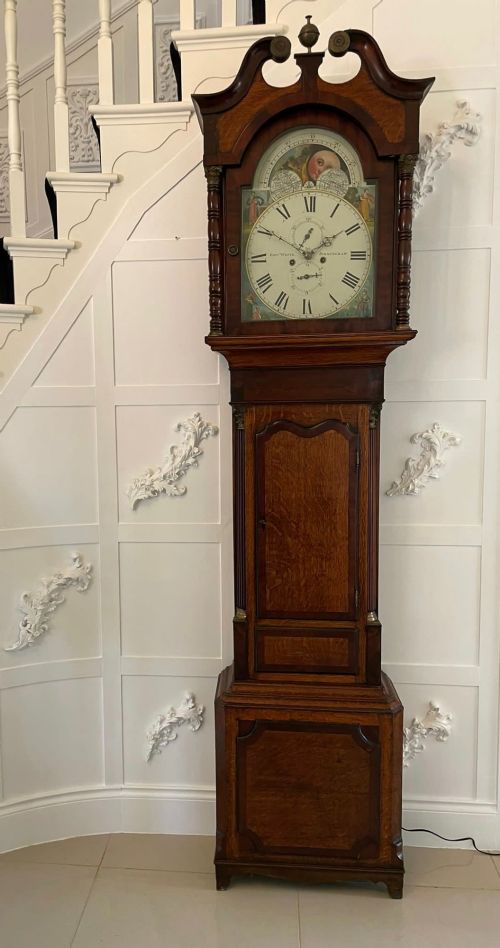
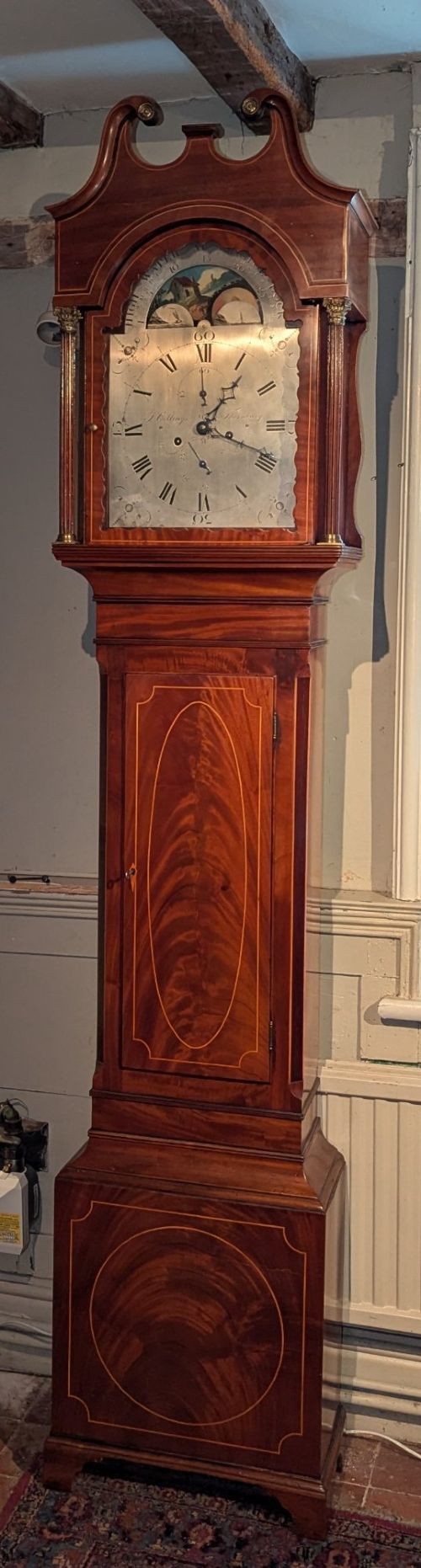
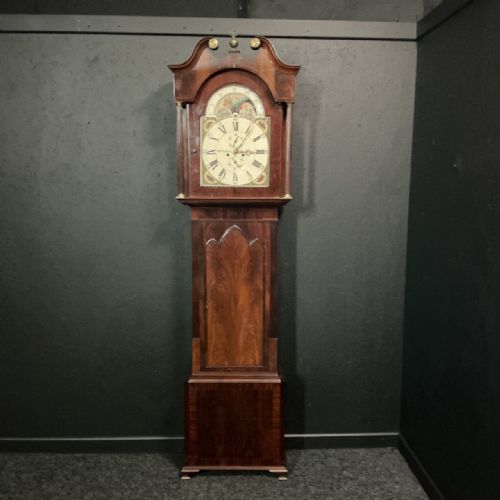
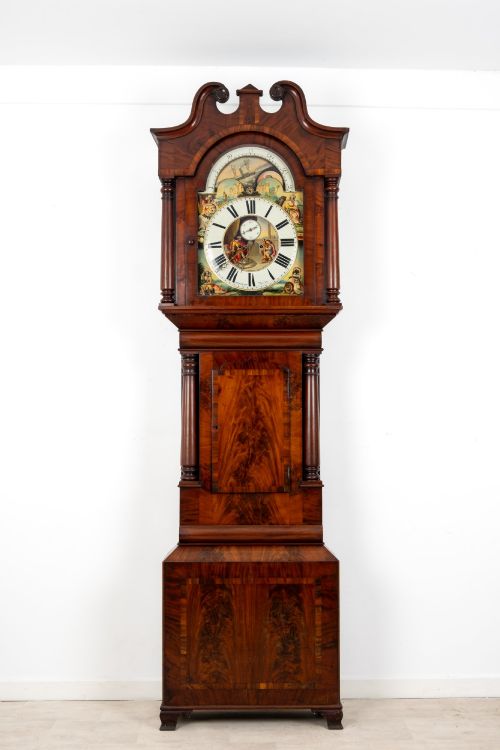
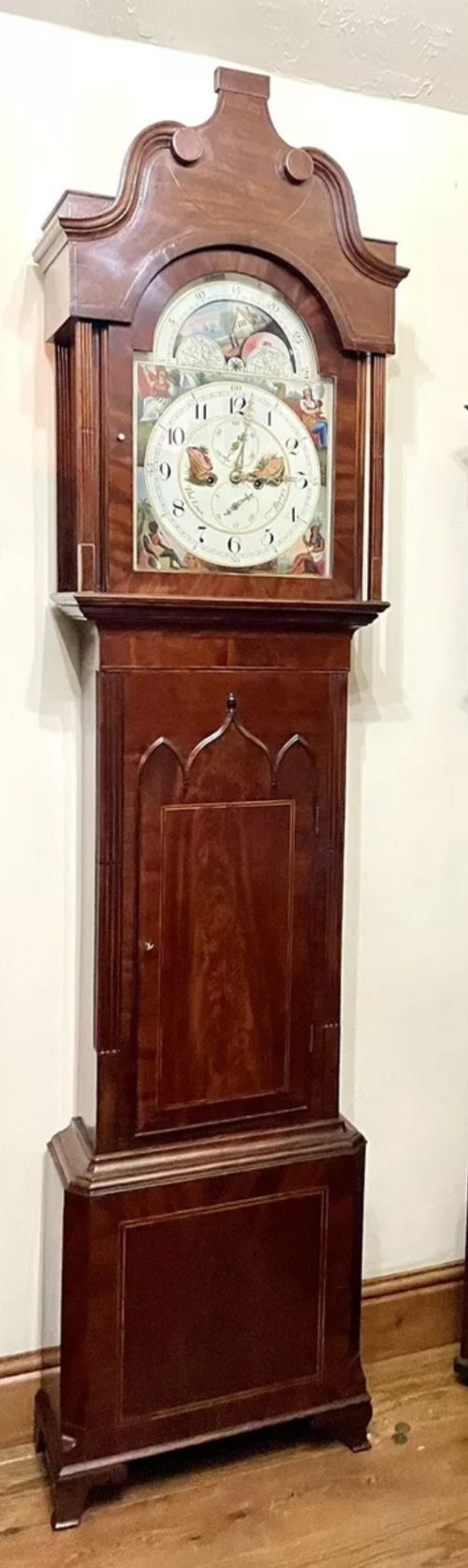
A georgian moon phase clock tracks both time and the lunar cycle in a tall wooden case, bringing mechanical mastery into the domestic interior.
Georgian Moon Phase Clock
A georgian moon phase clock stands as a substantial longcase timepiece, commonly known as a grandfather clock, housing a complex dial beneath glass. These pieces originate predominantly from the eighteenth and nineteenth centuries, spanning George III, early Georgian, and Regency periods.
Mahogany and oak form the primary casing materials, often enriched with flame mahogany veneers or intricate string inlay. The dial displays hours and minutes alongside a painted iron disk that tracks the phases of the moon.
How they were made
Cabinetmakers constructed the tall wooden housings using solid mahogany or oak, frequently selecting figured timber for the trunk door and base. Brass components formed the moving gear trains within the eight-day movements.
Dial faces combined brass chapter rings with painted iron plates, where artists rendered lunar landscapes by hand. Steel parts operated the internal mechanics, while glass protected the dial face.
Regional clockmakers occasionally painted small rural cottages or sailing ships alongside the moon on the rotating dial disk.
What varies in quality
Quality rests upon the skill of the regional clockmaker who signed the dial and the refinement of the cabinetwork. Cases featuring figured flame mahogany or precise marquetry inlay distinguish finer examples from plain oak iterations.
The artistry on the painted moon roller dictates the visual appeal of the dial, separating standard production from exceptional provincial craftsmanship.
Parkinson Bros Batley·Edward Shepley of Manchester·Edward White Birmingham·Will Lassell of Toxteth Park·Thomas Lees Bury·Thos Russell Lancaster·Furnival Oldham·Thomas Dean of Leigh·Stanyer Nantwich·R Lawson Leigh·John Wood of Grantham·Edward Glase of Bridgnorth·Henry Smith·William Mercer of Liverpool·David Griffith Carnarvon·John Wyat Altringham·Fulford Plymouth·John Uffington London·Birch of Tenterden·Dunn of Bristol·James Burr·Young of Nottingham·Burchall Nantwich·Edward Powell of Bristol
The Georgian Moon Phase Clock Glossary
- Moon phase
- A mechanical indication on the clock face that tracks the lunar cycle through a rotating painted disk. This mechanism reveals the waxing and waning of the moon behind two arched apertures.
- Longcase clock
- A tall freestanding weight-driven timekeeper enclosed in a wooden case. These pieces are frequently called grandfather clocks.
- Chapter ring
- The circular ring on the dial that displays the numerals for hours and minutes. It is typically constructed from brass.
- Movement
- The internal mechanical assembly of gears, weights, and pendulums that drives the clock. Eight-day movements require winding weekly.
- Penny moon
- A simple lunar display showing a single painted moon on a rotating disk rather than the traditional two hemispheres. This style appears on provincial dials.
Georgian Moon Phase Clock: Frequently Asked Questions
How do I set the moon phase?
The moon roller advances automatically with the clock movement, but manual adjustment requires aligning the painted moon with the current lunar calendar using specific fingers on the dial.
Consulting a lunar calendar ensures the disk matches the exact night sky before securing the movement.
What is an eight-day movement?
An eight-day movement requires winding via the keyholes on the dial once a week to keep the weights suspended.
This system uses suspended lead or iron weights inside the trunk to power the timekeeping and striking trains.
Why do some dials show a penny moon?
A penny moon utilises a single painted circle on a rotating disk visible through a semicircular opening on the arch.
This simpler provincial configuration appeared frequently on eighteenth-century regional clocks before double-hemisphere rollers became standard.
How do I clean the mahogany case?
Maintaining the wood involves applying quality beeswax and buffing gently with a soft cloth to nourish the grain.
Harsh chemical cleaners and modern polishes strip the historic patina from mahogany and oak surfaces.