

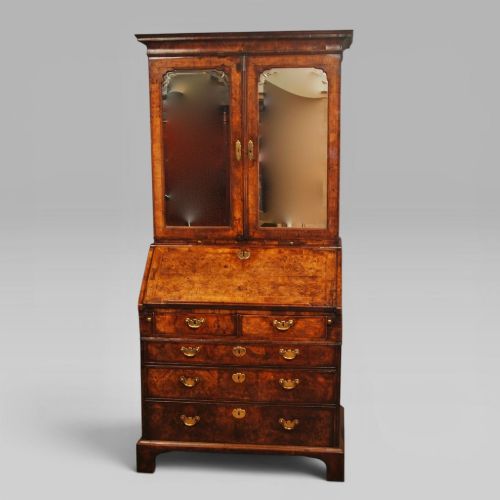
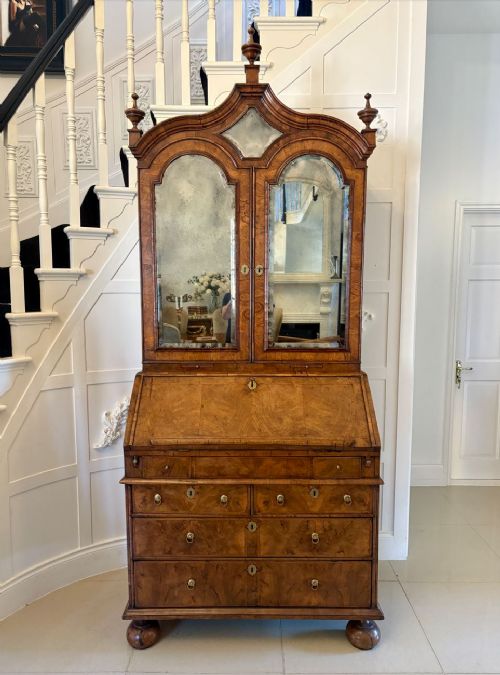
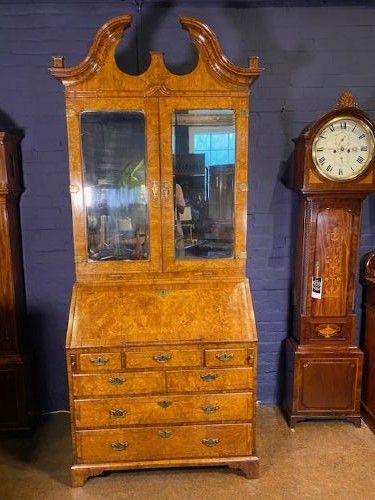
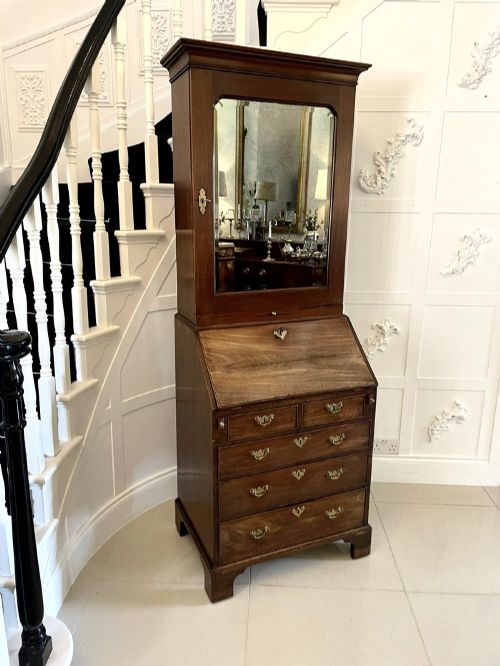


Georgian Mirrored Secretary
A georgian mirrored secretary is a formidable combination of writing desk and bookcase, built to display a collection while concealing private correspondence behind heavy timber doors.
Georgian Mirrored Secretary
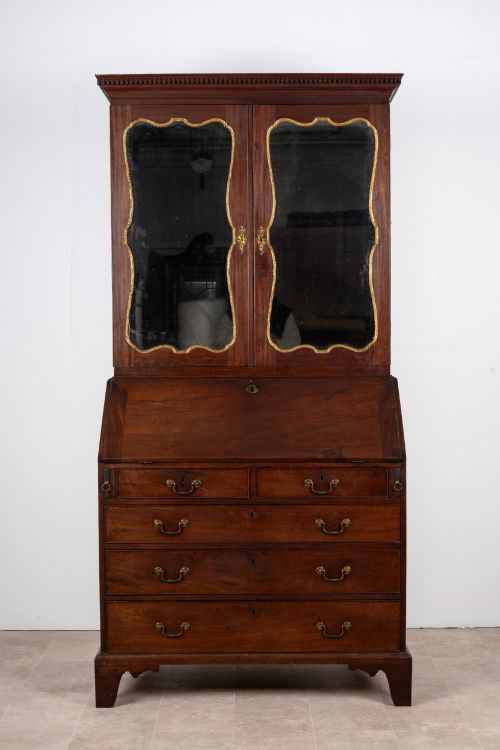
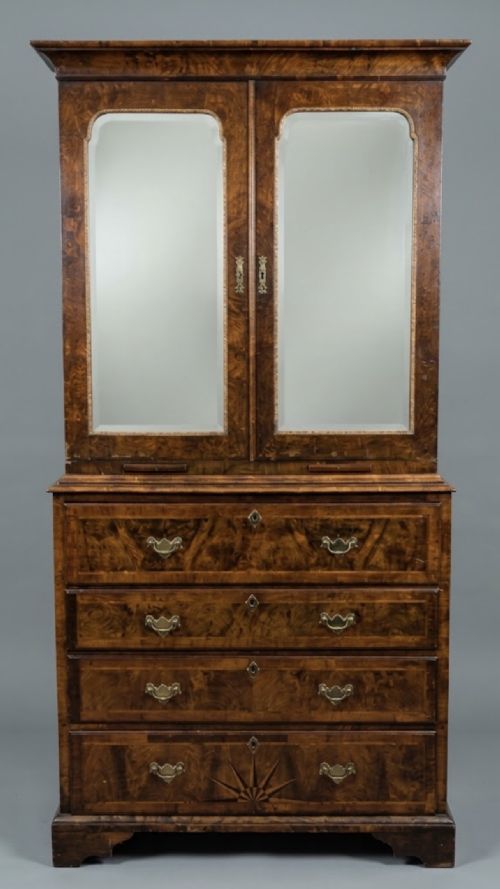
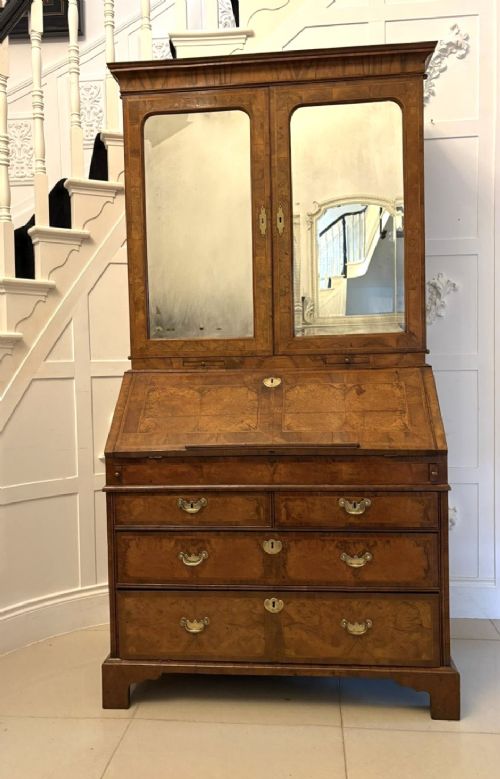
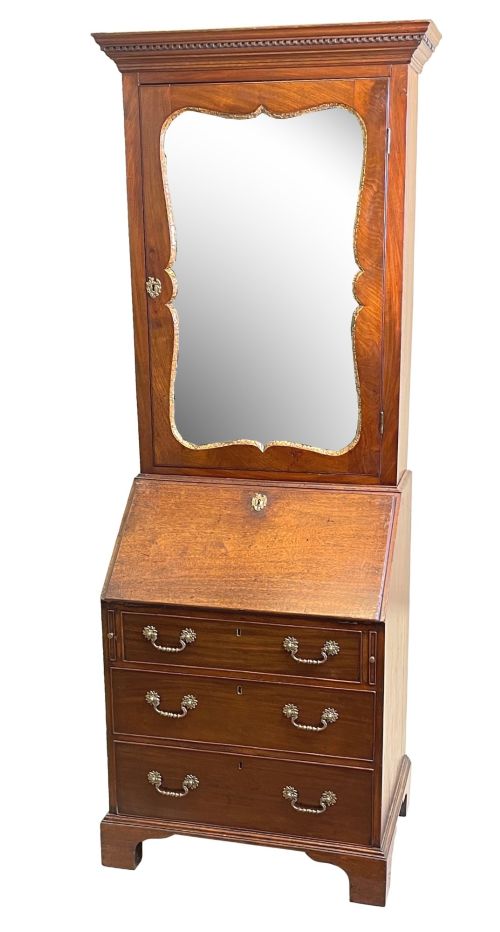
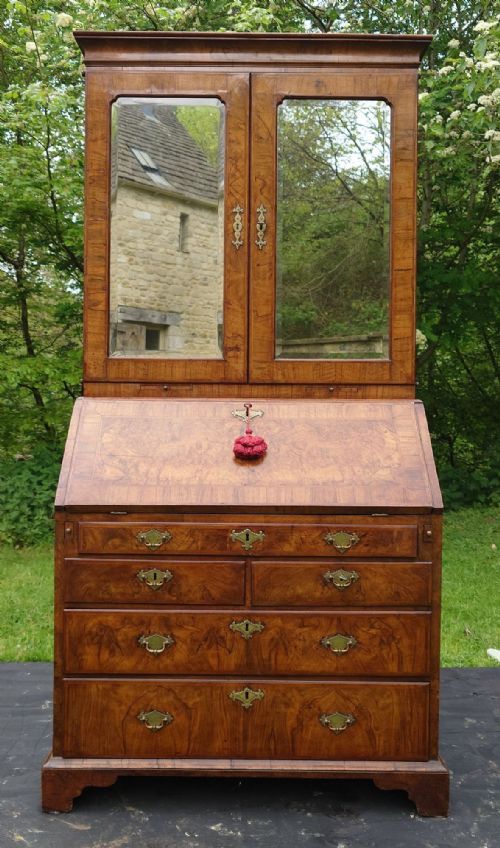
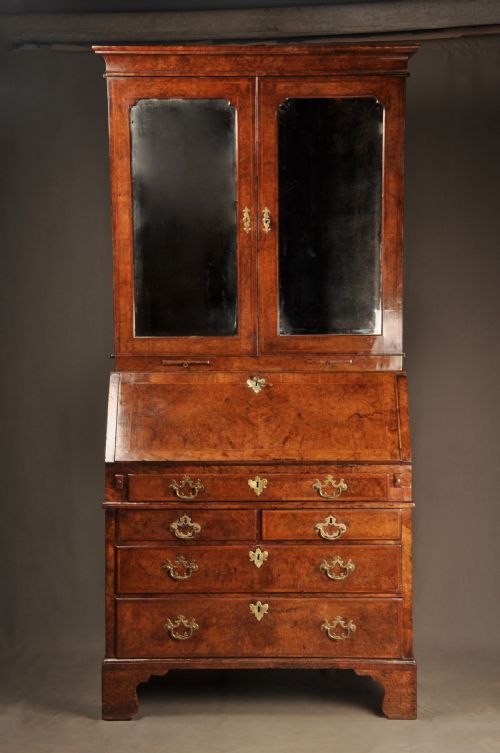
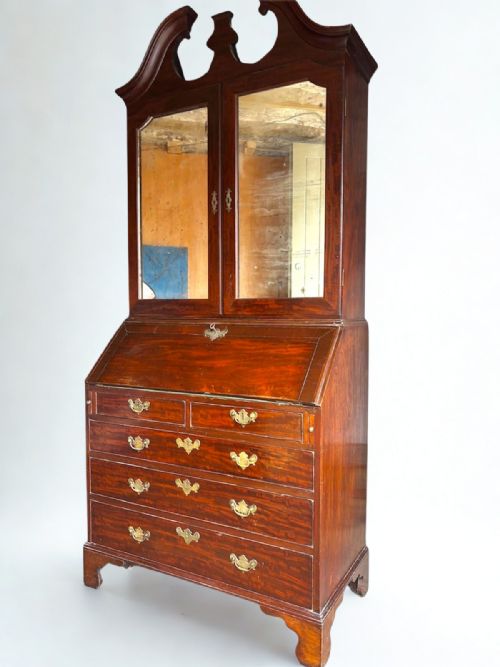
A georgian mirrored secretary typically combines a sloping desk fall-front or fall-front drawer with upper shelved compartments enclosed by doors set with mirror glass. These pieces appear frequently across the eighteenth century, spanning periods from Queen Anne and George I through to George III and the Chippendale style.
The primary forms found here are bureau bookcases and secretaire cabinets constructed in rich timbers. Buyers will encounter both smaller domestic examples and larger double-door architectural arrangements.
Originating predominantly from eighteenth-century workshops, these cabinets served as both working desks and elite storage for books and papers. Later interpretations also emerge from the nineteen-twenties in specific revival styles.
Materials and construction
Cabinetmakers utilised dense timbers including walnut, burr walnut, mahogany, and occasional rosewood, often applying featherbanding to accentuate the grain of figured surfaces. Structural carcasses incorporate secondary woods such as oak.
Upper doors are fitted with mirror glass, frequently secured within gilt wood frames or moulded wooden panels. Brass hardware serves for handles, escutcheons, and keyplates across the bureau drawers and doors.
Georgian Mirrored Secretary Retail Price Guide 2026
Typical asking prices for georgian mirrored secretary among the pieces listed under this phrase on Sellingantiques today, from the lower quarter to the upper quarter. They describe what is for sale here now, not the wider market.
Listings span from the 17th century through the Georgian era to 1920, utilising walnut, mahogany, burr walnut, rosewood, oak, and brass.
Assessing quality and craftsmanship
Quality rests upon the selection of timber veneers, where highly figured walnut or richly grained mahogany demonstrates superior taste and cost during manufacture. The integration of the mirror glass within the door panels also dictates the refinement of the piece.
Proportion and scale separate standard regional examples from exceptional urban commissions, particularly in the architectural treatment of double dome tops and internal pigeonhole arrangements.
The Georgian Mirrored Secretary Glossary
- Bureau bookcase
- A dual-purpose article featuring a lower writing desk component beneath an upper glazed or mirrored bookcase section.
- Secretaire cabinet
- A freestanding piece housing a dedicated writing drawer or fall-front compartment that conceals small drawers and pigeonholes.
- Fall-front
- A hinged writing flap that drops forward into a horizontal position to provide a surface for correspondence.
- Featherbanding
- A decorative inlay technique utilising matched veneer slices arranged diagonally to form a herringbone pattern around borders.
- Double dome
- An upper pediment profile shaped into two rounded arches, frequently seen on large walnut library cabinets.
Georgian Mirrored Secretary: Frequently Asked Questions
What is a georgian mirrored secretary used for?
These cabinets served as dual-purpose furniture for storing a library and managing correspondence. The upper mirrored doors kept volumes dust-free while reflecting light into panelled rooms.
Lower desk compartments provided secure drawers and pigeonholes for writing letters and keeping household accounts.
How do I identify a Queen Anne period piece?
Queen Anne examples generally date from the early eighteenth century and rely heavily on figured walnut timbers. They often feature smaller proportions and curved lines preceding the heavier architectural forms of the later Georgian eras.
Makers utilised featherbanding and brasses to accent the grain without relying on dense carving.
Are these cabinets made of solid walnut?
Most pieces combine solid structural framing of oak or walnut with decorative veneers applied to the visible exterior surfaces. Highly figured burr walnut was sliced thin to cover larger expanses of the fall-front and drawer fronts.
Solid timber construction is more commonly observed in internal partitions and secondary framing components.
How do I care for antique mirror glass?
Antique mirror glass requires gentle cleaning with a dry or lightly dampened microfiber cloth without harsh chemical ammonia. The silvering behind eighteenth-century glass is delicate and sensitive to excess moisture.
Keep the cabinet away from direct sunlight and fluctuating radiator heat to protect the wood joints and veneer.