





Georgian Miniature Locket
A georgian miniature locket holds a hand-painted portrait behind glass, carrying a personal likeness across the centuries.
Georgian Miniature Locket
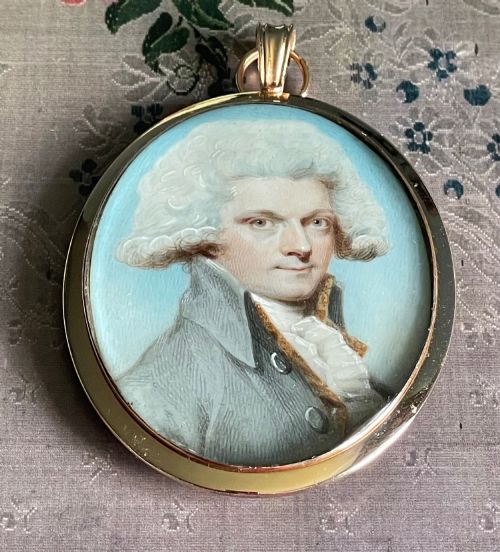
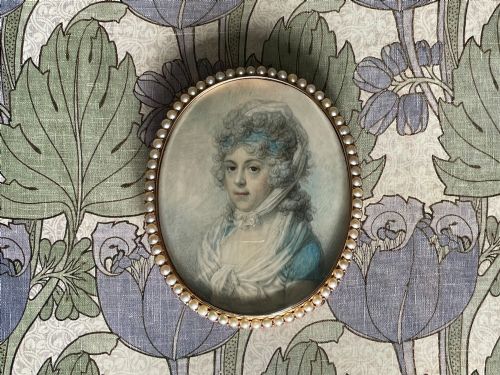
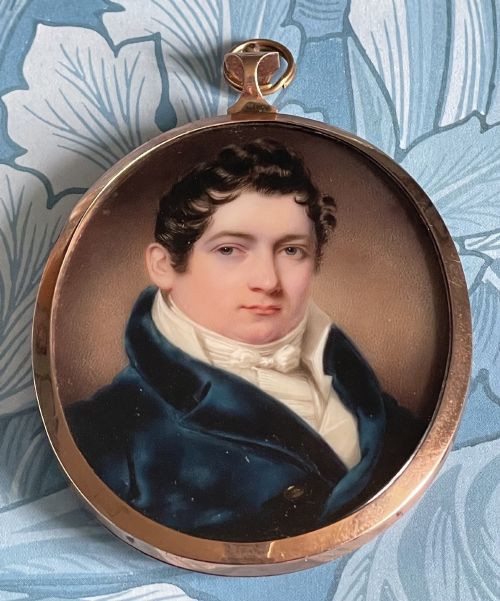
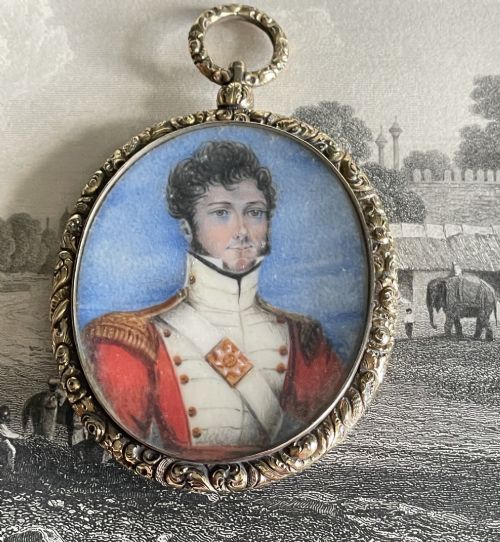
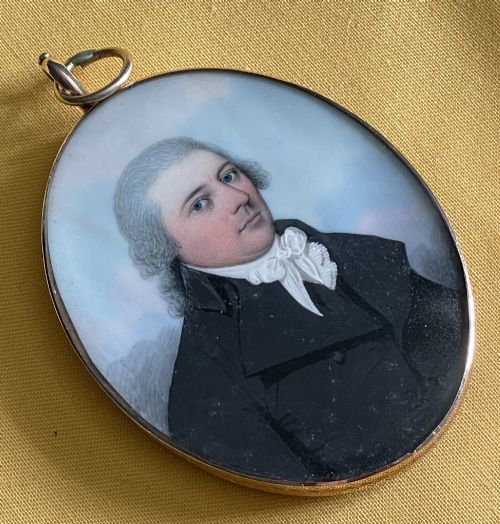
A georgian miniature locket combines portrait painting with wearable jewellery, taking the form of pendants housed in gold or gilt metal frames. The pieces on this page span the eighteenth and nineteenth centuries, including items from the Georgian and Regency periods.
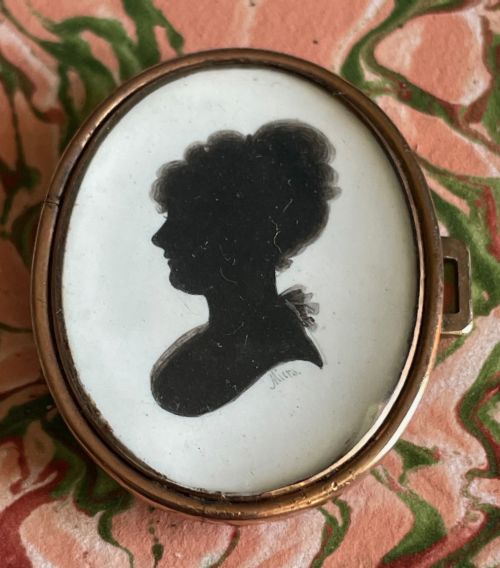
Most examples present a painted face, silhouette or enamel study designed to rest against the wearer's chest. Portrait miniatures and pendant necklaces form the core of these listings, often featuring named sitters or military officers.
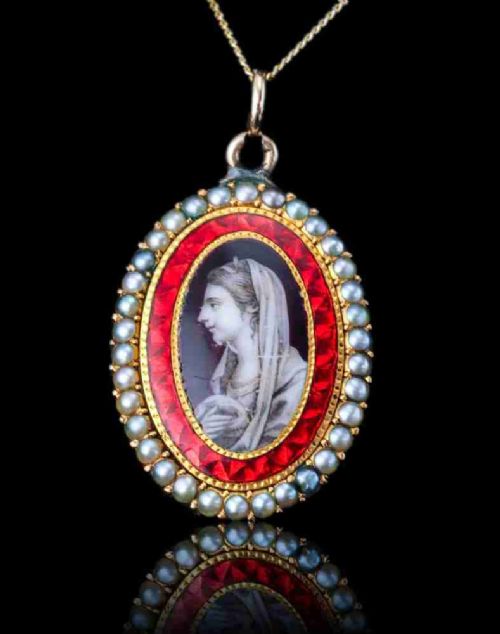
Makers and artists working in watercolour, enamel and pigment produced these small-scale works on ivory, vellum or glass. The resulting objects range from simple silhouette jewellery pieces to elaborate gold frames set with pearls.
Materials and construction
Makers used watercolour, pigment, gouache and enamel to paint likenesses on thin sheets of ivory, glass, vellum or agate panels. These delicate painted surfaces required glass covers to protect the image from moisture and wear.
Frames take shape in gold, including specific grades such as fourteen-carat and nine-carat gold, alongside gilt metal. Some pieces incorporate pearls into the metal surround to frame the portrait subject.
Capt. Claridge and Felicity Trotter peer out from these centuries-old frames alongside nameless country gentlemen.
Distinctions in quality
The quality and weight of the metal frame, whether gold or gilt metal, alongside integrated decorative elements like pearls, define the tier of the piece. Intact glass panels and original backing structures preserve the integrity of the locket.
Henry Bone ARA·Charles Shirreff·Richard Cosway·John Miers·John C D Engleheart·Christian Friedrich Zincke·Nicolas Freese·Elizabeth Hudson·George Engleheart·James Ferguson·Emma Kendrick·William Grimaldi·Henry Jacob Burch·John Inigo Wright·Edward Pugh·Samuel Cotes·Isaac Wane Slater·AE Chalon·John Barry
The Georgian Miniature Locket Glossary
- Miniature painting
- A small-scale portrait executed with fine brushes on materials such as ivory, vellum or card. These works demanded exceptional skill to render facial likenesses in a restricted compass.
- Silhouette
- A solid dark profile portrait, often cut from paper or painted on glass or card. John Miers stands out among makers working in this monochromatic medium.
- Vellum
- A fine parchment prepared from calfskin, utilised as a painting surface for portrait miniatures before the widespread adoption of ivory.
- Enamel
- A material created by fusing powdered glass to a metal substrate through firing, producing a durable, glossy coloured surface used for portraiture.
- Agate panel
- A polished slice of chalcedony stone used occasionally as a firm background support for miniature portrait paintings.
Georgian Miniature Locket: Frequently Asked Questions
What is inside a georgian miniature locket?
These pieces typically enclose a hand-painted portrait of an individual, rendered in watercolour on ivory, enamel, or pigment on glass. Many depict named gentlemen, ladies, or military officers from the eighteenth and nineteenth centuries.
Some examples contain silhouettes or sepia studies rather than full-colour painted portraits. The imagery served as a personal keepsake or memorial token for the original owner.
How do you wear a georgian miniature locket?
Pendant formats were designed to be suspended from a neck chain or ribbon, resting close to the wearer. The metal loops and suspension rings attached to the frames facilitated this close placement.
Today, owners continue to wear them on suitable gold chains or display them within dedicated collections. Care must be taken to protect the delicate glass and precious metal settings during wear.
How do I date a georgian miniature locket?
Dating relies on the costume, hairstyle, and painting technique visible in the portrait, alongside the style of the gold or gilt metal frame. Pieces from the seventeen-hundreds often exhibit distinct attire compared to Regency or early nineteenth-century examples.
Signatures or attributions to known artists recorded in the evidence help narrow the production period. Hallmarks on gold frames also provide fixed chronological markers.
Are these lockets made of real gold?
Frames vary between solid gold, specific gold standards such as fourteen-carat and nine-carat, and gilt metal alternatives. The listings distinguish between precious metal content and base metals covered in gold wash.
Higher-tier pieces frequently incorporate precious metals alongside decorative elements like pearls. Examining the metal colour and weight helps identify the material used.