


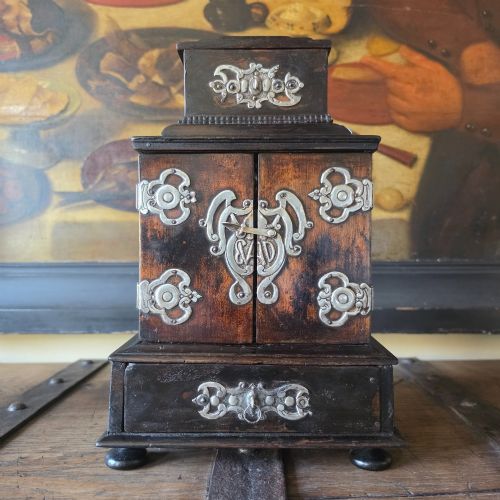
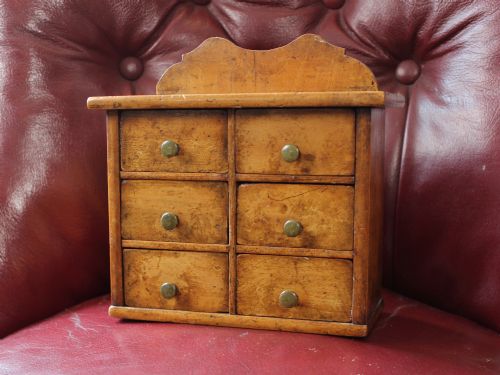
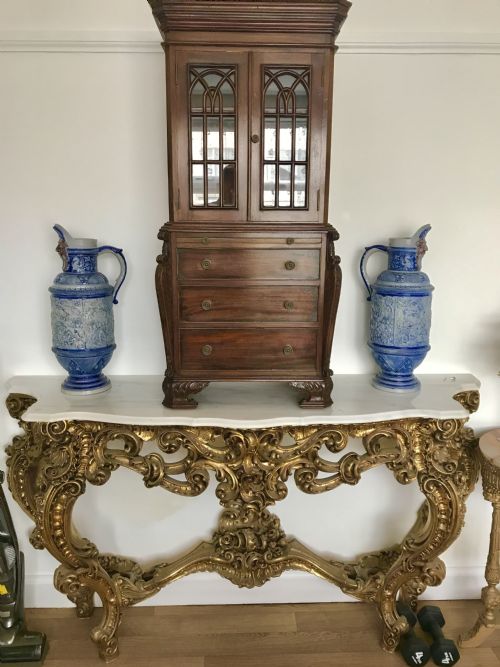

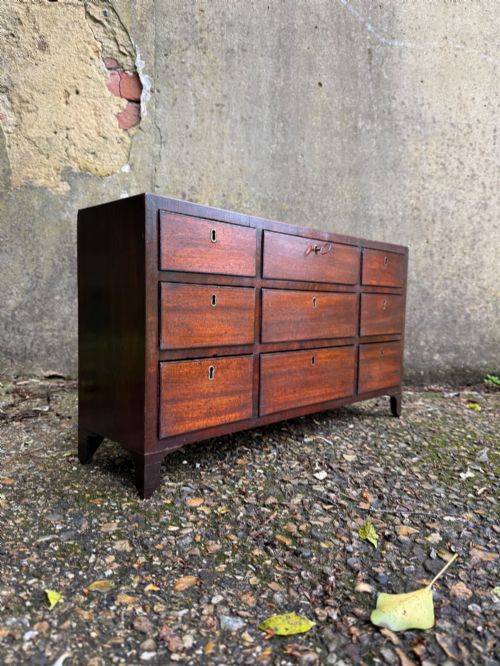

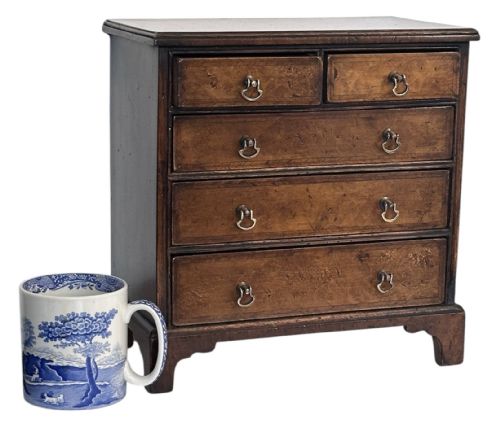
Georgian Miniature Cabinet
A georgian miniature cabinet offers compact ingenuity, gathering the meticulous joinery of full-scale furniture into diminutive tabletop and wall-hanging proportions.
Georgian Miniature Cabinet
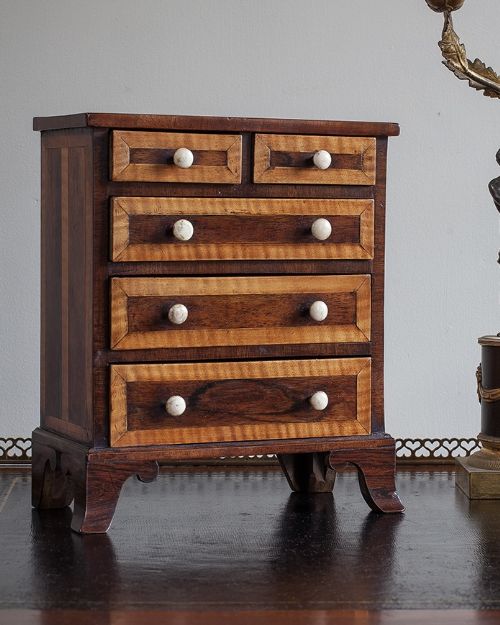
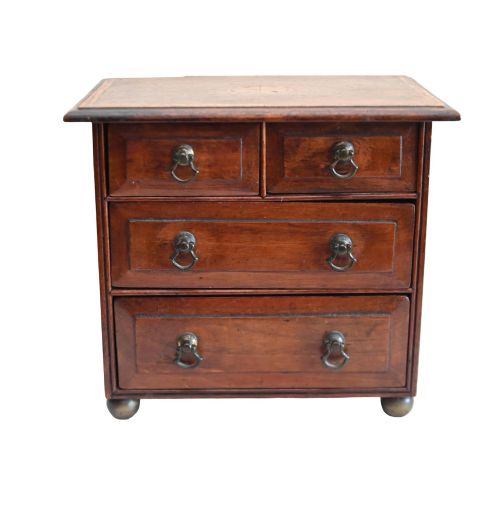
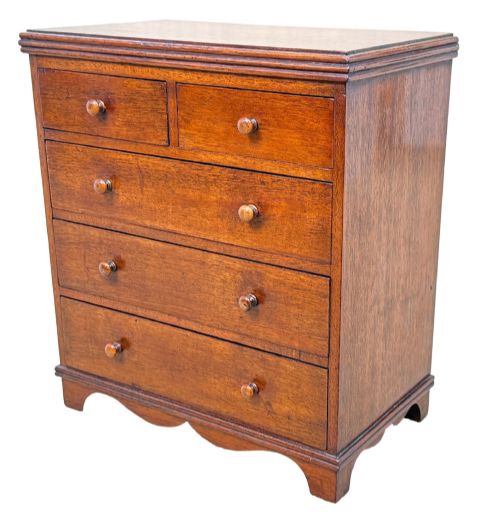
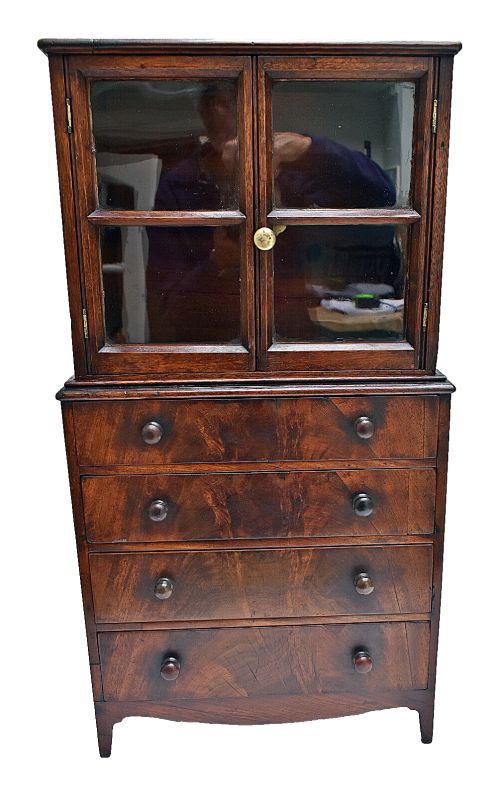
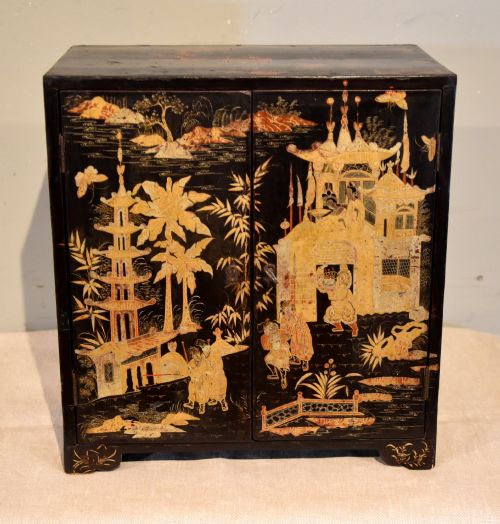
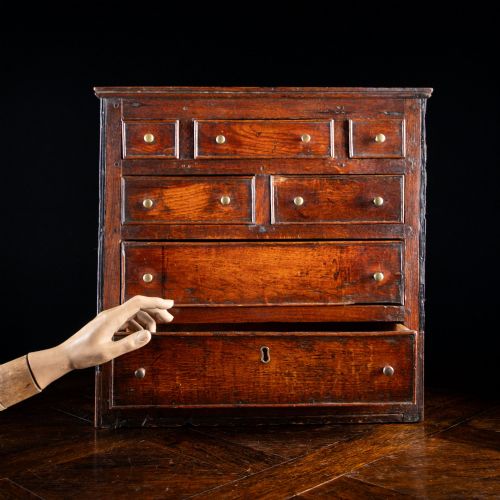
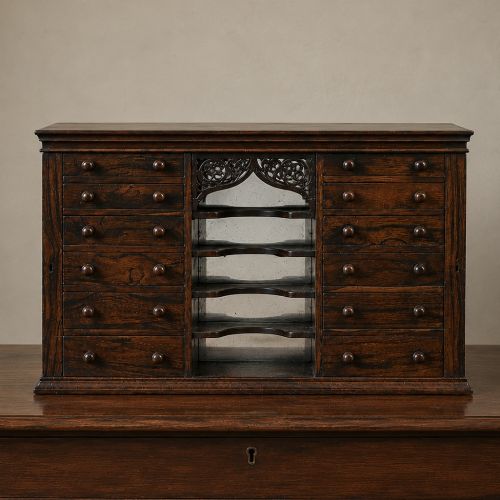
A georgian miniature cabinet primarily encompasses small chests of drawers, apprentice pieces, table cabinets, and spice drawers originating from the eighteenth and nineteenth centuries. These items serve as functional storage on a reduced scale, mirroring domestic furniture types such as bowfront chests, kneehole desks, and bureau bookcases.
The pieces emerge from distinct regional traditions, including Scottish and Welsh workshops alongside English examples. Makers constructed them from sturdy woods like oak, mahogany, and fruitwood to house small valuables, spices, or documents.
Buyers encounter variations ranging from wall-hanging spice boxes to glazed top chests and tallboy chests. The selection draws heavily upon Georgian, Regency, and Victorian stylistic influences.
Materials and Technique
Cabinet makers utilised dense hardwoods such as mahogany, oak, rosewood, and walnut, often pairing them with secondary woods like pine. Surfaces received finishes including French polish, while finer examples incorporated brass hardware, gold leaf, bone, and mother of pearl inlay.
Construction relied on traditional joinery methods scaled down for miniature proportions, including dovetail joints for drawer boxes. Glazed panels, mirrored doors, and delicate mouldings required precise hand woodworking techniques akin to those used for full-sized furniture.
Georgian Miniature Cabinet Retail Price Guide 2026
Typical asking prices for georgian miniature cabinet among the pieces listed under this phrase on Sellingantiques today, from the lower quarter to the upper quarter. They describe what is for sale here now, not the wider market.
Periods represented include the 18th century, Georgian, Regency, Victorian, and 1910.
Proportion and Finish
The standard of a georgian miniature cabinet rests on the fidelity of its proportions and the skill of its diminutive joinery. Pieces that maintain correct architectural scale and tight dovetailing demonstrate superior workshop origin compared to crude constructions.
Material selection and decorative restraint distinguish finer examples. The integration of figured veneers, intact brass handles, and subtle inlay elevation separates utilitarian spice boxes from sophisticated collector cabinets.
The Georgian Miniature Cabinet Glossary
- Apprentice piece
- A small item of furniture demonstrated to a guild to prove a tradesman's competence. These objects display the full range of advanced joinery techniques scaled down to cabinet size.
- Bowfront
- A curved furniture front curving outward at the centre. This shape appears frequently on miniature chests of drawers from the Georgian period.
- Table cabinet
- A small storage piece designed to sit upon a desk, table, or sideboard. Such items often feature internal compartments for jewellery, letters, or specimens.
- Kneehole desk
- A small writing desk featuring a recessed central space for the user's legs, flanked by pedestals of drawers. Miniature versions replicate this complex configuration in tabletop dimensions.
Georgian Miniature Cabinet: Frequently Asked Questions
What were miniature cabinets used for?
These small cabinets served multiple domestic purposes, from storing spices and culinary herbs in the kitchen to holding precious jewellery, letters, or small collectables in the parlour.
Craftsmen also produced them as salesmen's samples or apprentice pieces to demonstrate mastery of joinery techniques to guild masters.
How do I date a miniature chest?
Dating relies on examining the secondary timbers, drawer construction, and stylistic vocabulary. Eighteenth-century pieces typically show hand-cut dovetails in oak or walnut, while nineteenth-century examples frequently utilise mahogany and machine-sawn elements.
Changes in handles, locks, and veneer choices further anchor the piece to Georgian, Regency, or Victorian periods.
Where should I place a table cabinet?
Table cabinets and small chests suit placement on top of sideboards, chests of drawers, or sturdy writing desks where their detailed joinery remains visible at eye level.
Wall-hanging spice boxes require secure mounting on kitchen or study walls using appropriate fixings to support the weight of the timber.
Are apprentice pieces real furniture?
Apprentice pieces are fully functional items constructed to exact scale by trainees learning cabinet making. They feature the same drawer configurations, working locks, and timber construction as domestic furniture.
Their reduced size reflects the practical constraints of workshop training rather than any toy-like intention.