


Georgian Marquetry Tea Chest
A georgian marquetry tea chest organises precious leaves with intricate wood inlay, bringing refined detail and practical history to a room.
Georgian Marquetry Tea Chest
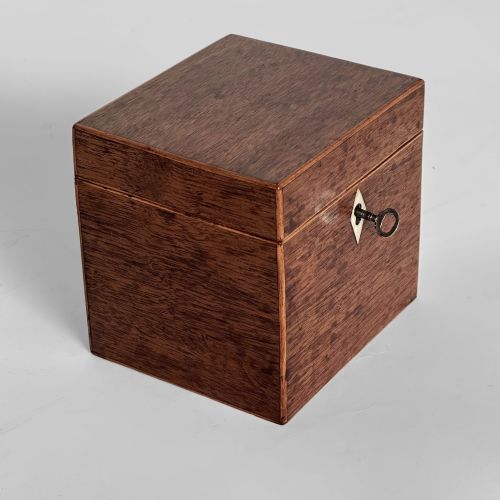
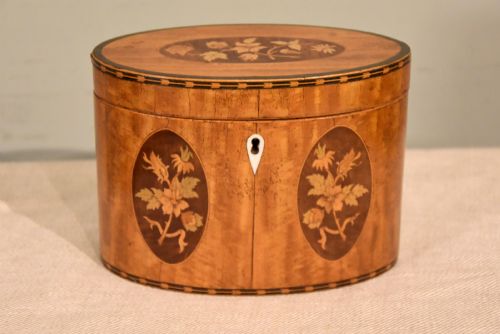
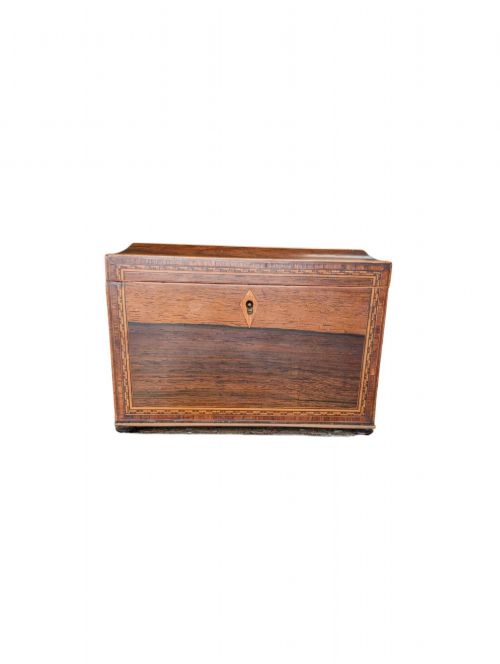
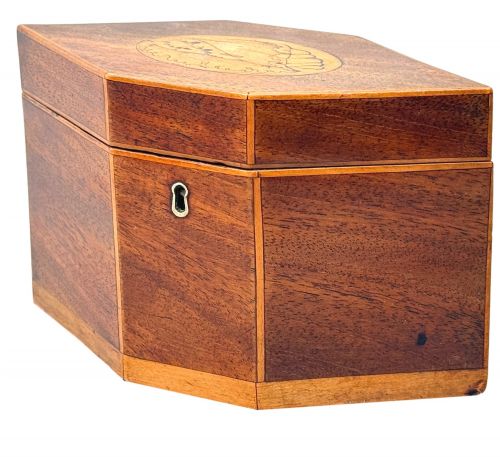
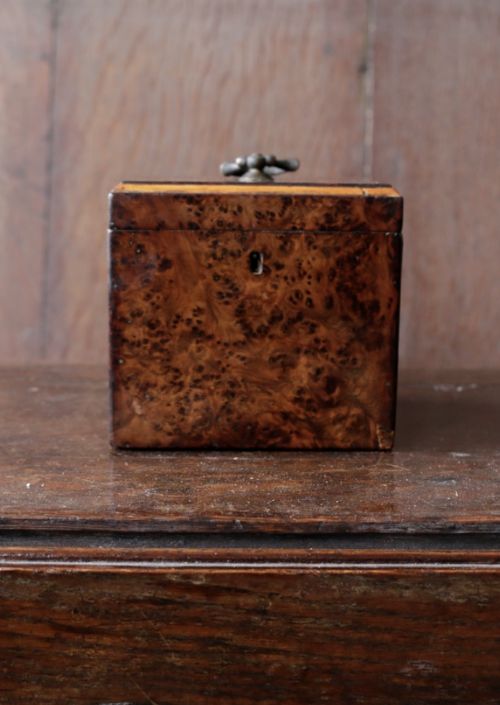
A georgian marquetry tea chest brings together finely constructed tea caddies, decorative boxes, and teapoys intended to store loose leaf tea safely under lock. These pieces appear across 18th century, Regency, and Victorian periods, often taking hexagonal, oval, or rectangular forms.
The assortment relies heavily on mahogany, satinwood, rosewood, and harewood, frequently enhanced by wood inlay, brass, bone, and mother-of-pearl details. Surviving examples reflect George III, George IV, and Sheraton styles alongside Tunbridge Ware decorative techniques.
How They Were Made
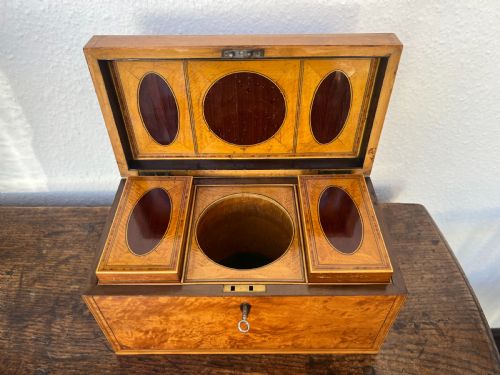
Cabinetmakers constructed these chests using dense timbers such as mahogany, rosewood, and harewood, alongside lighter woods like satinwood and boxwood for contrasting panels. Fitted interiors often housed compartments for leaf storage and mixing bowls.
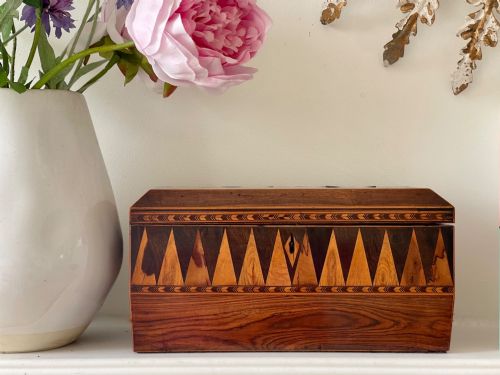
Makers applied intricate wood inlay, butterfly motifs, and shell patterns directly onto the timber surfaces. Specialised techniques like Tunbridge Ware integrated tiny coloured wood blocks to create geometric mosaics.
What Varies In Quality
The precision of the wood inlay and the crispness of butterfly and shell motifs define the standard of execution. Timbers selected for the outer case, from burr yew to partridge wood and gonçalo alves, display varying depth of grain and natural figure.
Complexity of form distinguishes simple rectangular containers from hexagonal, octagonal, or sarcophagus shapes equipped with fitted interiors and original brass hardware.
The Georgian Marquetry Tea Chest Glossary
- Marquetry
- Decorative veneer work arranged in pictorial or geometric patterns on a wooden ground. This technique uses contrasting woods and natural materials to form detailed surfaces.
- Teapoy
- A small stand or table designed to support a tea chest. These elevated pieces often feature sturdy pedestals or multiple legs.
- Tunbridge Ware
- Woodworking characterised by mosaic patterns assembled from thousands of tiny tinted wood segments. The resulting designs typically depict geometric borders or architectural views.
- Satinwood
- A durable timber possessing a lustrous golden yellow sheen. Cabinetmakers favoured it for light-coloured panels and fine inlay work.
Georgian Marquetry Tea Chest: Frequently Asked Questions
What is a georgian marquetry tea chest?
A georgian marquetry tea chest is a decorative lidded container designed to hold loose leaf tea securely in period dining rooms and drawing rooms. These boxes feature detailed wood inlay set into timbers such as satinwood, mahogany, and rosewood.
Inside, partitioned compartments kept different tea varieties separated and protected from moisture and odours. Many examples also include fitted glass mixing bowls and small locking mechanisms.
How do you date a tea chest?
Dating relies on the combination of wood species, construction methods, hardware, and decorative styles visible on the piece. Eighteenth-century examples frequently employ satinwood and harewood with simple geometric or shell inlays.
Later Regency and Victorian pieces often incorporate rosewood, brass stringing, or sarcophagus forms standing on distinct bracket feet or pedestals. Examining the interior fittings and secondary woods provides further chronological clues.
Where were tea chests kept?
Tea chests traditionally rested on sideboards, tea tables, or dedicated teapoy stands within the principal entertaining rooms of a Georgian or Regency household. Because tea was an expensive commodity, the container stayed locked until the mistress of the house dispensed the leaves.
When not in use on surface display, larger teapoys and chests sat in parlours or drawing rooms as decorative furnishings that showcased the owner's taste and wealth.
What woods were used for inlay?
Cabinetmakers utilised a wide palette of contrasting timbers to create detailed marquetry designs on tea chests. Boxwood, harewood, satinwood, and various fruitwoods provided bright tones for floral, butterfly, and shell motifs.
Darker woods like mahogany, rosewood, and partridge wood formed the surrounding background fields. Bone and mother-of-pearl details occasionally supplemented the wooden elements for added contrast.