


Georgian Marine Painting
Georgian marine painting captures the drama of naval warfare, bustling harbours and coastal shipping on canvas.
Georgian Marine Painting
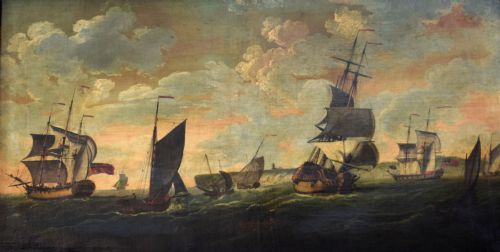
A georgian marine painting portrays ships at sea, naval battles, harbour scenes and coastal landscapes from the eighteenth and early nineteenth centuries. These works record historic engagements, warships with raised sails and local fishing boats navigating choppy waters.
The pieces on this page are oil paintings on canvas and watercolours, frequently housed in giltwood frames. You encounter depictions of named vessels like HMS Swift and HMS Queen Charlotte alongside anonymous coastal views.
Originating across the Georgian and Regency periods, these oil paintings range from mid eighteenth century seascapes to early nineteenth century depictions of maritime trade and naval triumphs.
Materials and construction
These works are executed in oil paint on canvas or watercolour on paper, capturing intricate details of rigging, cannon and coastal figures. Artists applied rich pigments to build up the movement of water and the atmospheric conditions of the sky.
The paintings are typically presented in giltwood or gesso frames, often constructed from wood with decorative gilding that complements the scale and period of the artwork.
Georgian Marine Painting Retail Price Guide 2026
Typical asking prices for georgian marine painting among the pieces listed under this phrase on Sellingantiques today, from the lower quarter to the upper quarter. They describe what is for sale here now, not the wider market.
Listings feature oil paint, watercolour, canvas, wood, giltwood and gesso across the eighteenth and nineteenth centuries.
Judging quality in marine art
Quality rests upon the artist's ability to render nautical architecture, maritime rigging and the restless movement of the sea with precision. Works attributed to known hands or depicting specific historical vessels demonstrate a higher level of compositional ambition.
George Morland·Samuel Owen·Francis Holman
The Georgian Marine Painting Glossary
- Giltwood
- Wood carved and coated with gold leaf or a gold coloured finish. This material is standard for the ornate frames enclosing period oil paintings.
- Oil on canvas
- Pigments bound in a drying oil applied to a stretched fabric support. This combination allowed artists to achieve deep tonal gradations in seascapes.
- Seascape
- A work of art depicting the sea, ships or coastal views. These subjects formed a major category of British painting during the eighteenth and nineteenth centuries.
- Regency
- The period in British history from 1811 to 1820, spanning the end of the Georgian era. Paintings from this time often exhibit refined draughtsmanship and dramatic lighting.
Georgian Marine Painting: Frequently Asked Questions
What subjects appear in these paintings?
These works depict warships, naval battles, harbour scenes, coastal landscapes and fishing vessels navigating coastal waters.
They record specific historic ships and naval engagements alongside everyday maritime commerce of the period.
How do I date a marine painting?
Dating relies on the rigging and design of the vessels depicted, the style of the brushwork, and the framing materials.
Evidence from canvas construction and period inscriptions also help establish whether a work belongs to the eighteenth century or the Regency era.
Are these works painted on canvas?
Most examples utilise oil paint on stretched canvas as their primary medium for capturing maritime scenes.
Watercolour on paper also appears among nineteenth century works attributed to period artists.
How should I display a giltwood frame?
These frames require stable indoor humidity away from direct sunlight to preserve the gilt wood and gesso surfaces.
Their substantial weight necessitates secure wall fixings suited to heavy oil paintings.