


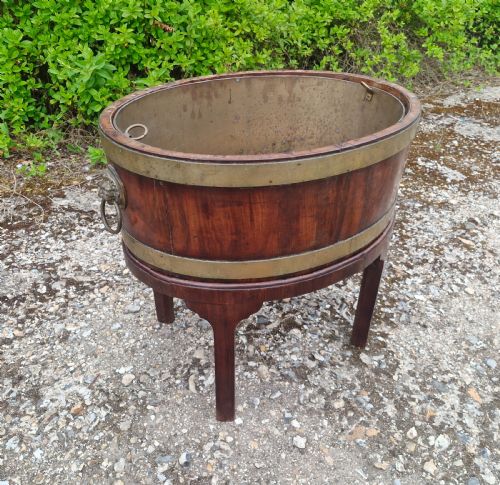


Georgian Mahogany Wine Cistern
A georgian mahogany wine cistern brings serious presence to a room, serving as the ultimate container for chilling bottles with historic elegance.
Georgian Mahogany Wine Cistern
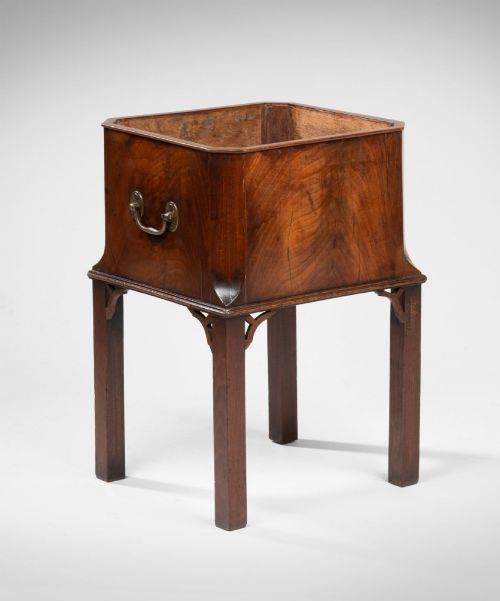
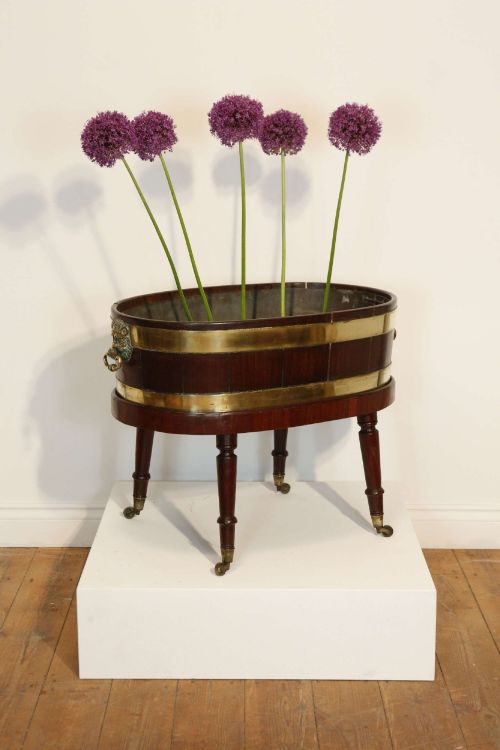
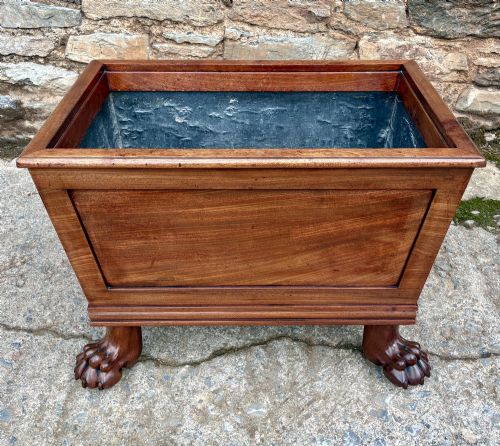
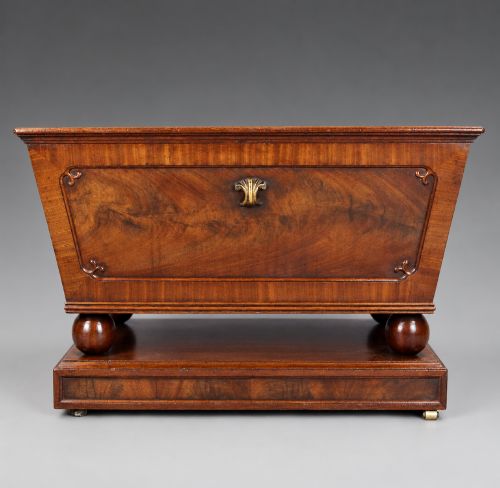
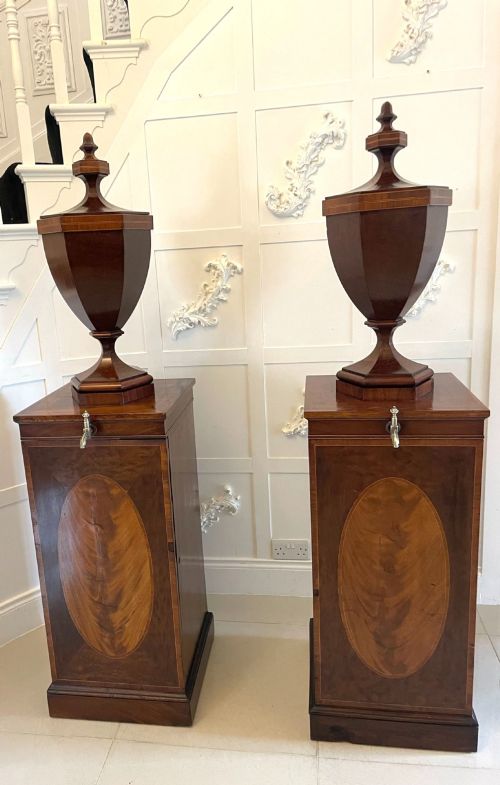
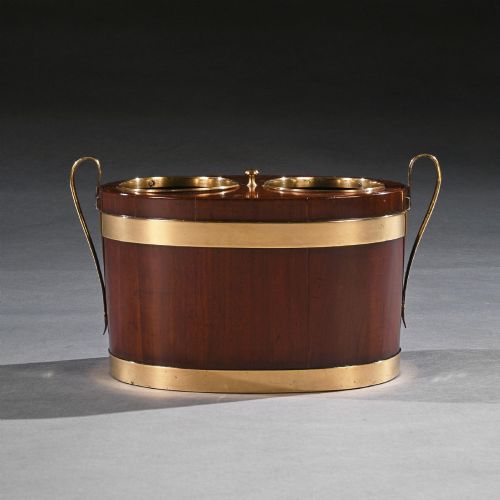
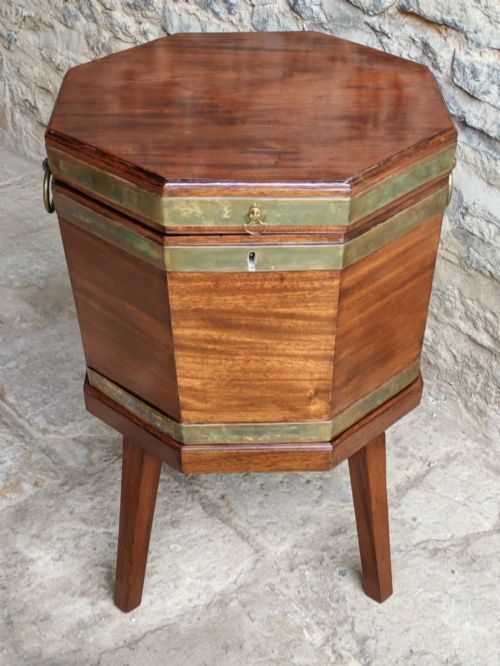
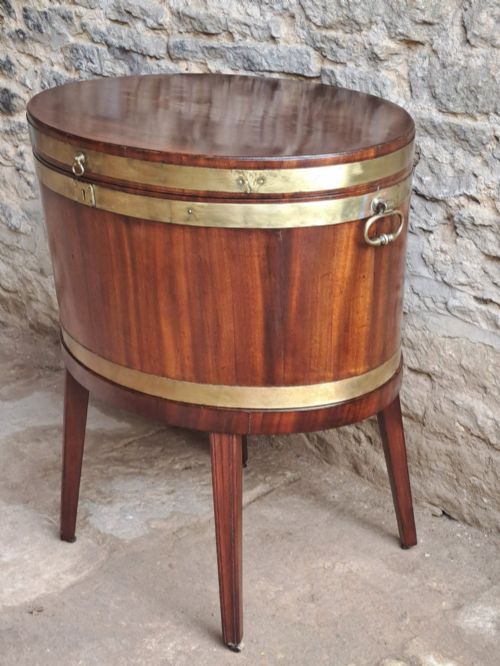
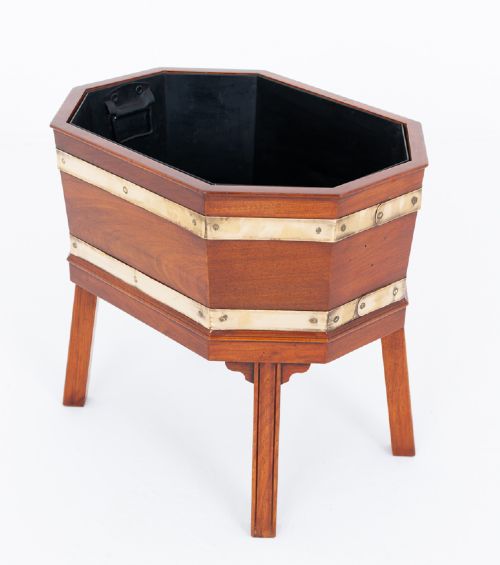
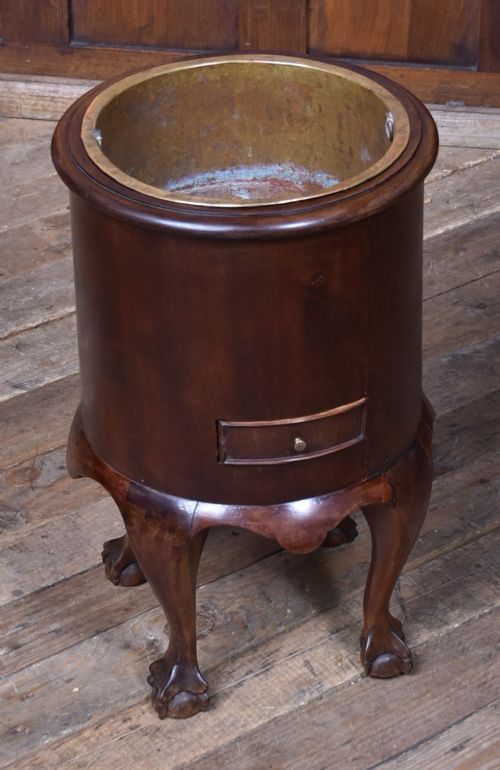
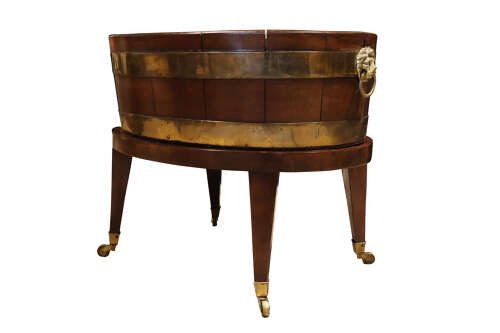
A georgian mahogany wine cistern takes several distinct shapes across the eighteenth and nineteenth centuries, ranging from oval table vessels to grand urns on pedestals and coopered buckets on stands. These pieces date principally from the Georgian, George III, and Regency periods, though later revivals also appear.
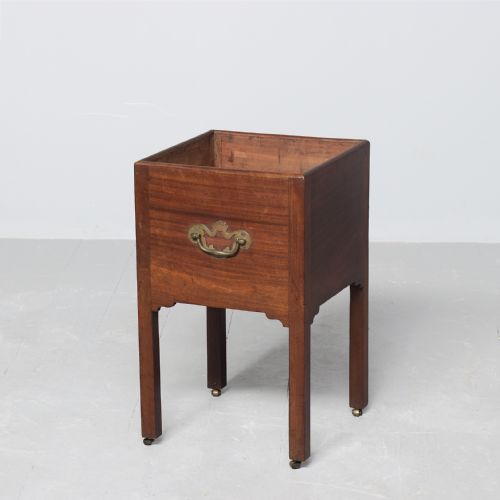
The most common forms on this page include brass-bound oval coolers and cellarettes, alongside occasional examples adapted as plant jardinières. Makers constructed them to hold ice and bottles during formal dining, reflecting the elaborate hospitality customs of the era.
Construction and materials
Craftsmen built these vessels primarily from solid mahogany and rich flame mahogany, often incorporating contrasting boxwood inlay or warm walnut accents. Metal components played an essential structural and decorative role, with heavy brass bands securing the staves and watertight zinc linings protecting the wood from melting ice.
Cooperage techniques borrowed from barrel-making created the sturdy curved bodies of bucket-style coolers, while finer cabinetmaking methods shaped the elegant oval vessels and matching pedestals. Skilled joinery ensured these heavy containers remained stable even when filled with ice and heavy glass bottles.
Georgian Mahogany Wine Cistern Retail Price Guide 2026
Typical asking prices for georgian mahogany wine cistern among the pieces listed under this phrase on Sellingantiques today, from the lower quarter to the upper quarter. They describe what is for sale here now, not the wider market.
The listings span the eighteenth and nineteenth centuries, featuring mahogany, brass, zinc, and boxwood inlay across various oval and coopered forms.
Judging quality and character
Quality rests heavily on the depth of the mahogany grain, the crispness of any boxwood inlay, and the originality of the brass hoops and handles. Pieces retaining their original stands or pedestals command greater interest among collectors than those separated from their bases over time.
Proportion and execution also define the better examples, where careful attention to brass binding and interior zinc linings reveals the hand of a premier workshop rather than a standard commercial maker.
Gillows·Samual Norman
The Georgian Mahogany Wine Cistern Glossary
- Cellarette
- A lockable container used for storing and cooling wine bottles in the dining room. These sturdy cabinets often featured internal divisions and sat on the floor beneath a sideboard.
- Coopered
- Built using curved wooden staves bound together by metal bands, following traditional barrel-making techniques. This method ensured watertight integrity for holding melting ice.
- Jardinière
- An ornamental pot or stand designed to hold plants or flowers. Many surviving wine coolers were later repurposed for this role in nineteenth-century interiors.
- Flame mahogany
- Timber cut from the fork of the mahogany tree, producing a dramatic, flickering flame-like grain pattern. Cabinetmakers reserved this prized veneer for the most prominent exterior surfaces.
Georgian Mahogany Wine Cistern: Frequently Asked Questions
How were wine cisterns used in the eighteenth century?
These vessels stood beneath the sideboard or on the floor during grand dinners, packed with ice to chill wine before serving. Servants drew bottles directly from the cold water and ice mixture as the meal progressed.
They formed part of an elaborate dining ritual where display mattered as much as temperature control, demonstrating the host's wealth through fine mahogany and gleaming brass.
Can I use an antique wine cooler as a planter?
Many historic examples feature zinc liners that protect the timber from moisture, making them practical for holding potted plants today. This conversion has a long history, with numerous pieces adapted for indoor greenery since the nineteenth century.
Using a protective inner pot ensures the original mahogany and internal metal linings remain undamaged by damp soil and regular watering.
How do I distinguish Regency pieces from Georgian ones?
Georgian examples often favour classical symmetry, subtle boxwood stringing, and traditional oval shapes associated with the eighteenth century. Cabinetmakers during this era focused on restrained elegance and sturdy brass banding.
Regency pieces frequently display bolder architectural details, heavier mounts, and richer flame mahogany veneers influenced by classical antiquity and French taste.
Where should I place a wine cistern in a modern home?
These substantial pieces anchor a dining room or living space effectively when placed against a panelled wall or beside a large sideboard. Their rich timber tones pair well with both traditional and contemporary interior schemes.
Freestanding oval buckets and urns also work well as standalone sculptural elements in entrance halls or large reception rooms.