




Georgian Mahogany Wall Barometer
A georgian mahogany wall barometer brings practical science and rich timber grain together on the wall, offering a tangible link to eighteenth and nineteenth-century domestic life.
Georgian Mahogany Wall Barometer
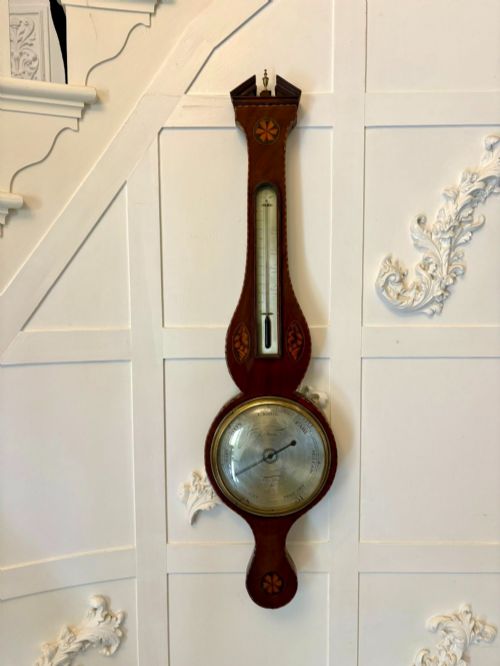
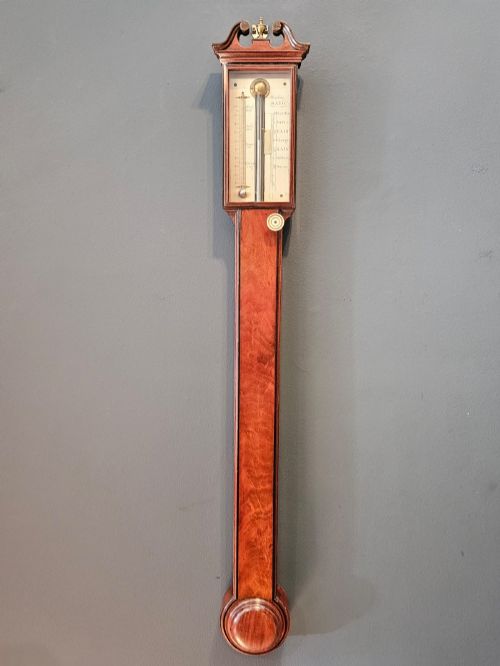
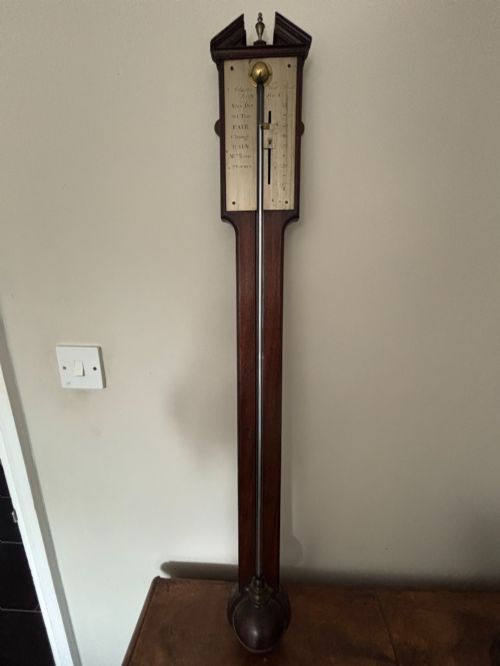
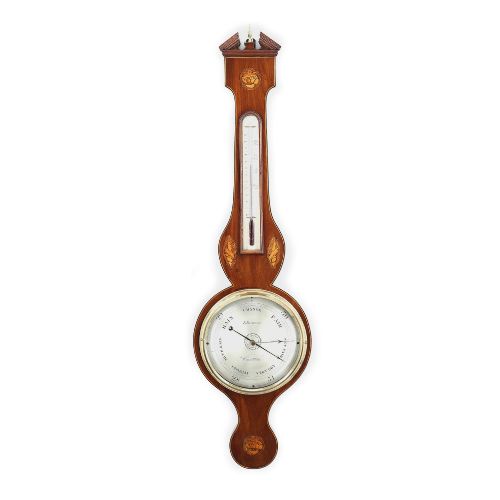
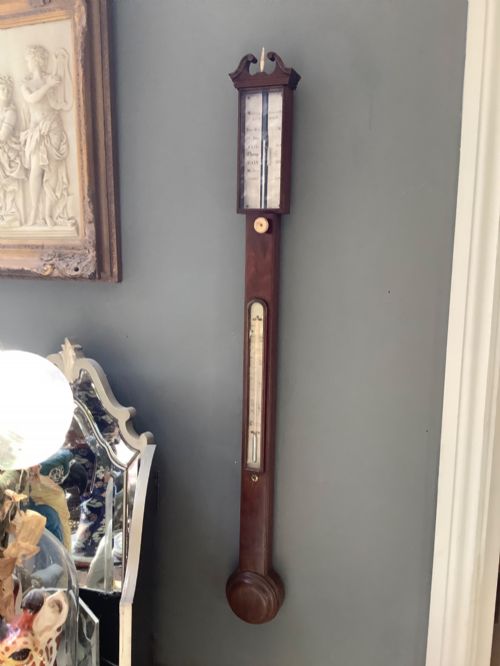
When searching for a georgian mahogany wall barometer, buyers encounter two primary domestic forms: the upright stick barometer and the wider wheel or banjo barometer. These instruments hung in hallways and parlours to measure atmospheric pressure, serving as both scientific tools and decorative furnishings.
The pieces on this page span the Georgian, Regency and Victorian periods, with examples stretching from the eighteenth century into the nineteenth century. Makers from London and various regional towns signed these works, combining timber cases with exposed glass tubes and metal dials.
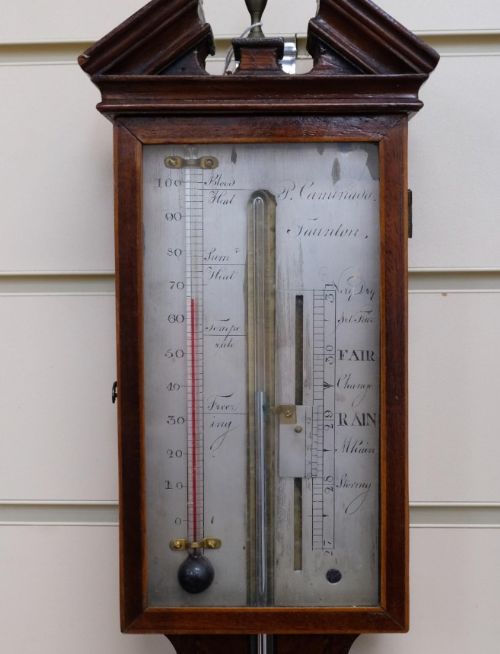
Stick barometers present a narrow, restrained profile often featuring exposed cistern covers and vernier scales, whereas banjo barometers expand at the base to incorporate hygrometers, thermometers or spirit levels. Both variants utilise rich mahogany housing, sometimes enriched with boxwood inlay or marquetry.
How they were made
Cabinetmakers constructed the bodies using solid mahogany, shaping veneers and housings to protect the fragile glass barometer tubes containing mercury. Boxwood stringing and shell inlay frequently decorate the surfaces of banjo and wheel variants.
Graduated scales were engraved onto silvered metal or silvered brass plates, allowing accurate reading of atmospheric changes. Artisans mounted brass indicators, bone adjusters and thermometer scales alongside the main pressure column.
What varies in quality
Quality rests upon the crispness of the dial engraving, the restraint of the cabinetwork, and the originality of the brass fittings and mercury tubes. Signed instruments by notable makers command attention through finer proportions and superior mechanical execution.
The retention of original boxwood inlay, intact architectural pediments, and unaltered glass cistern covers distinguishes superior examples from heavily restored or later replacement pieces.
George Adams London·B. Besozzi of Weymouth·Dollond of London·Ganthony of London·JB Bergna Newcastle·Luisetti of London·Bate of London·Ronchetti of Holborn·L Casatelli Liverpool
The Georgian Mahogany Wall Barometer Glossary
- Stick barometer
- An upright instrument housing a vertical glass tube filled with mercury to measure atmospheric pressure directly against a scale. These form the more restrained style among wall barometers.
- Wheel barometer
- A wider banjo-shaped instrument that uses a pulley and float system to translate mercury movement into the rotation of a pointer around a circular dial. They frequently incorporate secondary dials like thermometers.
- Silvered brass
- A metal dial plate treated with a silver compound to create a bright, legible surface for engraved numbers and inscriptions. Makers used this material for clarity and durability.
- Boxwood inlay
- Contrasting pale wood inserted into channels cut into the darker mahogany case for decorative borders or shell motifs. This technique highlights the craftsmanship of Georgian cabinetmakers.
- Vernier scale
- A small sliding scale device attached alongside the main barometer tube to allow precise reading of atmospheric pressure fractions. It represents the scientific precision built into these instruments.
Georgian Mahogany Wall Barometer: Frequently Asked Questions
What is the difference between a stick and a wheel barometer?
Stick barometers display a tall, narrow wooden trunk where the mercury column reads directly against an exposed scale. They offer a simpler, architectural presence on the wall.
Wheel barometers widen at the base into a circular dial, translating the mercury movement through an internal pulley. This layout allowed makers to add subsidiary instruments like thermometers and hygrometers.
How do I read a mercury barometer?
The mercury column rises and falls within the glass tube in response to atmospheric pressure changes. A vernier scale allows you to take precise measurements of these shifts.
Changes in the reading indicate impending weather shifts, which made these instruments essential household guides in past centuries.
Where should I hang a wall barometer?
Hang your barometer on an interior wall away from direct sunlight, heating vents, and exterior doors. Stable room temperatures ensure the metal and wood components remain protected.
Ensure the wall anchor securely supports the weight of the timber case and glass components.
How can I tell the period of a barometer?
Cabinet styles, dial designs, and signature formats offer clear indicators of age. Earlier Georgian pieces tend toward restrained architectural lines and restrained inlay.
Regency and Victorian examples often introduce more robust proportions, bow fronts, or more ornate floral and shell marquetry patterns.