

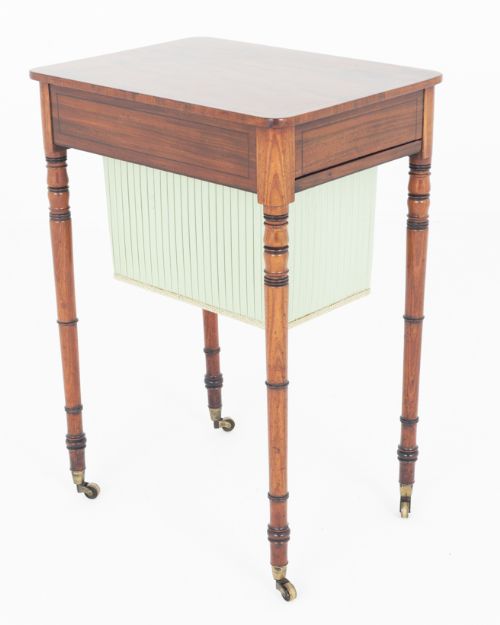


Georgian Mahogany Sewing Box
These georgian mahogany sewing box examples offer clever compartments and elegant stands that turn practical needlework storage into a handsome piece of furniture.
Georgian Mahogany Sewing Box
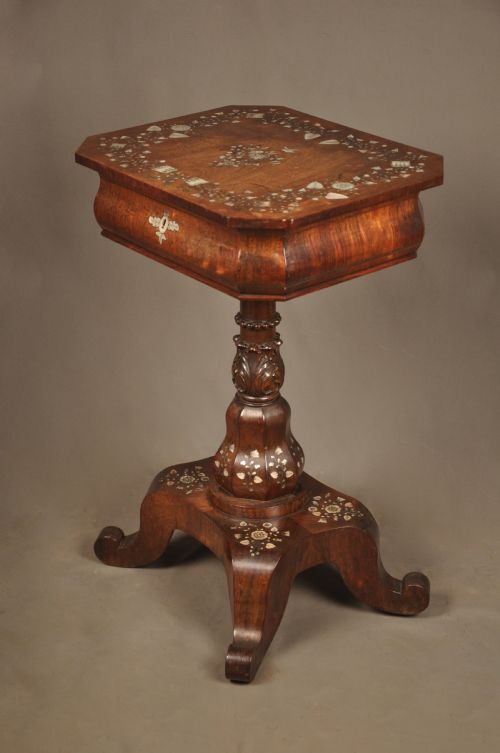
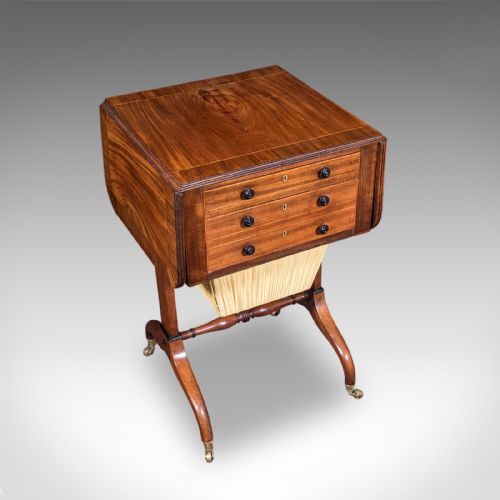
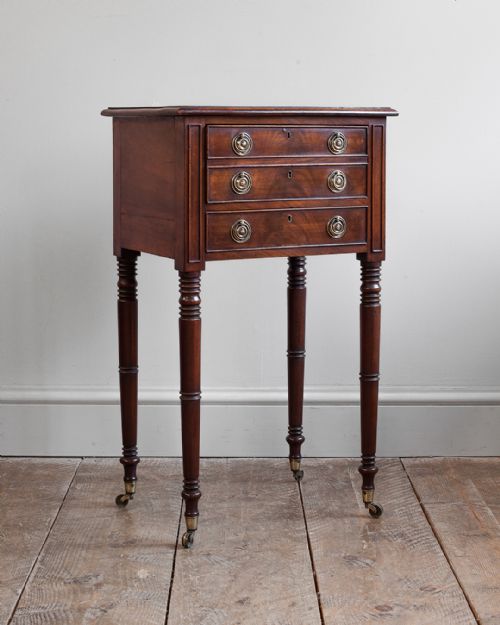
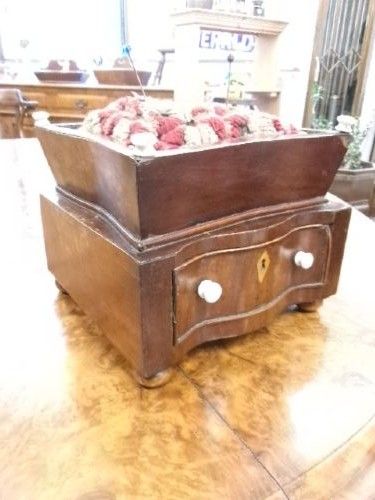
A georgian mahogany sewing box takes several distinct physical forms across this selection, appearing as small tabletop work boxes, freestanding work tables with drop leaves, and pedestal or lyre-ended stands. The pieces serve both functional needlework storage and refined occasional furniture roles within period interiors.
Most items you encounter cluster around the Regency and George III eras of the late eighteenth and early nineteenth centuries. These designs frequently incorporate internal compartments, silk lined bags, and integrated pincushions tailored for domestic sewing tasks.
How They Were Made
Cabinet makers constructed these pieces primarily from solid mahogany and flame mahogany veneers, often accentuating the surfaces with boxwood and satinwood stringing or shell inlay. Structural elements benefit from dense hardwoods that take a sharp edge and a deep polish.
Smaller decorative details rely on contrasting materials including bone for winding spools or pins, alongside brass handles, escutcheons, and paw feet. Fabric interiors utilise silk to line the storage bags suspended beneath the main table bodies.
The inventory spans the Georgian, Regency, William IV, and Edwardian periods, with the majority originating in the nineteenth century.
What Varies in Quality
The choice of timber grain fundamentally dictates visual appeal, with highly figured flame mahogany veneers marking out the finer examples from plain stock. Subtle additions like boxwood stringing and well-executed shell inlays elevate the decorative ambition of individual pieces.
Construction methods also separate standard items from superior productions, particularly in the joinery of internal divided trays and the stability of pedestal or tripod bases. Well-balanced proportions and original brass hardware contribute significantly to a cohesive piece.
The Georgian Mahogany Sewing Box Glossary
- Drop leaf
- A hinged flap on the side of a table that raises to extend the surface area. These leaves are common on work tables designed to hold sewing tasks.
- Work table
- A specialised small table equipped with drawers and hanging fabric bags for storing needlework. These items double as occasional or side tables.
- Stringing
- A narrow inlay of contrasting wood used to outline panels and borders. Boxwood often provides a pale line against dark mahogany.
- Lyre-ended
- A pedestal support shaped in the form of an ancient Greek lyre. This stylistic support appears frequently on Regency work tables.
Georgian Mahogany Sewing Box: Frequently Asked Questions
What is inside a sewing box?
These boxes typically contain partitioned trays designed to organise threads, needles, and small tools. Many include dedicated pincushions and storage wells.
Freestanding versions often feature a fabric bag suspended below the main body to hold ongoing needlework projects.
How do I date these tables?
Dating relies on stylistic markers such as pedestal bases and lyre supports associated with the Regency period, compared to straighter George III legs.
Cabinet timbers and secondary woods also help establish age, alongside construction methods used for the internal compartments.
Where were they placed?
Ladies kept these pieces in parlours, drawing rooms, and bedrooms where needlework and letter writing took place. Their compact footprints suited placement beside armchairs.
Drop leaf and pembroke versions allowed them to expand when in use and tuck away against walls afterward.
Are they sturdy enough for daily use?
Solid mahogany construction provides robust durability for everyday placement as side or lamp tables. The small drawers and compartments remain practical for modern storage.
Care should be taken with delicate internal silk linings and older hinge mechanisms during regular handling.