

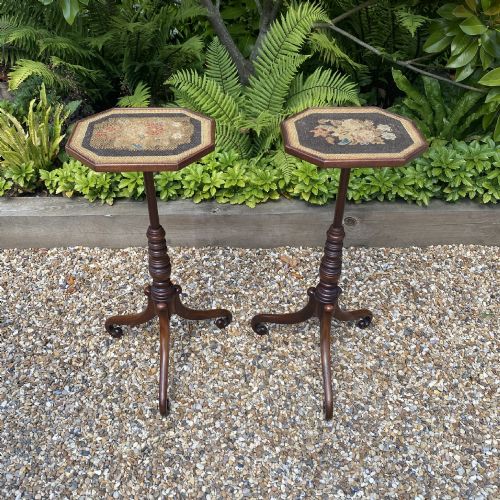

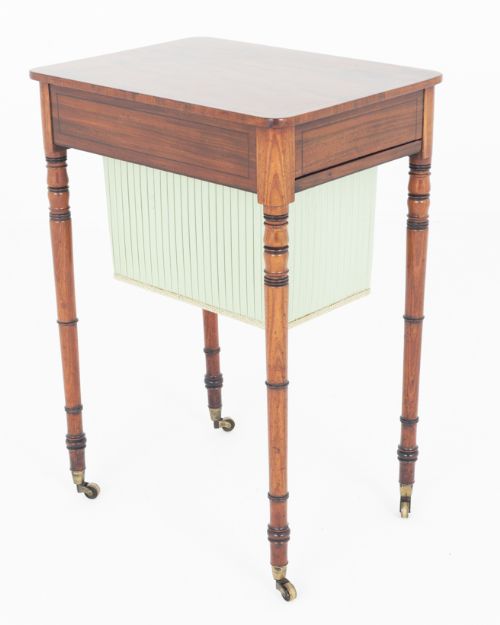
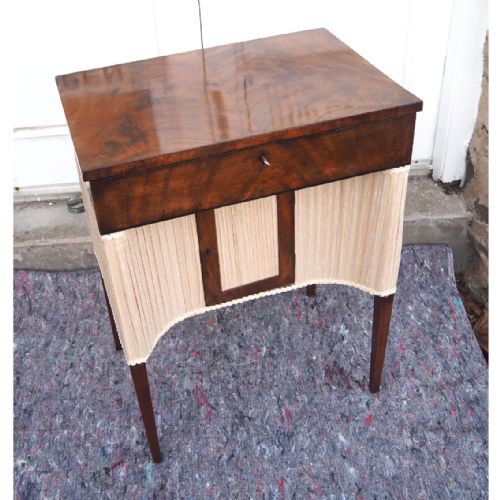


Georgian Mahogany Needlework Table
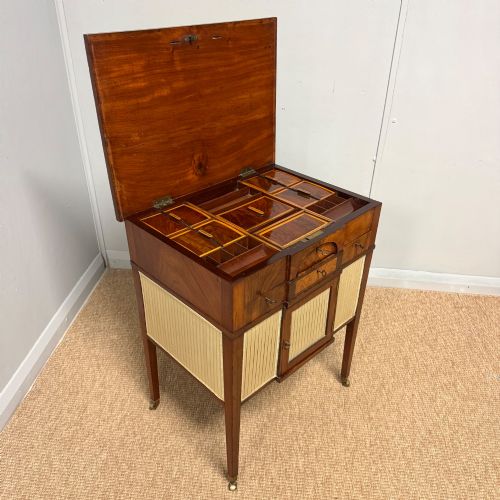
A georgian mahogany needlework table is a clever domestic piece designed for sewing and writing, offering neat compartments for yarn and thread.
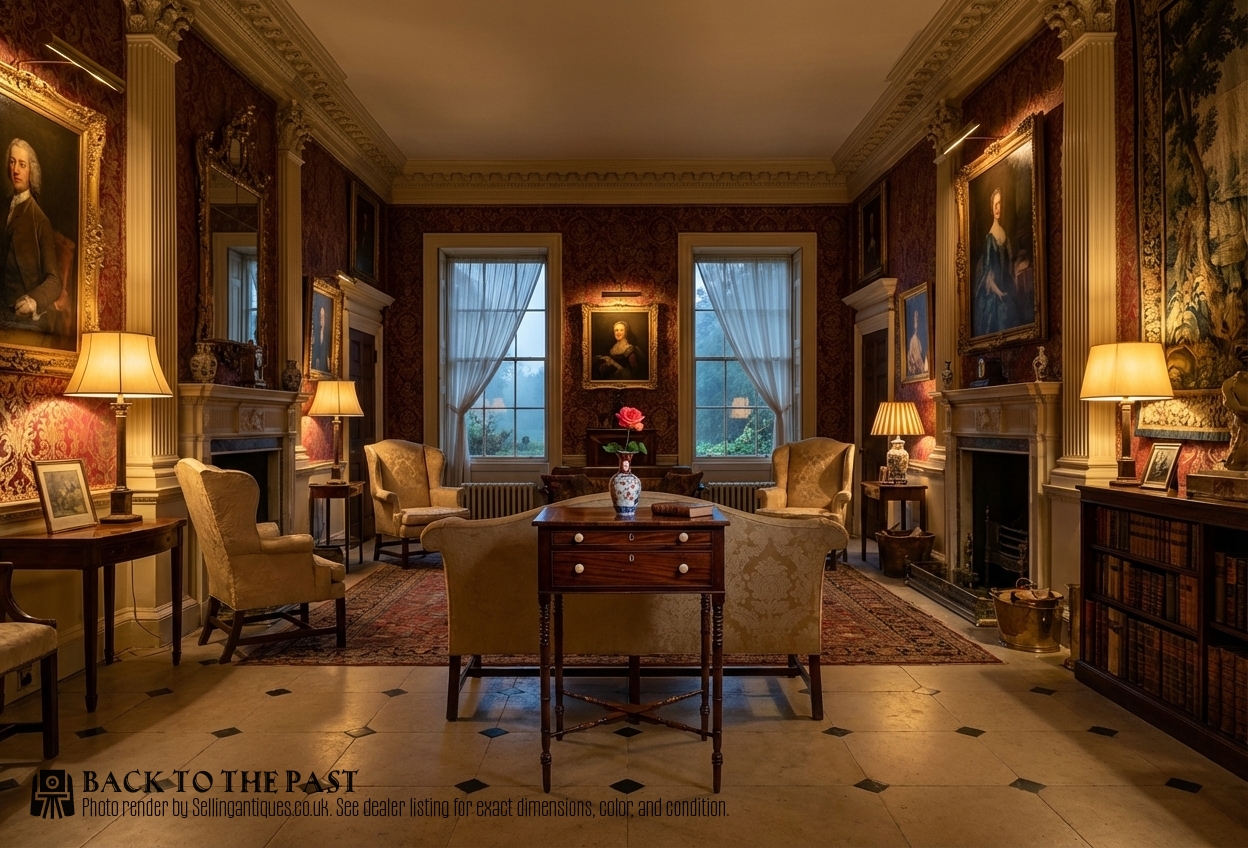
Georgian Mahogany Needlework Table
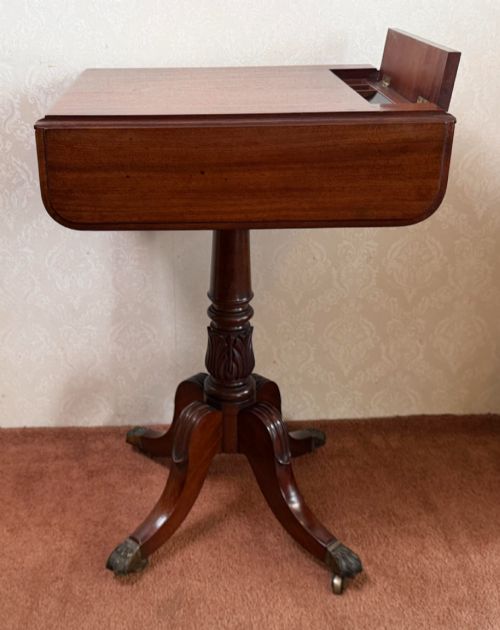
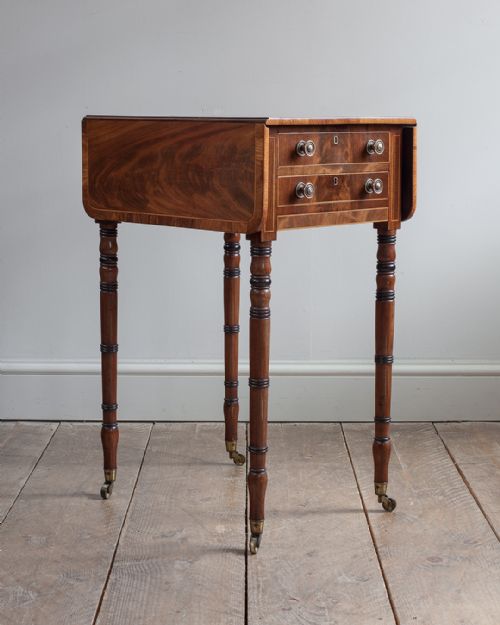
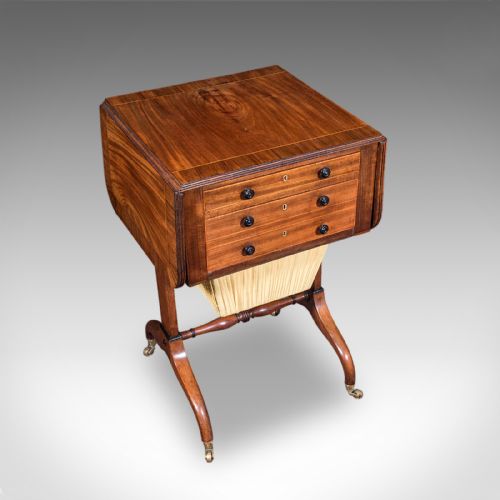
When you examine a georgian mahogany needlework table, you look at compact domestic furniture intended for ladies' private chambers or parlours. The pieces available here span periods from the eighteenth century through the Regency and Victorian eras, taking forms such as drop-leaf sewing tables, work boxes on stands, and pedestal worktables.
The Regency era yields a significant proportion of these examples, featuring lyre ends, brass mounts, and inlaid decoration. Alongside dedicated sewing tables, related forms like occasional side tables, wine tables, and dressing tables appear in the inventory.
Elements of distinction
The distinction between standard and exceptional examples rests in the selection of timber and the precision of the cabinet work. Highly figured flame mahogany and crisp, fine inlay work elevate a piece above simpler variants.
Internal organisation also dictates distinction, with complete fitted compartments and original silk or needlepoint linings demonstrating superior craftsmanship. The architectural execution of supports, whether pedestals, lyre ends, or tapered legs, further establishes the grade of the work.
Georgian Mahogany Needlework Table Retail Price Guide 2026
Typical asking prices for georgian mahogany needlework table among the pieces listed under this phrase on Sellingantiques today, from the lower quarter to the upper quarter. They describe what is for sale here now, not the wider market.
Listings span several eras, including the Georgian, Regency, William IV, Victorian, and Edwardian periods.
Gillows
The Georgian Mahogany Needlework Table Glossary
- Mahogany
- A durable tropical timber known for its rich reddish-brown tone and resistance to warping. Cabinet makers selected it for its stable qualities and capacity to take a fine polish.
- Flame mahogany
- A veneer cut from timber where the grain creates a distinctive flickering, flame-like pattern. It was applied to prominent surfaces like table tops and drawer fronts to catch the light.
- Drop leaf
- A table top design featuring hinged flaps that fold down at the sides. This mechanism allowed the piece to occupy less space when not in use for sewing or writing.
- Work table
- A small domestic table fitted with drawers or an underslung fabric bag for holding sewing materials. These pieces served ladies engaged in needlework, embroidery, and correspondence.
- Stringing
- A thin band of contrasting wood inlaid into the surface of a piece in a shallow groove. It creates delicate geometric borders around drawer fronts and table tops.
Georgian Mahogany Needlework Table: Frequently Asked Questions
What is a georgian mahogany needlework table used for?
These tables were designed primarily for ladies to store sewing equipment, threads, and unfinished needlework projects inside built-in drawers or hanging fabric bags. Many versions also incorporated writing surfaces or folding leaves for correspondence.
Their compact proportions allowed them to sit beside chairs or near windows in private sitting rooms and parlours where domestic handwork took place.
How do I date a mahogany work table?
Dating relies on observing the overall style, leg shape, and secondary materials used in the internal framing. Regency examples often display brass inlay, lyre supports, or pedestal bases, while earlier Georgian pieces tend to feature simpler rectilinear forms or tapered legs.
Cabinet construction methods, such as hand-cut dovetails in the drawers, also help confirm the period of manufacture.
Are these tables sturdy enough for daily use?
These tables were built with practical domestic service in mind, utilising solid timber frames and stable mahogany boards. Their lightweight construction makes them easy to move around a room as needed.
Care should be taken with delicate drop-leaf mechanisms and older fabric interiors, but the structural frames remain robust for holding lamps or small decorative items.
What is the difference between a sewing table and a work table?
The terms are largely interchangeable in historical descriptions, as both refer to small tables equipped for needlework and domestic crafts. Some specific variants feature specialised internal compartments for spools and needles, while others prioritise a pull-out fabric bag.
Both forms served the same social and practical functions in domestic interiors from the eighteenth century onward.