
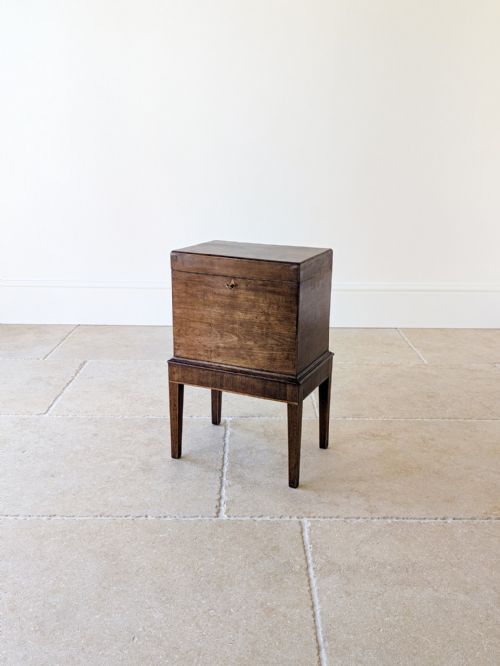
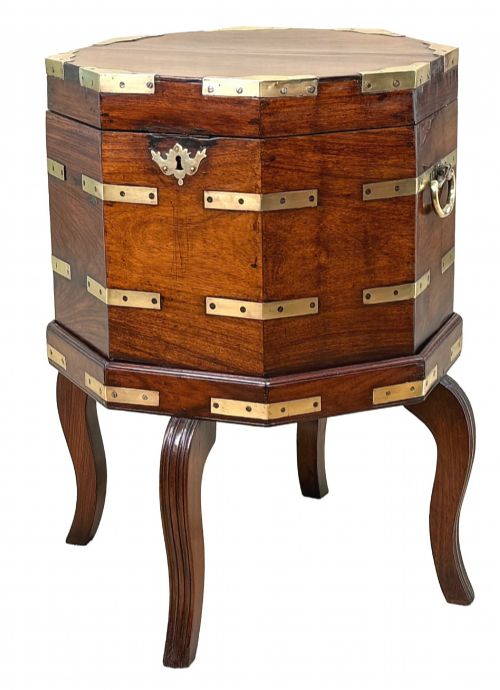
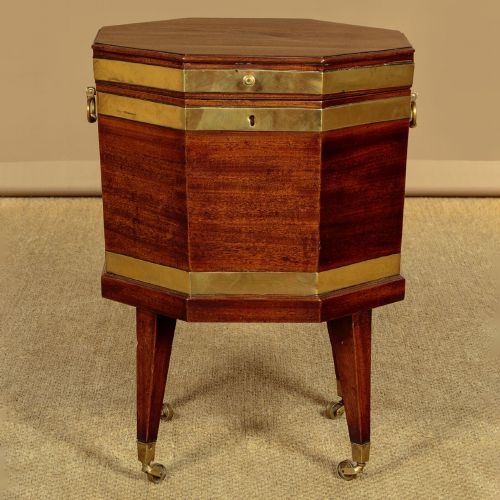
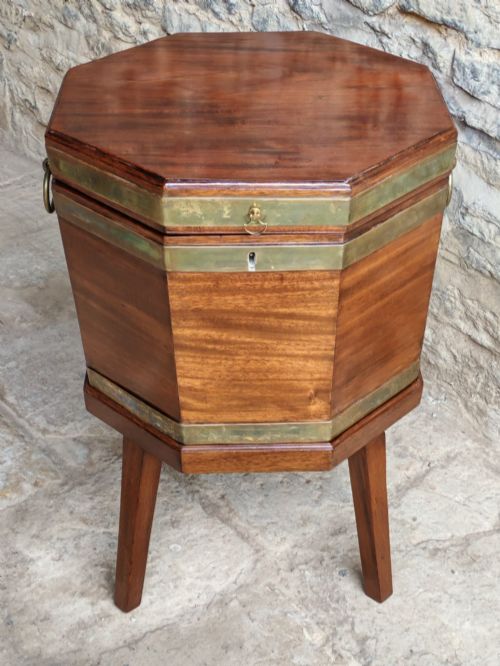
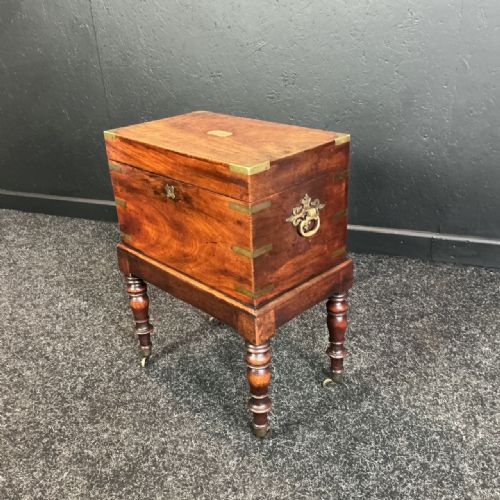
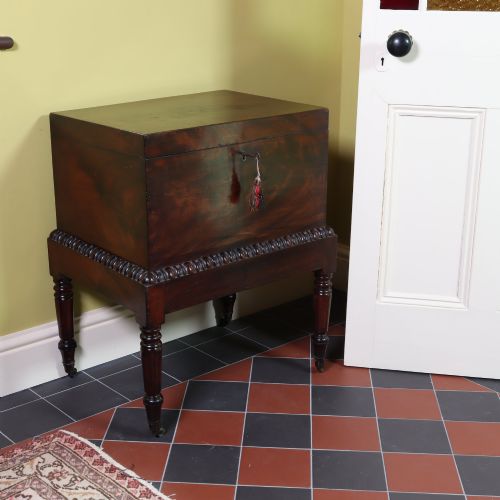
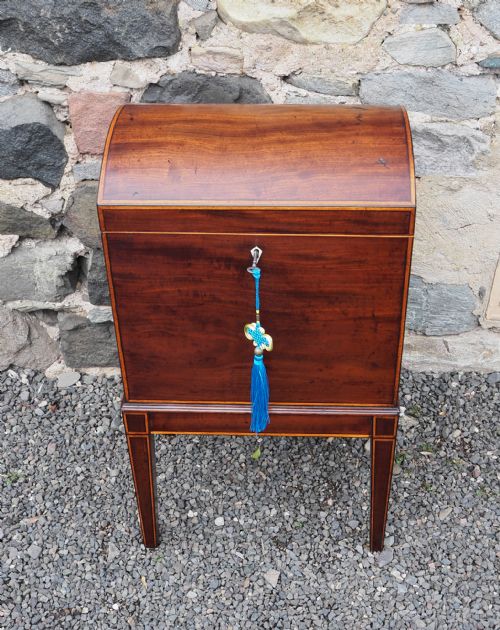
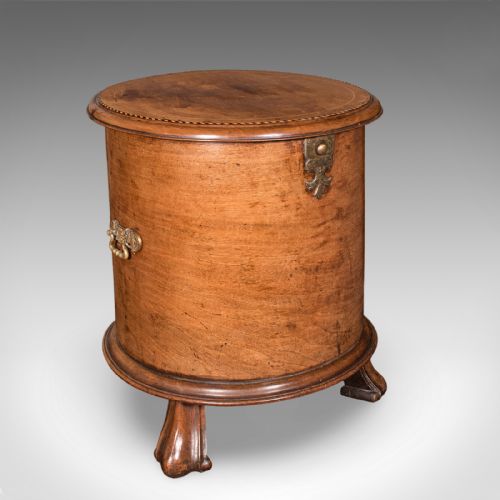


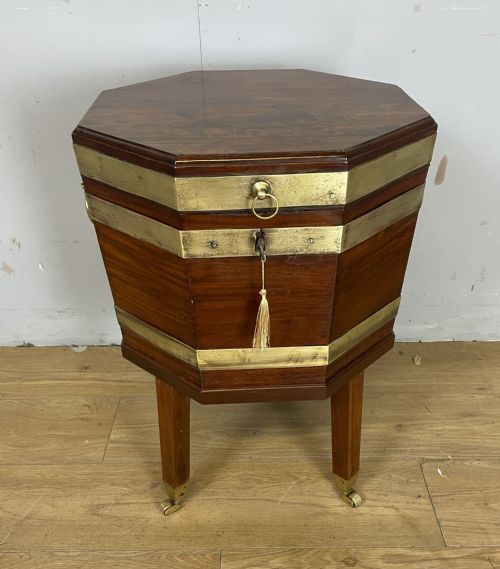
Georgian Mahogany Liquor Stand
A georgian mahogany liquor stand organises fine bottles with the quiet authority that defined polite dining rooms.
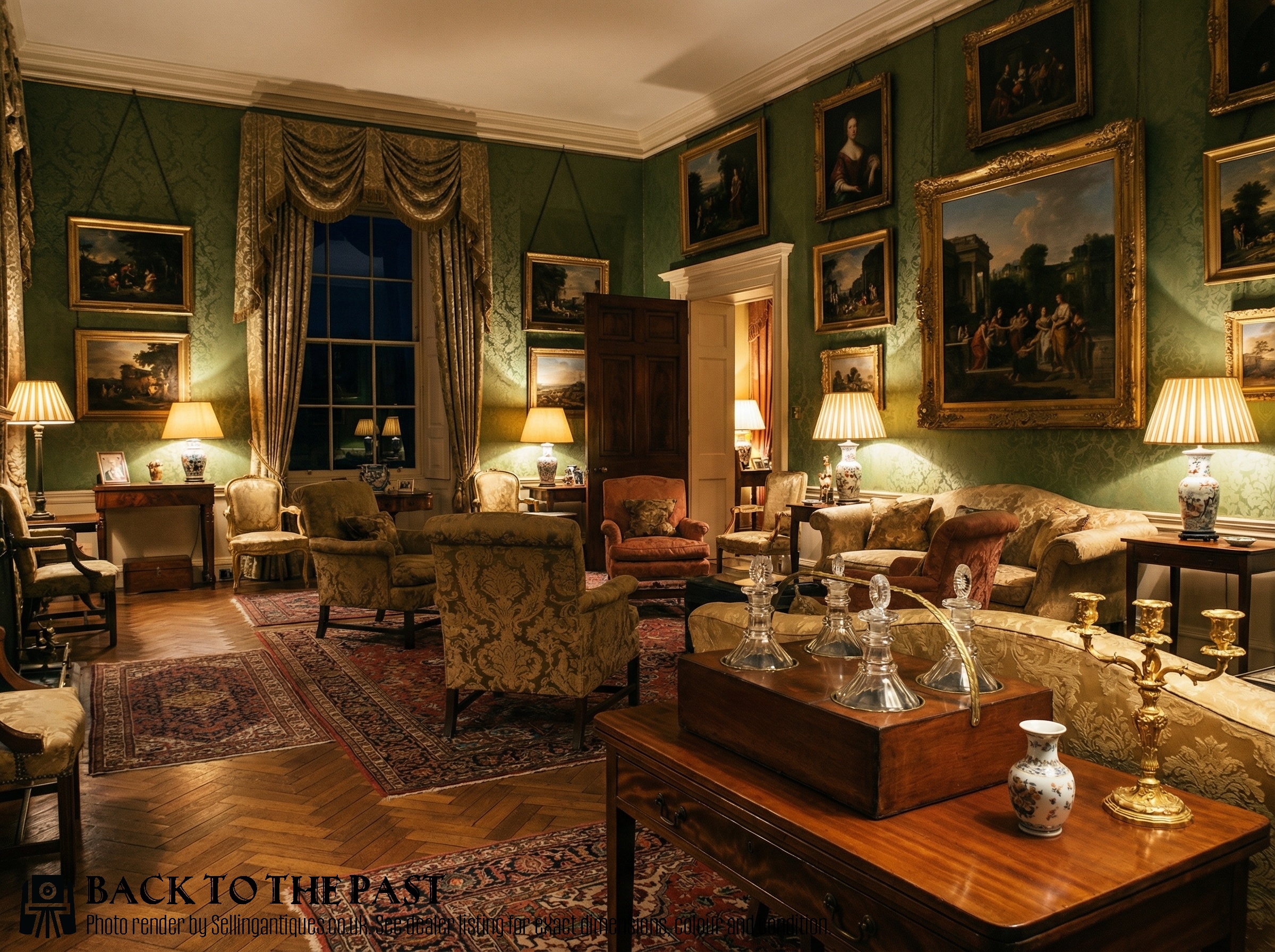
Georgian Mahogany Liquor Stand
A georgian mahogany liquor stand encompasses cellarettes, wine coolers, and decanter stands designed to keep spirits and wine secure during the evening. You meet octagonal, square, and rectangular forms mostly from the eighteenth century and the Regency period.
The materials span solid timbers and brass mounts, reflecting formal dining traditions where portable refreshment sat near the table. Cabinets on stands and lidded boxes sit alongside wine coolers, reflecting diverse domestic requirements.
Makers utilised rich grain patterns and classical lines to suit contemporary interiors, ranging from plain timbers to intricate inlays.
How they were made
Cabinet makers constructed these pieces primarily in mahogany, flame mahogany, and padouk, often incorporating secondary timbers like walnut.
Decoration relied on boxwood and satinwood inlay, alongside brass banding and handles that reinforced heavy structures.
The listings here span the eighteenth century, the Regency era, and the early nineteenth century, using mahogany, padouk, and walnut.
What varies in quality
The selection of timber grain, particularly flame mahogany or padouk, sets finer examples apart from plainer utilitarian boxes. Crispness in boxwood and satinwood inlay and substantial brass mounts indicate superior workshop production.
Proportion and structural joinery define the standing pieces, where well-turned legs or tight cabinet joints demonstrate skilled craftsmanship.
Gillows
The Georgian Mahogany Liquor Stand Glossary
- Cellarette
- A lockable container for holding bottles of wine or spirits beneath the dining room sideboard. These vessels often featured lead-lined interiors to hold ice for chilling.
- Wine cooler
- A large standing or floor-based vessel designed to keep bottles cool during formal meals. They frequently mirror the architectural styling of the period.
- Padouk
- An exotic tropical timber valued for its dense grain and deep reddish-brown tone. It appears in colonial and imported furniture of the eighteenth century.
- Inlay
- The technique of embedding contrasting woods like boxwood or satinwood into the primary surface to create geometric or floral patterns.
- Brass band
- Metal stripwork applied around the perimeter of timber containers to provide structural strength and decorative contrast.
Georgian Mahogany Liquor Stand: Frequently Asked Questions
What is a georgian mahogany liquor stand?
These pieces are secure timber containers built to store and present wine bottles and spirits during the eighteenth and early nineteenth centuries. They functioned as portable or static furniture within the dining room.
Craftsmen constructed them in various forms, including octagonal boxes, wine coolers, and cabinets on stands, utilising rich mahogany and brass hardware.
How were they used historically?
Servants kept wine and spirits locked inside these containers during dinner parties to control access to expensive vintages. Some examples featured lead linings to hold melting ice and cool the bottles.
At the end of the meal, the containers remained near the dining table for guests to pour drinks without summoning staff.
How do I place one in a modern room?
A liquor stand works well as a side table or low storage piece in a drawing room, study, or dining space. Its lid opens to reveal interior compartments that can store modern glassware or bottles.
The rich timber tones and brass details pair naturally with both traditional and contemporary interior schemes.
How can I tell the period?
Stylistic cues such as Chippendale bracket feet, Regency brass inlay, or Sheraton proportions help assign a date to the piece. Construction methods inside the box also reveal the age of the timber and fixings.
Earlier examples from the eighteenth century tend to show solid craftsmanship without later machine-cut elements.