


Vintage Drink Caddy
These vintage drink caddy pieces are designed to secure and present your spirits with elegance, making them essential additions to a well-appointed room.
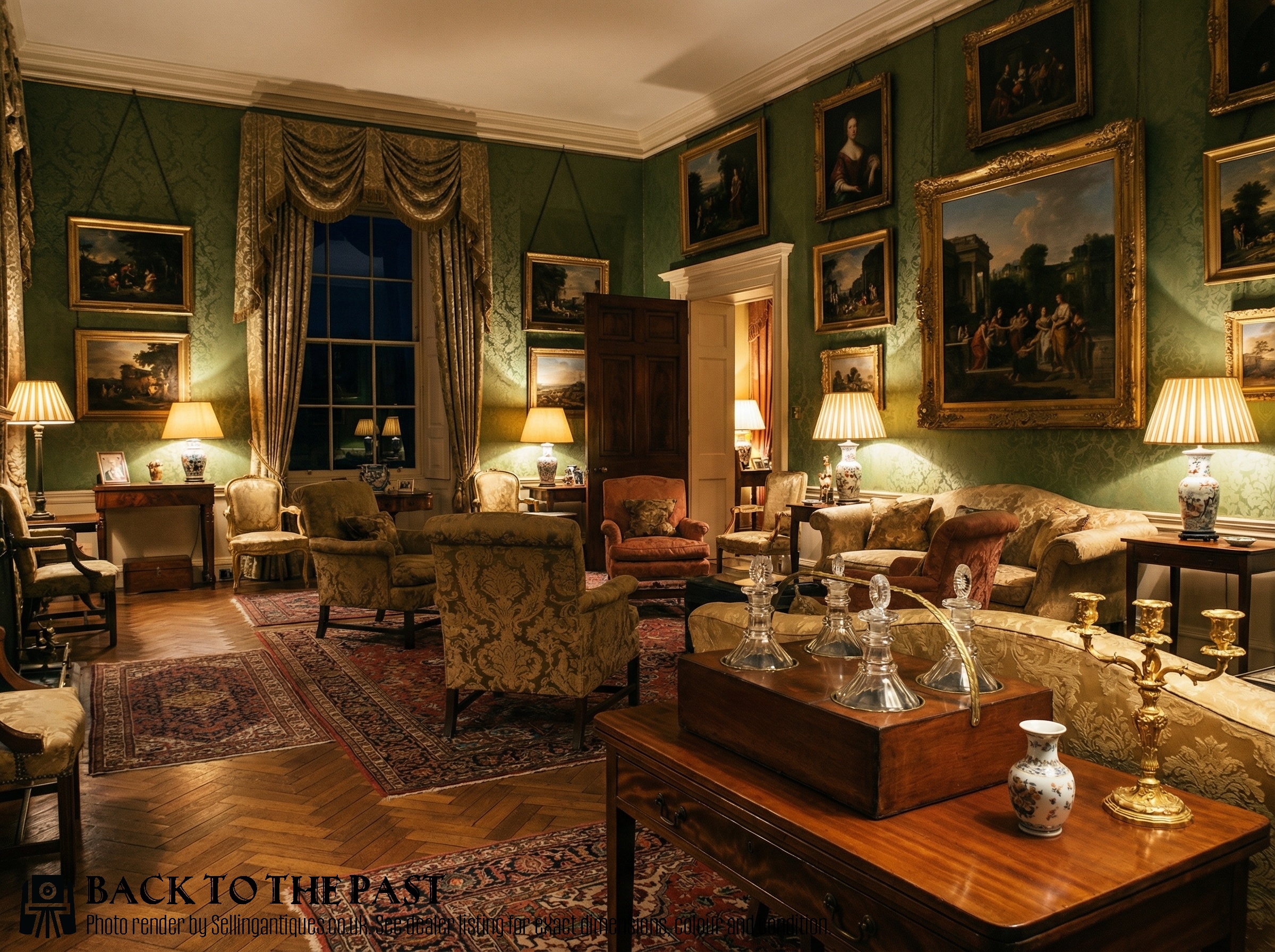
Vintage Drink Caddy
A vintage drink caddy encompasses a variety of barware forms, including tantalus sets, cellarettes, liqueur stands, and glass serving trays designed to hold decanters and bottles securely.
The pieces on this page span from the nineteenth century into the twentieth century, with Victorian and Edwardian examples appearing frequently alongside earlier Georgian forms.
Buyers will encounter robust oak and mahogany frameworks mounted in brass or silver plate, housing cut glass decanters, barrels, or specialised serving services.
Materials and construction
Cabinetmakers utilised dense timbers such as mahogany, oak, satinwood, and burr wood to construct sturdy frames and cellarettes, frequently incorporating brass handles and mounts for reinforcement.
Metalwork involved silver plating over base metals alongside chrome, while glassware was shaped using cut glass and frosted crystal techniques to form decanters and barrels.
Listings feature timber varieties including oak, mahogany, satinwood, and burr wood paired with cut glass and silver plate.
Distinctions in quality
Quality rests upon the execution of the cabinetry, the weight and clarity of the cut glass components, and the integration of the locking mechanisms found in tantalus frames.
Finer examples demonstrate precise dovetail joinery in the timber bases, heavier silver plating, and uncompromised glass surfaces without chips or replacement decanters.
Elkington·Jacques Adnet
The Vintage Drink Caddy Glossary
- Tantalus
- A locking drink cabinet that holds decanters securely in place with a metal bar, preventing the removal of contents without a key while still displaying the bottles.
- Cellarette
- A freestanding or floor-standing cabinet traditionally used to hold wine bottles and coolers near the dining table.
- Silver Plate
- A manufacturing technique where a thin layer of silver is bonded to a base metal, commonly utilised in nineteenth-century barware.
- Demitasse
- A small cup used for serving strong espresso or liqueur after a meal, often found in matching vintage service sets.
Vintage Drink Caddy: Frequently Asked Questions
What is a tantalus?
A tantalus is a specific type of drink caddy featuring a locking mechanism that secures decanters by their stoppers. This design allowed hosts to display their expensive spirits while safely restricting access.
Most surviving examples date from the Victorian period onwards and rely on a turning key to release the retaining metal bar.
How do I date a piece?
Dating relies on identifying the primary materials, construction methods, and stylistic cues present in the woodwork and metal mounts. For instance, heavy oak frames with brass locking bars point towards the later nineteenth century, while chrome and glass elements indicate the Art Deco era.
Examining the hinges, locks, and the cut of the glass provides further clues to the decade of manufacture.
Were these used in the dining room?
Drink caddies and cellarettes were primarily kept in dining rooms, libraries, or drawing rooms for convenient hospitality after meals. Servants or hosts would utilise them to serve guests without needing to fetch bottles from the cellar.
They transitioned from large floor-standing cellarettes in the Georgian period to table-top tantalus sets by the late Victorian era.
Can I polish silver plate safely?
Silver-plated items benefit from gentle cleaning using a non-abrasive silver polish and a soft cloth to preserve the underlying metal. Vigorous scrubbing can wear through the thin plating down to the base metal underneath.
Regular dusting and minimal polishing maintain the subdued lustre appropriate for antique barware.