




Georgian Mahogany Display Case
A georgian mahogany display case brings warmth and architectural precision to a room while keeping treasured collections safe behind glass.
Georgian Mahogany Display Case
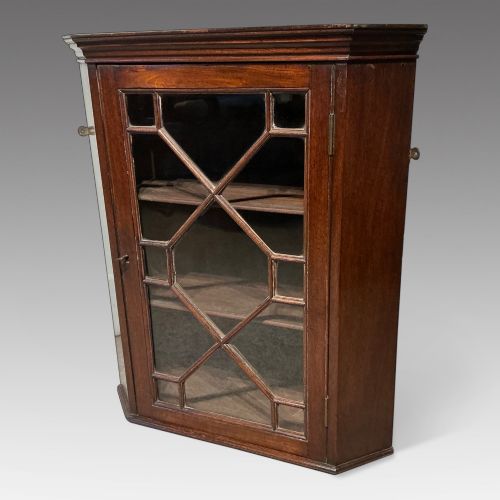
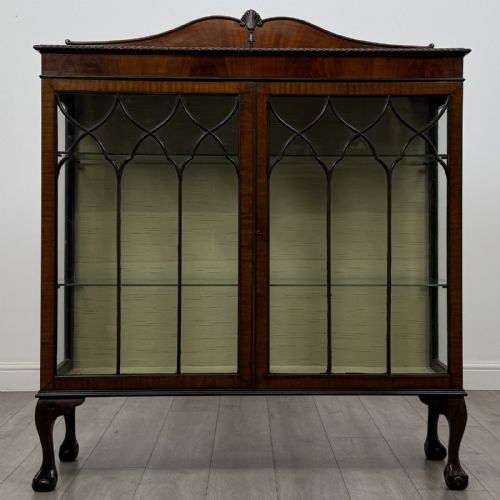
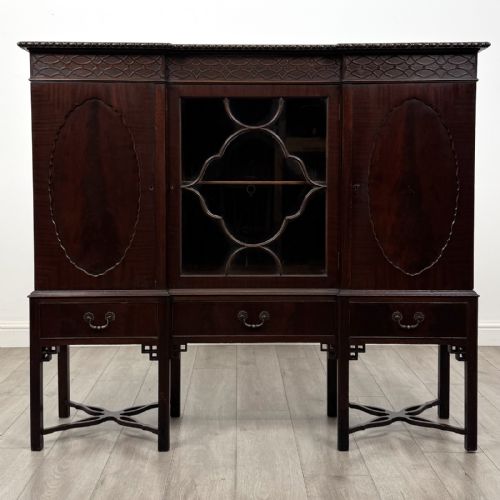
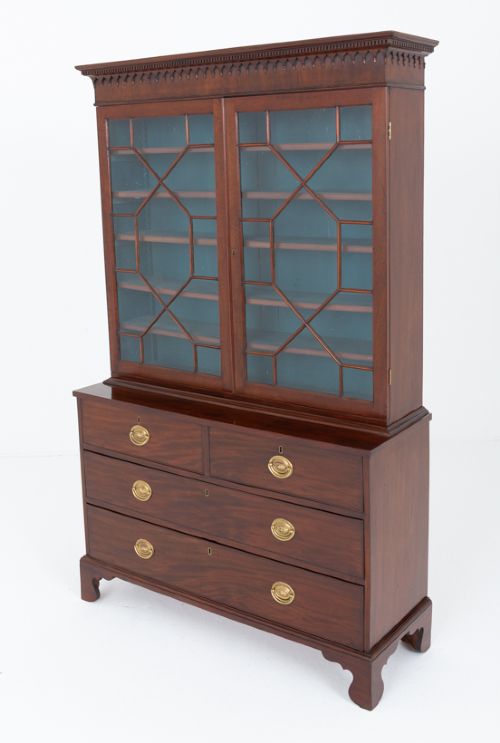
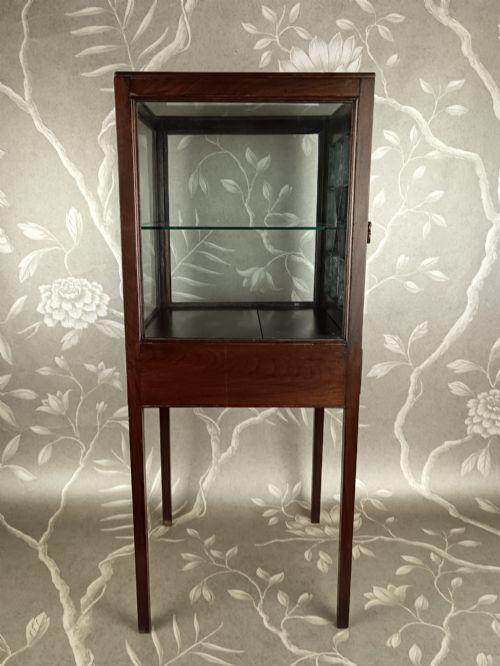
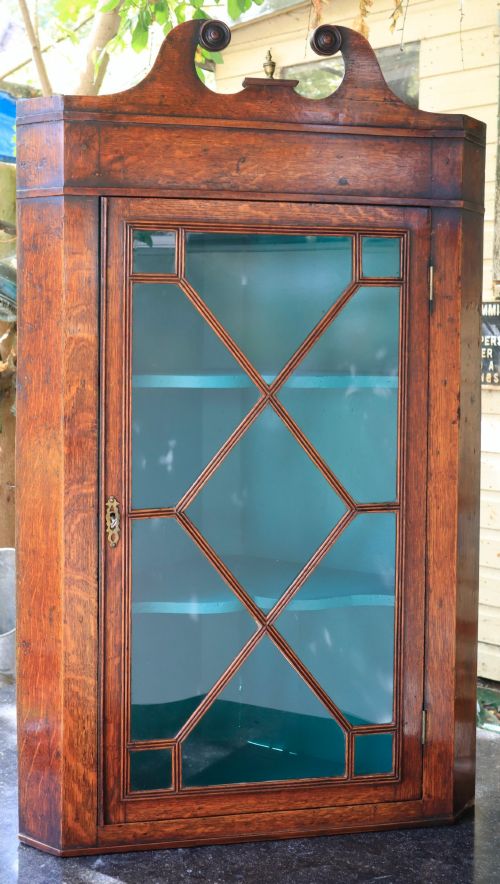
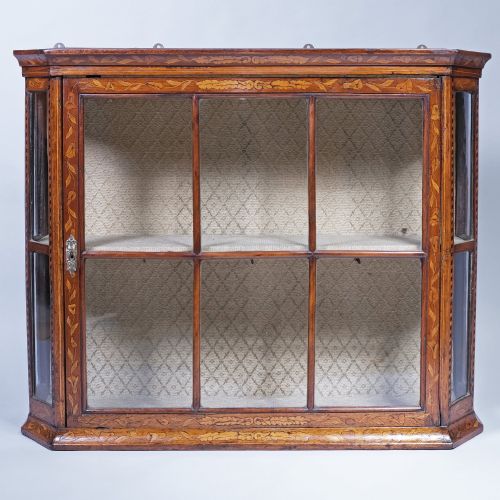
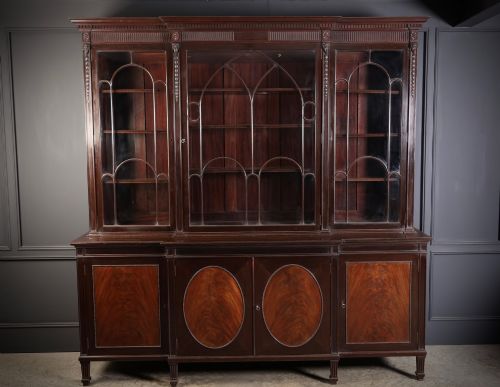
When you search for a georgian mahogany display case, you encounter a variety of forms designed to house books, ceramics, and curiosities. These pieces range from towering breakfront bookcases and vitrines to compact wall-hanging corner cupboards and miniature cabinets.
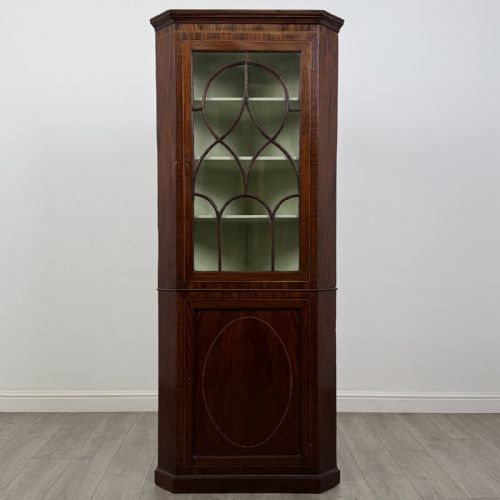
The selection on this page spans genuine 18th-century pieces alongside later revival styles such as Chippendale Revival, Sheraton Revival, and Edwardian interpretations. Corner cabinets and glazed wall units appear frequently, reflecting how period makers utilised domestic space efficiently.
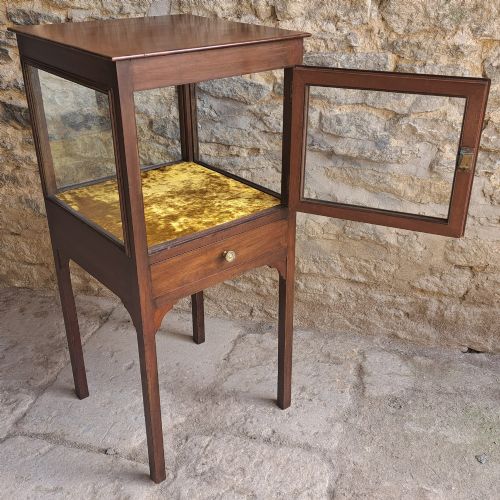
Origins include Scottish workshops and English cabinet makers, with formats stretching from floor-standing breakfronts down to small tabletop bijouterie cases and display tables.
How they were made
Makers constructed these cabinets using dense tropical mahogany timbers, frequently accented with satinwood inlay, brass hardware, and internal fabric linings. Glazing bars formed delicate geometric patterns across the doors, balancing structural strength with maximum light for the objects displayed inside.
Construction techniques involved traditional joinery, dovetail drawers, and fitted locks with working keys. Cabinets on stand or large breakfront bookcases combined solid timber frames with figured mahogany veneers chosen for grain pattern and depth of colour.
Georgian Mahogany Display Case Retail Price Guide 2026
Typical asking prices for georgian mahogany display case among the pieces listed under this phrase on Sellingantiques today, from the lower quarter to the upper quarter. They describe what is for sale here now, not the wider market.
Several corner cupboards include functioning locks and keys, proving that Georgian secrets were sometimes safely kept behind glass.
What varies in quality
Quality reveals itself in the selection of timber veneers and the crispness of carved details such as astragal glazing bars and bracket feet. Superior pieces exhibit thoughtful proportions, harmonious grain matching across large surfaces, and original brass fittings.
The distinction between a standard cabinet and an exceptional one lies in the finesse of secondary timbers, the delicacy of inlay work, and whether structural elements like adjustable shelving and locking doors remain entirely intact.
Maple and Co.·Gillows
The Georgian Mahogany Display Case Glossary
- Breakfront
- A large cabinet featuring a central section that projects forward from the flanking wings. This architectural arrangement creates depth and visual interest in larger bookcase forms.
- Vitrine
- A glass-fronted display cabinet specifically built to showcase porcelain, silver, or curiosities from all angles. These often sit on slender legs or stands.
- Astragal
- A moulding profile used to divide panes of glass within a glazed door. Fine astragals indicate meticulous cabinet work.
- Bijouterie cabinet
- A glass-topped or glazed table or cabinet designed expressly for displaying small precious items or jewellery. They frequently feature fabric-lined interiors.
- Corner cupboard
- A triangular cabinet built to fit neatly into the corner of a room. Versions include floor-standing units and wall-hanging models with panelled or glazed doors.
Georgian Mahogany Display Case: Frequently Asked Questions
How were corner cupboards used?
Period corner cupboards served to utilise awkward angles in dining rooms and parlours, storing glassware, china, or bottled spirits securely behind glazed or panelled doors.
Many wall-hanging versions kept everyday items within arm's reach while preserving valuable floor space in smaller period homes.
How do I tell original glass from replacement panes?
Original glass often displays subtle surface ripples, tiny air bubbles, and slight variations in thickness caused by early cylinder or crown glass manufacturing methods.
Modern replacement glass tends to be perfectly flat and uniform across the entire surface of the door.
Where should I place a wall cabinet?
Wall-hanging display cabinets work best mounted securely at eye level in hallways, studies, or dining rooms where their interior contents can be easily observed.
Ensure the wall construction can bear the combined weight of the solid mahogany frame, glass panes, and displayed objects.