



Georgian Mahogany Cheese Cradle
A georgian mahogany cheese cradle brings the sturdy elegance of the dining room straight to the table, offering a clever way to serve a grand wedge.
Georgian Mahogany Cheese Cradle
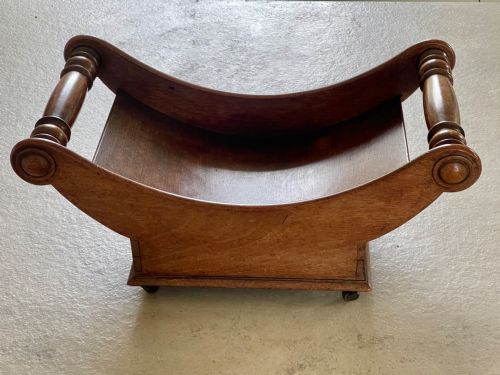
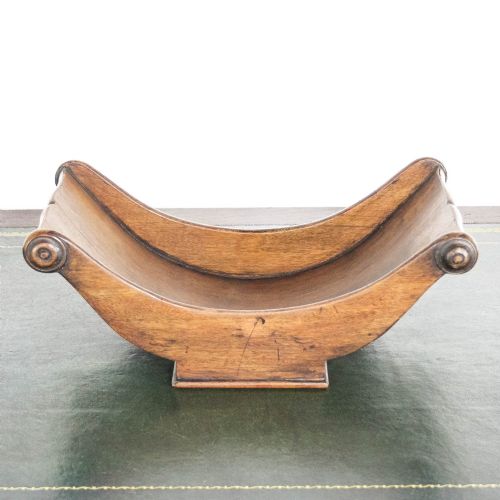
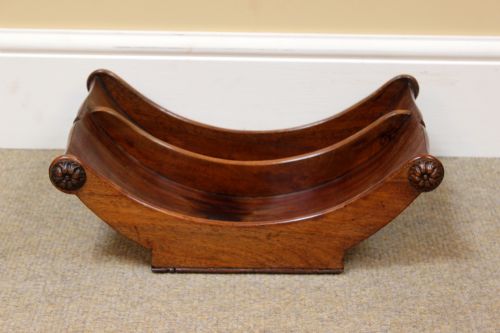
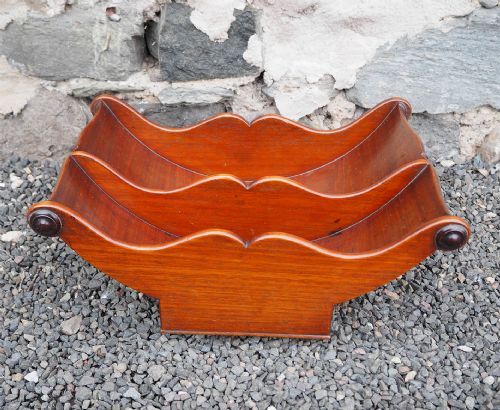
When you search for a georgian mahogany cheese cradle, you are looking at functional dining accessories designed to hold and display a substantial truckle or wedge of cheese during dessert. These pieces usually take the form of miniature sledges, troughs, or low coasters that allowed diners to slide the cheese smoothly along the table.
Makers shaped these items primarily from rich timbers, often pairing the main body with small wheels or castors so the cradle could glide between guests with ease. The forms range from simple crescent troughs to larger stands designed to showcase the cheese as a centerpiece of the dessert course.
What varies in quality
The distinction between ordinary and exceptional pieces lies in the choice of timber and the crispness of the turning. Finer examples display a rich, deep grain in the mahogany and balanced proportions that speak to careful workshop production.
Hardware integration also defines quality, where original brass castors and neat structural joinery elevate a utilitarian object into a refined dining accessory. Pieces that retain their original smoothness of line and timber warmth demonstrate superior historical craftsmanship.
The Georgian Mahogany Cheese Cradle Glossary
- Truckle
- A small, solid wheel of cheese, particularly hard varieties like stilton or cheddar, which these cradles were built to accommodate. The container matches the circular or crescent profile of the cheese.
- Treen
- Small handmade wooden objects for domestic use. These pieces represent a fine branch of treen made specifically for the dining room.
- Castor
- A small swiveling wheel attached to the base of the cradle. This addition allowed diners to push the heavy cheese smoothly across the length of the table.
Georgian Mahogany Cheese Cradle: Frequently Asked Questions
What is a cheese cradle?
A cheese cradle is a specialised dining accessory designed to hold and serve a large wedge or truckle of cheese at the table. These pieces allowed hosts to present the cheese securely during the dessert course.
Most examples feature low sides and small wheels or castors so the heavy cheese could glide smoothly across the surface. They combine practical utility with the polished woodwork characteristic of formal dining.
How were these pieces used?
Diners used these stands to contain large portions of hard cheese, such as stilton, while passing them around the dining table. The rolling base made it easy to share the food without lifting a heavy weight.
They served as a functional centrepiece during the final stages of a meal. Guests could help themselves directly from the rolling trough as it reached their seat.
What woods are typical?
Mahogany is the primary wood found in these pieces, valued for its strength and rich grain. Fruitwood also appears in certain examples, offering a different tone and texture.
Craftsmen selected these dense hardwoods to withstand the weight of heavy cheeses and constant handling. Secondary materials like brass and bone often appear in the fittings and details.
How do periods differ?
Pieces from the eighteenth century and the georgian era generally emphasise deep mahogany tones and simple, robust construction. Regency and victorian versions sometimes introduce different proportions or varied turning styles while keeping the core function intact.
Changes in dining customs over these decades gradually altered how cheese was presented and shared. Examining the timber and fittings helps identify the specific era of manufacture.