



Georgian Lead Crystal Glassware
Georgian lead crystal glassware encompasses drinking vessels and tableware spanning the eighteenth and early nineteenth centuries.
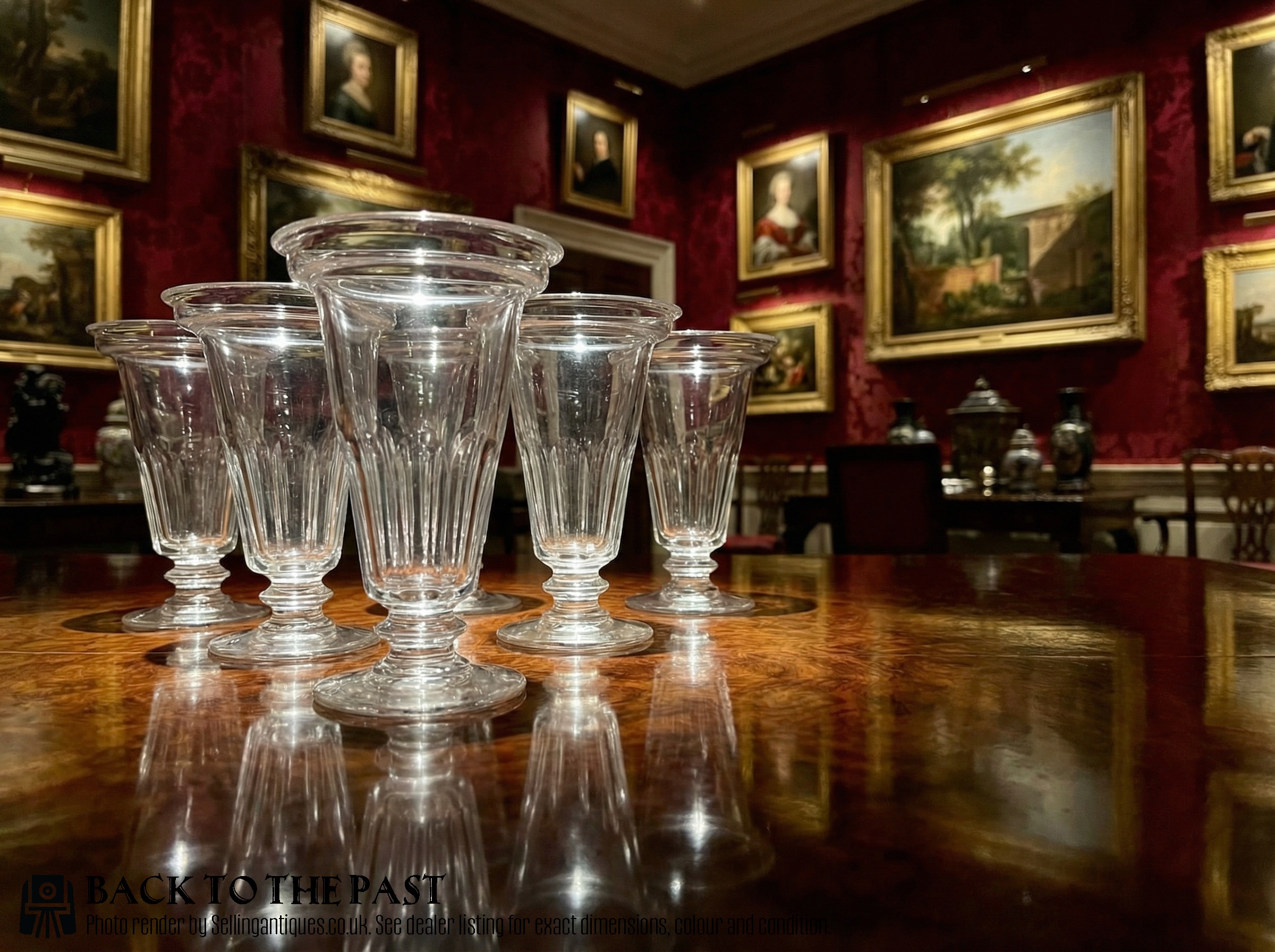
Georgian Lead Crystal Glassware
Georgian lead crystal glassware comprises drinking vessels and table items produced across the eighteenth and nineteenth centuries, including periods described as Georgian and Regency. Buyers encounter forms such as wine glasses, ale glasses, rummers, jelly glasses, and celery vases.
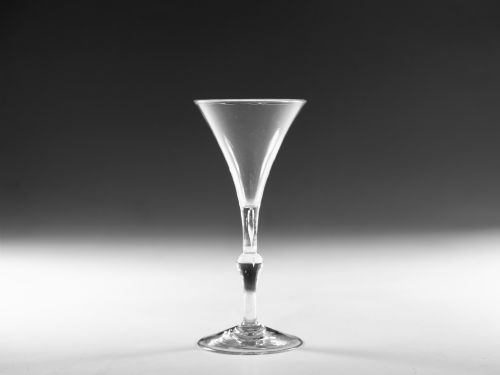
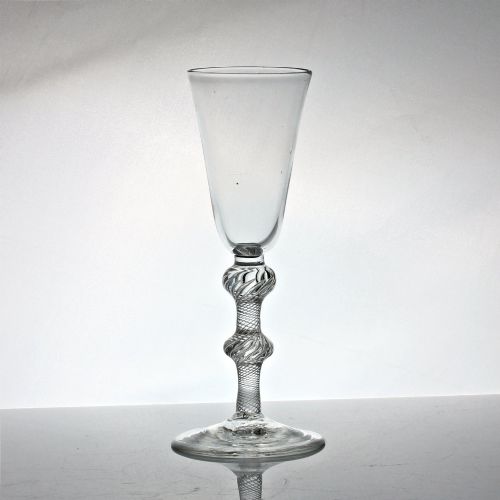
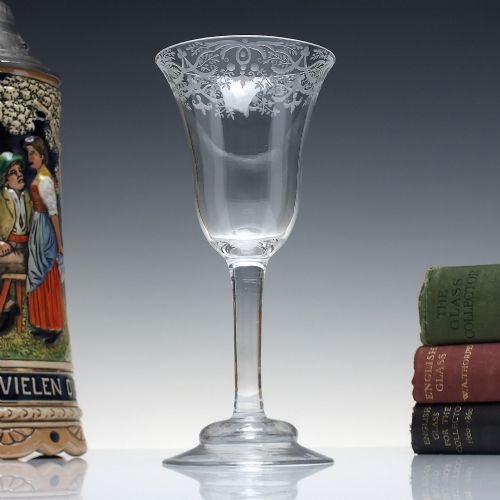
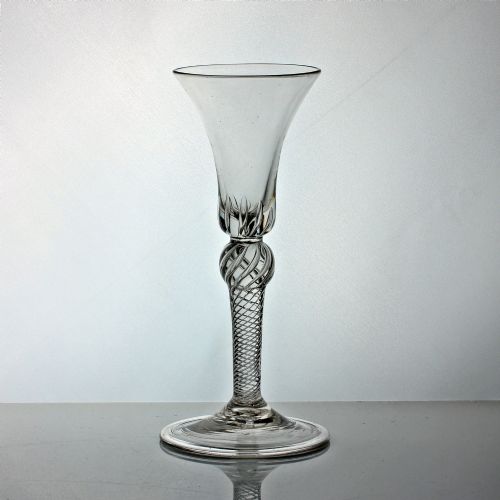
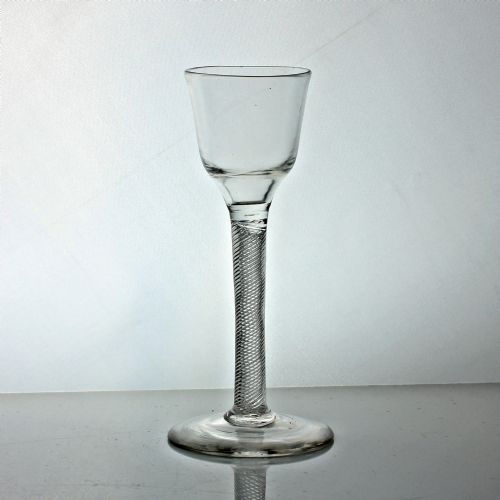
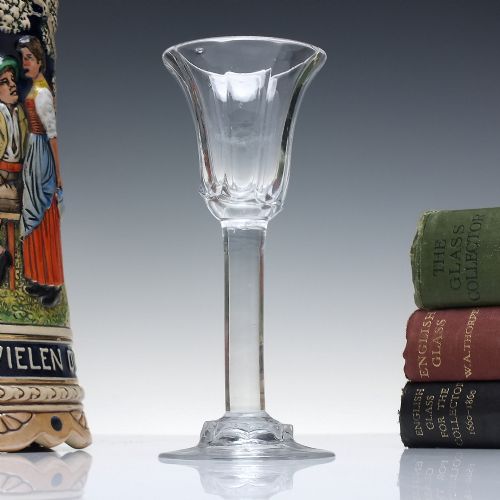
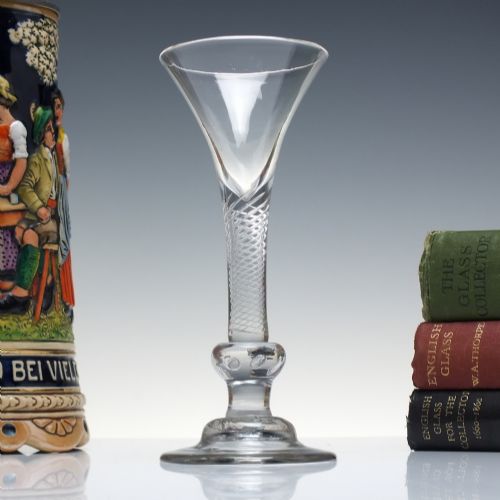
Stemware dominates the selection, featuring variations like air twist stems, plain stems, and composite stems supporting bowls shaped as ogee, bell, or trumpet profiles. Pieces frequently originate from English workshops, alongside Irish examples from the early nineteenth century.
How they were made
Maker operations utilised lead crystal, flint glass, and clear glass, sometimes incorporating enamel decoration or turquoise green glass colouring. Blowing techniques formed the foundational vessel bodies, which were often manipulated in moulds to create ribbed or petal patterns.
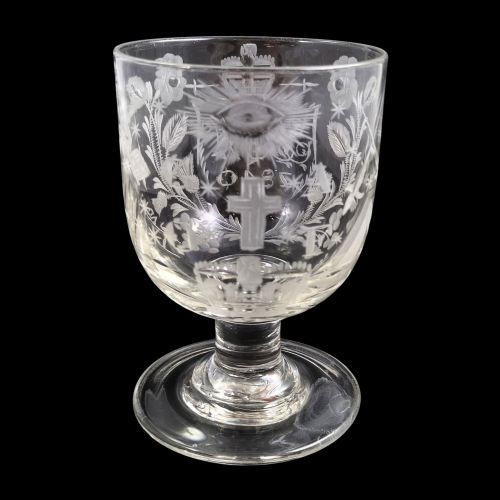
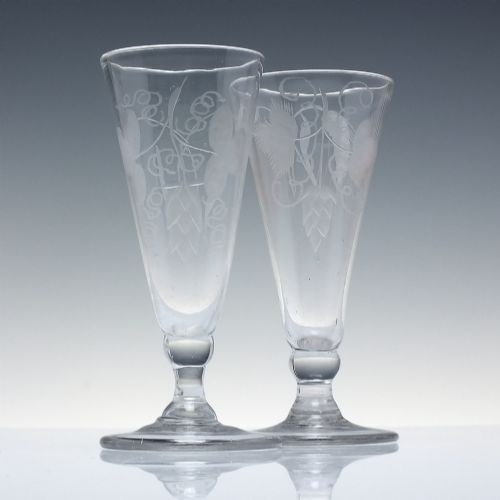
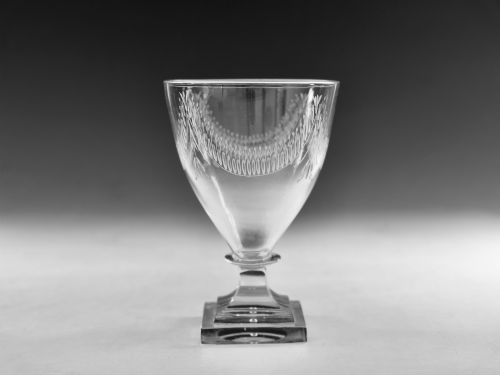
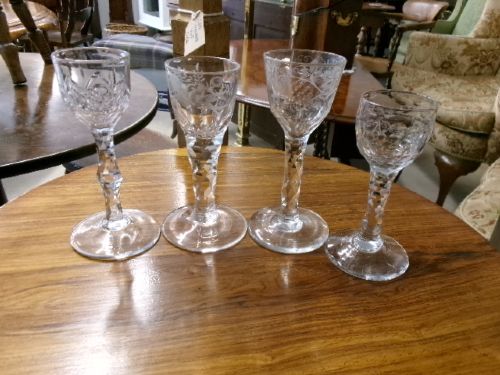
Surface ornamentation involved wheel engraving, etching, and faceting to apply decorative motifs such as hops and barley or armorial crests. Stems were shaped using complex air twist or opaque twist methods, while bases frequently included folded feet or square lemon squeezer feet.
Anti-Jacobite rummers carried secret political toasts intended only for the sympathetic eyes of those holding the glass.
What varies in quality
Clarity of the metal differentiates standard items from superior examples, with exceptional pieces showing high transparency and brilliance in the crystal. The intricacy and precision of internal stem formations, such as multi-spiral air twists, indicate the skill applied during manufacture.
The depth and detail of surface execution, including complex wheel engraving of botanical or heraldic subjects, separate basic utility items from finer display pieces. Proportions between bowl, stem, and foot also influence the overall balance and visual harmony of the vessel.
James Giles
The Georgian Lead Crystal Glassware Glossary
- Rummer
- A large drinking glass used for beer, ale, or wine, popular during the late eighteenth and early nineteenth centuries.
- Air twist
- A stem formation containing elongated spiral bubbles trapped inside the glass, created by drawing and twisting heated rods.
- Jelly glass
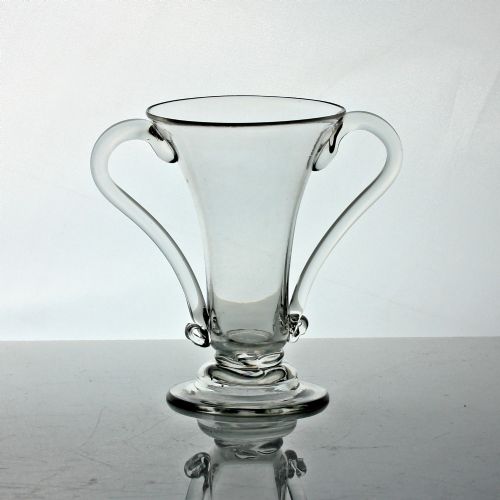
- A small, often handled vessel designed for serving sweet jellies or syllabubs at the table.
- Lemon squeezer foot
- A square, heavily moulded glass base with sloping sides resembling the kitchen tool of the same name.
- Ogee bowl
- An S-curve profile turning outward at the rim and inward at the base, common on eighteenth-century drinking glasses.
Georgian Lead Crystal Glassware: Frequently Asked Questions
What is georgian lead crystal glassware?
Georgian lead crystal glassware refers to drinking and serving vessels produced in Britain and Ireland during the eighteenth and early nineteenth centuries. These items include wine glasses, rummers, and celery vases made from heavy, clear lead glass.
Craftsmen shaped these pieces using blowing, moulding, and cutting techniques, often incorporating decorative twists within the stems or engraved motifs on the bowls.
Were these glasses used daily?
Many of these vessels served functional roles at the dining table for consuming wine, beer, ale, and spirits. Sturdier forms like rummers and celery vases handled regular use during meals and gatherings.
More delicate variants with intricate air twist stems were handled with greater care during formal dining occasions.
How should I clean antique glassware?
Antique glassware requires gentle hand washing in lukewarm water with mild detergent. Avoid sudden temperature changes to prevent thermal shock and potential cracking of the old metal.
Dry the pieces promptly with a lint-free cloth to maintain the clarity and brilliance of the crystal.