

Georgian Lead Crystal Glasses
Georgian lead crystal glasses bring tactile weight and eighteenth-century craftsmanship to the table.
Georgian Lead Crystal Glasses
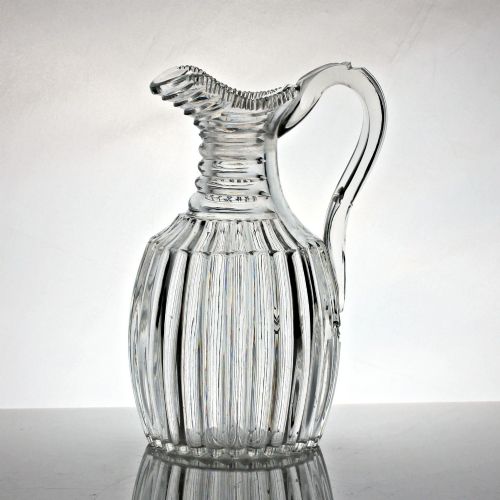
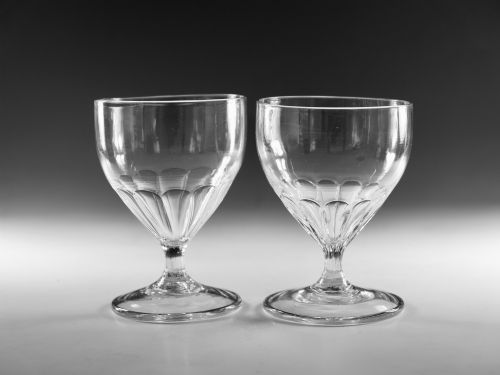
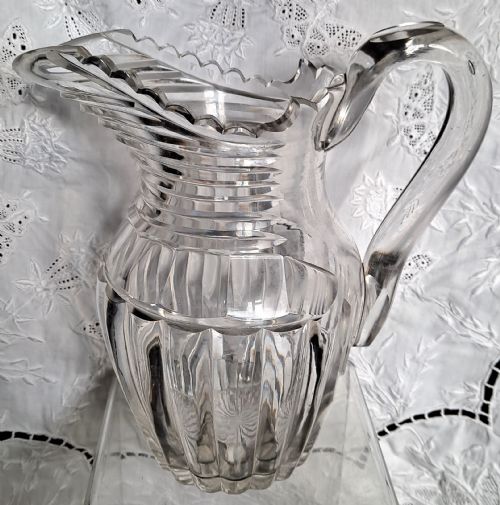
When you search for georgian lead crystal glasses, you encounter drinking vessels and tableware spanning the eighteenth and nineteenth centuries, including wine glasses, rummers, ale glasses, and decanters. The pieces range from early baluster forms to later cut-glass rummers and heavy water jugs.
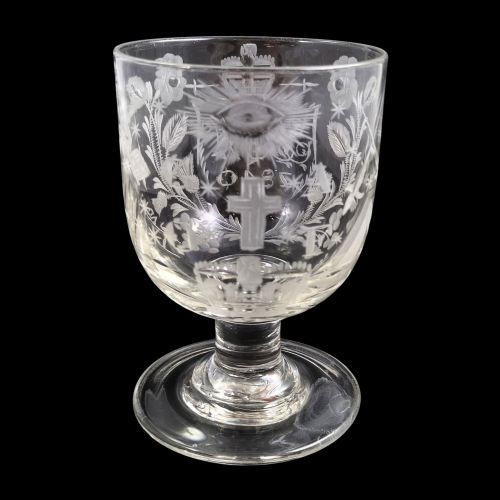
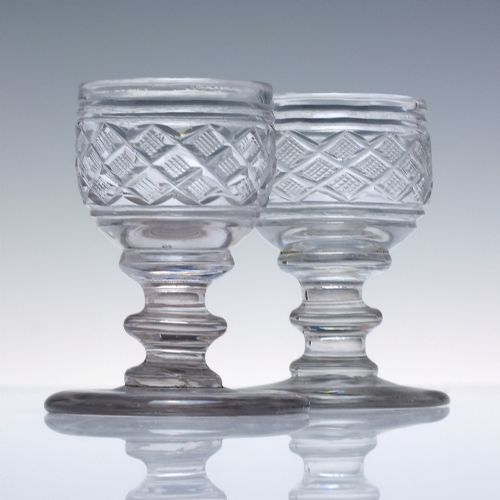
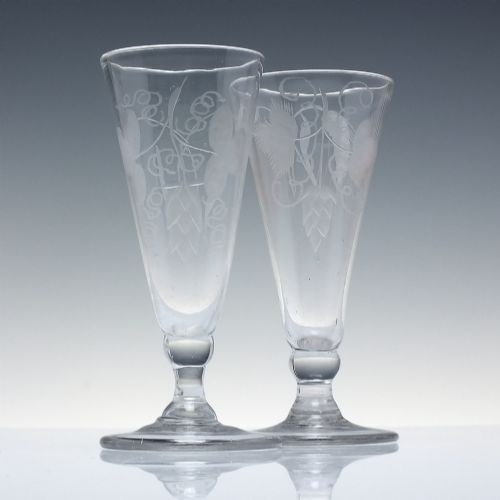
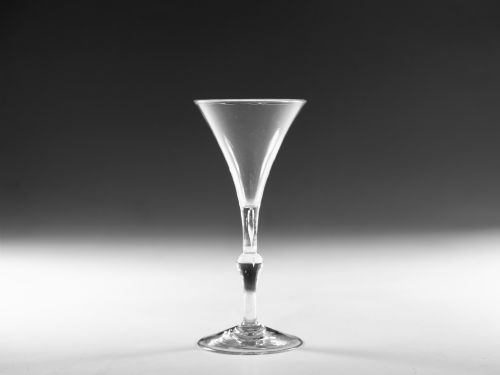
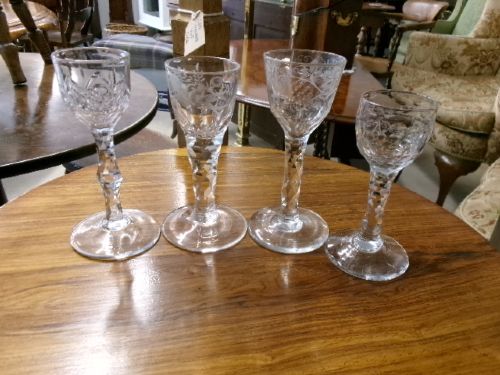
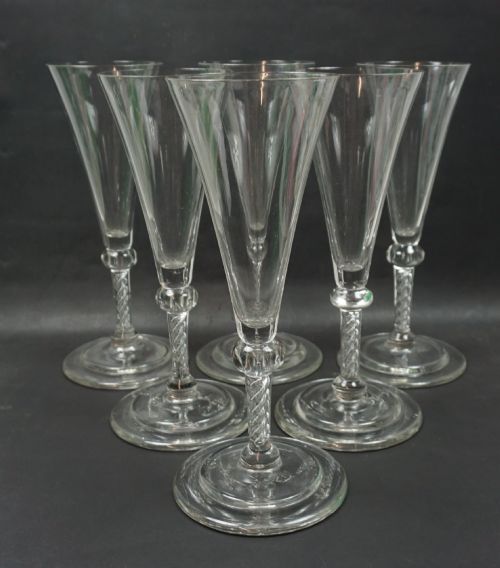
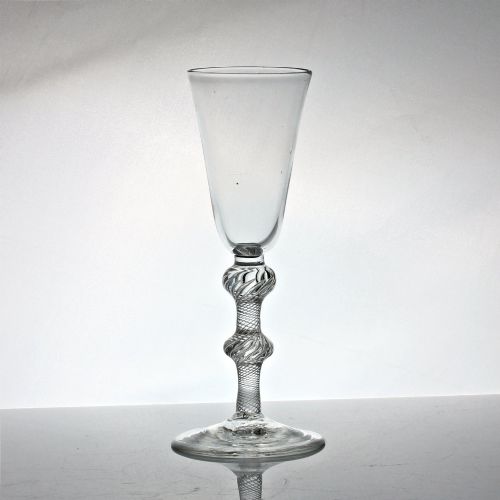
Wine glasses with air twist and opaque twist stems from the mid-eighteenth century appear frequently, alongside later cut-glass dram glasses and large serving rummers engraved with hops and barley. These items reflect the domestic drinking habits of their era, from small drams of spirits to communal ale vessels.
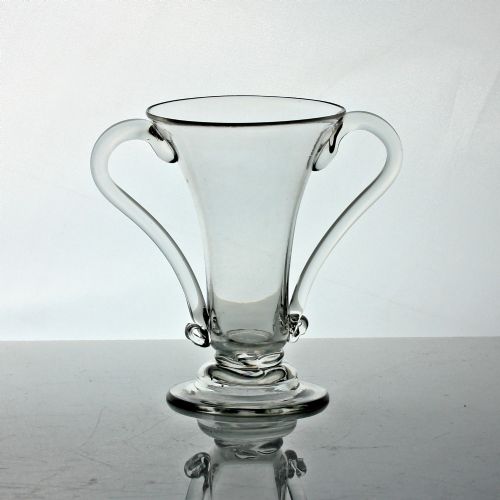
The selection includes specialised items such as jelly glasses, double-handled vessels, and flip glass tumblers, alongside decanters labeled for Madeira. Many items originate from English workshops, while others represent Anglo-Irish production styles of the Regency period.
How they were made
Makers utilised lead crystal, flint glass, and clear glass, manipulated through blowing, moulding, and cutting techniques. Heavy lead content gave the glass clarity, density, and resonance when struck.
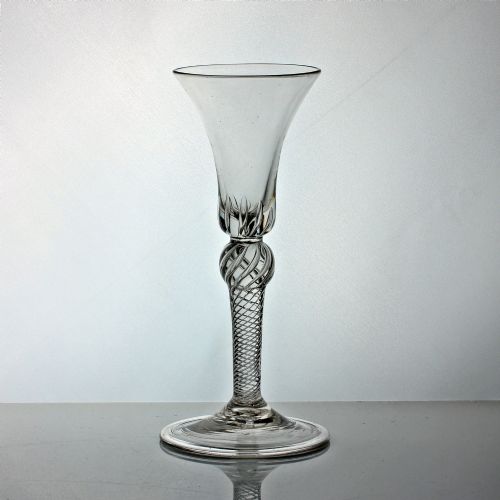
Stems were formed using specialised internal techniques, creating multi-spiral air twists or single and double series opaque white enamel threads trapped within the glass rod. Bowls were blown into moulds or shaped by hand before being attached to feet and stems.
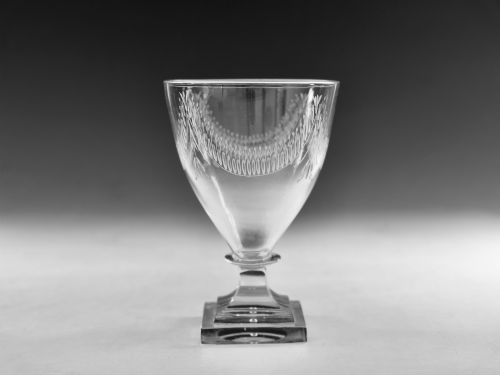
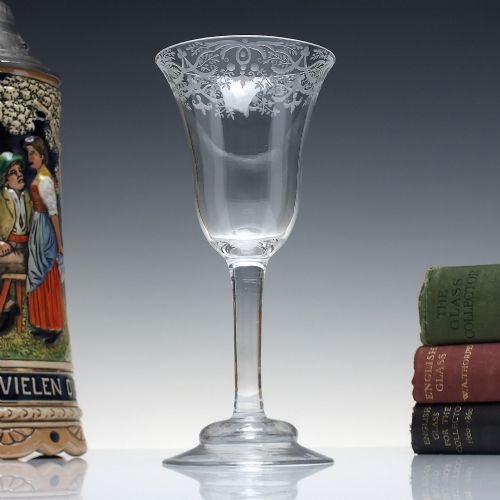
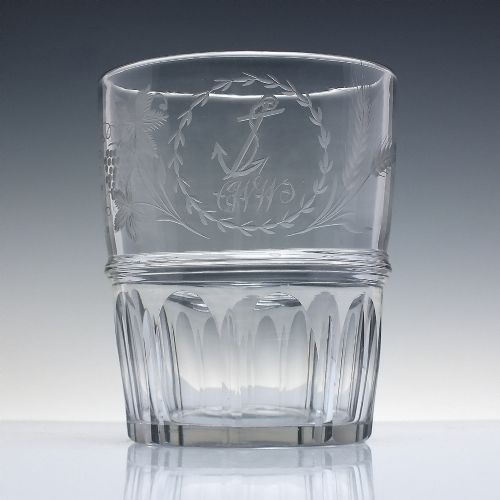
Surface decoration involved wheel engraving to render floral motifs, hops and barley, or political emblems, alongside pillar and prism cutting that created faceted surfaces catching the light.
The listings show pieces spanning the eighteenth century through to the Victorian era, utilising clear glass, lead crystal, and enamel.
What varies in quality
Quality rests in the crispness of the glass cutting and the precision of internal stem formations, where clean, regular spirals distinguish finer work from simpler production. Weight distribution and metal clarity also divide standard drinking vessels from exhibition or museum-grade pieces.
Engraved detail determines distinction, with deeply cut or finely wheel-engraved botanical and commemorative subjects showing superior hand skill compared to light surface scratching. The integrity of the foot base, whether folded or domed, contributes to the overall structural balance of the form.
The Georgian Lead Crystal Glasses Glossary
- Lead crystal
- Glass containing lead oxide, which increases brilliance, weight, and workability for cutting. This material characterises the heavier drinking vessels of the period.
- Air twist
- A stem containing elongated bubbles or spiral threads of air trapped inside the glass. Makers produced these by drawing and twisting heated glass rods.
- Opaque twist
- A stem containing fine white enamel threads twisted into linear or spiral patterns inside the clear glass. This technique dates predominantly to the mid-eighteenth century.
- Rummer
- A large, sturdy drinking glass used for punch, rum, or ale during the eighteenth and nineteenth centuries. These pieces often feature bucket bowls and thick pedestals.
- Baluster
- A heavy, swelling stem shape reminiscent of architectural balusters, typical of early eighteenth-century drinking glasses. These stems frequently feature knops.
- Flip glass
- A cylindrical tumbler without a stem, used for serving beer or mixed drinks. Examples from the Georgian period often display detailed wheel engraving.
Georgian Lead Crystal Glasses: Frequently Asked Questions
Can I use these glasses for daily dining?
Many of these drinking vessels remain robust enough for occasional use at the table, provided guests handle them with care. Their substantial lead crystal construction gives them a satisfying weight in the hand.
Collectors often reserve delicate air twist wine glasses for display or special toasts. Sturdier rummers and cut-glass tumblers handle functional use more readily.
How do I date an air twist glass?
Air twist stems appeared largely between the seventeen-forties and seventeen-sixties, accompanied by specific bowl forms like the ogee or bell. Examining the foot type, such as folded edges, helps narrow the production era.
Reference guides compare the twist configuration, knop placement, and metal characteristics against documented examples. Subtle variations in manufacturing technique separate mid-century work from later revivals.
What is the difference between flint glass and lead crystal?
Flint glass originally denoted a high-quality glass made with calcined flints, while lead crystal specifically incorporates lead oxide for increased refractive index and density. Over time, the terms often overlapped in historical manufacturing terminology.
Both materials yielded clear, heavy vessels capable of holding deep wheel engraving. The presence of lead gives the glass its characteristic ring and heft.