
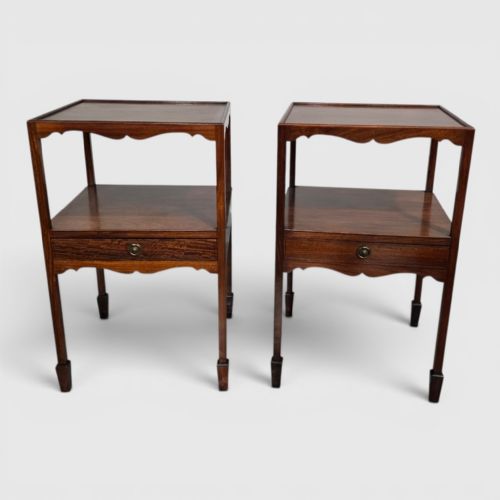
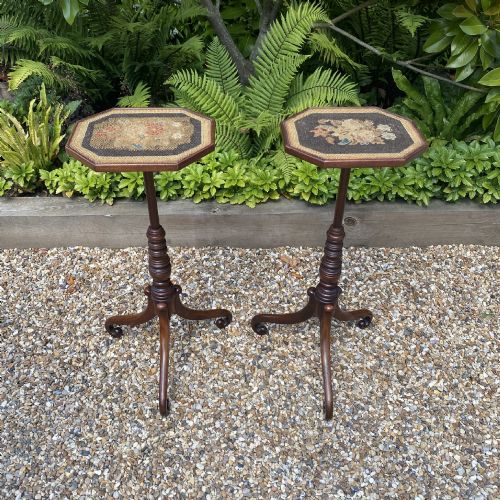
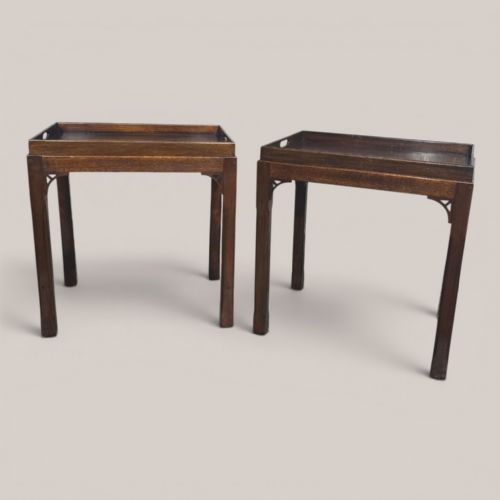
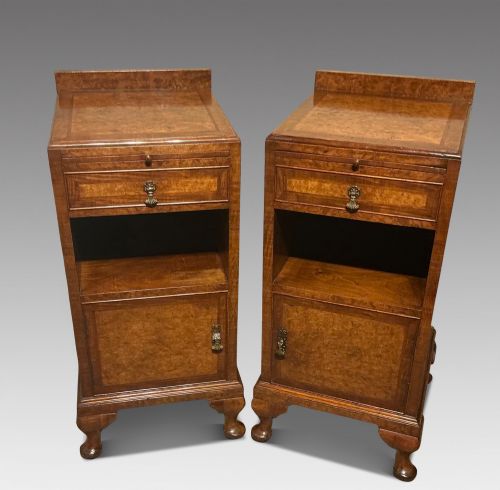
Georgian Lamp Table Pair
A georgian lamp table pair brings balanced symmetry to a room, offering matched surfaces designed to hold lighting beside a bed or sofa.
Georgian Lamp Table Pair
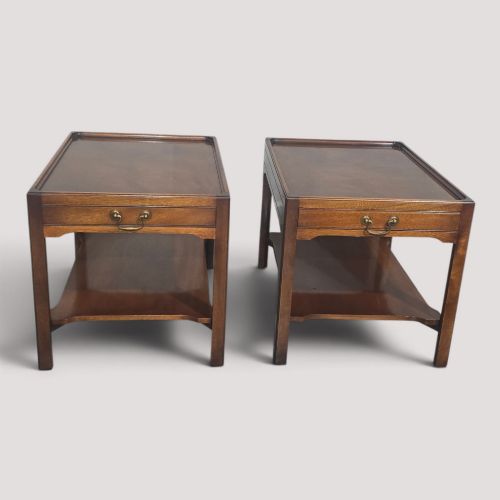
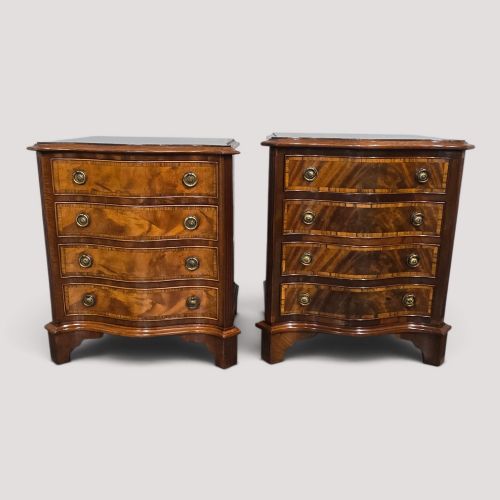
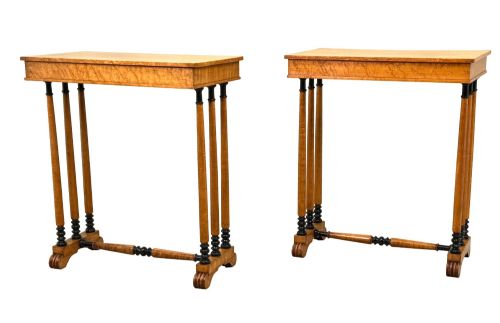
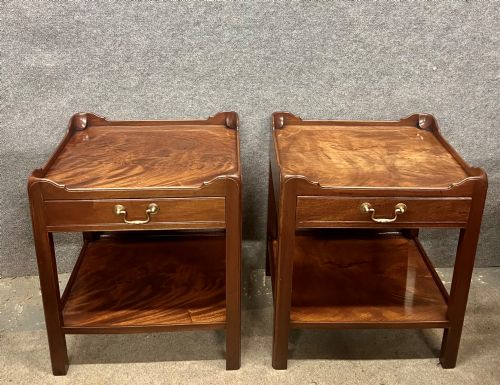
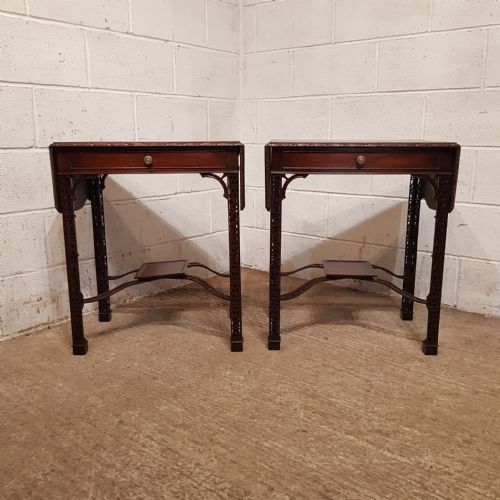
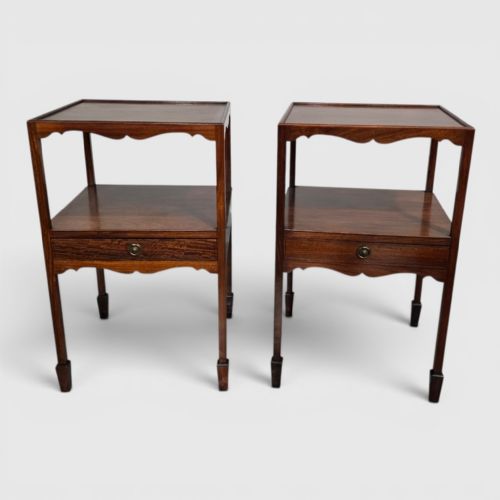
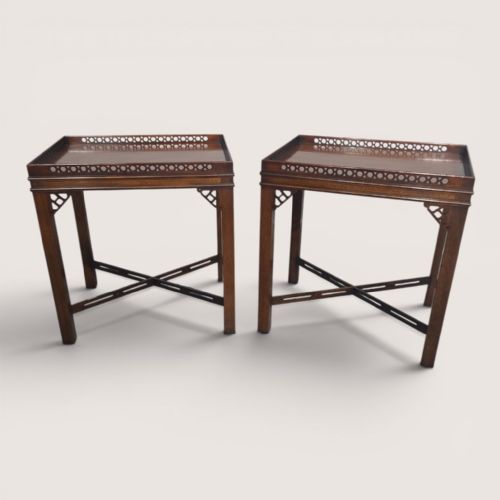
A georgian lamp table pair consists of matched small tables or stands originally built for lighting or bedside use, though many surviving examples date from later revival periods such as the early twentieth century. These pieces function as side tables, occasional tables, or bedside cabinets, providing symmetrical placement within a room.
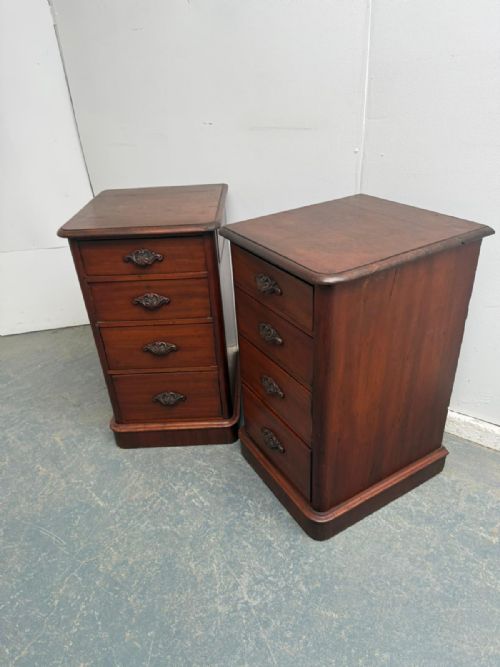
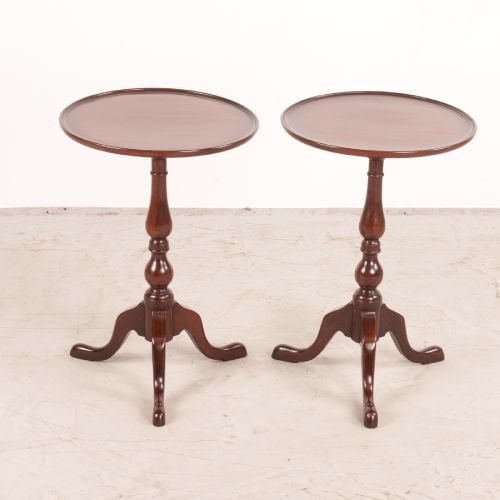
The selections found here draw heavily on eighteenth and nineteenth-century forms, alongside revival interpretations from the decades around nineteen hundred and nineteen twenty. Buyers will frequently encounter mahogany as the primary timber, often shaped into tripod bases, bedside chests of drawers, or wine tables.
Many pairs bridge the gap between actual period pieces and later craftsmanship inspired by Georgian and Regency designs. This means a buyer might select genuine nineteenth-century tables or choose solid mahogany revival pieces that replicate the classic proportions of earlier eras.
Materials and construction methods
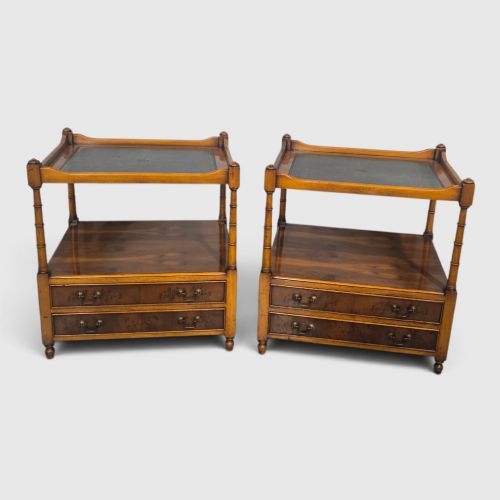
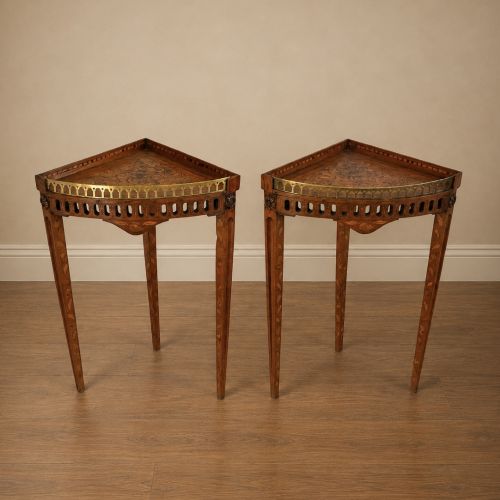
Cabinetmakers relied predominantly on mahogany for its strength and rich grain, frequently pairing it with walnut, yew, and burr walnut for decorative effect. Inlaid marquetry, brass galleries, and leather insert tops add refined detail to surfaces designed for daily domestic use.
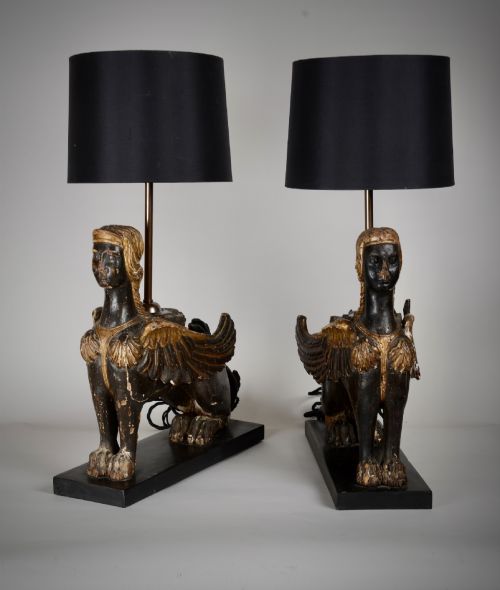
Construction techniques include traditional joinery such as tripod pillar supports, drop leaves, and fitted small drawers with waxed finishes. Metal components like brass and ormolu appear on hardware, gallery rails, and candlesticks converted into lighting.
Periods represented span from the eighteenth century through the Regency era to twentieth-century revival pieces dated nineteen twenty and nineteen thirty.
Distinctions in construction and finish
Quality rests in the selection of timber figures, such as dense mahogany grain or burr walnut veneers, paired with crisp hand-cut marquetry inlay. Superior examples display precise joinery in drawer construction and well-proportioned tripod or four-leg bases that remain stable on uneven floors.
The execution of brass galleries, leather top inserts, and hardware separates standard utility items from finely appointed pieces. Period accuracy in revival pieces also influences worth, with handmade construction methods holding greater regard than mass-produced alternatives.
The Georgian Lamp Table Pair Glossary
- Tripod base
- A three-legged support structure commonly found on round occasional and wine tables. This design ensures stability on uneven floors without rocking.
- Brass gallery
- A low pierced metal rail fitted around the edge of a tabletop. It prevents items from sliding off the surface.
- Marquetry
- Decorative veneer work arranged in geometric or pictorial patterns using various coloured woods. This technique requires exceptional skill from the cabinetmaker.
- Drop leaf
- A hinged table flap that can be raised to extend the surface area or lowered when space is limited. Brass hinges are typically countersunk into the timber.
- Serpentine
- A gently undulating curved shape applied to the front of chests and cabinets. It offers a softer visual profile than straight lines.
Georgian Lamp Table Pair: Frequently Asked Questions
How are matching pairs identified?
Matching pairs are judged by consistent timber grain, identical dimensions, and matching hardware or inlay patterns across both pieces.
Even when constructed during revival periods, true pairs share uniform wear and identical turning on legs or pedestals.
Where should these tables be placed?
These pieces suit placement beside a bed, flanking a sofa, or serving as occasional surfaces in a hallway.
Their compact dimensions allow them to fit into smaller corners while providing functional tabletop space for lighting.
Are these tables solid wood?
Construction varies between solid timbers such as mahogany and walnut, and pieces featuring decorative veneers over secondary woods.
Cabinetmakers often applied burr walnut or maple veneers to drawer fronts while utilising solid timber for structural frames.
What defines the Regency style?
Regency design draws on classical Greco-Roman motifs, featuring clean lines, restrained carving, and dark woods.
Pieces from this era often incorporate brass mounts, tripod pedestals, and subtle reeding on the legs.