
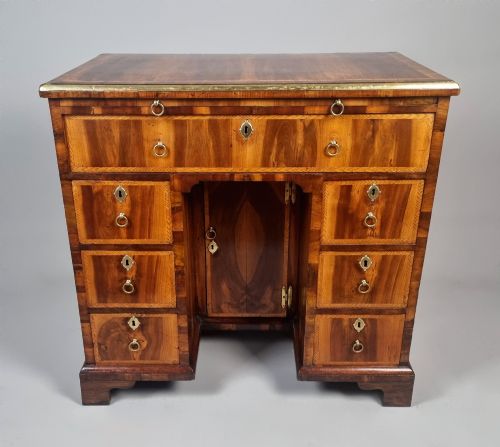
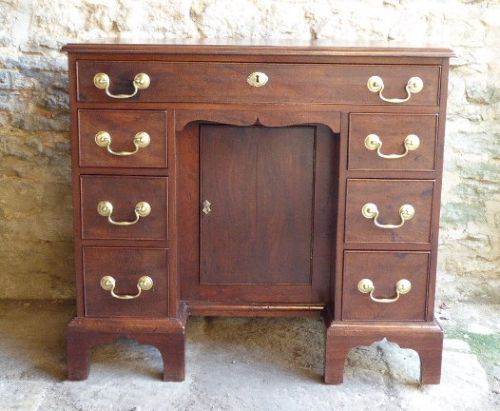
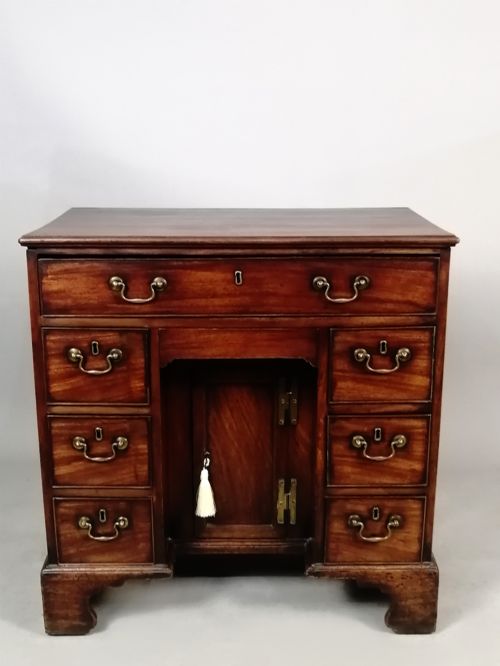
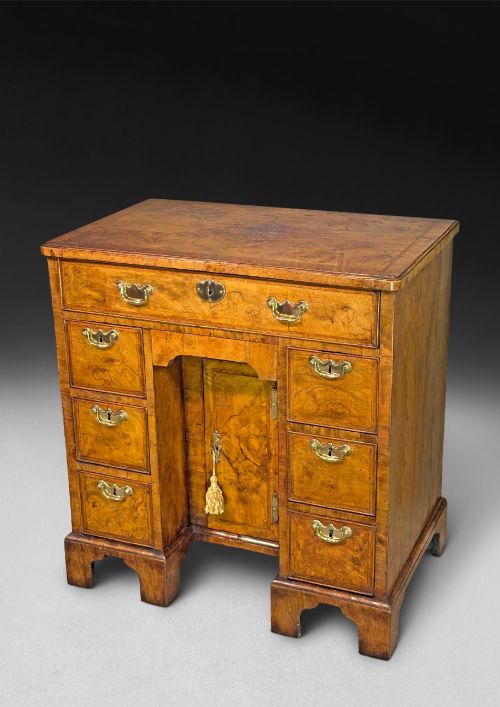
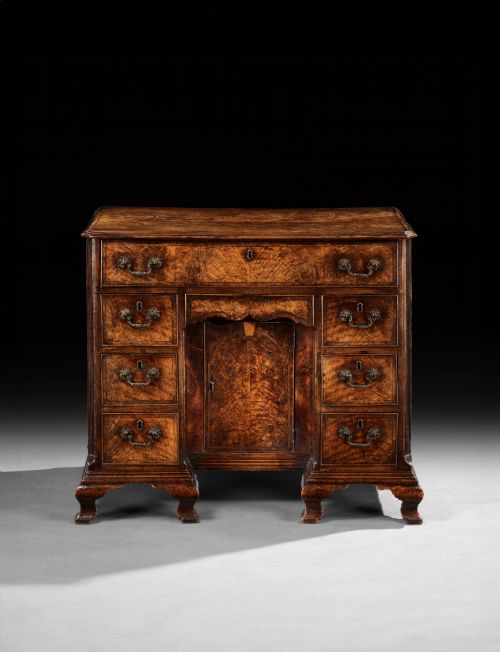
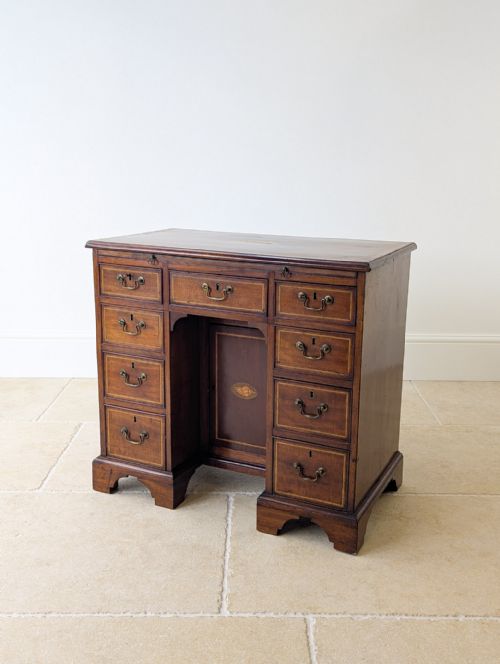
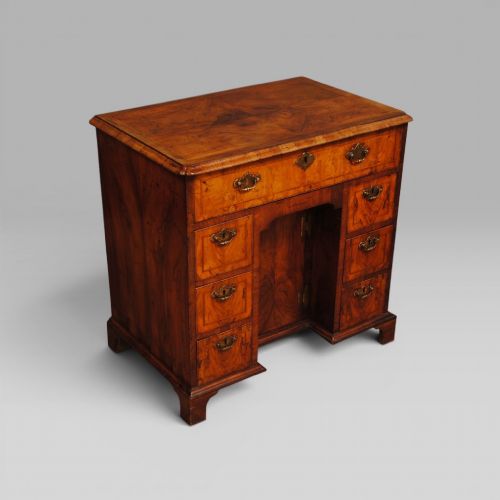
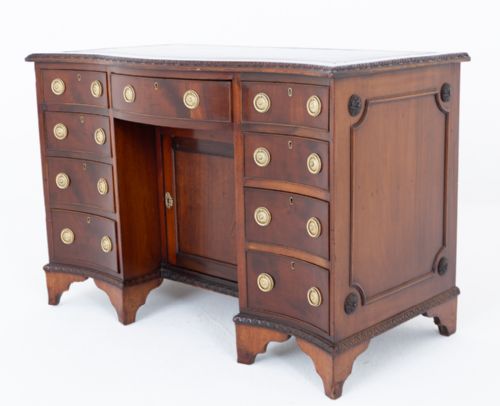

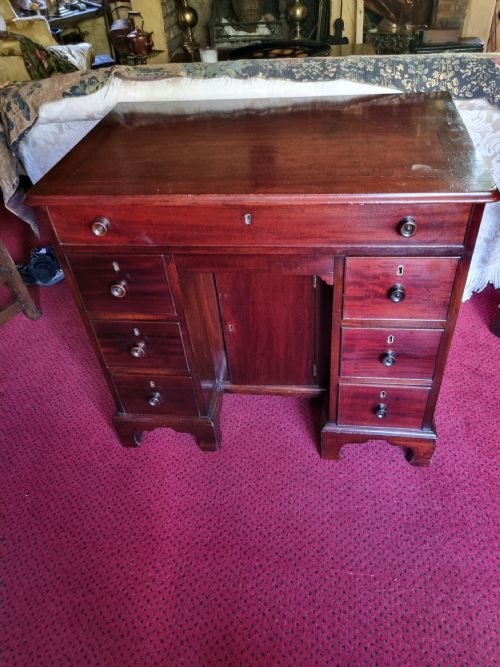
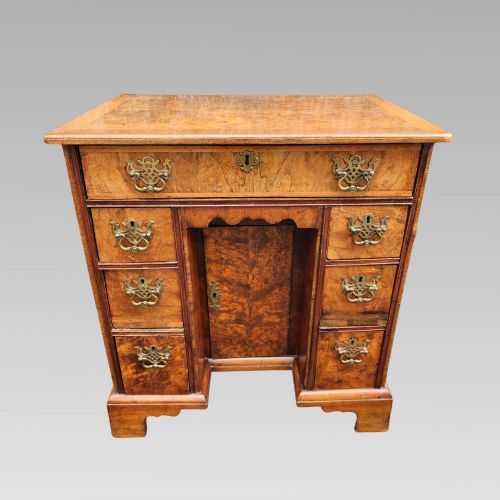

Georgian Kneehole Cupboard
A georgian kneehole cupboard provides a compact writing space with concealed drawers, bringing understated utility to a room.
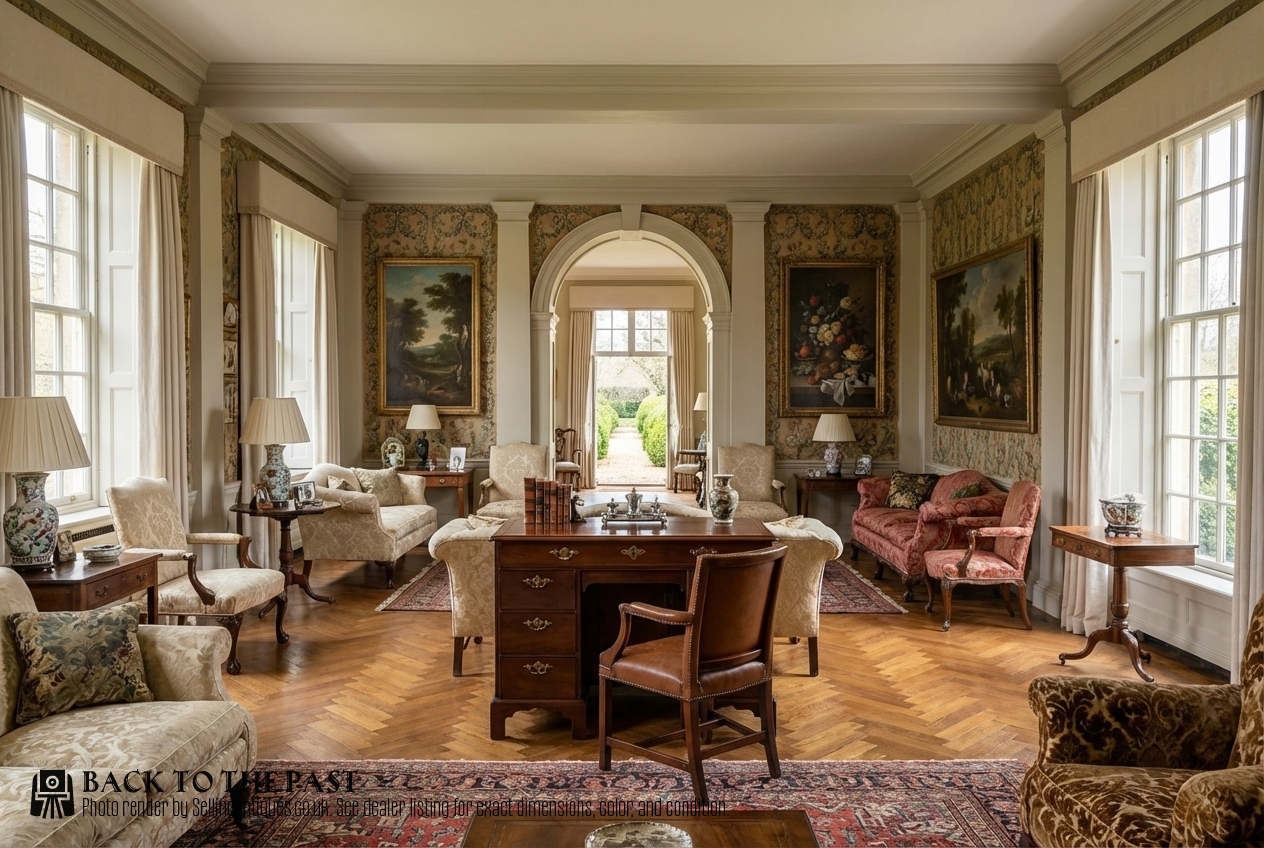
Georgian Kneehole Cupboard
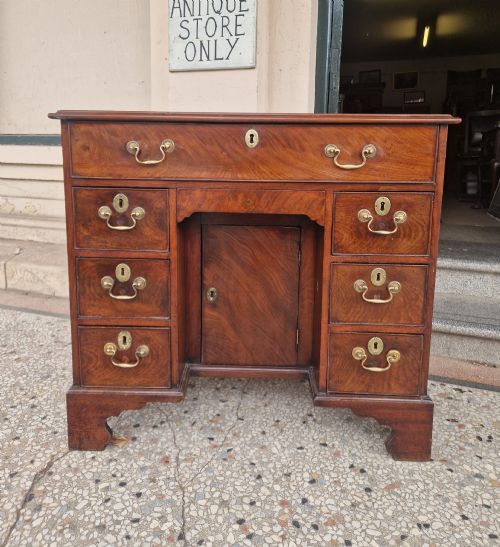
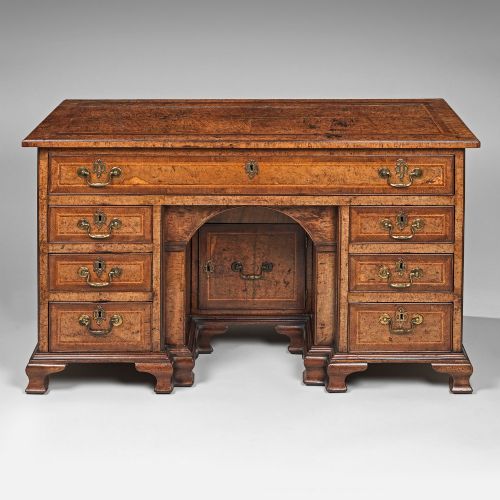
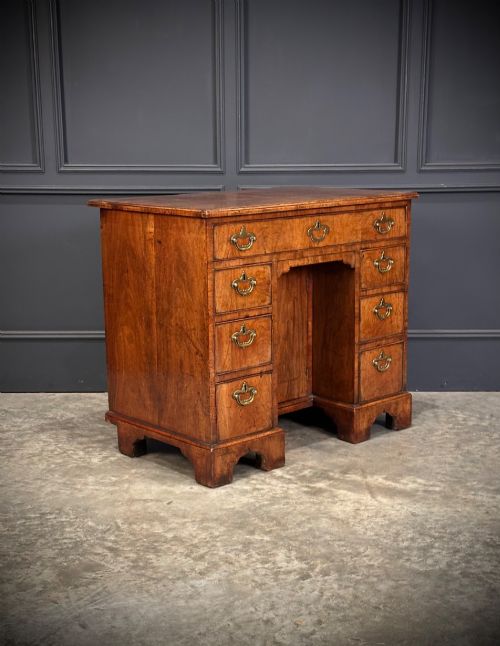
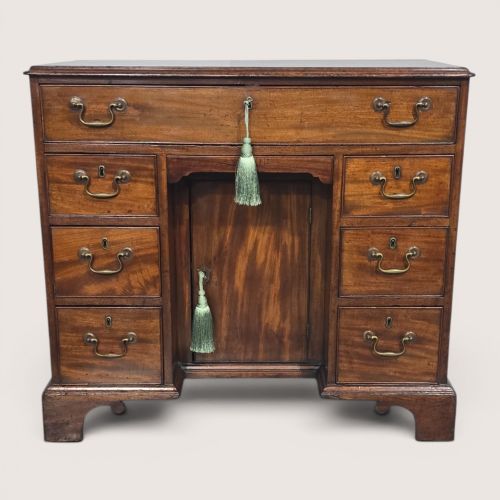
A georgian kneehole cupboard typically presents as a low, freestanding desk or dressing table with a central recessed recess flanked by banks of small drawers, often topped by a long drawer beneath the writing surface. The pieces appearing here span the eighteenth century and the regency period, drawing on earlier queen anne designs as well as later nineteenth century revivals.
Most examples found on this page are constructed from mahogany or walnut, while rarer instances utilise burr elm, yew, or simulated pine. The proportions remain consistently modest, designed to sit comfortably against a wall in a study, bedroom, or dressing room.
Materials and construction
Cabinet makers relied heavily on dense timbers such as mahogany and figured walnut, frequently applying veneers of burr walnut, fiddleback walnut, or curl mahogany over secondary woods to create richly patterned surfaces. Crossbanding and featherbanding in contrasting light and dark woods often frame the drawer fronts, adding linear definition to the main facade.
Brass hardware, including batwing or plate handles and cast brass escutcheons, secures the drawers and reinforces the corners. Internal drawer construction typically employs solid oak or pine with hand-cut dovetails, reflecting the precise joinery standard of the period.
Listings feature periods spanning from queen anne and george i through to the regency and victorian eras.
Distinctions in quality
The distinction between ordinary and exceptional pieces lies in the choice of timber and the restraint of the decoration. Finer examples display highly figured veneers like burr elm or fiddleback walnut that wrap continuously across the drawer fronts, matched by meticulous inlay and featherbanding.
Structural integrity and untouched original surfaces set the better specimens apart. Pieces retaining their original brass handles, locks, and polished finish demonstrate a higher degree of preservation than those altered by later restoration or replacement components.
The Georgian Kneehole Cupboard Glossary
- Kneehole
- A recessed space beneath the central writing surface of a desk or dressing table, designed to accommodate the user's legs. This architectural feature creates the characteristic pedestal arrangement of drawers on either side.
- Crossbanding
- A narrow strip of veneer laid around the border of a drawer front or tabletop so that the grain runs at right angles to the surrounding wood. This technique provides a neat decorative frame.
- Featherbanding
- A delicate form of inlay consisting of two strips of veneer laid side by side in a chevron pattern resembling a bird's feather. It often outlines drawer perimeters on walnut furniture.
- Burr walnut
- Timber taken from a growth or excrescence on a walnut tree, yielding a swirling, highly figured grain pattern. Cabinet makers prized this wood for high-status eighteenth century drawer fronts.
- Dovetail
- A joint formed by interlocking wedge-shaped fingers, used extensively to join drawer sides to drawer fronts. Hand-cut dovetails indicate traditional craftsmanship before mass production.
Georgian Kneehole Cupboard: Frequently Asked Questions
What is a kneehole cupboard used for?
These pieces served historically as writing desks, dressing tables, or compact bureaus for private correspondence and personal grooming. The central cupboard concealed behind the kneehole often held a chamber pot or provided secure storage.
Today, they function well as writing desks in studies or as decorative console tables in hallways, offering practical drawer storage without dominating a room.
How do I distinguish walnut from mahogany pieces?
Walnut furniture generally dates from the earlier eighteenth century, featuring rich brown tones with dark figuring or swirling burrs. It often includes decorative inlays like featherbanding.
Mahogany became more prominent later in the eighteenth century, presenting a deeper reddish-brown hue and a straighter grain. The presence of curl or flame mahogany usually points towards the george iii period.
Are these desks suitable for daily use?
The compact proportions and sturdy timber construction make them resilient enough for contemporary laptop use or letter writing. Their drawers offer convenient organisation for modern stationery.
Care should be taken with antique polished surfaces, using coasters and mats to prevent moisture rings and heat marks from everyday items.
How can I tell the period from the style?
Early eighteenth-century pieces from the queen anne and george i eras frequently feature walnut veneers, herringbone banding, and cabriole legs or bracket feet. The proportions tend to be neat and architectural.
Later eighteenth-century examples under george iii lean towards straight-grained mahogany, satinwood accents, and refined bracket feet or plinth bases. Victorian revivals often copy these earlier proportions but show different secondary timbers and machine-cut elements.