



Georgian Inlaid Writing Cabinet
A georgian inlaid writing cabinet brings together fine cabinet-making and functional workspace, offering fitted drawers and elegant marquetry for the study.
Georgian Inlaid Writing Cabinet
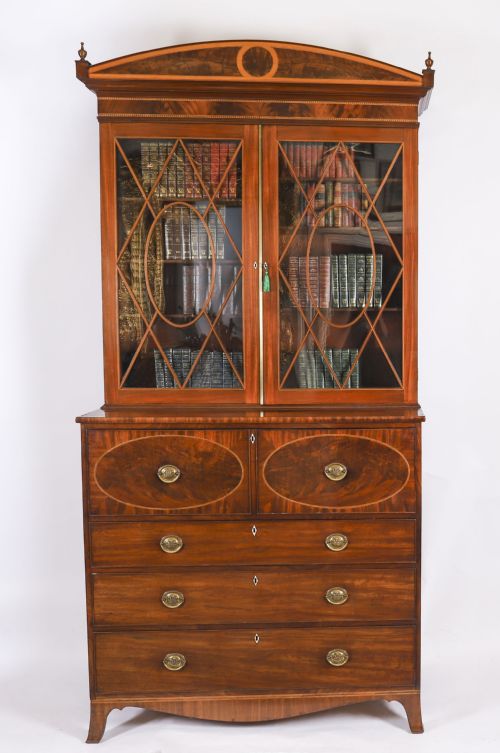
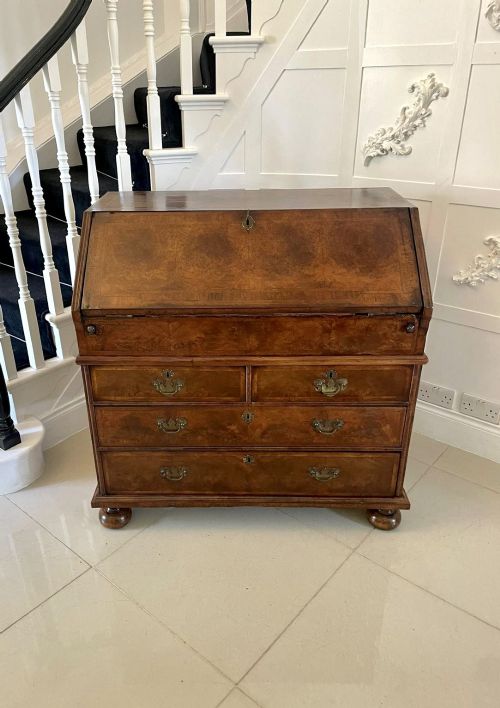
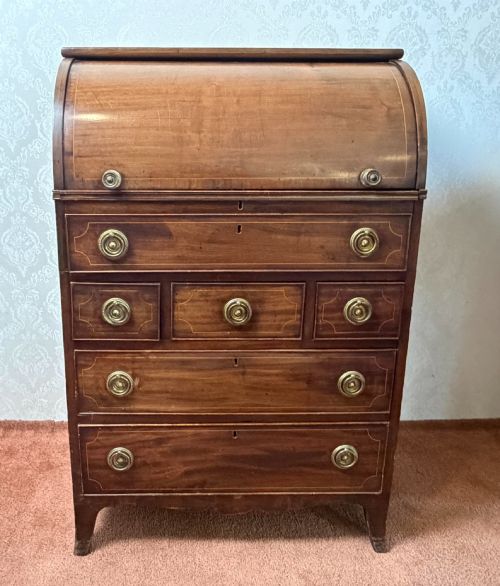
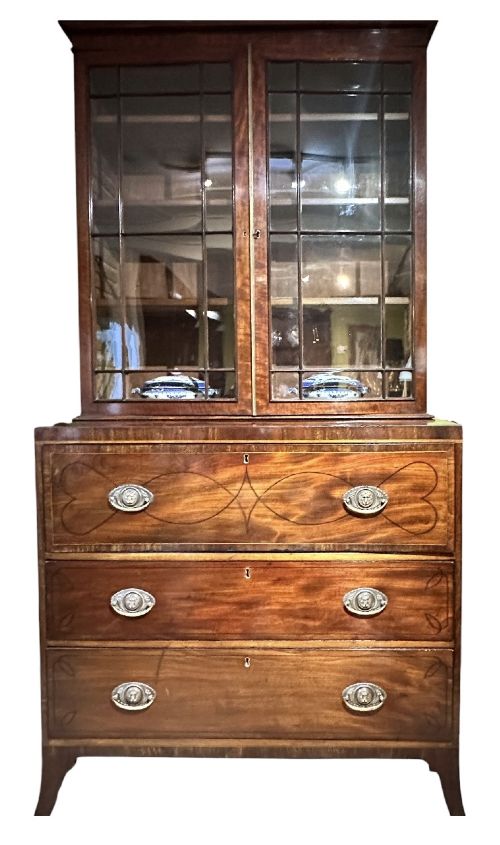
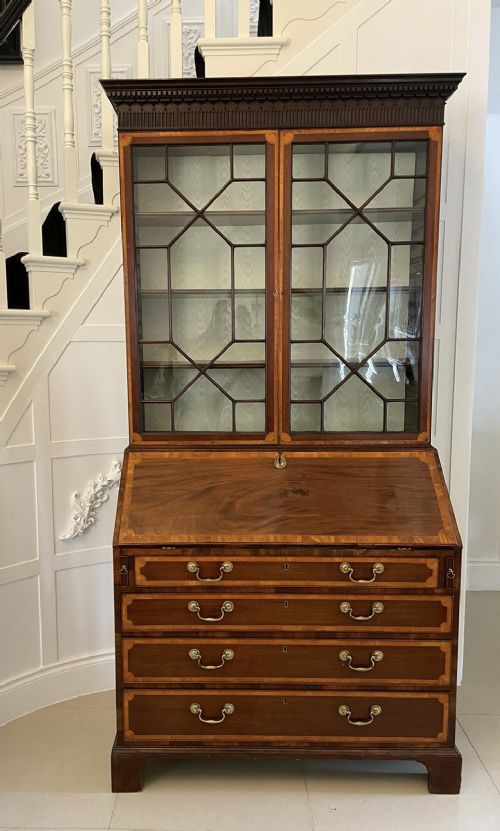
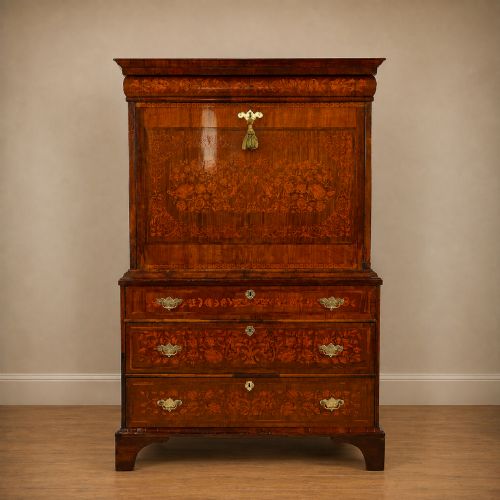
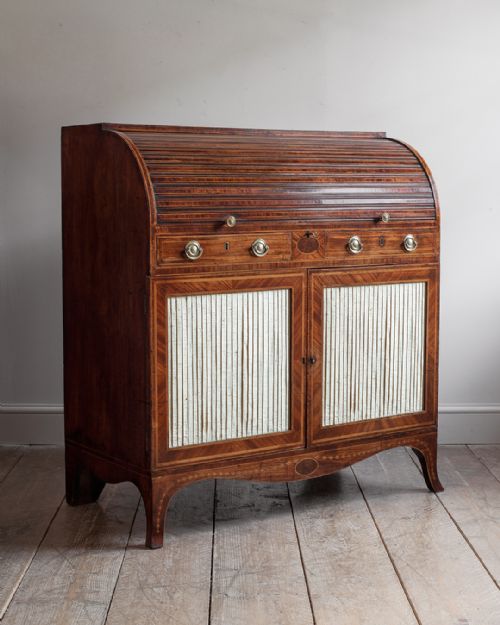
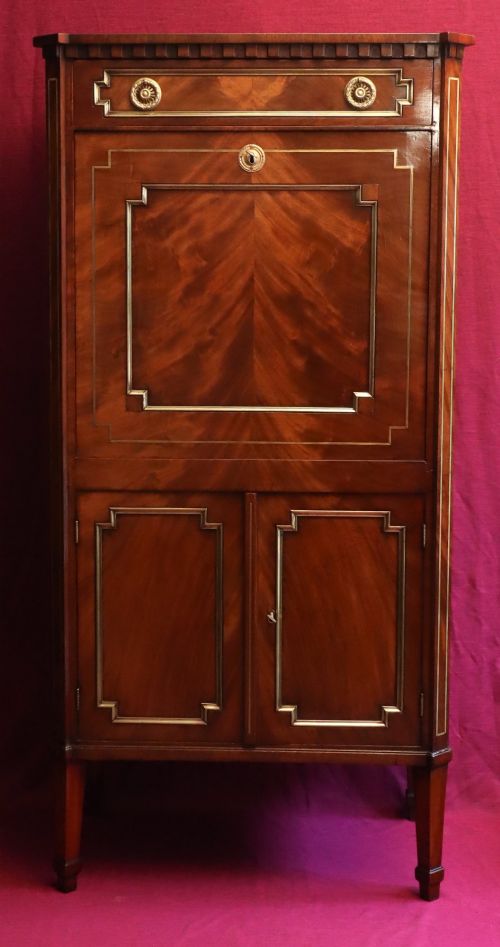
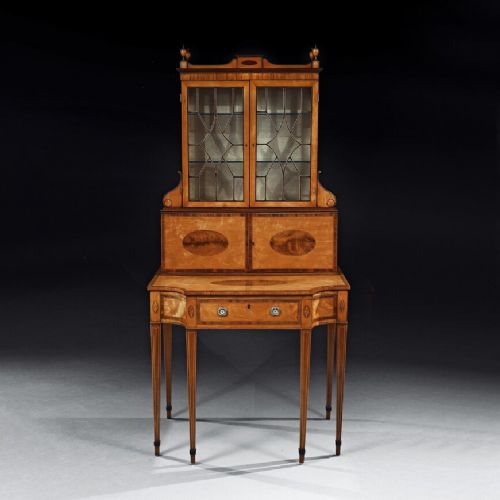
A georgian inlaid writing cabinet encompasses forms such as bureau bookcases, secretaire chests, and cylinder desks designed for correspondence and storage. These pieces combine upper shelving or glazed display sections with a fall-front or pull-out writing surface concealing pigeonholes and small drawers.
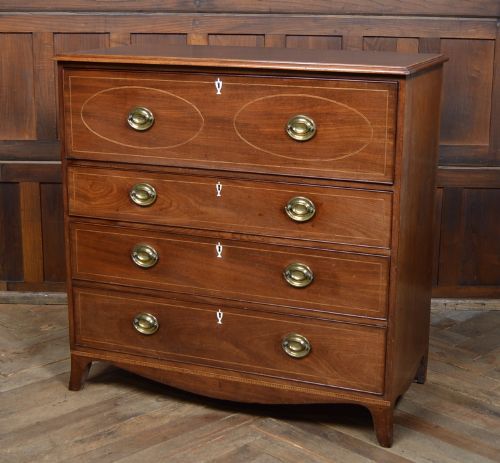
The versions met most often on this page date from the eighteenth and nineteenth centuries, spanning George III and Regency periods alongside later revival styles. Mahogany and satinwood predominate, frequently accented with marquetry or contrasting stringing.
Originating as essential furniture for the Georgian study or drawing room, these cabinets serve both practical writing needs and display functions. Their internal compartments provide dedicated spaces for paper, ink, and ledgers.
How they were made
Carpenters constructed carcasses from dense hardwoods like mahogany and walnut, often applying flame veneers or burr figures to primary surfaces. Secondary timbers such as oak or pine appear in drawer linings and internal divisions.
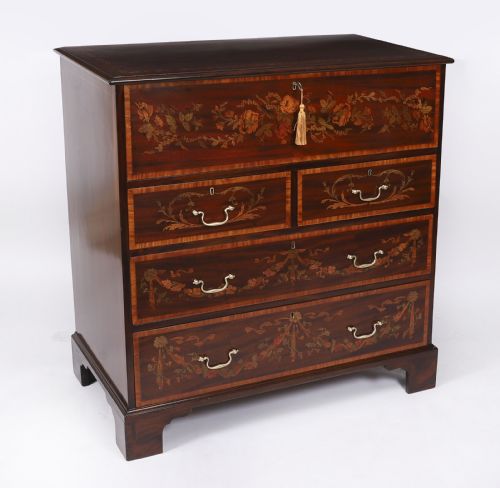
Inlay and marquetry techniques utilise contrasting woods like satinwood, harewood, and fruitwoods, sometimes combined with brass stringing. Tambour shutters and cylinder fronts require precise grooved track construction to operate smoothly.
Hand-cut dovetails join drawer corners, while brass hardware including drop handles and escutcheons secures functional access. French polishing or wax finishes protect the wood surfaces while enhancing natural grain patterns.
Periods represented span eighteenth-century George III through Regency, Edwardian, and Sheraton revival styles.
What varies in quality
The refinement of the timber selection dictates much of the visual distinction, from plain mahogany planks to highly figured flame veneer and intricate floral marquetry. Skilled grouping of wood grain creates balanced symmetrical patterns across drawer fronts and fall-front panels.
Internal complexity separates standard pieces from exceptional examples, particularly fitted interiors featuring secret compartments, carved pigeonholes, and miniature drawers with crossbanded borders. The precision of the joinery in sliding mechanisms and tambour slats reflects the workshop's standard.
Proportion and architectural harmony influence the standing of a piece, where glazed upper doors retain delicate wooden glazing bars and cornices display considered moulding profiles rather than heavy proportions.
Shoolbred of London·John Mclean
The Georgian Inlaid Writing Cabinet Glossary
- Secretaire
- A desk or writing cabinet featuring a fall-front drawer that drops down to reveal a writing surface and fitted interior. This form conceals private papers behind standard drawer facades.
- Tambour
- Flexible shutters formed from narrow strips of wood glued to a canvas backing, allowing them to slide around a curved track. This mechanism closes off cylinder desks and bureau writing compartments.
- Marquetry
- Decorative patterns formed by fitting together contrasting veneers into a wooden ground to create pictorial or floral designs. Artisans utilise various tinted woods and engraved bone to build up complex motifs.
- Crossbanding
- A border veneer applied around the edges of a panel where the grain runs at right angles to the central wood. This technique frames drawer fronts and table tops to provide visual definition.
- Escritoire
- A tall writing cabinet or desk used for correspondence, often fitted with numerous internal drawers and a fall-front writing flap. The term derives from the French word for writing.
- Satinwood
- A durable tropical hardwood with a lustrous yellow or golden sheen, utilised extensively for banding and inlay work during the eighteenth and nineteenth centuries. Its bright tone contrasts effectively against darker woods like mahogany.
Georgian Inlaid Writing Cabinet: Frequently Asked Questions
What is a secretaire bookcase?
A secretaire bookcase combines a shelved upper section for books with a lower bureau or writing drawer that pulls out or folds down. This dual purpose serves both library storage and everyday correspondence.
Such furniture functioned as a central piece in Georgian studies, keeping writing materials and ledgers close at hand while displaying bound volumes behind glass doors.
How do cylinder desks work?
Cylinder desks feature a rounded quarter-circle wooden shutter that slides back into the body of the desk when opened. This action reveals a pull-out writing slide and internal pigeonholes.
When closed, the cylinder hides all paperwork and writing tools, maintaining a neat appearance in a drawing room or parlour.
What is satinwood inlay?
Satinwood inlay involves cutting decorative shapes from yellow satinwood and inserting them into recesses carved into a darker primary wood like mahogany. This technique creates contrasting floral motifs and geometric borders.
Cabinet-makers used this method to lighten cabinet fronts and highlight key architectural areas during the late eighteenth century.
How do I identify a Georgian writing cabinet?
Georgian writing cabinets display characteristic proportions, hand-cut dovetails in the drawer construction, and secondary timbers such as oak internal linings. Stylistic cues include bracket feet, ogee bracket feet, or cornice mouldings typical of the period.
Makers of this era relied on flame mahogany, walnut, and subtle stringing rather than heavy machine-made elements found in later furniture.