
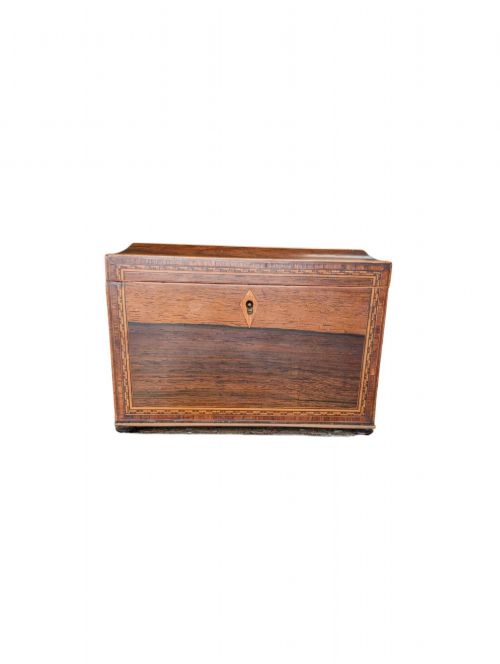
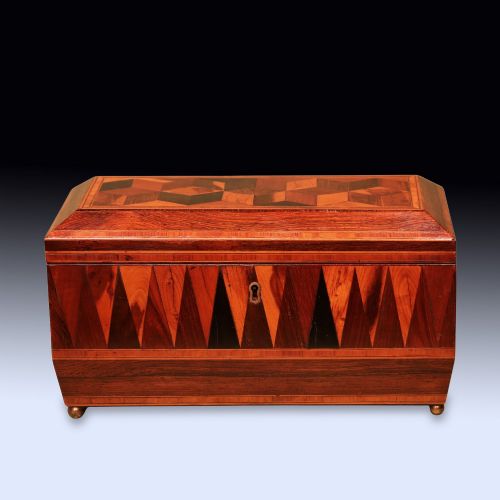

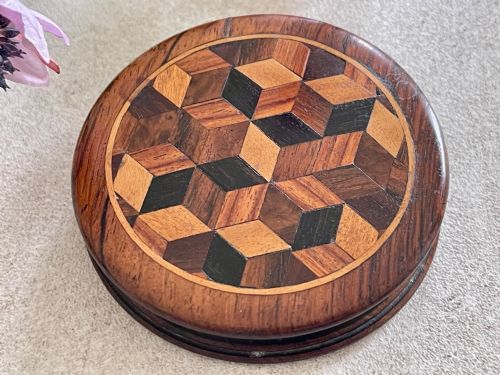
Georgian Inlaid Wooden Box
A georgian inlaid wooden box is a portable treasure of the period, holding everything from tea and letters to cutlery with quiet grace.
Georgian Inlaid Wooden Box
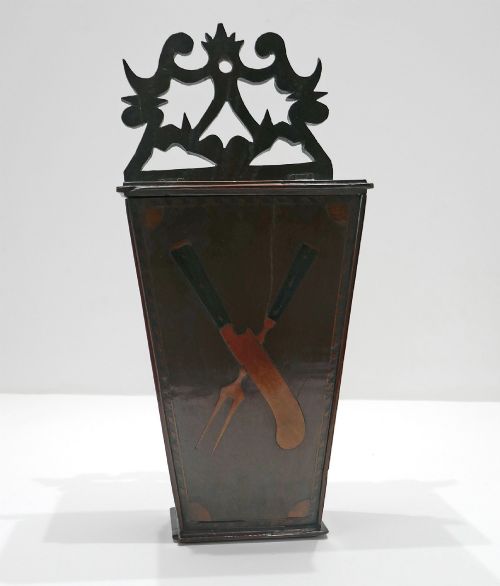
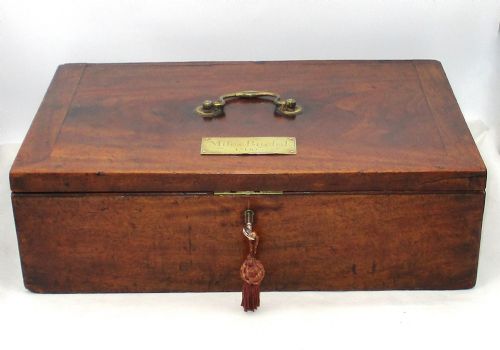
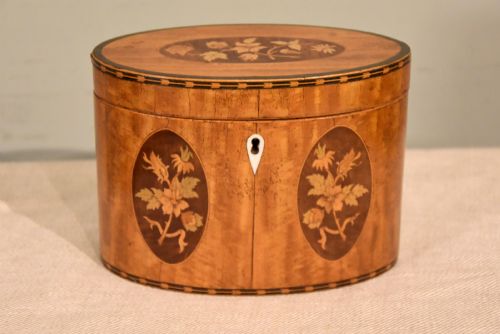
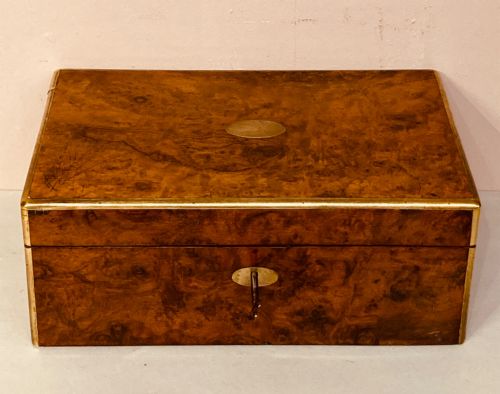
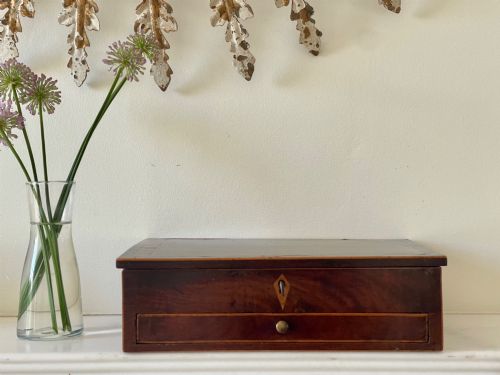
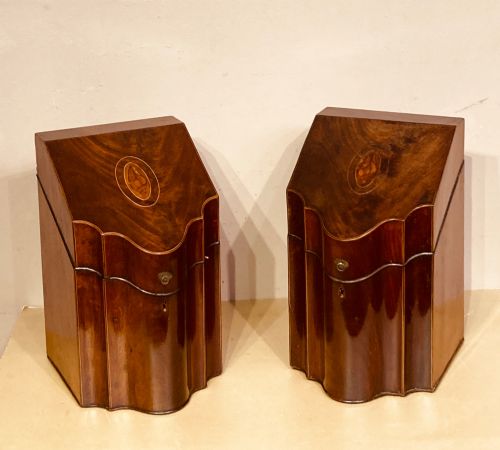
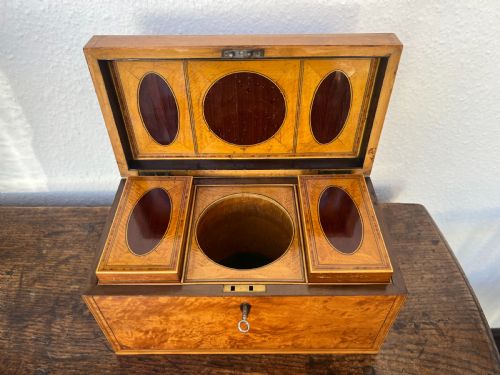
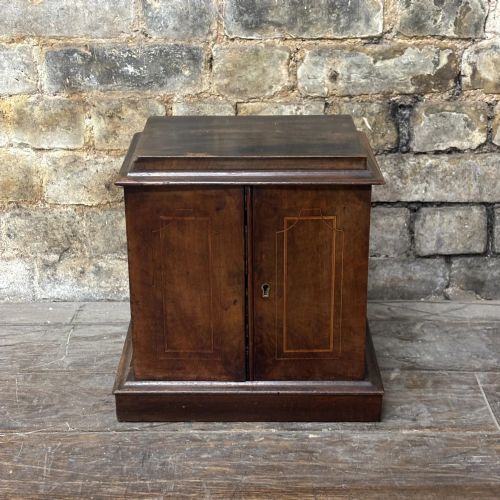
A georgian inlaid wooden box appears in domestic interiors primarily as a tea caddy, writing slope, knife box, or small storage casket.
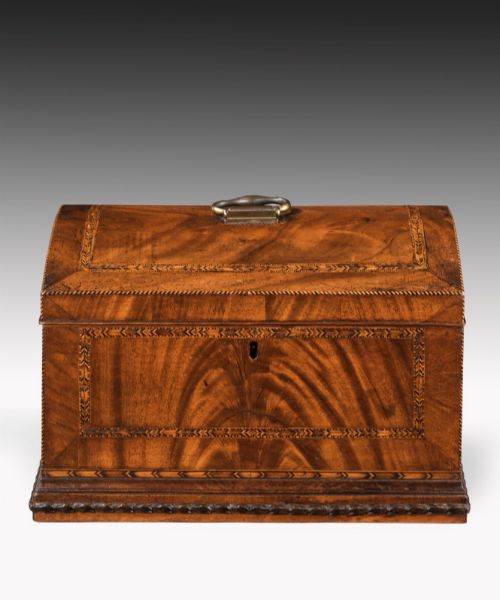
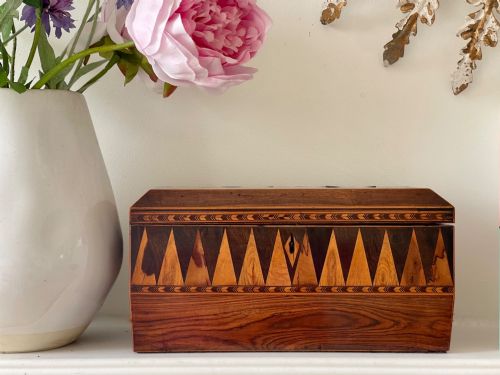
The pieces on this page span the Georgian, Regency, and Victorian periods, often taking geometric, oval, or sarcophagus shapes.
Makers of the era utilised native and exotic timbers to construct these functional containers for affluent households.
Materials and Technique
Craftsmen built carcasses from foundational timbers like mahogany, walnut, and rosewood, applying contrasting veneers of satinwood, boxwood, and harewood.
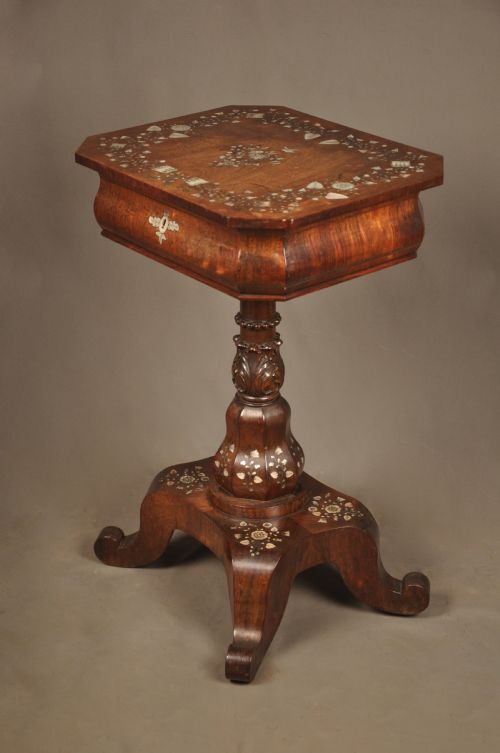
Detailed surface ornamentation relies on wood inlay, stringing, and parquetry, sometimes incorporating brass or bone accents.
Interiors frequently retain fitted compartments, lined paper, or original hardware such as lion mask handles and locks.
A specialised snuff shoe provides a peculiar historical place to store tobacco.
Judging the Workmanship
The distinction between ordinary and superior examples lies in the precision of the veneer work and the complexity of the inlay motifs, such as shells or stars.
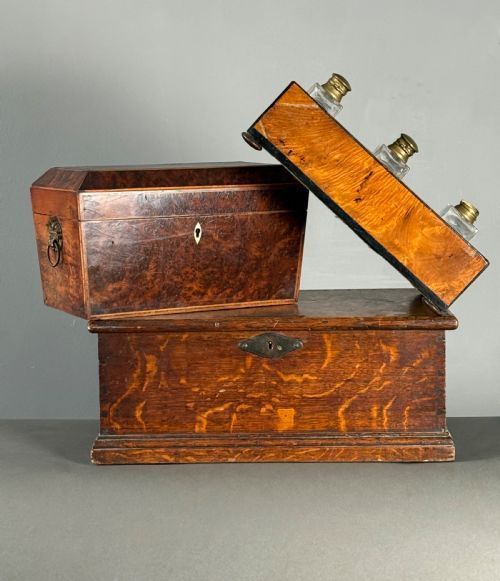
Proportion and timber selection drive value, with figured grains like flame mahogany or burr yew-wood marking out ambitious commissions.
The survival of original fitted interiors and working brass locks elevates a piece well above those altered or stripped over time.
Holtzapffel and Co
The Georgian Inlaid Wooden Box Glossary
- Tea caddy
- A box designed specifically to store dry tea leaves, often featuring internal lidded compartments to keep the blends separate.
- Writing slope
- A portable slant-front desk that opens to reveal a slanted writing surface, inkwells, and storage for stationery.
- Parquetry
- A geometric mosaic of wood pieces used for decorative veneer on floors and furniture surfaces.
- Tunbridge Ware
- A type of decorative woodwork produced in Kent, characterised by intricate mosaic patterns made from many tiny pieces of naturally coloured wood.
- Sarcophagus caddy
- A tea container shaped like a miniature stone sarcophagus, popular during the Regency period and typically resting on paw feet.
Georgian Inlaid Wooden Box: Frequently Asked Questions
What was a tea caddy used for?
Tea was a costly commodity in the eighteenth century, so leaves were kept locked away in dedicated caddies to prevent theft by servants.
Households often kept two distinct varieties inside the same box, one for green tea and one for black, along with a small mixing bowl.
How do I date a wooden box?
Dating relies on observing the prevailing timber choices, construction methods, and hardware styles of the period in question.
Earlier pieces favour solid mahogany and simple stringing, while Regency examples lean towards rosewood with intricate brass inlay.
Are writing slopes difficult to maintain?
These boxes require stable room humidity to prevent the delicate satinwood or mahogany veneers from cracking or lifting.
Applying a gentle wax polish helps nourish the historic timber surface without altering its natural patina.
What is the difference between a caddy and a chest?
A caddy is scaled for tabletop use to hold small quantities of tea, spices, or documents.
Larger chests, such as silver chests or knife boxes, sit on the floor or sideboard and serve heavier dining or storage functions.