


Georgian Inlaid Sideboard Table
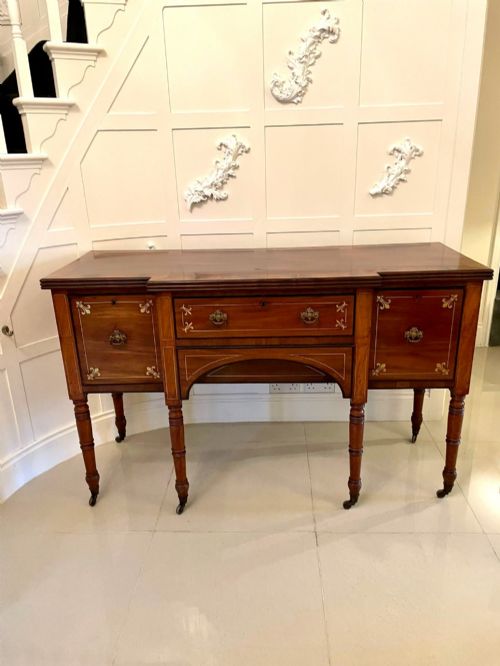
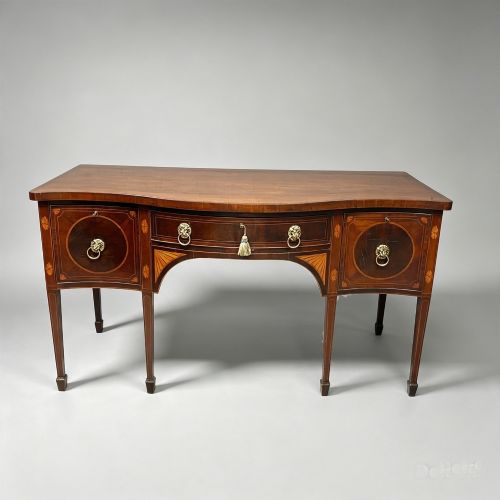
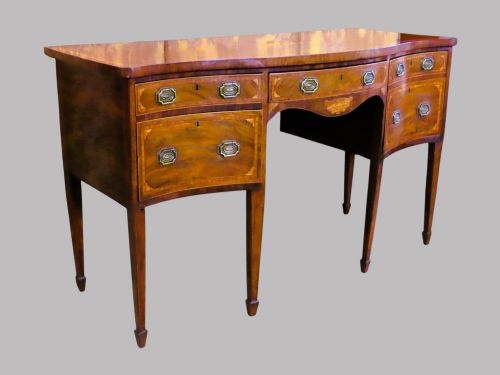
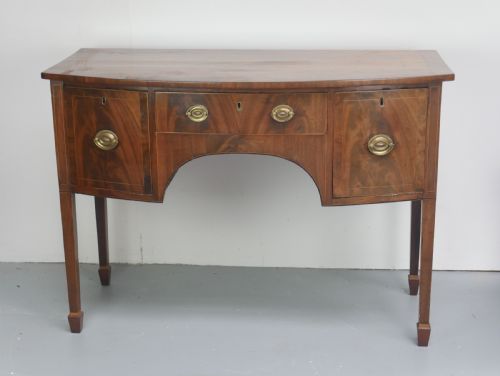
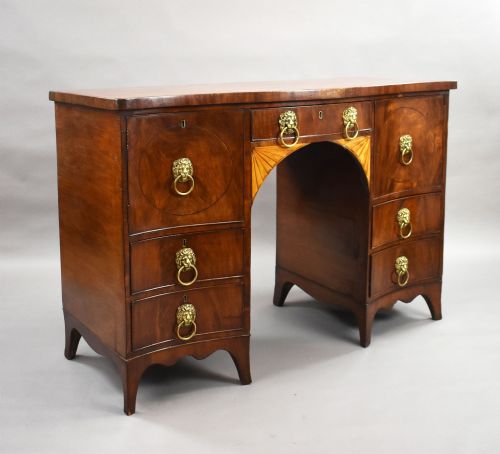
Georgian inlaid sideboard table designs bring architectural grace to a dining room, combining figured timber with precise boxwood stringing.
Georgian Inlaid Sideboard Table
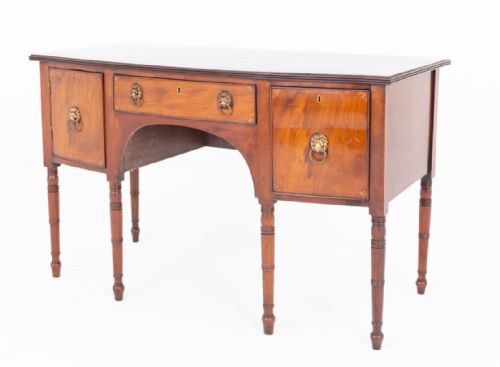
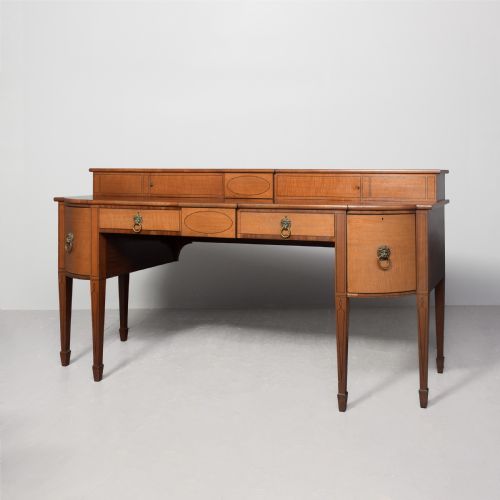
A georgian inlaid sideboard table serves as a monumental serving surface and storage piece, emerging primarily in the eighteenth and nineteenth centuries. These items occupy dining spaces to hold silver, linen, and serving dishes.
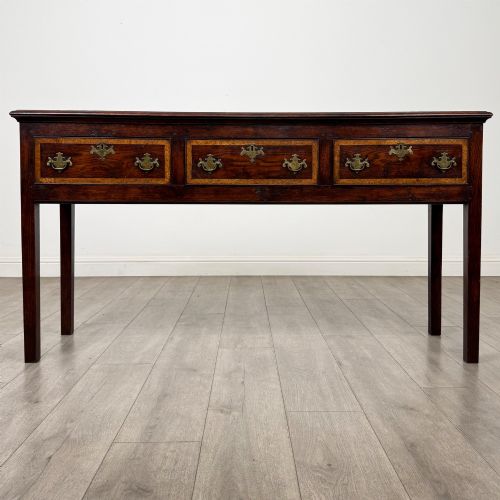
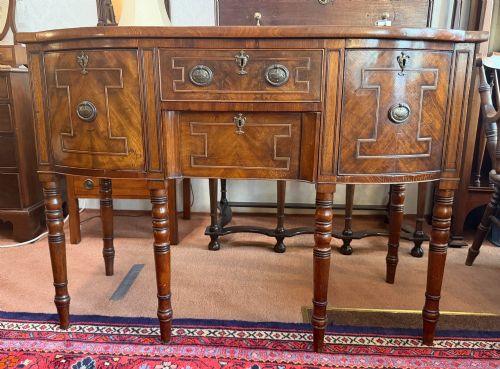
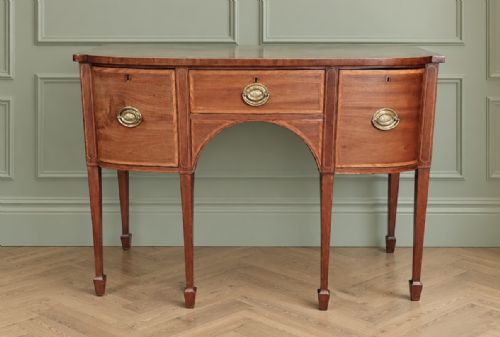
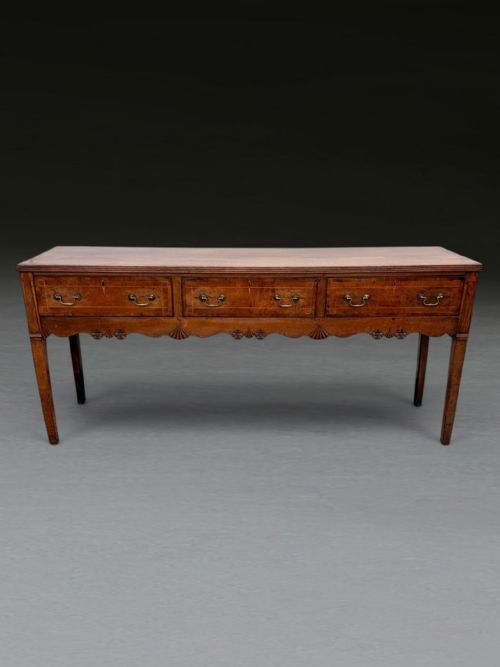
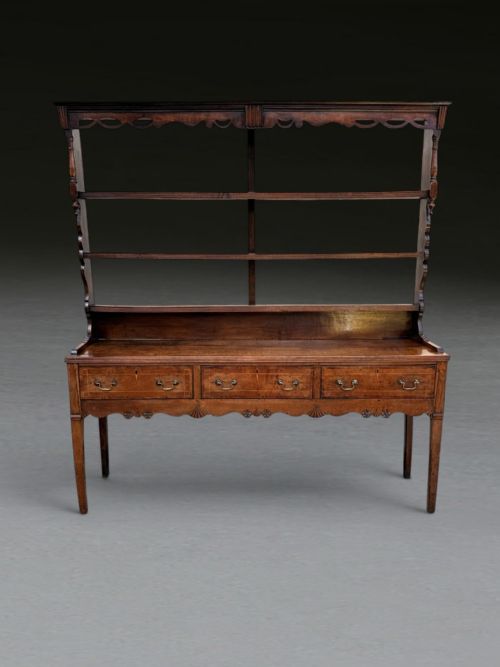
Mahogany forms the structural chassis for the majority of pieces on this page, shaped in bow-front, serpentine, or straight lines. Oak and satinwood also appear regularly in various foundational or decorative capacities.
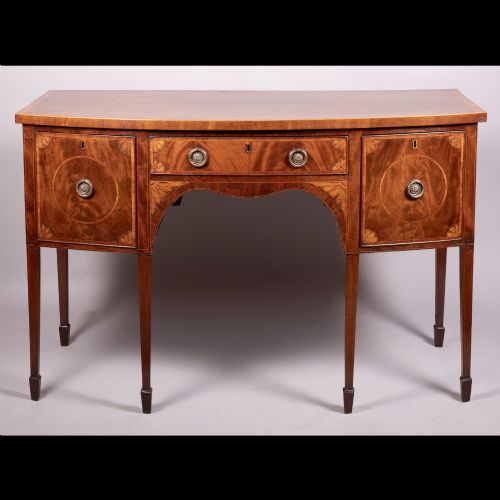
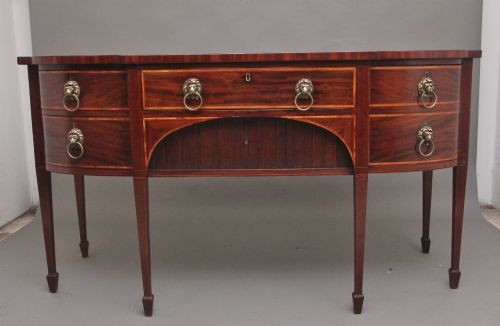
The inventory spans authentic Georgian and Regency periods alongside later Edwardian revivals. Bow-front and serpentine silhouettes dominate the selection, often carrying contrasting stringing along the drawer fronts and legs.
Materials and construction methods
Cabinet makers constructed these pieces using solid mahogany and oak carcasses overlaid with figured veneers. Timber selection focused on rich grain patterns visible across the top and drawer panels.
Boxwood and satinwood provide the contrasting inlay work seen in stringing, fan motifs, and border banding. Artisans channelled narrow grooves into the primary wood to receive these lighter contrasting veneers.
Brass fittings, including handles and occasionally inlay strips, complement the dark timber. Joinery relies on traditional methods to accommodate the curved contours of bow-front and serpentine forms.
Listings feature mahogany, oak, satinwood, and boxwood inlay across Georgian, Regency, and Edwardian periods.
Distinctions in craftsmanship
The precision of the inlay work marks the tier of a piece, with tight, symmetrical boxwood lines separating standard examples from superior ones. Hand-cut veneers show a fluency that mechanical reproduction lacks.
Timber choice dictates overall presence, where highly figured mahogany and well-matched grain patterns elevate the aesthetic value. Lesser examples employ plain timber with minimal decorative banding.
Proportion and structural integrity define the higher range, particularly in complex serpentine or breakfront shapes. Fluid curves require exceptional carpentry to maintain stability and alignment across doors and drawers.
George Oakley
The Georgian Inlaid Sideboard Table Glossary
- Serpentine
- A front contour characterised by a convex centre flanked by concave curves. This shape requires advanced woodworking skill to execute properly.
- Bow-front
- A convex, outwardly curved front profile popular in the Georgian and Regency periods. It softens the linear geometry of a dining room.
- Stringing
- Narrow lines of contrasting wood inlay used to outline drawers, legs, and top surfaces. Boxwood is frequently utilised for this purpose.
- Pedestal sideboard
- A form comprising distinct side pedestals flanking a central serving section. These pieces often date to the George III era.
- Satinwood
- A pale, lustrous timber native to India and Ceylon, employed for contrasting crossbanding and decorative panels.
Georgian Inlaid Sideboard Table: Frequently Asked Questions
How do I date a sideboard?
Dating relies upon timber characteristics, handle styles, and construction techniques visible in the drawer linings and carcase. Georgian and Regency pieces exhibit hand-cut dovetails and specific framing methods distinct from later Edwardian revivals.
Examining the secondary woods, such as oak or pine used internally, provides further clues to the manufacturing decade. Cabinet making conventions shifted noticeably between the eighteenth century and the later revival periods.
Where were these pieces used?
Dining rooms formed the primary setting for these tables, where they functioned as staging areas for meals. Servants placed dishes, wine, and cutlery upon the surface before service.
Today, they transition easily into hallways or living spaces while retaining their original storage utility. Cupboards and drawers accommodate modern household items while preserving period character.
What is serpentine shaping?
Serpentine describes a curved front featuring an outward sweep in the middle flanked by inward curves at the sides. This fluid line creates a dynamic interplay of light and shadow across the timber.
Executing this profile demands precise carpentry, making such forms desirable among collectors. It contrasts with simpler straight-front or bow-front designs.
How do I care for mahogany?
Maintaining mahogany involves keeping the timber away from direct sunlight and sudden temperature shifts. Regular dusting with a dry cloth preserves the wax finish without building up residue.
Occasional application of traditional beeswax nourishes the grain and deepens the natural lustre. Avoid synthetic sprays that can degrade historic polish over time.