
Georgian Inlaid Mahogany
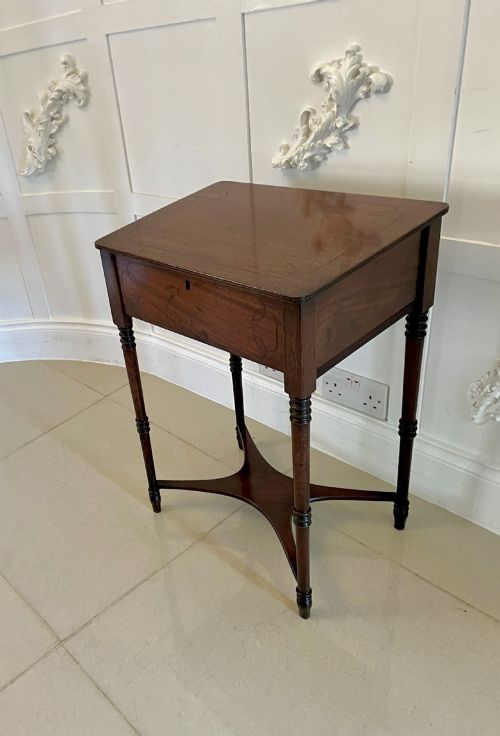
When you examine georgian inlaid mahogany, you find cabinet work defined by contrasting woods and rich figures that still anchors a traditional interior.
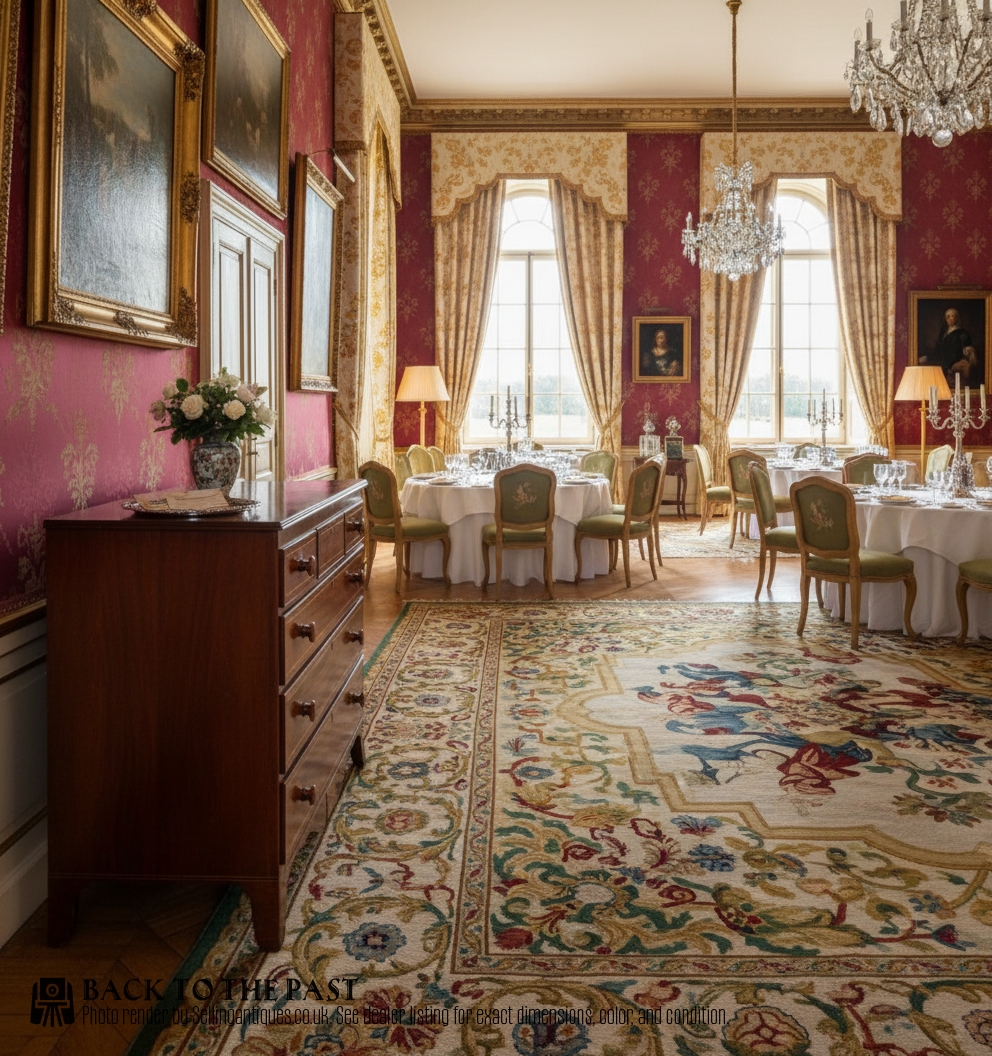
Georgian Inlaid Mahogany
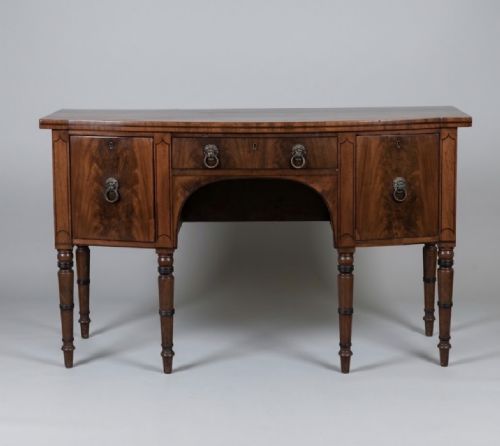
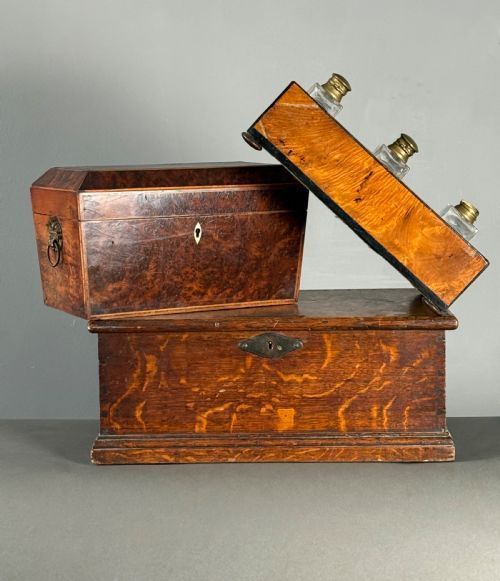
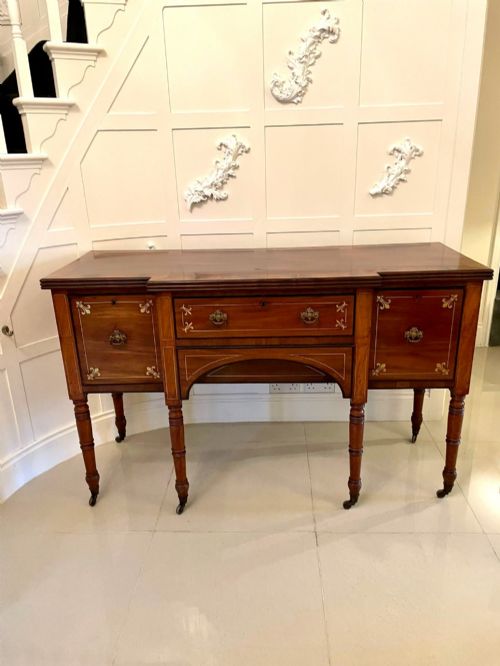
Items associated with georgian inlaid mahogany span formal dining rooms, libraries, and parlours, ranging from large sideboards and linen presses to small tea caddies and dressing mirrors.
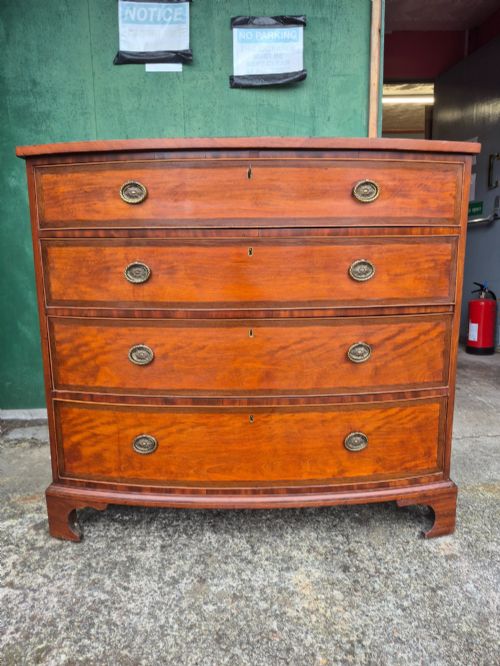
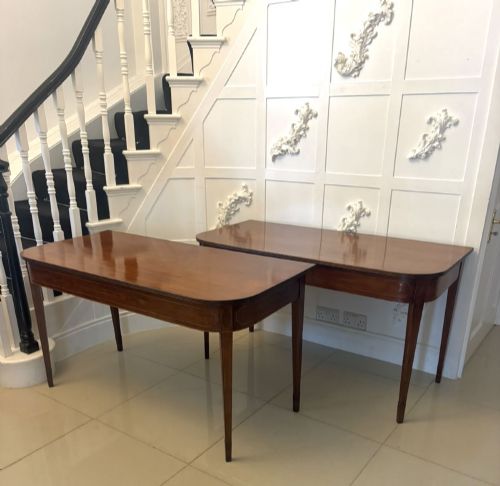
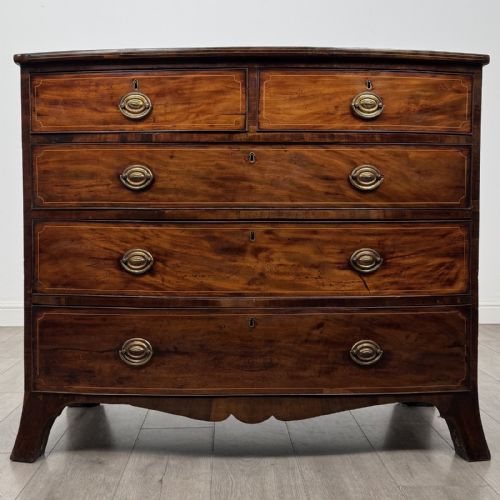
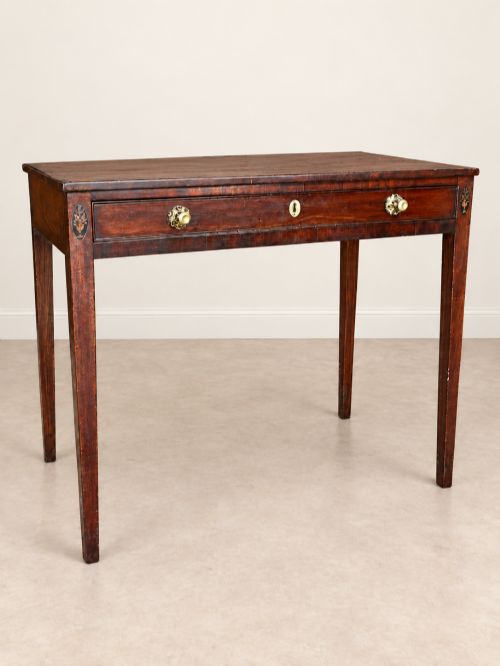
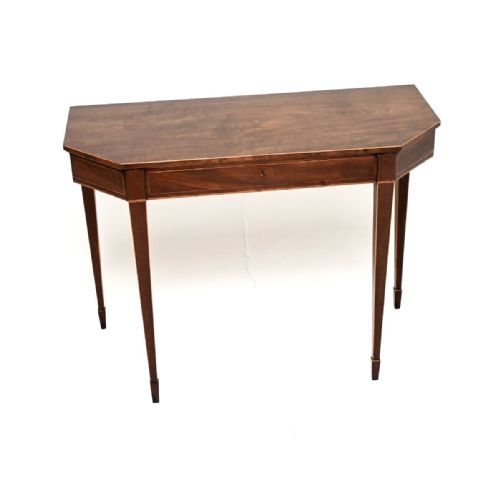
Sideboards, card tables, and chest of drawers appear frequently, displaying the characteristic dark timber contrasted with lighter stringing.
Pieces from the Georgian and Regency periods sit alongside later revival items from the Edwardian era and the twentieth century.
Materials and Technique
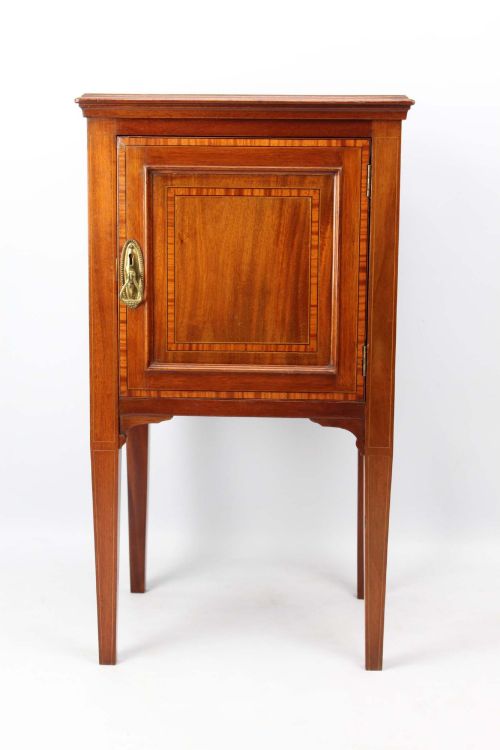
Cabinet makers utilised solid mahogany and flame mahogany veneers over secondary timbers, enriched with contrasting stringing and banding in satinwood, boxwood, and ebony.
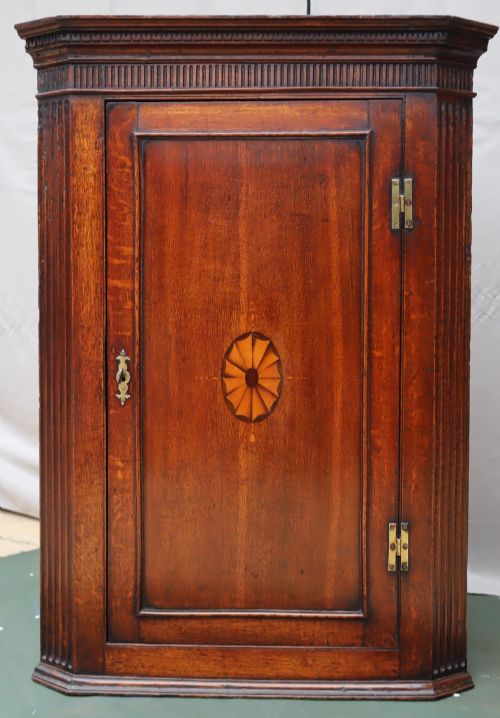
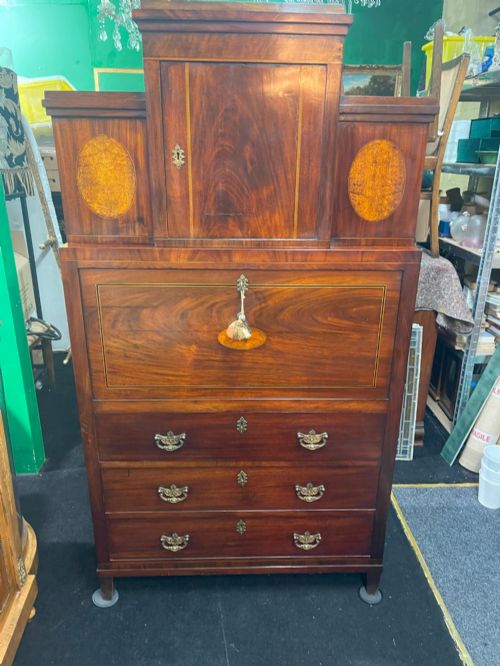
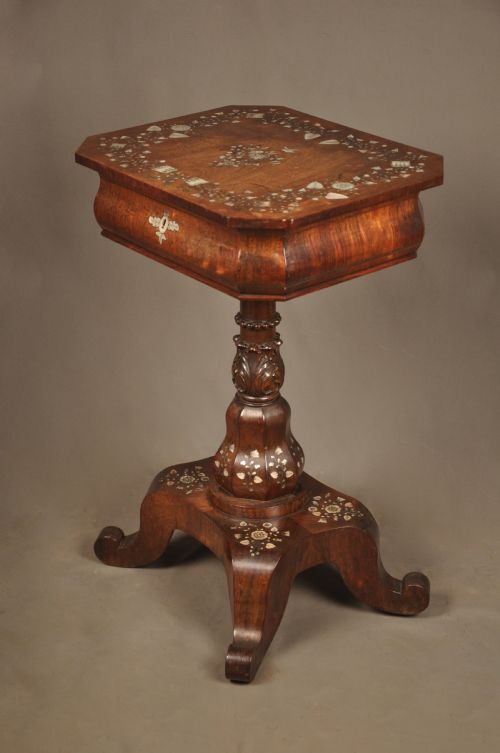
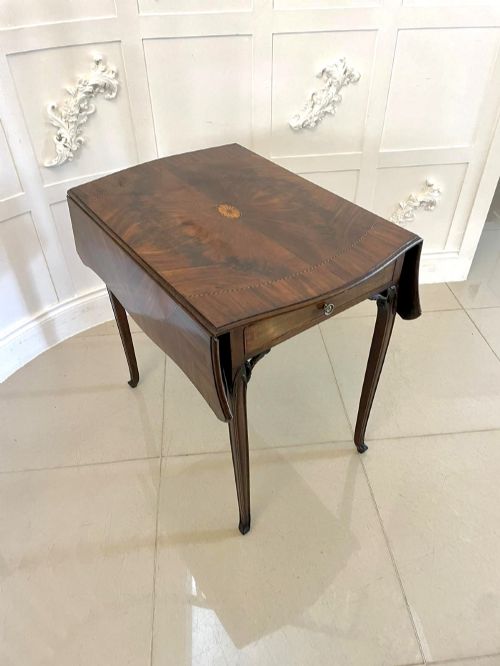
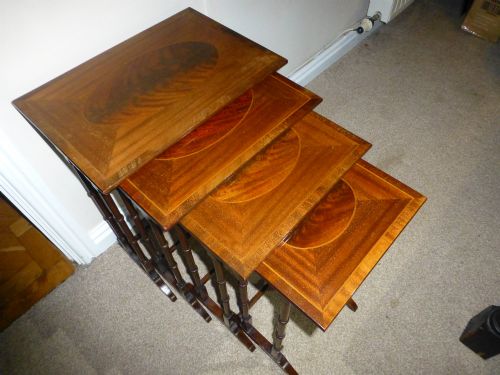
Inlay techniques such as paterae, shell motifs, and geometric borders required precise hand-cutting to set light woods flush into the dark mahogany surface.
Metal mounts in brass, including handles, paw feet, and clock dial bezels, completed the construction alongside occasional fabric linings.
Secret compartments in secretaire bookcases stored private correspondence while hidden cellarettes kept wine cool near the dining table.
Markers of Excellence
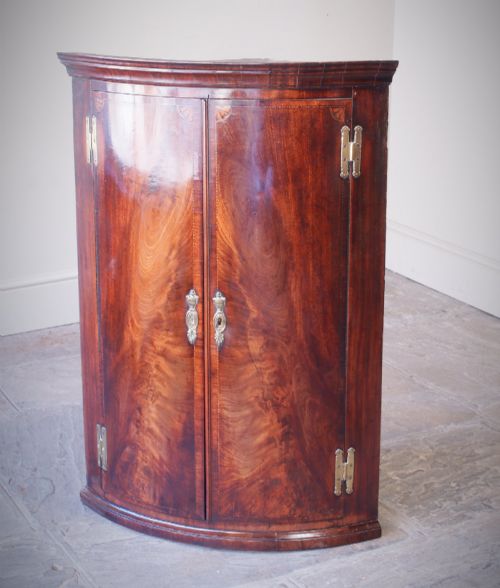
The distinction between ordinary and exceptional pieces rests upon the choice of timber figure, such as highly flamed mahogany veneers, and the precision of the contrasting inlay work.
Proportion and restrained decoration elevate certain examples, where stringing aligns accurately around curves and drawer edges without appearing clumsy or overdone.
Original hardware, sound drawer construction with dovetailing, and untouched surfaces distinguish superior items from later replacements or heavily restored examples.
Thomson of London·John Douglas of Galston·Gillows
The Georgian Inlaid Mahogany Glossary
- Paterae
- Small circular or oval decorative ornaments carved or inlaid into furniture panels, frequently seen on clocks and sideboards of the period.
- Stringing
- Narrow strips of contrasting timber inlaid into grooves on table edges, drawer fronts, and pilasters to create a fine border.
- Flame mahogany
- A veneer cut from the branch junction or fork of the tree, producing a distinct feather-like pattern with intense chatoyancy.
- Demi lune
- A half-moon shape characteristic of console tables and sideboards designed to sit flush against a wall.
- Crossbanding
- A border of veneer laid with the grain running perpendicular to the main surface of the panel, framing the top or drawer front.
Georgian Inlaid Mahogany: Frequently Asked Questions
How do I spot fake inlay?
Genuine inlay is physically embedded into the timber surface with visible joints and matching grain integration. Painted lines or printed simulations sit flush on top of the wood without any depth.
Close inspection with a magnifying glass reveals the tiny gaps where separate pieces of wood meet in traditional hand-cut work.
Where should I place a sideboard?
A georgian inlaid mahogany sideboard requires a stable environment away from direct sunlight and strong heat sources. Rapid temperature changes cause the timber to shrink and veneers to lift.
Dining rooms and spacious hallways provide traditional settings where these large case pieces command sufficient visual space.
How do I clean the wood?
Dust surfaces regularly with a soft, dry lint-free cloth rather than modern silicone polishes. Traditional beeswax applied sparingly maintains the lustre of the mahogany finish.
Harsh chemical cleaners strip the aged patina and damage the delicate satinwood and boxwood stringing over time.
Are these pieces fragile?
Solid mahogany construction offers notable durability, but delicate elements like boxwood stringing and applied veneers demand careful handling during moves. Drawer runners and hinge mechanisms require gentle treatment to preserve original timber.
Daily use remains entirely practical provided the furniture avoids damp conditions and excessive weight loads.