


Georgian Inlaid Jewellery Box
A georgian inlaid jewellery box brings together fine timber and careful Tunbridge or string work to hold trinkets on a dressing table.
Georgian Inlaid Jewellery Box
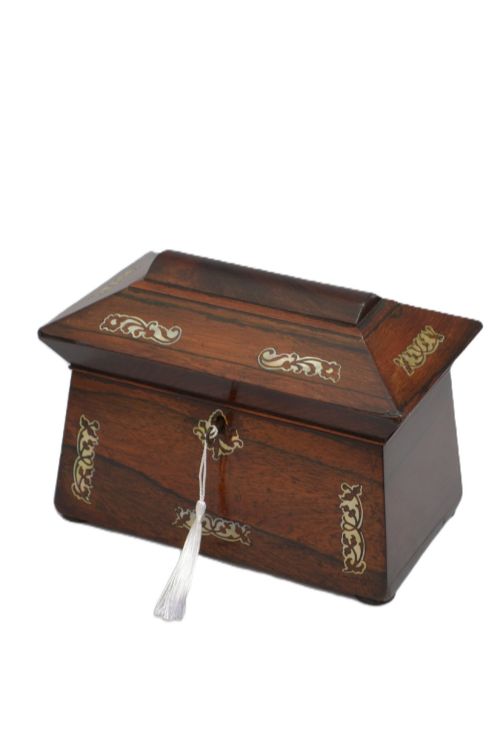
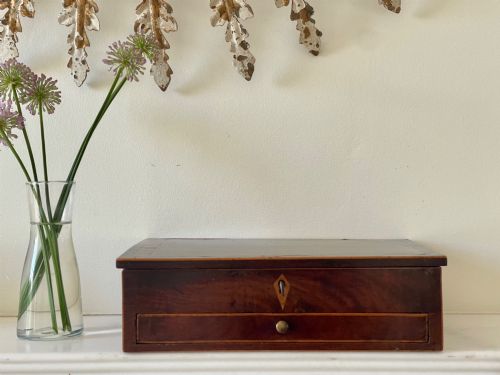
A georgian inlaid jewellery box sits among decorative wooden containers from the Georgian, Regency, and Victorian eras, often taking the form of slope-front work boxes, tea caddies adapted for trinkets, or miniature chests. The selection here leans heavily toward the Regency period, showing rich timbers shaped into portable caskets and cabinets.
Makers of the era utilised native and exotic woods, frequently incorporating mother-of-pearl escutcheons or contrasting stringing to frame the lid and sides. Alongside dedicated jewellery caskets, buyers will encounter related receptacles such as sewing boxes, document cases, and miniature drawers designed for precious keepsakes.
Judging quality
The finest examples display superior selection of veneer figures, such as flame mahogany or burr yew, matched symmetrically across the lid and panels. Poorer specimens rely on plain timber with simpler, heavier banding.
Intricacy of the inlay and preservation of the original lining and brass hardware elevate a piece significantly. Boxes retaining working locks, key escutcheons, and unblemished polish stand apart from those with replaced components.
Periods represented span from George III through the Regency era and into the Victorian period.
The Georgian Inlaid Jewellery Box Glossary
- Inlay
- The technique of inserting decorative pieces of contrasting wood, metal, or shell into a prepared recess flush with the surrounding surface. It defines the surface decoration of these boxes.
- Stringing
- Narrow strips of contrasting wood inlaid into channels cut into the surface to form geometric borders. It is commonly seen framing the lids of Regency boxes.
- Parquetry
- Geometric patterns formed by small pieces of wood fitted together to create a mosaic effect on the exterior. This technique appears on games boxes and fine workboxes.
- Work box
- A portable container fitted with compartments for sewing implements, threads, and small valuables. Many boxes of this type served multiple domestic purposes.
Georgian Inlaid Jewellery Box: Frequently Asked Questions
What is a georgian inlaid jewellery box used for?
These boxes were originally designed to store small personal valuables, rings, necklaces, and delicate trinkets on a dressing table or in a withdrawing room.
Today, they serve the exact same purpose while adding period character and rich timber tones to modern interiors as functional display pieces.
How do I spot a Regency box?
Regency boxes typically feature darker exotic veneers like rosewood or calamander, often enhanced with brass inlay or mother-of-pearl accents.
They also tend to display cleaner, more architectural lines compared to the heavier proportions of earlier Georgian pieces.
Are these boxes waterproof?
No, antique wooden boxes possess delicate historical polishes and glued veneer construction that will warp or stain if exposed to moisture.
Keep them away from damp environments and clean them only with a dry, soft cloth.
Did all these boxes come with keys?
Many boxes were supplied with small brass keys to secure personal letters or valuables away from household staff.
Surviving original keys are uncommon, so many pieces today function purely as display objects rather than secure safes.