


Georgian Inlaid Drop Side Table
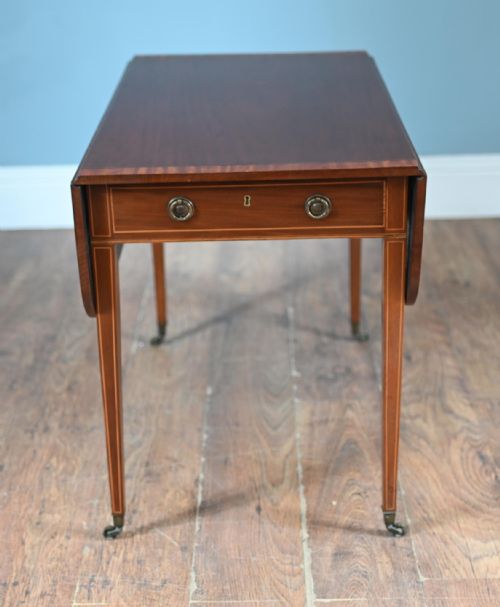
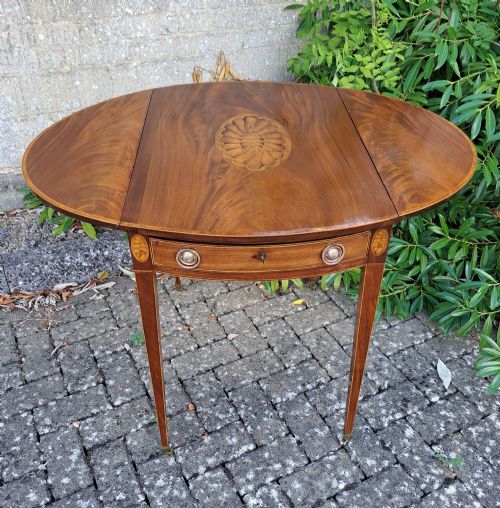
A georgian inlaid drop side table brings versatile folding leaves and delicate cabinetwork into a room.
Georgian Inlaid Drop Side Table
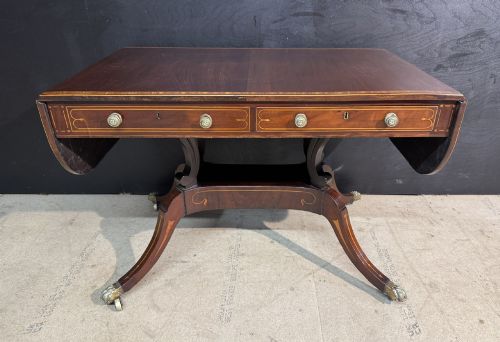
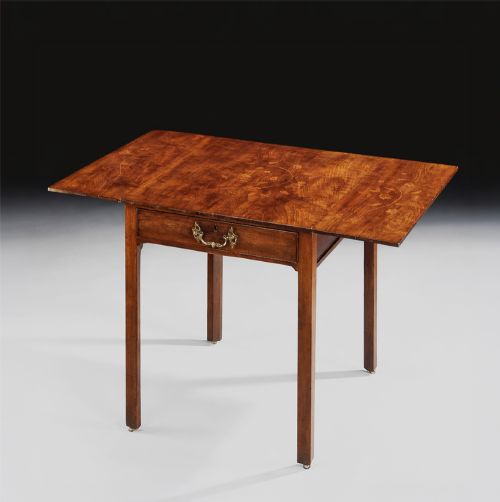
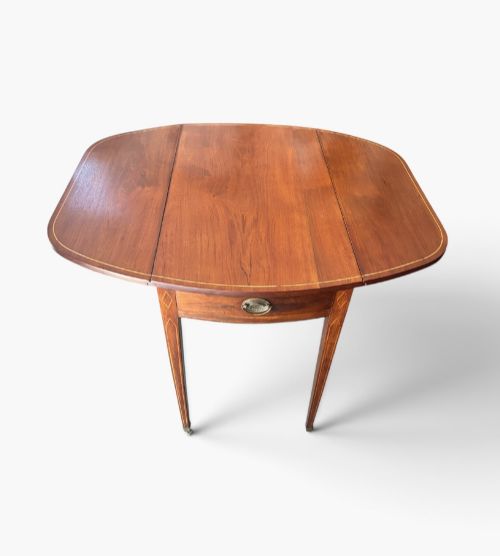
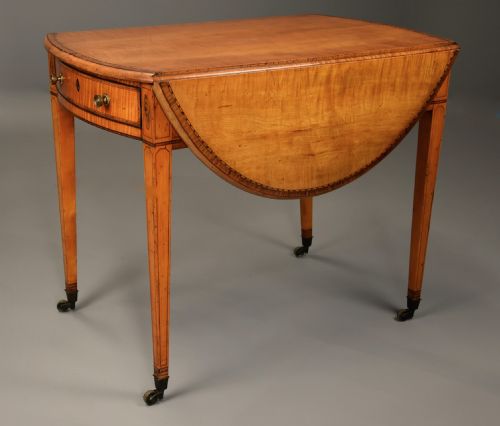
A georgian inlaid drop side table encompasses versatile furniture pieces designed with folding leaves at either side. The selection spans the eighteenth century, the regency era, and into the twentieth century, reflecting shifting domestic habits.
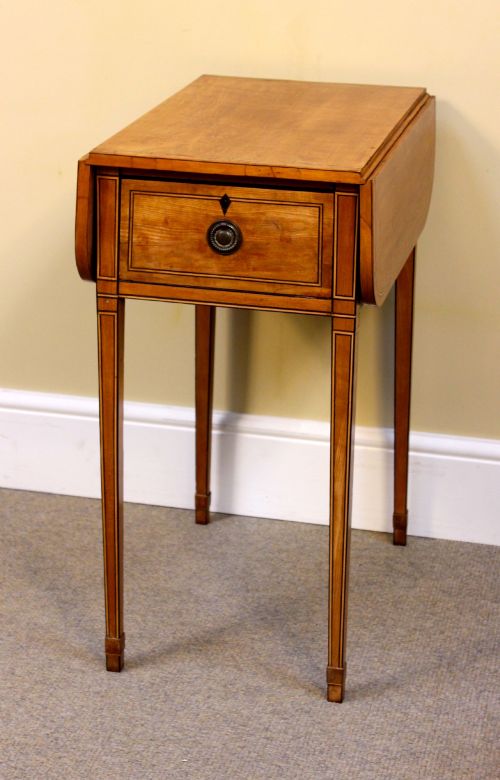
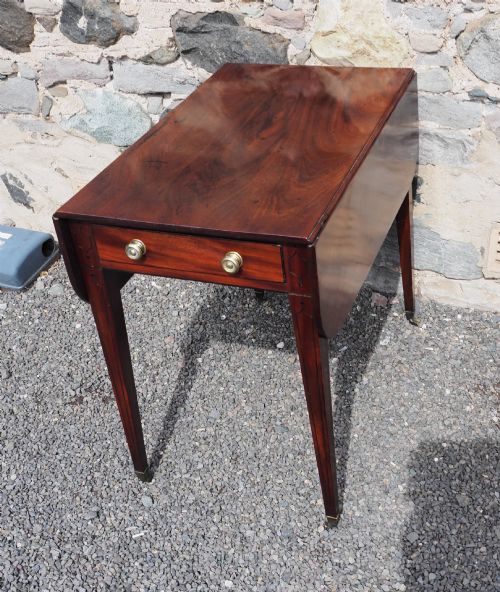
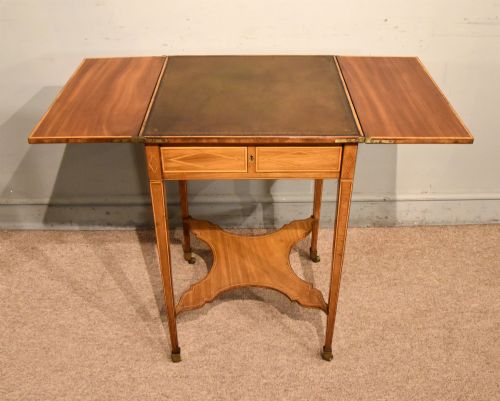
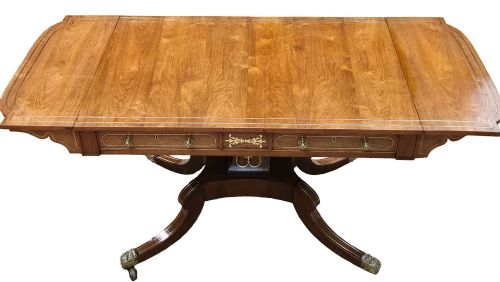
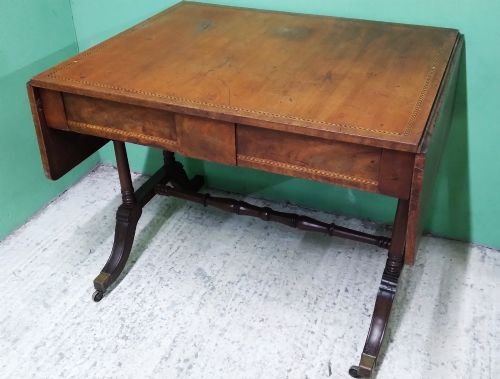
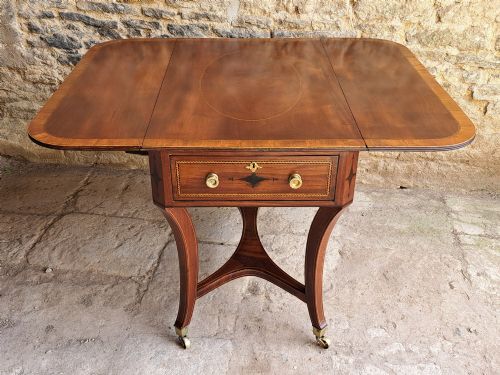
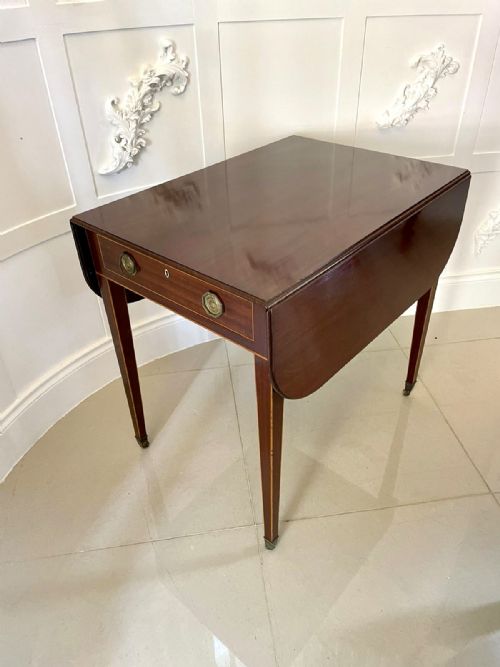
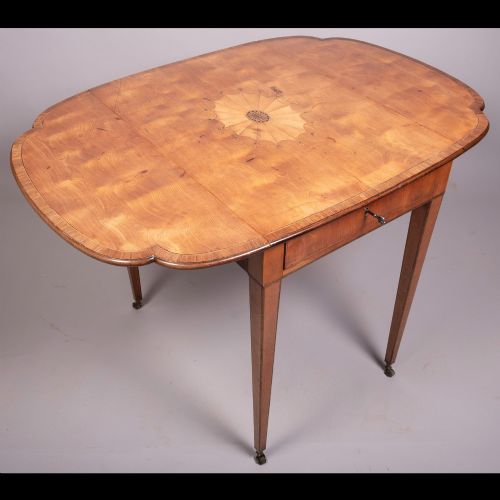
Pembroke tables, sofa tables, and sewing tables dominate the available forms. These variants often feature drop leaves supported by hinged brackets or rule joints.
Originating across the georgian, george iii, and sheraton periods, these tables showcase the cabinetmaker's skill in creating adaptable surface area for everyday use.
Materials and construction
Makers utilised solid timbers and veneers, predominantly mahogany, alongside decorative woods such as satinwood, rosewood, and harewood. These primary woods provide both structural integrity and a rich ground for ornamental detailing.
Inlay work relied on contrasting materials like boxwood and ebony, shaped into delicate stringing or geometric marquetry patterns. Brass details frequently appeared on hardware, hinges, and occasional inlaid stringing.
Judging execution and finish
The refinement of the timber figure and the precision of the wood inlay distinguish superior examples. Finer pieces display carefully matched veneers and intricate banding that follow the contours of the table top.
Structural joinery, the crispness of the turning on legs, and the retention of original brass fittings indicate higher workshop standards. The depth of the natural patina also marks the distinction between ordinary and exceptional survivals.
The Georgian Inlaid Drop Side Table Glossary
- Drop leaf
- A hinged flap on a table that can be raised to extend the surface or dropped when not in use. These flaps rest on pivoting brackets or swinging legs.
- Pembroke table
- A small rectangular table featuring two hinged drop leaves on opposing sides. It frequently includes one or two small drawers.
- Sofa table
- A wider, longer table traditionally placed in front of a sofa. It typically possesses two drop leaves and stands on twin pedestal ends or trestle supports.
- Marquetry
- Decorative patterns formed by the insertion of various coloured woods and veneers into a solid background. This technique creates pictorial or geometric designs.
- Stringing
- A thin, narrow line of contrasting wood inlay used to outline borders and drawer fronts. It accentuates the architectural lines of the furniture.
Georgian Inlaid Drop Side Table: Frequently Asked Questions
What is a pembroke table?
A pembroke table is a compact occasional table featuring two hinged leaves that drop down from the main surface. These tables typically include small drawers and were originally designed for multiple domestic uses.
Cabinetmakers produced them extensively during the eighteenth and nineteenth centuries in various woods like mahogany and satinwood. Their versatile design allowed them to function as writing desks, breakfast tables, or sideboards.
How do I identify a sheraton piece?
Sheraton style furniture relies on classical geometry, straight tapering legs, and contrasting wood inlays. Pieces from this period exhibit lighter proportions and refined elegance compared to earlier heavy designs.
Look for satinwood veneers, subtle boxwood stringing, and delicate marquetry motifs such as urns or fan paterae. These details reflect the neoclassical taste popular in the late eighteenth century.
Where did they place sofa tables?
Sofa tables were designed to sit directly behind a sofa in the drawing room or parlour. Their long, narrow proportions and drop leaves made them practical for serving tea or holding reading material.
Unlike standard side tables, they often featured trestle bases or twin pedestals to allow stable placement on carpets. Their finished backs ensured they looked appropriate when positioned centrally in a room.
What distinguishes regency tables?
Regency tables incorporate bolder classical influences derived from ancient roman and greek design. The period favoured darker timbers like rosewood contrasted with brass inlay and gilt mounts.
Supports often consisted of heavy pillar and claw bases or sabre legs rather than straight tapering forms. This style reflects the aesthetic shifts of the early nineteenth century.