

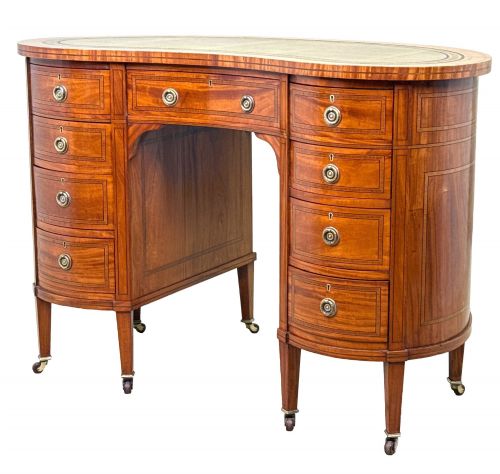
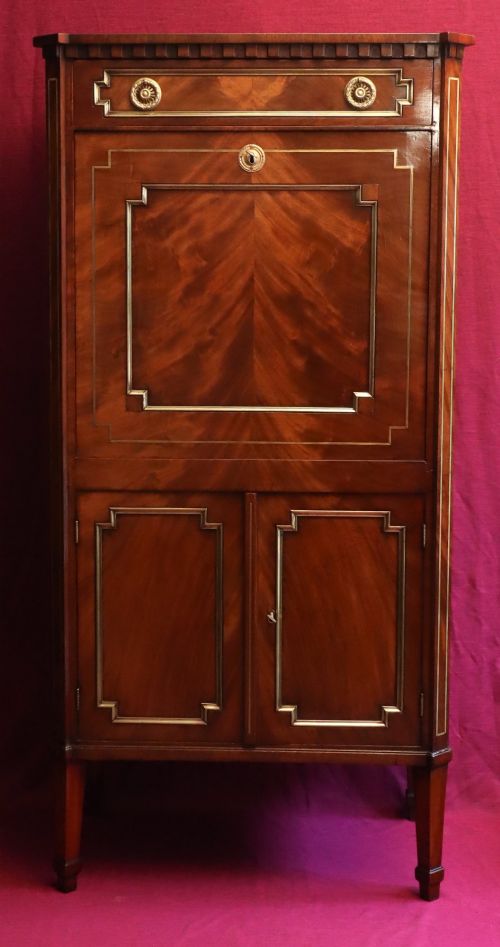
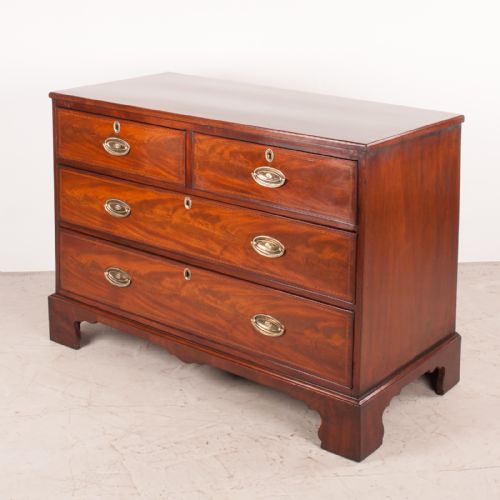
Georgian Inlaid Bureau
When you search for a georgian inlaid bureau, you are looking at eighteenth and nineteenth-century writing furniture combining fall fronts, fitted interiors, and decorative wood marquetry or line inlay.
Georgian Inlaid Bureau
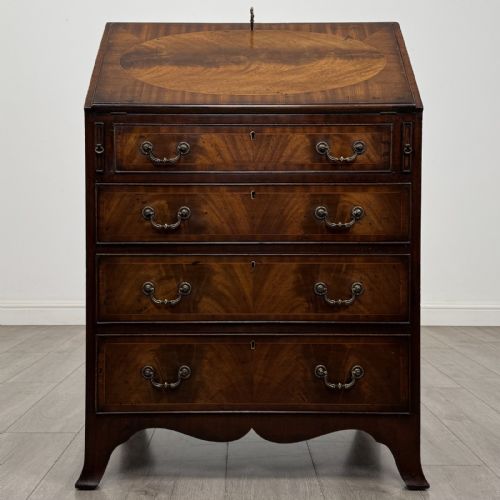
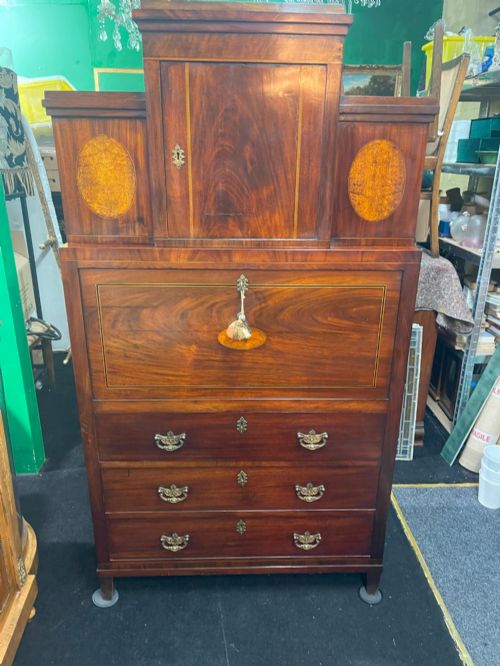
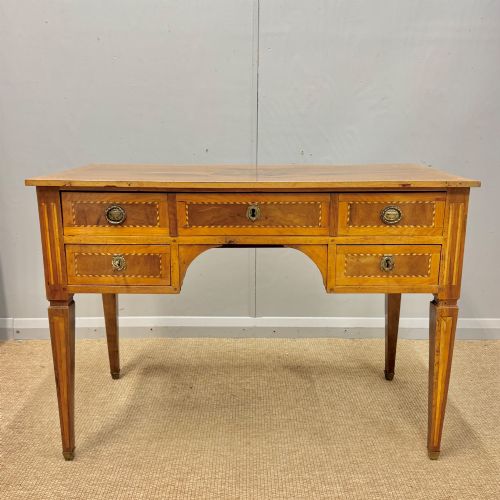
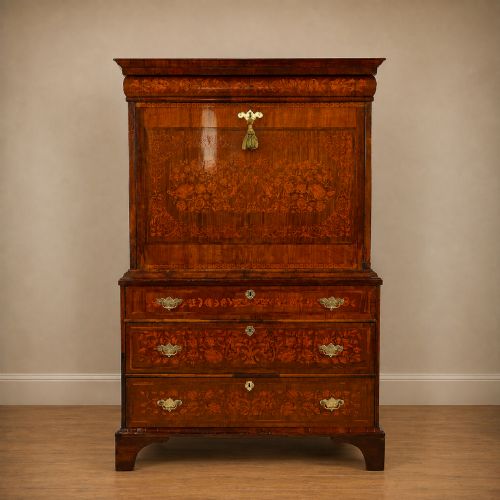
A georgian inlaid bureau typically takes the form of a fall-front desk that conceals a fitted interior of small drawers and pigeonholes, often resting on a base of graduated chest drawers. Pieces span the eighteenth and nineteenth centuries, including George III periods and later revivals, reflecting the domestic writing habits of the period.
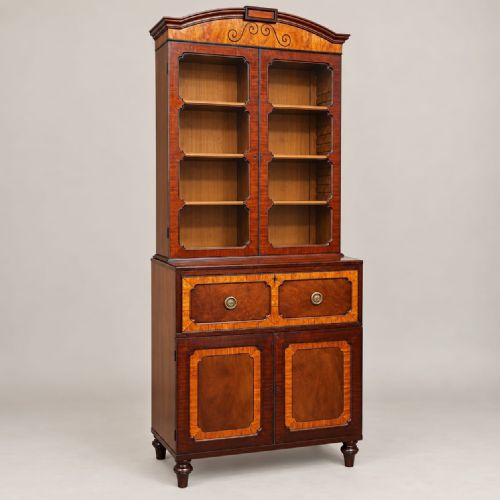
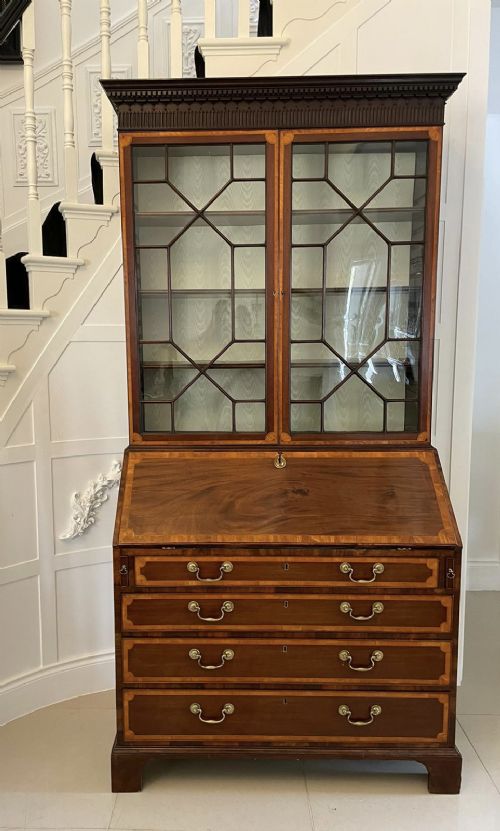
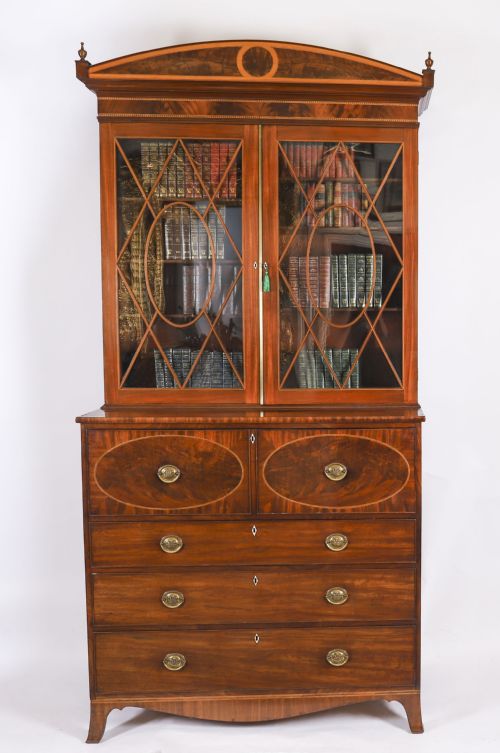
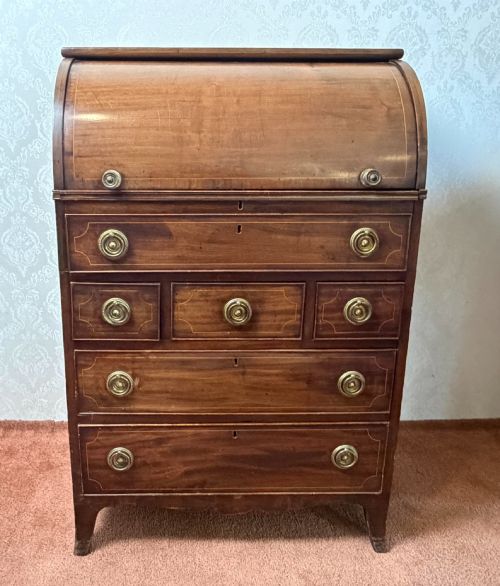
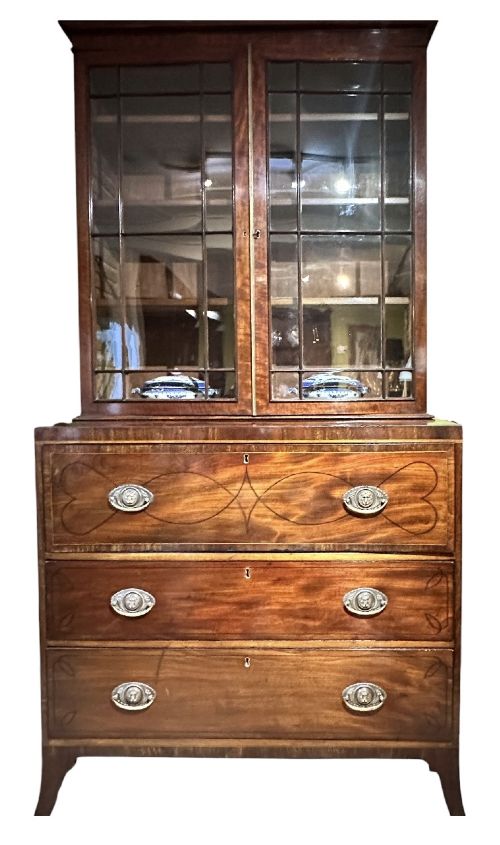
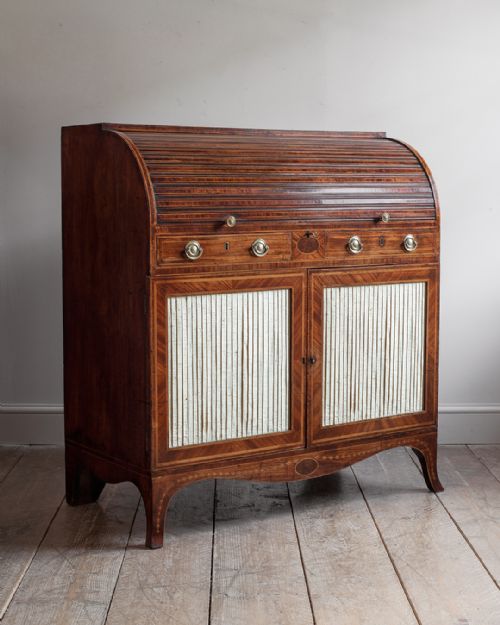
The materials recorded in the evidence show a strong preference for mahogany, walnut, and oak, frequently enhanced with contrasting satinwood or boxwood inlay. Many examples extend to bureau bookcases with glazed upper cabinets or cylinder-top writing desks.
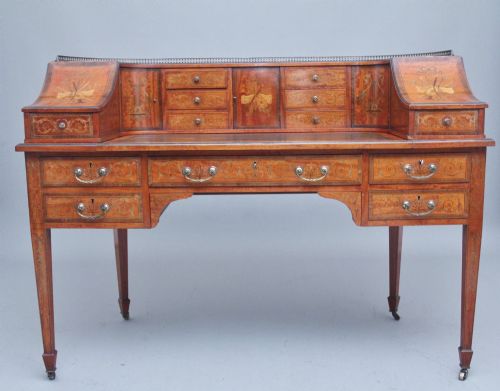
Buyers will encounter regional variations, ranging from modest country oak desks with starburst designs to formal urban cabinetwork in flame mahogany. The selection also includes related forms such as secretaire bookcases and writing cabinets sharing similar inlaid decorative vocabularies.
How They Were Made
Cabinetmakers constructed carcass frames primarily from solid timbers like mahogany, oak, and walnut, applying fine veneers across the fall fronts and drawer surfaces. Timber selection often favoured figured grains such as flame mahogany or burr walnut to create natural pattern.
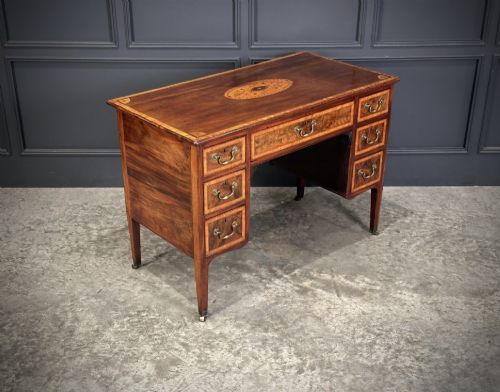
Inlay techniques relied on contrasting woods such as satinwood, boxwood, and partridgewood, cut precisely into channels to form geometric lines, fan motifs, or elaborate marquetry scrolls. Brass handles, key escutcheons, and occasional ring pulls completed the hardware.
Interior compartments required intricate joinery, housing secret drawers and sliding wells within tightly toleranced miniature drawers. Secondary timbers like oak typically lined the internal drawer boxes.
The listings span the Georgian, Regency, Victorian, and Edwardian periods, employing materials such as satinwood, burr walnut, mahogany, and brass.
What Varies in Quality
Quality rests upon the crispness of the cabinetmaking and the precision of the inlay work. Finer pieces display seamless veneer matching across drawer fronts and tight joints that withstand centuries of seasonal wood movement.
The complexity and depth of the internal fittings separate standard production from superior cabinetwork. Bureau interiors featuring shaped pigeonholes, veneered document drawers, and well-executed prospect doors indicate higher workshop standards.
The choice of primary and secondary timbers also dictates standing. Dense flame mahogany, figured walnut, and carefully selected contrasting satinwood borders denote higher expenditure during manufacture than plain domestic softwoods.
The Georgian Inlaid Bureau Glossary
- Bureau
- A writing desk featuring a sloping fall-front flap that opens to reveal an arrangement of small drawers and pigeonholes. It typically sits atop a chest of drawers.
- Marquetry
- The art of applying decorative pieces of veneer to a structure to form detailed pictorial or geometric designs. Craftsmen use contrasting timbers like satinwood and fruitwood to achieve tonal variation.
- Secretaire
- A piece of furniture containing a drawer or compartment that pulls down or drops open to provide a writing surface. These often incorporate bookcase superstructures above.
- Tambour
- A sliding shutter constructed from narrow vertical strips of wood glued to a fabric backing. It allows curved desks and cylinder fronts to open smoothly.
- Escritoire
- A decorative writing cabinet or desk used for correspondence, popular throughout the eighteenth and nineteenth centuries.
Georgian Inlaid Bureau: Frequently Asked Questions
What is a georgian inlaid bureau?
A georgian inlaid bureau is a period writing desk featuring a hinged writing flap that conceals small interior compartments and drawers. These pieces date primarily from the eighteenth and nineteenth centuries and incorporate decorative wood inlays.
They combine practical desk space with household storage in the form of underlying drawers, often finished with mahogany or walnut veneers and contrasting stringing.
How were these desks used?
Owners used them for personal correspondence, household accounts, and letter writing before the widespread adoption of modern office furniture. The fall front provided a stable writing surface when lowered.
Inside compartments kept writing materials, documents, and valuables organised and secure when the desk flap was locked shut.
Where should I place a bureau?
These pieces suit studies, living rooms, and large hallways where their compact footprint provides both surface area and storage. They require sufficient clearance in front for the fall flap to lower completely.
Keep them away from direct heat sources and strong sunlight to protect the aged veneers and polished timber surfaces from drying out.
How do I tell periods apart?
Cabinet proportions, handle styles, and inlay motifs help distinguish between periods like George III, Regency, and later Victorian revivals. Earlier pieces often rely on restrained walnut or flame mahogany with subtle line inlay.
Later nineteenth-century and Edwardian examples frequently feature brighter satinwood borders, heavier brass hardware, or more eclectic marquetry patterns influenced by Sheraton revivals.