



Georgian Housekeeper Dressers
Georgian housekeeper dressers are heavy timber storage pieces that command a room with their honest utility and architectural presence.
Georgian Housekeeper Dressers
When you search for georgian housekeeper dressers, you encounter large storage pieces built to hold household linens, provisions, and tableware in country houses and estates. These items span the eighteenth and nineteenth centuries, taking the form of massive cupboards, court cupboards, and kitchen dressers designed for heavy daily service.
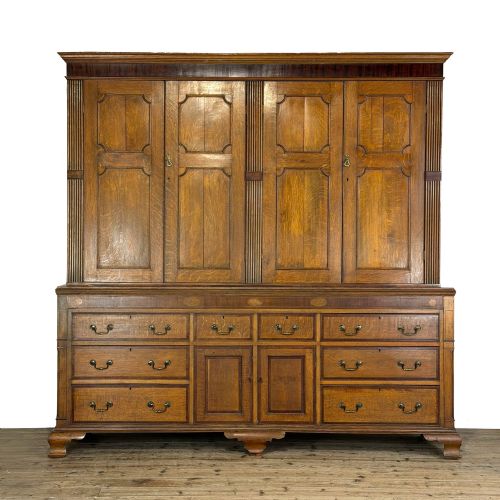
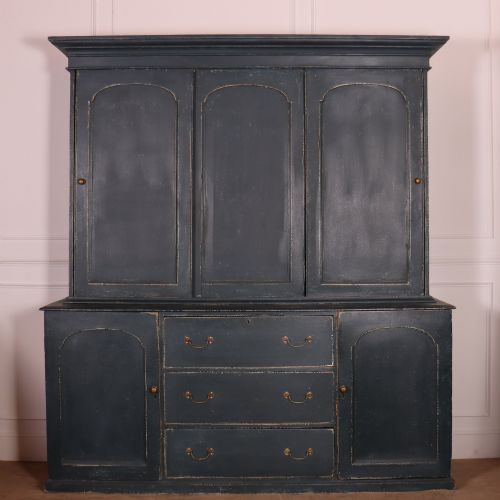
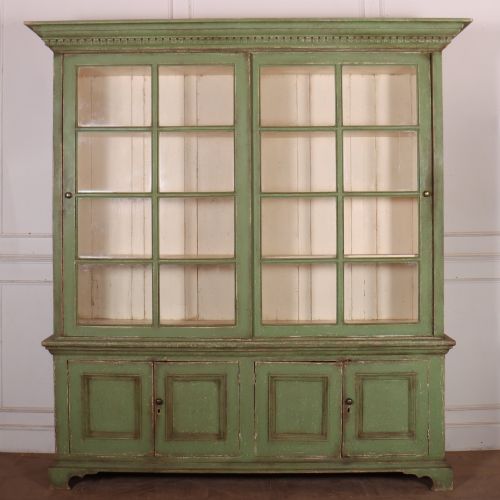
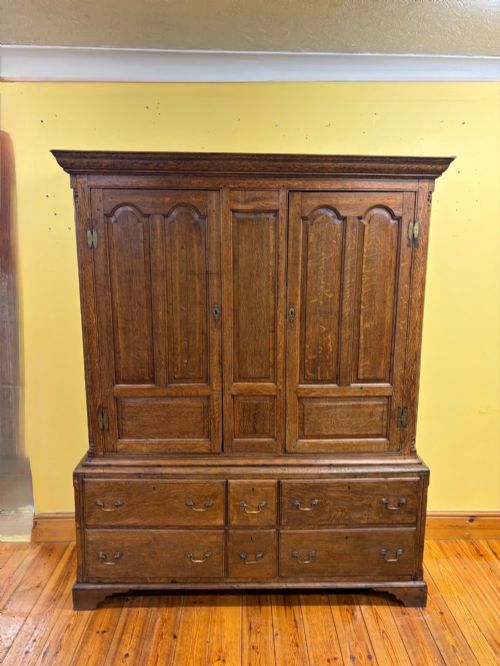
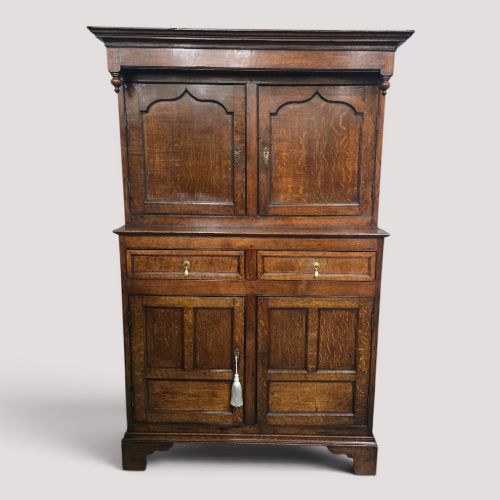
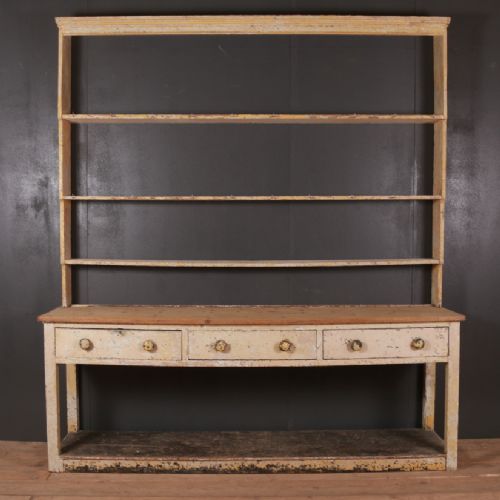
The versions most common on this page are substantial oak and pine pieces originating from English and Irish country houses. You see both unpolished wood surfaces showing natural grain and older painted finishes that reflect generations of domestic use.
Several examples show regional British and Irish characteristics, linking them directly to rural workshops rather than metropolitan cabinet makers. Their forms range from tall enclosed linen cupboards to glazed display cabinets and open potboard dressers.
Construction and materials
Makers built these pieces primarily using solid oak, pine, and mahogany, selecting timbers for strength and availability. Carpenters joined heavy panels with traditional methods to withstand the damp and heavy demands of sculleries and great kitchens.
Hardware consists of brass fittings and metal hinges that secure heavy panelled doors. Many surfaces retain original layers of paint or simple wax finishes over the bare wood.
Georgian Housekeeper Dressers Retail Price Guide 2026
Typical asking prices for georgian housekeeper dressers among the pieces listed under this phrase on Sellingantiques today, from the lower quarter to the upper quarter. They describe what is for sale here now, not the wider market.
Listings on this site feature oak, pine, and mahogany pieces spanning the eighteenth and nineteenth centuries, alongside painted wood surfaces.
Assessing quality
Quality rests on the integrity of the timber and the depth of the original surface patina. Pieces constructed entirely from dense oak or figured mahogany with untouched joinery stand apart from later altered examples.
The architectural proportion and the presence of original brass hardware or early painted finishes define the finer examples. Simple country pieces achieve distinction through honest proportions and untouched signs of age.
The Georgian Housekeeper Dressers Glossary
- Court cupboard
- An antique enclosed storage piece, typically featuring an upper section recessed above a larger lower cabinet. They frequently date to the Georgian period and earlier.
- Potboard dresser
- A kitchen dresser featuring a low open shelf beneath the main cupboards, historically used for storing heavy pots and pans. This form appears across nineteenth-century English country houses.
- Housekeeper cupboard
- A large storage furniture form designed for domestic linen, provisions, and household stores. These pieces feature deep internal shelving enclosed by heavy panelled timber doors.
- Patina
- The surface sheen and colour developed by wood and paint over centuries of handling and cleaning. A deep patina indicates genuine age and continuous domestic use.
- Scullery cupboard
- A utilitarian storage piece built for auxiliary kitchen work and food preparation areas. They utilise durable timbers like pine and oak to withstand heavy domestic routines.
Georgian Housekeeper Dressers: Frequently Asked Questions
What are Georgian housekeeper dressers?
These large wooden storage pieces were built to house household linens, dry goods, and tableware in large domestic settings. They combine functional shelving with substantial panelled doors to secure valuable stores.
The listings show examples made from oak, pine, and mahogany, ranging from plain country workshop pieces to finer Georgian forms.
How were these cupboards used?
Housekeepers utilised these large units to organise and protect household textiles, dry provisions, and daily utensils from dust and damp. They stood in service rooms, sculleries, and large kitchens where heavy storage was essential.
The deep internal shelving accommodated folded linens and heavy ceramic vessels with ease.
How do I live with one?
These substantial pieces require adequate wall space and anchor naturally in large kitchens, dining rooms, or hallways. Their neutral timber tones and painted finishes complement both traditional and modern interiors.
Ensure you measure ceiling heights and access routes carefully, as these historic cupboards arrive fully assembled and weigh considerably.
How can I tell the periods apart?
Eighteenth-century examples often display denser oak timbers, hand-cut joinery, and simpler structural lines associated with George III craftsmanship. Nineteenth-century variants frequently incorporate pine, painted surfaces, or glazed upper cabinets.
Examining the internal construction methods and the wear patterns on the wood reveals the era of manufacture.