
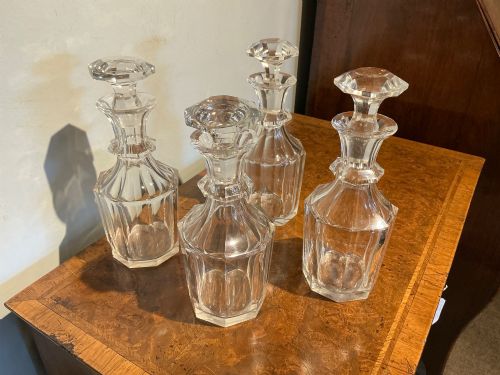
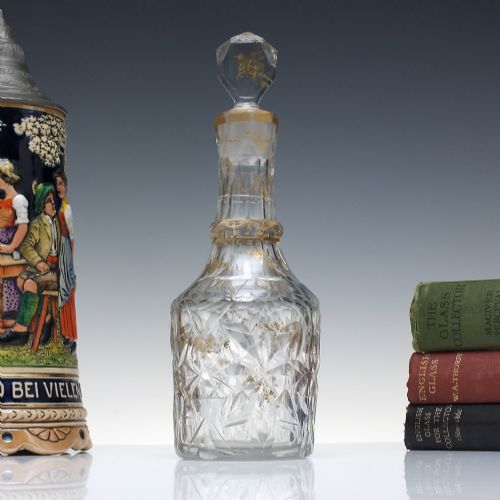
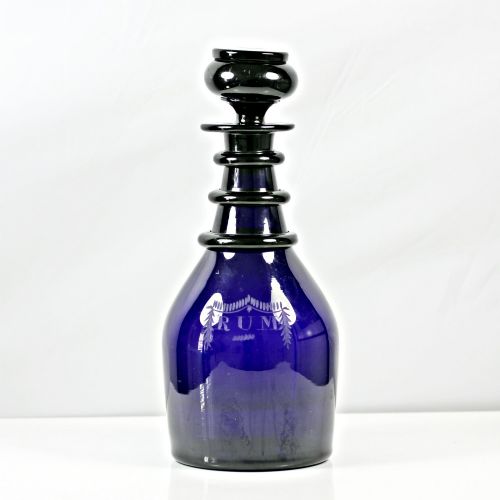
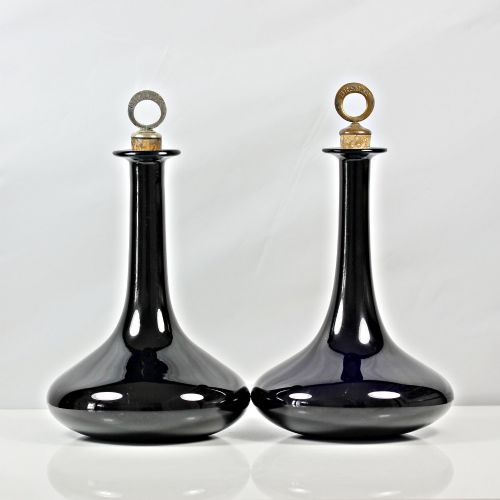
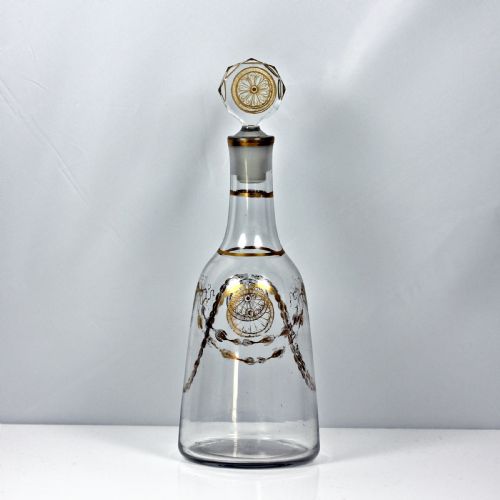


Georgian Glass Spirit Decanter
A georgian glass spirit decanter brings heavy lead crystal and brilliant hand-cut facets to the table, offering a tangible link to eighteenth and nineteenth-century dining traditions.
Georgian Glass Spirit Decanter
When searching for a georgian glass spirit decanter, buyers encounter vessels designed specifically to hold and pour alcoholic spirits like rum, brandy, whisky, and gin. These pieces emerge primarily from Georgian, Regency, and early Victorian periods, spanning the eighteenth and nineteenth centuries.
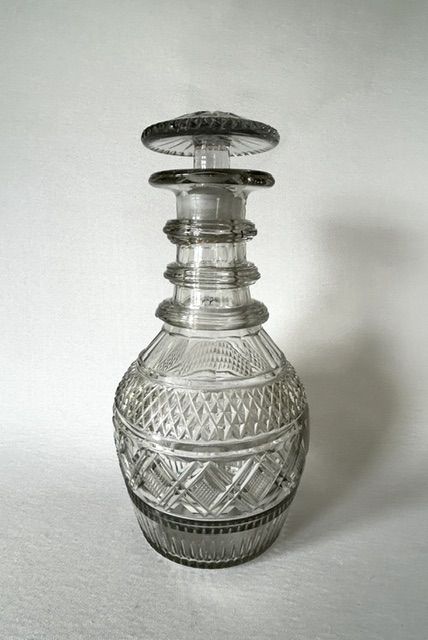
The forms vary widely from ship's decanters with wide bases designed for stability at sea to tall mell, club, and Prussian styles featuring distinctive neck rings. Collectors also meet matched pairs, sets, and occasional campaign boxes fitted with multiple bottles.
Origins stretch across English, Irish, Scottish, and Continental workshops, encompassing plain lead glass as well as richly decorated cobalt blue, green, and opaline bodies.
Materials and production methods
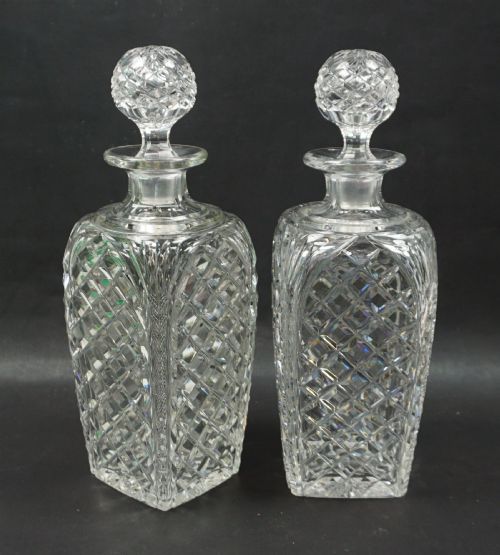
Makers utilised heavy lead glass and crystal, which provided the substantial weight and refractive clarity required for deep wheel-cutting. Artisans shaped the molten metal by blowing it into moulds or free-blowing before applying hand-cut flutes, prisms, and pillar patterns.
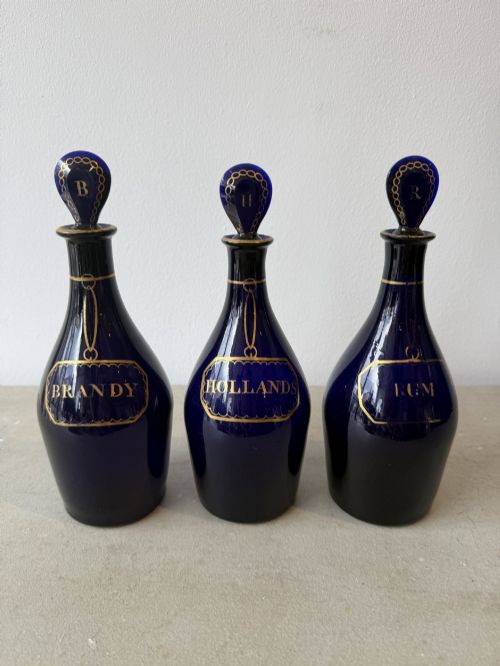
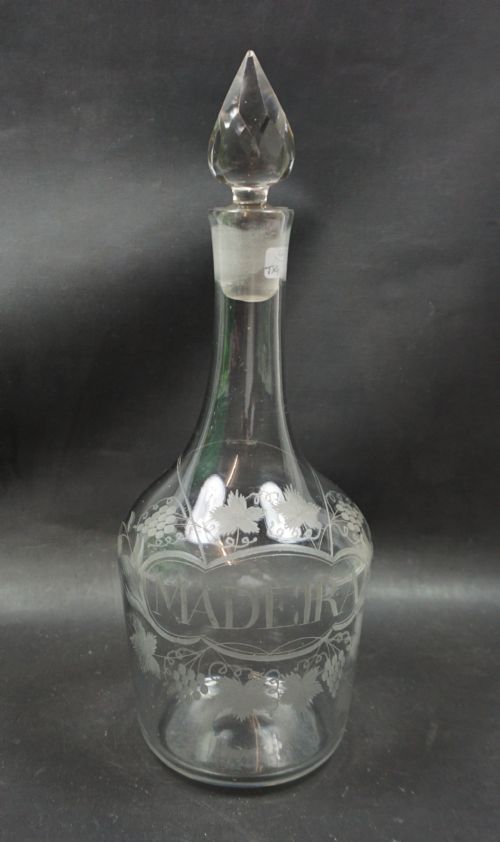
Decoration extended beyond cutting to include gold leaf gilding, enamel hand-painting, and delicate surface engraving to denote specific contents like Madeira or rum. Necks were frequently finished with applied glass rings, while stoppers were ground by hand to fit individual bottlenecks securely.
Some officers carried portable spirit decanters tucked inside fitted mahogany campaign boxes across the globe.
Distinguishing quality across examples
Quality rests upon the crispness of the cutting, the weight and clarity of the lead crystal, and the originality of the matching stopper. Superior pieces display deep, sharply defined facets and clear metal free from excessive internal clouding or bubbles.
The presence of specialised decoration, such as fine atelier gilding, hand-painted enamel labels, or rich cobalt and Bristol blue coloration, elevates an example above standard utility vessels.
Atelier of James Giles
The Georgian Glass Spirit Decanter Glossary
- Prussian neck
- A series of horizontal raised glass rings encircling the neck of a decanter, common on Georgian and Regency examples. These rings initially served to provide a secure grip for pouring.
- Ship's decanter
- A wide-based, sloping vessel designed with a low centre of gravity to prevent tipping during sea voyages. This form appeared frequently during the Regency period.
- Mell decanter
- A mallet-shaped bottle with a broad lower body tapering towards the shoulder, often utilised for spirits during the late eighteenth and early nineteenth centuries.
- Lead glass
- Glass containing lead oxide, which increases the weight, refractive index, and workability of the material. This composition allowed Georgian cutters to achieve deep, brilliant facets.
- Toddy lifter
- A small, bulbous glass vessel with a narrow stem used to transfer hot punch or spirits from a bowl to a glass. These portable accessories form part of broader barware collections.
Georgian Glass Spirit Decanter: Frequently Asked Questions
What are neck rings on decanters?
Neck rings are horizontal bands of glass melted or applied around the narrow part of the decanter. They appeared primarily on Georgian and Regency pieces.
Beyond decoration, these raised bands offered a firm grip for wet hands when pouring spirits.
Why are some decanters blue?
Coloured glass, particularly Bristol blue and cobalt, gained popularity during the Georgian period to protect light-sensitive spirits from degradation. Makers added metallic oxides to the molten metal.
These vibrant hues also created a striking visual contrast against white tablecloths and cut crystal presentation sets.
Are stoppers original to the decanter?
Original stoppers were ground individually to fit a specific bottleneck during manufacture. Matching numbers cut into both the base and the stopper often confirm authenticity.
Replacements are common due to breakage over centuries of use, making original matched pairs particularly desirable to collectors.