
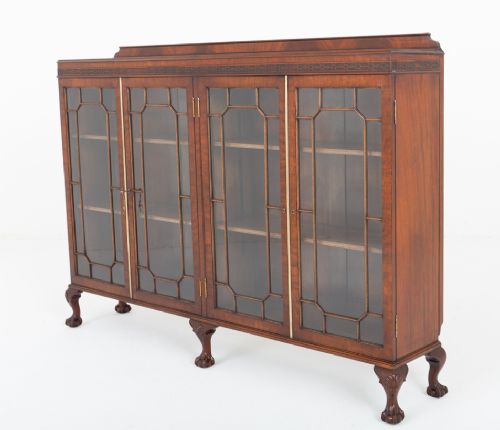
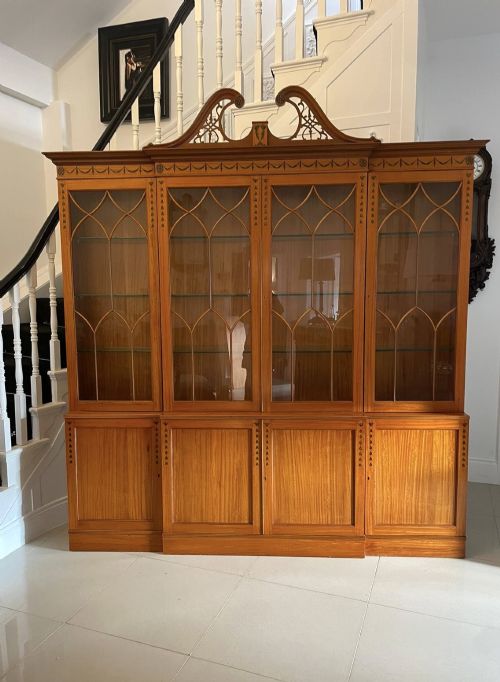
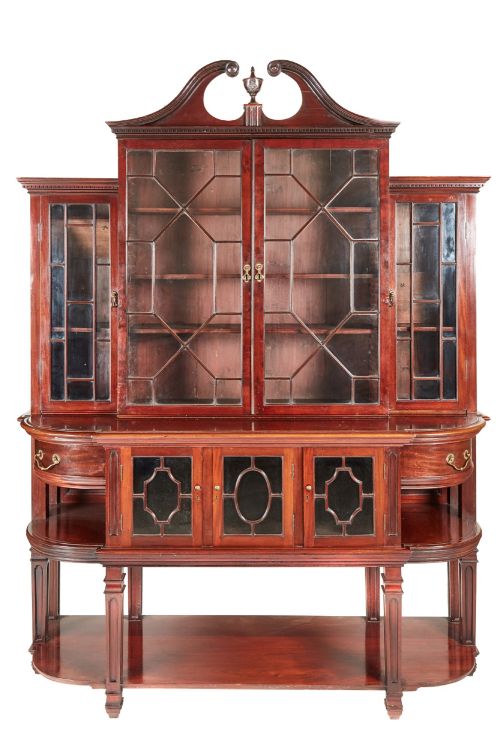
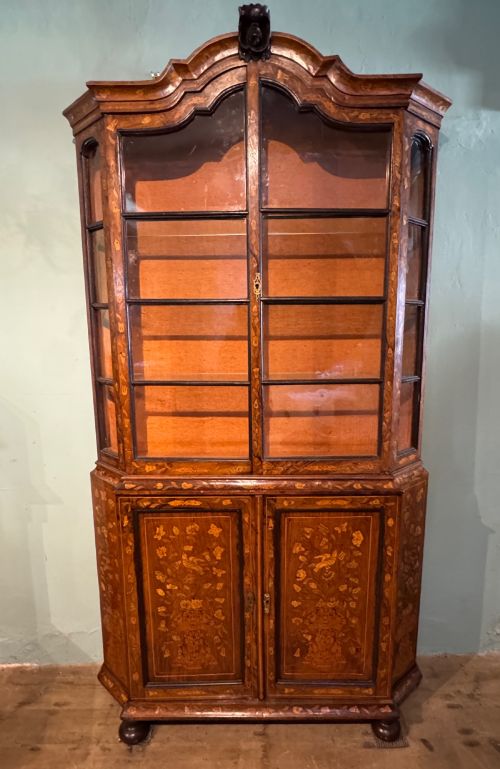
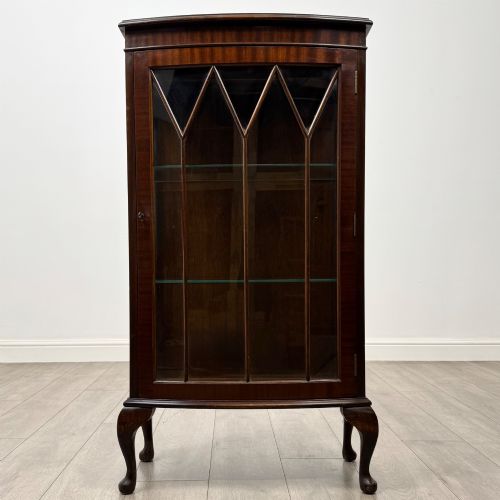
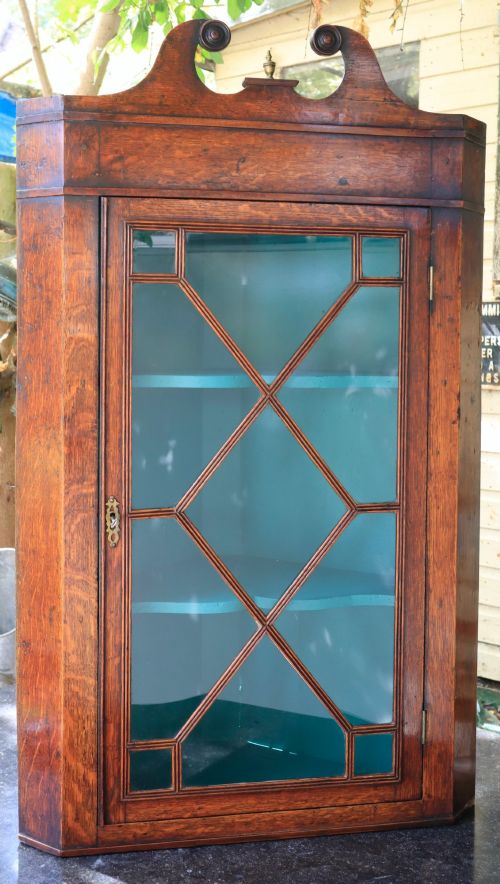
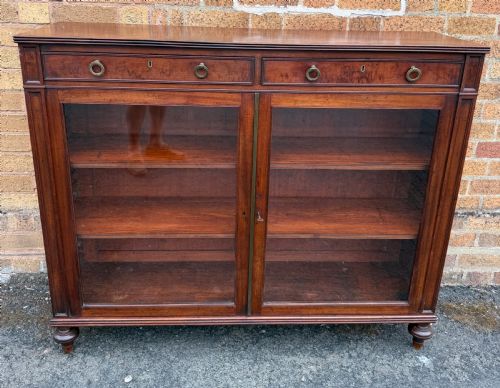
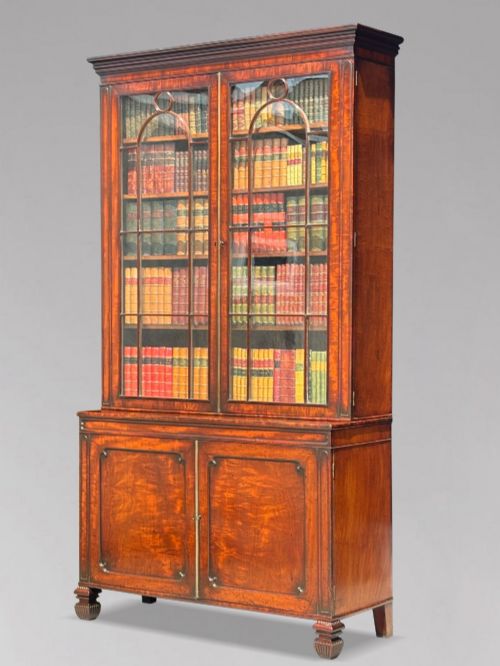

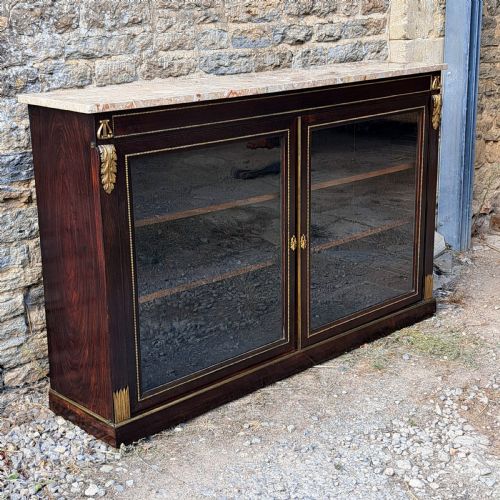
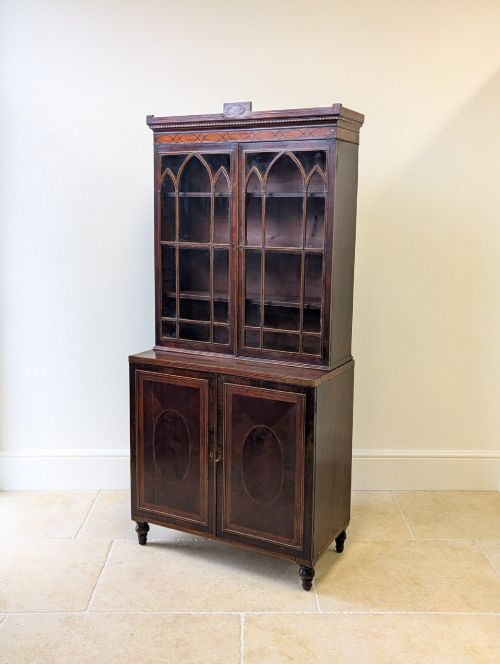
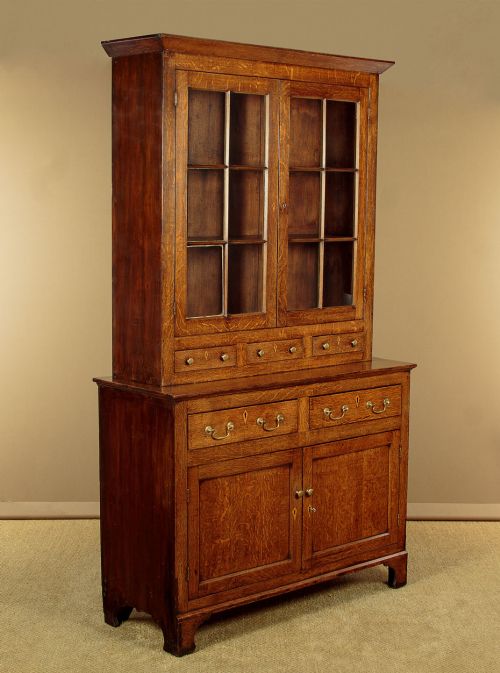
Georgian Glass Display Cabinet
A georgian glass display cabinet brings visible order to precious things, framing antique treasures behind transparent panelling.
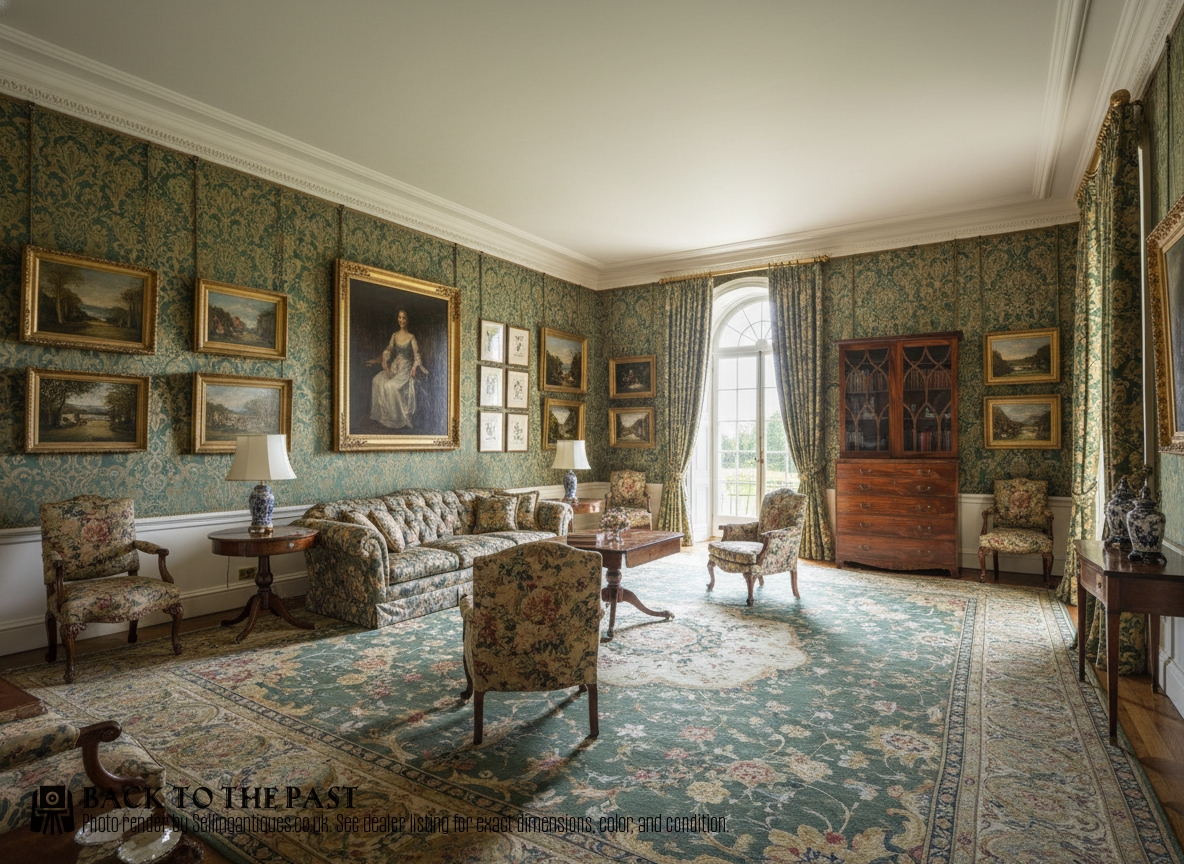
Georgian Glass Display Cabinet
A georgian glass display cabinet brings together timber framing and transparent panelling designed to showcase contents while protecting them from dust.
Buyers seeking a georgian glass display cabinet most frequently encounter mahogany and satinwood structures spanning the eighteenth century through to later revival periods.
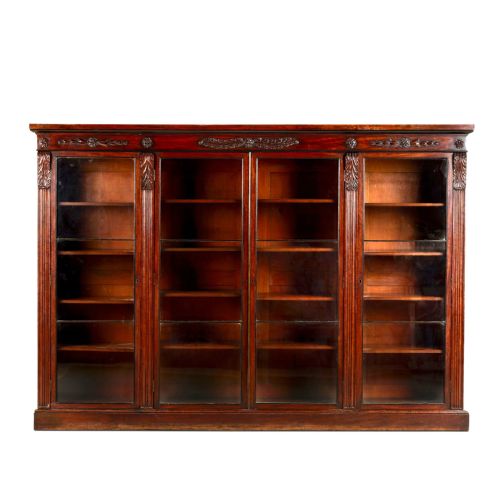
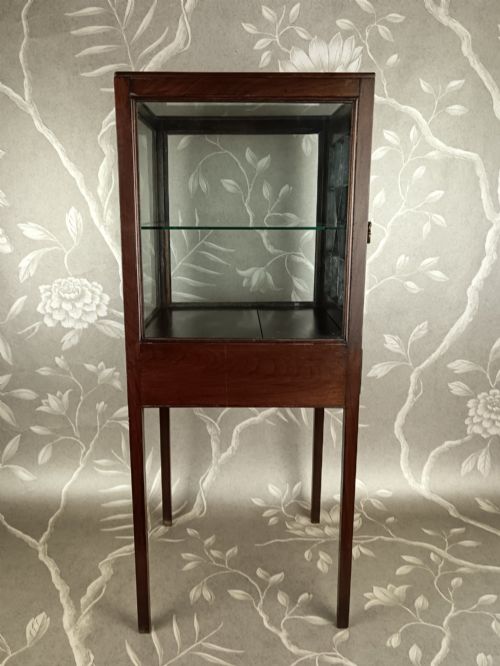
The category encompasses floor-standing breakfront bookcases, corner units, and wall-hanging display cases originating from diverse British and continental workshops.
Materials and construction methods
Cabinet makers utilised dense hardwoods like mahogany, walnut, and oak for structural stability, often applying satinwood veneers or marquetry for decorative contrast.
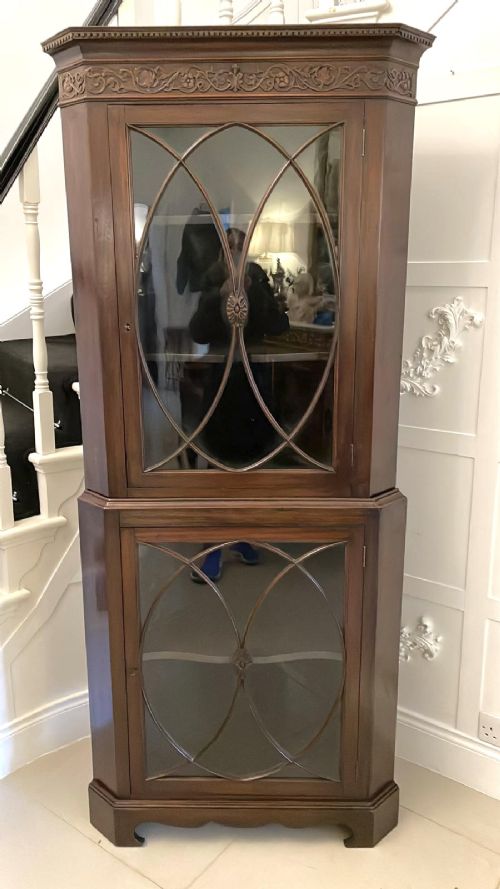
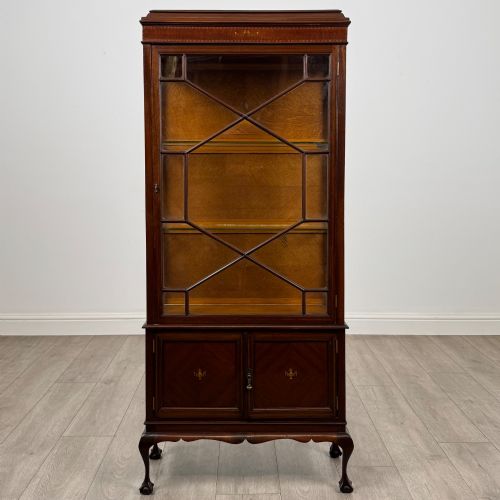
Glazing relies on individual panes held together by wooden framing members known as glazing bars or astragals, creating distinct geometric patterns across the doors.
The listings show numerous corner units rendered in oak, mahogany, and burr walnut alongside larger breakfront bookcases.
Distinctions in craftsmanship
Quality rests upon the refinement of the timber selection, the precision of the joinery within the glazing bars, and the presence of original brass hardware.
Superior examples demonstrate careful proportion, integrated decorative details such as hand-carved mouldings or painted ornamentation, and harmonious timber graining across large unbroken surfaces.
Wylie and Lochhead·Waring and Gillow·Edwards and Roberts
The Georgian Glass Display Cabinet Glossary
- Astragal
- A moulding profile used to divide glass panes within a door frame. These slender wooden strips form the geometric lattice work characteristic of period cabinetry.
- Breakfront
- A cabinet design where the central section projects forward from the flanking wings. This architectural arrangement adds depth and visual interest to large bookcases.
- Vitrine
- A glass-sided display cabinet designed primarily for the exhibition of porcelain or small decorative objects. The term originates from the French word for glass.
- Marquetry
- An elaborate decorative technique applying fitted pieces of veneered wood to form pictorial or ornamental patterns. Craftsmen use varied timber colours to create contrast.
Georgian Glass Display Cabinet: Frequently Asked Questions
How do I distinguish corner cabinets?
Corner cabinets are specifically constructed with angled or curved backs designed to fit directly into the intersection of two room walls. They maximise unused spatial areas while offering display capability.
Versions range from floor-standing cupboards to smaller wall-hanging units with single or double glass doors.
Where should I place a display cabinet?
Display cabinets require stable interior environments away from direct sunlight to protect antique timbers and stored contents from fading. Placing them against interior walls prevents excessive temperature fluctuations.
Ensure adequate floor space is available for doors to swing fully open without obstruction from surrounding furniture.
Are revival pieces considered authentic?
Revival pieces are legitimate historical items manufactured in later eras, such as the late nineteenth or early twentieth centuries, paying homage to earlier design epochs. They reflect the tastes and manufacturing standards of their own specific time of creation.
Examining construction techniques and secondary woods helps identify whether a piece dates from the primary period or a later revival.