





Georgian Glass Corner Cupboard
A georgian glass corner cupboard solves the problem of dead space while displaying your glassware in the most elegant timber frames.
Georgian Glass Corner Cupboard
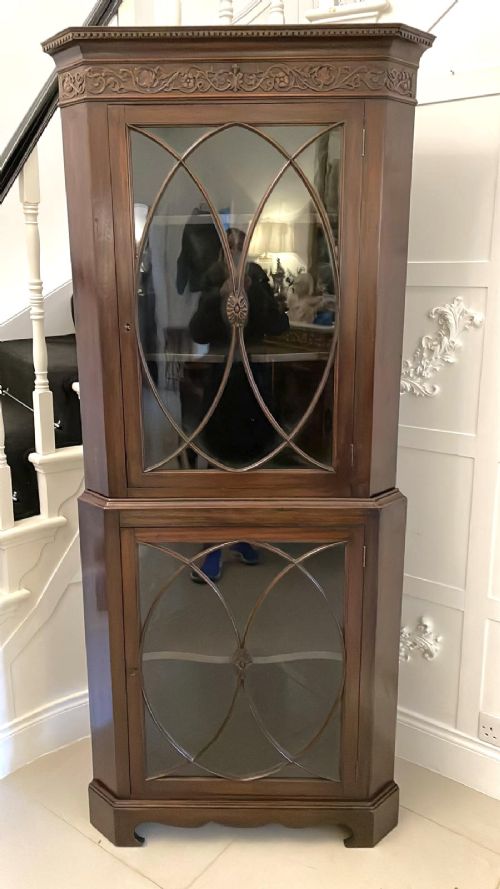
When you search for a georgian glass corner cupboard, you are looking at fitted timber cabinetry designed to sit neatly into the ninety-degree angle of a room. These pieces combine closed storage below with glazed display space above, making them practical for both hiding everyday items and showing off finer possessions.
The versions you are most likely to meet on this page span from the eighteenth century into the twentieth century, reflecting enduring design popularity through revival periods like Edwardian and Georgian Revival. Woods range from rich mahogany and walnut to sturdy oak, often shaped in bow-front or serpentine profiles to soften the room's geometry.
How They Were Made
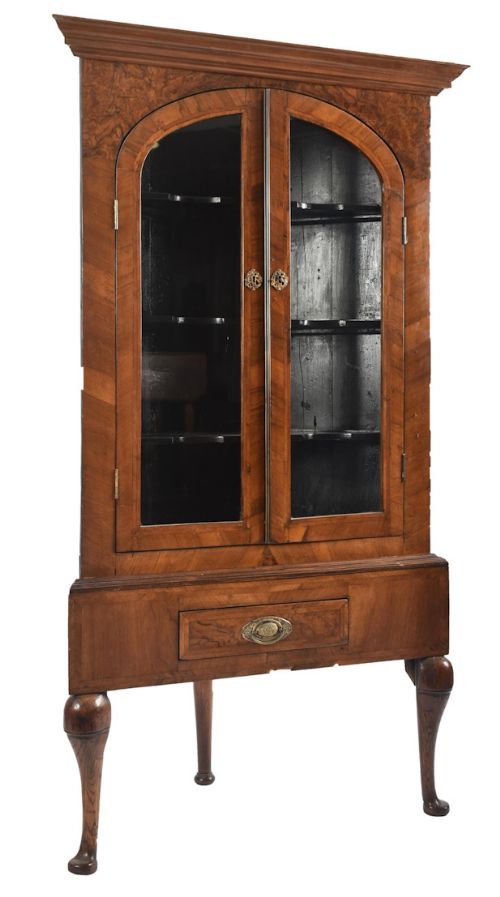
Cabinet makers built these cupboards primarily using solid and veneered timbers such as mahogany, oak, and walnut, frequently selecting figured grains like burr walnut or flame mahogany for the primary visual surfaces. Brass fittings provide the functional and decorative hardware for hinges, key escutcheons, and working locks.
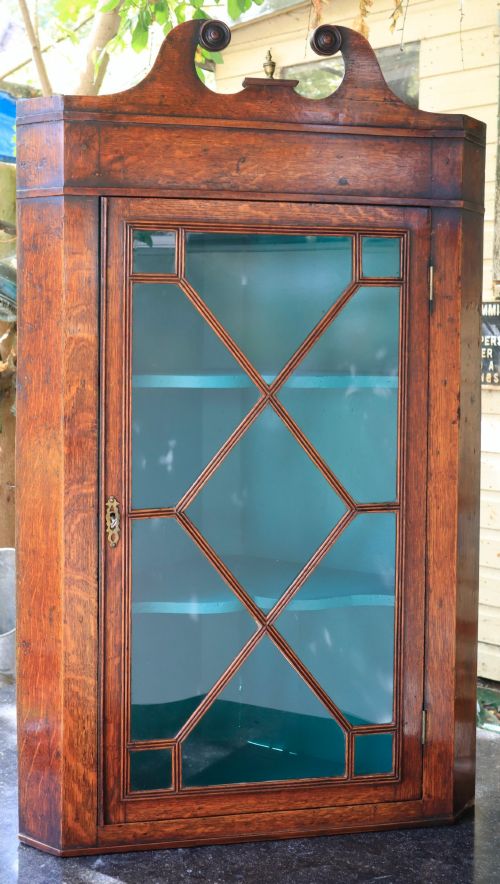
Glazing is a defining structural element, utilising individual glass panes held together by timber glazing bars, frequently arranged in astragal patterns to create delicate geometric divisions across the door front.
Georgian Glass Corner Cupboard Retail Price Guide 2026
Typical asking prices for georgian glass corner cupboard among the pieces listed under this phrase on Sellingantiques today, from the lower quarter to the upper quarter. They describe what is for sale here now, not the wider market.
Cabinet forms include both wall-hanging display cases and two-piece floor-standing storage units with bow and serpentine profiles.
What Varies In Quality
Quality rests heavily on the selection of timber and the precision of the cabinet work, particularly in how well the grain matches across visible doors and panels. Cabinets featuring complex curved fronts, such as bow or serpentine profiles, require superior joinery skills compared to standard flat-fronted versions.
The Georgian Glass Corner Cupboard Glossary
- Astragal glazed
- A method of framing glass doors with small, moulded timber strips that divide the window into smaller geometric panes. This technique creates a lighter appearance than a single large sheet of glass.
- Bow front
- A convex, outward-curving front profile that softens the hard angles of a room. It demands precise woodworking to ensure the doors close smoothly against the curved frame.
- Serpentine front
- A shaped furniture front featuring a central convex curve flanked by two concave curves. This undulating outline requires expert craftsmanship in solid timber.
- Hanging cabinet
- A wall-mounted cupboard designed to attach securely to wall studs rather than resting on the floor. These pieces free up floor space while keeping contents at eye level.
- Flame mahogany
- A veneer cut from the fork of a mahogany tree where the branch meets the trunk. It displays a distinct, fiery pattern with intense movement and depth.
Georgian Glass Corner Cupboard: Frequently Asked Questions
How do I hang a wall cabinet safely?
Wall-hanging corner cupboards require secure fixing directly into masonry or substantial timber wall studs due to the combined weight of the solid wood and glass panes. Use heavy-duty brackets matched to the specific wall construction.
Distribute the weight of any displayed glassware evenly across the internal shelves once the cabinet is firmly mounted.
Are these cupboards meant to stand on the floor or hang?
These pieces appear in both wall-hanging formats and taller two-piece floor-standing configurations. Wall-hanging versions usually feature flat or shaped bottom cornices designed to fit flush against wall angles.
Floor-standing examples provide much greater internal capacity and often incorporate a separate base cupboard below the main display section.
How do I spot a later revival piece from an original eighteenth-century example?
Examine the timber shrinkage, secondary woods used inside, and hand tool marks around the joints and drawer linings. Eighteenth-century pieces often show irregularities consistent with hand-planed surfaces.
Revival pieces from later eras like Edwardian times or the early twentieth century typically display more uniform machine-sawn timber and standardised hardware fixings.
What woods were commonly used for these cupboards?
Mahogany and oak dominate the construction across most periods, with walnut appearing frequently in earlier eighteenth-century pieces. Cabinet makers also utilised satinwood and burr walnut for decorative veneer accents.
Secondary woods inside drawers and backing boards often include pine or oak depending on the regional workshop origin.