



Georgian Glass Barware
Georgian glass barware brings heavy lead crystal and bright cobalt blue decanters to the table, offering tactile weight and historic charm for daily use.
Georgian Glass Barware
Georgian glass barware encompasses decanters, rummers, dram glasses, and toddy lifters spanning periods from the mid-eighteenth century through the Regency era and into the nineteenth century. These vessels served wine, rum, whisky, and liqueurs in domestic settings, constructed to hold spirits securely on the dining table or sideboard.
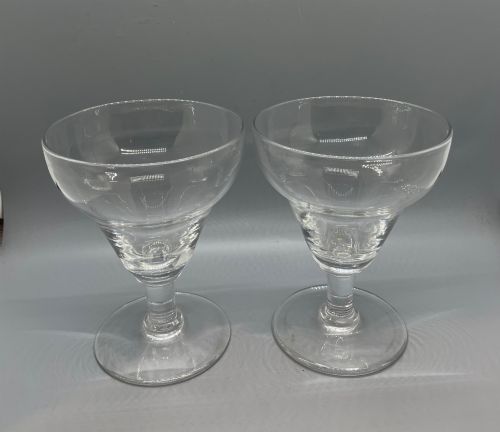
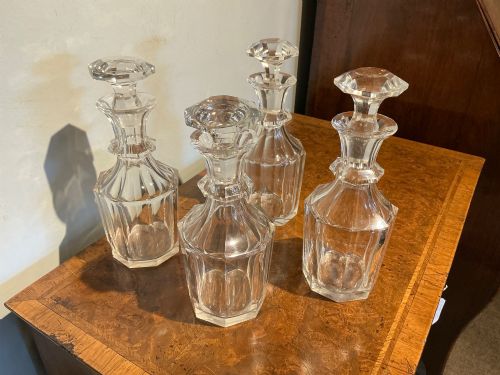
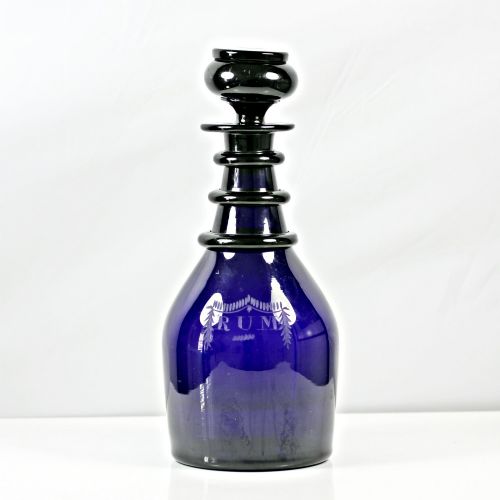
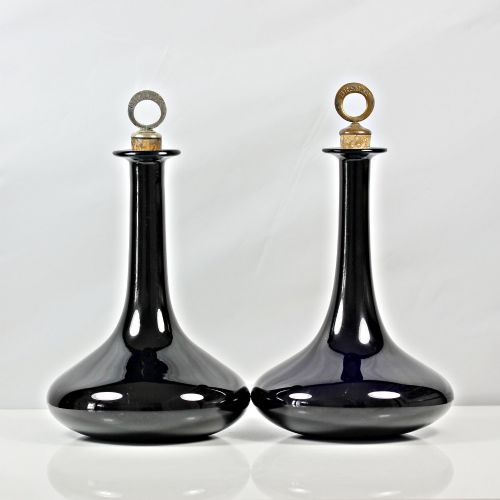
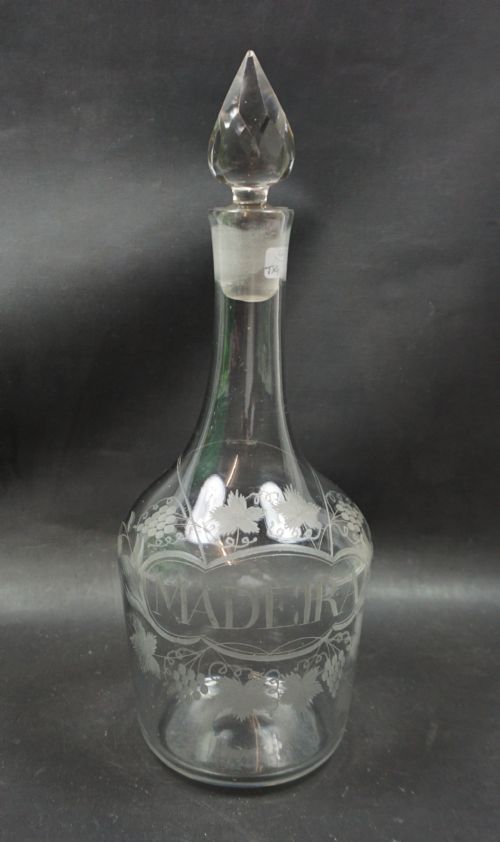
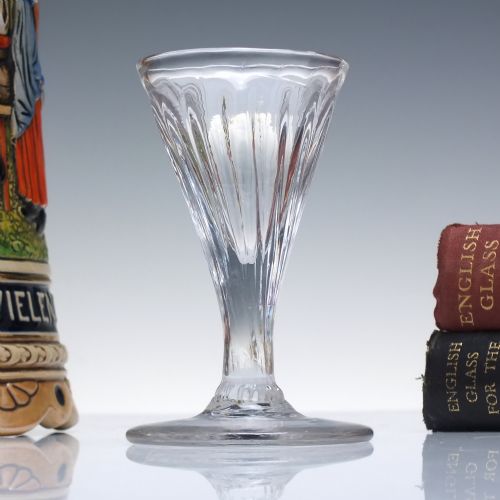
The objects seen here range from matched pairs of ogee rummers and shoulder decanters engraved with Madeira labels to small dram glasses and multi-ring spirit decanters. Lead glass and cut crystal dominate the forms, alongside rich cobalt blue and Bristol blue colourways that bring striking visual depth to the collection.
How they were made
Makers shaped these drinking vessels from heavy lead glass and lead crystal, utilising robust metal that took deep wheel-cutting and facet-cutting exceptionally well. Craftsmen employed rib moulding to give bodies texture, alongside hand-engraving to delineate labels and floral motifs upon the clear surfaces.
Decanters featured applied glass rings around their necks for secure handling, fitted with matching stoppers ground individually to fit each specific neck. Metal components such as sterling silver mounts appeared on associated items like spirit flasks.
A tiny glass tube transfers hot punch from bowl to glass without spilling a drop.
What varies in quality
Quality rests in the clarity of the metal, the crispness of the facet-cutting, and the retention of original matching stoppers that complete the silhouette. Pieces showing deep, sharp blaze cuts or clean rib moulding demonstrate superior craftsmanship compared to softer, shallower work.
Proportion and weight dictate the presence of the object, with heavier lead crystal vessels offering a more satisfying heft in the hand. The depth of colour in cobalt or Bristol blue examples further separates standard domestic wares from finer cabinet pieces.
The Georgian Glass Barware Glossary
- Rummer
- A large, sturdy drinking glass with a short stem, traditionally used for rum or punch during the eighteenth and nineteenth centuries.
- Toddy lifter
- A small, bulbous glass vessel with a narrow stem and thumb-hole at the top, used to transfer hot whisky toddy from a bowl to a glass.
- Mell decanter
- A decanter shaped like a mallet, featuring a broad base tapering towards the neck, popular for its stability on shipboard or dining tables.
- Rib moulded
- Glass blown into a ribbed or fluted dip-mould to create parallel raised vertical patterns on the body.
- Ogee
- An S-shaped double curve profile seen on the bowls of rummers and drinking glasses of the period.
Georgian Glass Barware: Frequently Asked Questions
What is a rummer?
A rummer is a capacious drinking glass designed for heavy spirits and punch, featuring a short, thick stem and a stable foot.
These glasses were built for everyday hospitality during the Georgian and Regency periods, offering substantial weight in the hand.
How do I use old decanters?
Antique decanters can still hold wine and spirits for the table, provided you check them for soundness and wash them gently by hand.
Avoid extreme temperature changes to protect the old lead glass from thermal shock.
What distinguishes Regency glass?
Regency glass often exhibits sharp, geometric cut patterns such as blaze cuts and three neck rings on decanters.
The metal tends to be heavy lead crystal with brilliant clarity and crisp facet work.
Are stoppers original?
Original stoppers were ground to fit the individual neck of each decanter during manufacture.
Matching numbers or identical wear patterns help confirm that the stopper has stayed with its vessel over the centuries.