




Georgian Girandole Mirrors
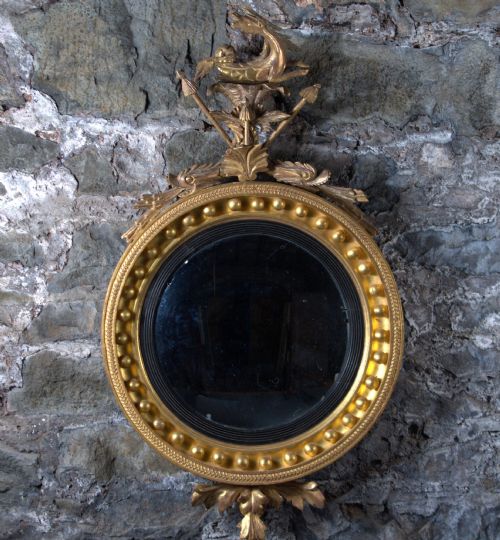
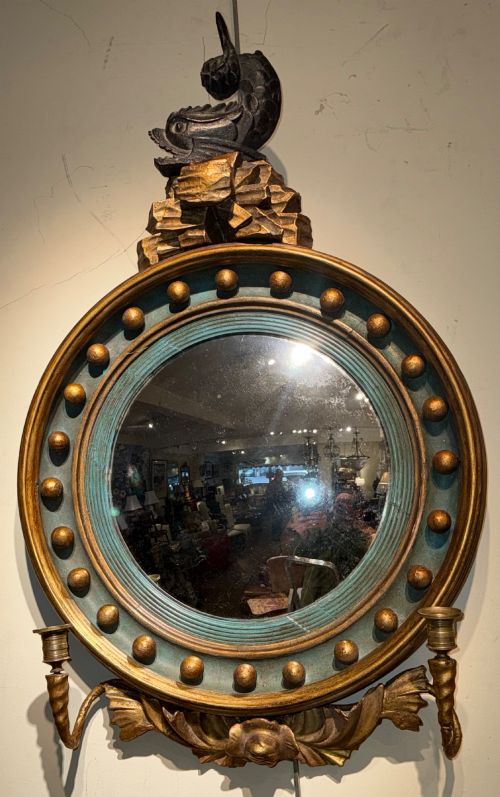
Georgian girandole mirrors are striking gilded wall pieces that command a room through their brilliant convex glass and candle arms.
Georgian Girandole Mirrors
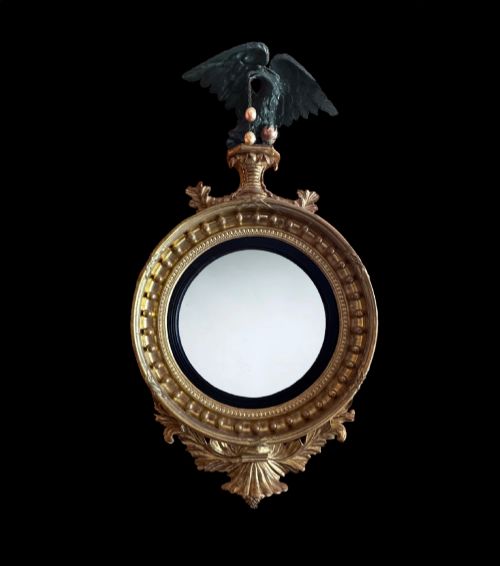
Georgian girandole mirrors bring intense focal energy to an interior through circular convex glass plates framed in gilded timber. When you search for georgian girandole mirrors, you encounter wall mirrors spanning the eighteenth and nineteenth centuries, alongside later twentieth-century revivals.
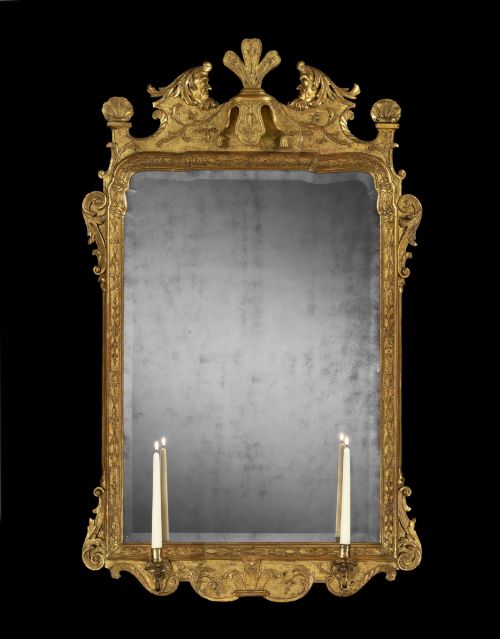
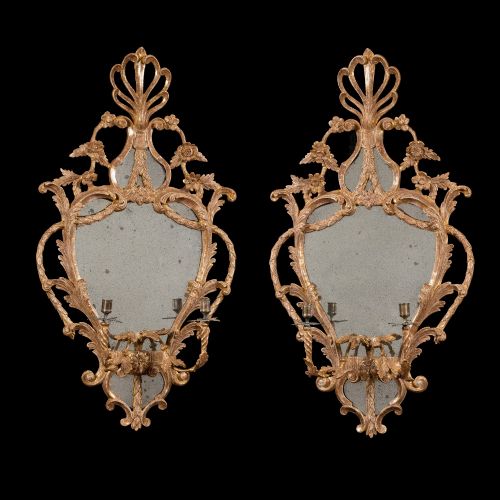
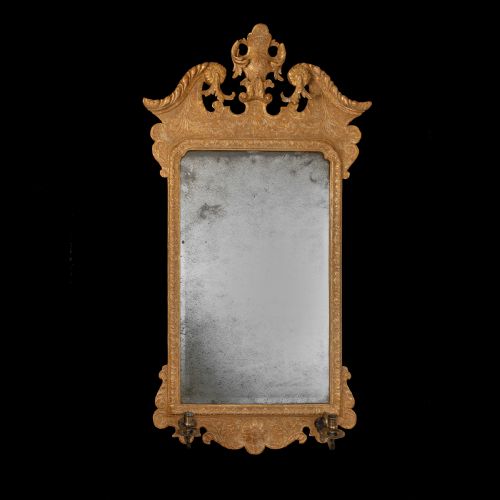
The Regency period dominates the selection, bringing convex plates paired with candle arms and carved crests featuring eagles, dragons or rope twist motifs. Earlier eighteenth-century examples from the George I and George II periods also appear, showing intricate gesso and carved giltwood work.
These wall pieces function primarily to bounce candlelight and daylight across a parlour while serving as sculptural statements. Most pieces span various dimensions from small intimate glasses to large format convex mirrors reaching significant scale.
How they were made
Carvers shaped solid timber frames from wood before applying layers of gesso to build up high-relief decorative details. Artisans then gilded these surfaces using gold leaf to achieve a brilliant metallic sheen.
Convex glass plates were blown and silvered to create the signature curved reflection that distorts the room in a wide-angle view. Brass elements frequently support the candle branches extending from the main giltwood structure.
Materials recorded across the selection include giltwood, gesso, brass, ebonised wood, and painted timber.
What varies in quality
The crispness of the hand-carved wood and gesso ornamentation dictates the primary tier of craftsmanship. Superior examples display deeply undercut foliage, sharp eagles and finely articulated dragons rather than soft, flattened moulding.
The depth and clarity of the original convex glass plate, combined with the intactness of the gold leaf application, separate masterworks from ordinary production. Original candle arms and integrated brass sconces surviving without replacement elevate a piece considerably.
Benjamin Goodison
The Georgian Girandole Mirrors Glossary
- Girandole
- A wall mirror featuring attached candle branches designed to reflect artificial light into the room. These arms extend outward from the gilded frame.
- Convex glass
- A curved mirror plate that swells outward, producing a circular panoramic reflection of the interior space. This optical format defines the majority of these pieces.
- Gesso
- A plaster-like mixture applied to wooden frames and carved into relief designs before gilding. It allows for intricate ornamentation.
- Giltwood
- Timber coated with gold leaf over a prepared base. This material gives the frames their characteristic warm metallic brilliance.
- Regency
- An English design period spanning the early nineteenth century characterised by classical revival motifs. Pieces from this era often incorporate bold eagle crests.
Georgian Girandole Mirrors: Frequently Asked Questions
How do you light rooms with girandoles?
The integrated candle arms held tapers that doubled the ambient light by bouncing flames off the curved glass plate. Placing them opposite windows also maximised daytime illumination in eighteenth-century drawing rooms.
Today, modern rooms benefit from positioning these mirrors where unlit candles still catch evening lamplight. This creates a warm, atmospheric glow without requiring actual flames.
Why are the mirror plates curved?
Convex glass was technically challenging to produce in large sizes during the period and provided a wide-angle view of the entire interior. This optical distortion served as a fashionable parlor novelty that fascinated guests.
The curvature concentrates light into a compact focal point, making small rooms appear larger and brighter. It offers a distinct visual perspective compared to flat looking glasses.
How do I date a convex mirror?
Examining the crest details, wood construction and gilding technique helps determine the era, with Regency pieces showing bold neoclassical motifs and eagles. Earlier George I and George II examples exhibit heavier gesso carving and distinct proportions.
Backboards, fixing methods and secondary woods also provide clues to age. Professional inspection of the glass plate can confirm whether the surface is original.
Where should I hang a convex mirror?
These pieces require prominent wall space where their reflective properties and sculptural frames can command attention. Focal points above mantelpieces or centered on principal reception room walls work best.
Ensure the wall structure can support the substantial weight of carved timber, gesso and glass. Hanging them at eye level maximises their decorative impact.