





Georgian Gallery Back Desk
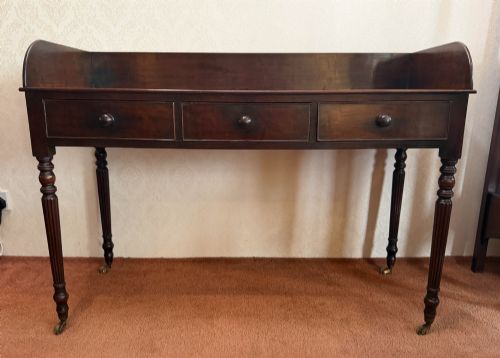
A georgian gallery back desk brings working functionality and refined timber framing into a room with understated British tradition.
Georgian Gallery Back Desk
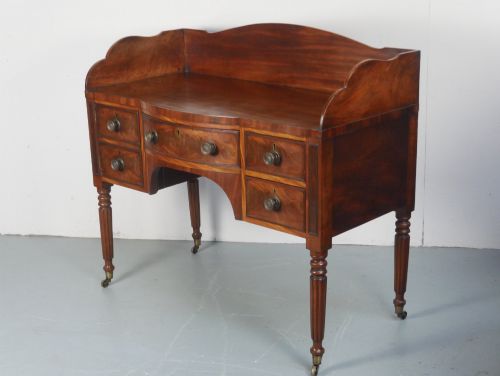
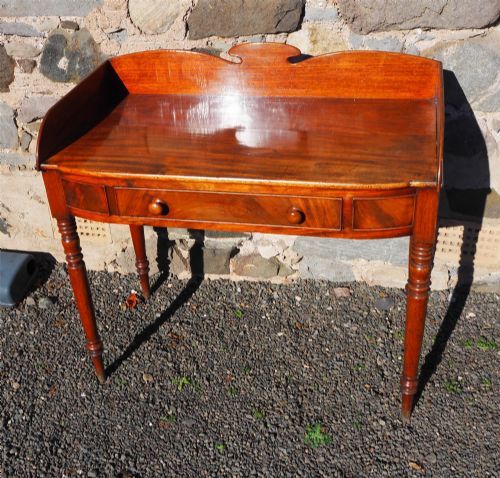
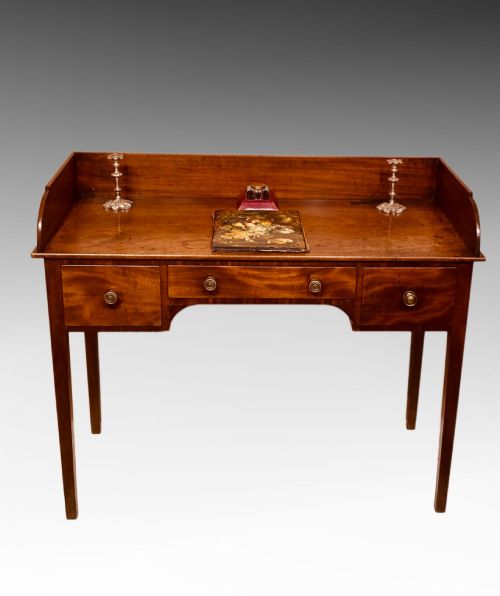
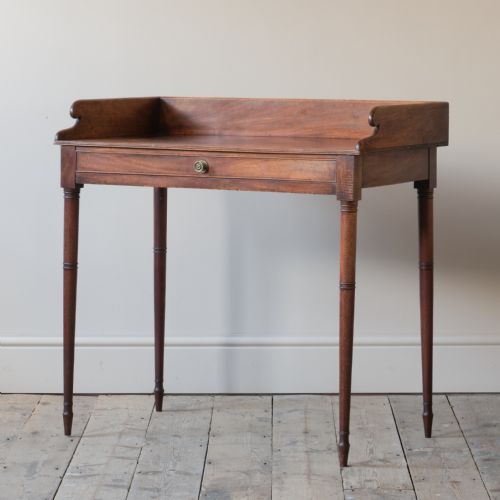
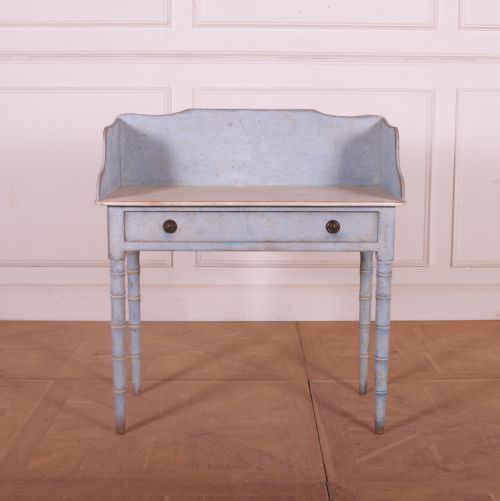
When you search for a georgian gallery back desk, you encounter a selection of writing tables, side tables, and dressing tables featuring raised upstands or tiered backs. These practical surfaces span the Georgian, Regency, and Victorian periods, often taking the form of side tables or writing desks equipped with drawers.
How they were made
Makers utilised solid mahogany and supporting secondary timbers such as softwood, pairing the primary wood with inlay work in boxwood. Structural integrity relied on traditional joinery techniques suited to frequent writing and domestic use.
Hardware details typically involved brass fittings for handles and mounts, while writing surfaces often integrated leather inserts. Painted wood finishes also appear among the construction variants recorded in the evidence.
Georgian Gallery Back Desk Retail Price Guide 2026
Typical asking prices for georgian gallery back desk among the pieces listed under this phrase on Sellingantiques today, from the lower quarter to the upper quarter. They describe what is for sale here now, not the wider market.
At least one table comes equipped with a tiered shelf back specifically designed to keep your inkwell from rolling onto the floor.
What varies in quality
The distinction between standard examples and top quality pieces rests upon timber selection and the depth of natural patina developed over centuries of use. Exceptional surfaces display rich colour variations across the mahogany grain rather than flat, uniform finishes.
Refinement in secondary details, such as precise inlay work, well-fitted drawers, and the elegance of the gallery surround, separates standard utility tables from finer writing desks and Carlton House forms.
George Hepplewhite
The Georgian Gallery Back Desk Glossary
- Gallery back
- A raised wooden border or upstand running along the back and sides of a table top to prevent items from rolling off. This feature defines many dressing and writing tables from the period.
- Mahogany
- A durable tropical hardwood prized for its reddish-brown colour and stable grain, forming the primary material for nearly all pieces on this page.
- Carlton House desk
- A distinctive horseshoe-shaped writing desk featuring a tiered superstructure of small drawers and compartments, often associated with Hepplewhite designs.
- Patina
- The surface sheen and softening of colour developed by wood over long periods of handling and exposure to light.
- Kneehole dressing table
- A vanity or writing table featuring a central recess for the user's legs, flanked by pedestals of small drawers.
Georgian Gallery Back Desk: Frequently Asked Questions
What is a gallery back?
A gallery back is a raised wooden upstand fixed to the rear and sides of a table surface. It prevents papers and small objects from sliding off the back.
In period desks and dressing tables, this feature also adds a decorative architectural element to the piece.
How do I identify a Georgian desk?
Georgian desks are typically identified through their use of solid mahogany, restrained proportions, and traditional hand-cut joinery. They often feature simple drawer configurations and brass hardware.
Pieces from this era emphasise structural utility combined with understated elegance rather than heavy ornamentation.
Were these tables used for writing?
Many tables listed under this heading served multiple domestic functions, including writing, side storage, and dressing. Writing tables often incorporated integrated drawers for stationery and ink.
Surfaces finished with leather inserts were specifically designed to provide a smooth platform for writing.
What is a Carlton House desk?
A Carlton House desk is a specialised writing desk featuring a curved superstructure with multiple small drawers and letter slots arranged around the user. This form follows designs originally published by George Hepplewhite.
They represent a more elaborate style of writing furniture compared to standard flat-top side tables.