


Georgian Fusee Movement Clock
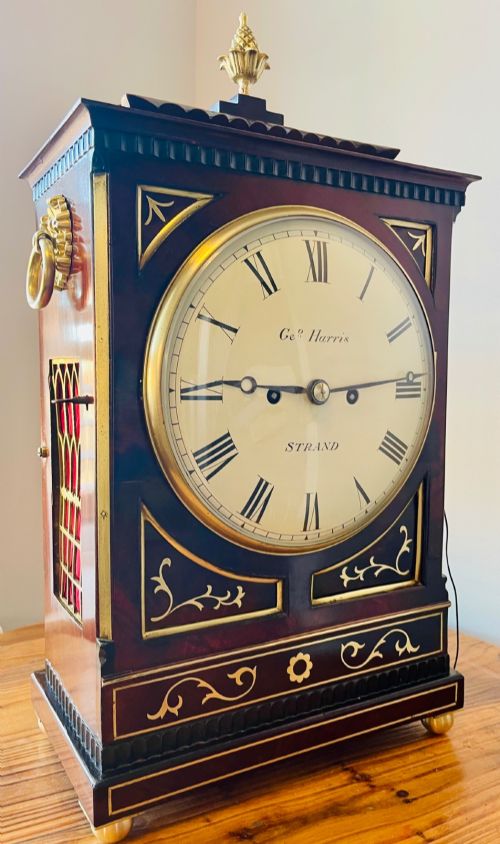
A georgian fusee movement clock offers reliable timekeeping through a conical pulley mechanism, housed in traditional mahogany or ebonised wood.
Georgian Fusee Movement Clock
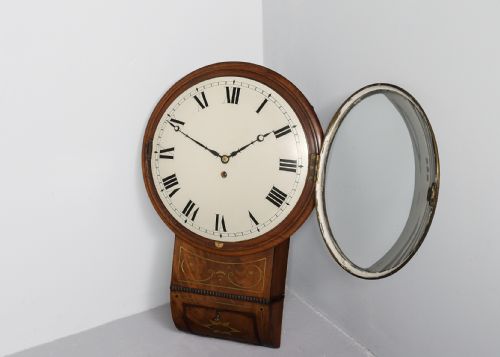
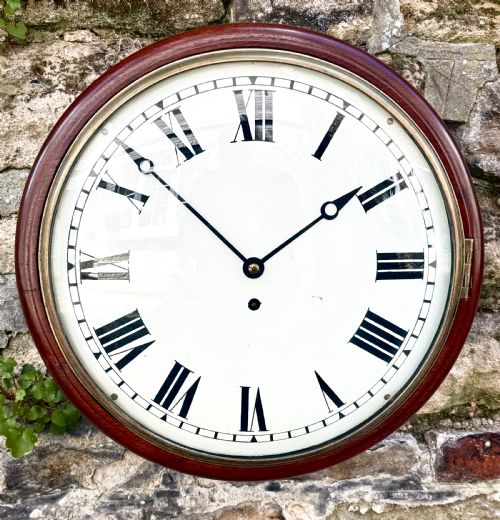
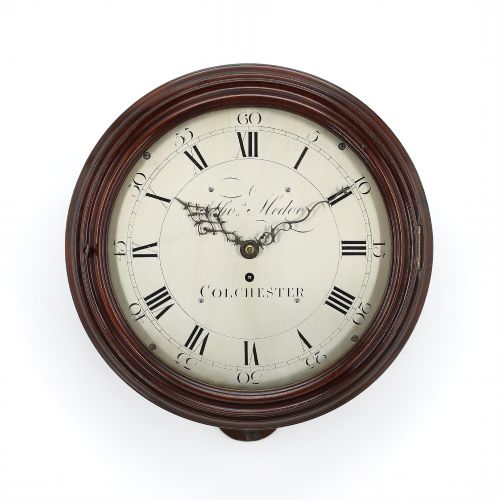
A georgian fusee movement clock comprises wall clocks, bracket clocks, and mantel clocks originating primarily from the eighteenth and nineteenth centuries. These timepieces rely on a fusee mechanism to equalise the pull of the mainspring as it unwinds, ensuring steady precision. Buyers examining this page encounter diverse forms ranging from large dial wall clocks to miniature balloon and library tables clocks.
The aesthetic falls predominantly into Regency, George III, and Victorian styles, reflecting the prevailing taste of their eras. Cabinets employ materials such as mahogany, brass inlay, gilt bronze, and ebonised wood to frame painted metal or enamel dials. London makers dominate the origins, alongside provincial workshops across England and Scotland.
Distinctions in quality
Quality rests upon the execution of the cabinetwork and the precision of the mechanical movement housed within. Finer examples display crisp brass inlay, well-proportioned mahogany grain, and clean engraving upon the dial or backplate. Master makers signed their work on the face or movement, elevating the piece through documented provenance.
The complexity of the train also alters the character of the piece, distinguishing a simple single fusee timepiece from a twin chain automation striking bracket clock. Original elements, including the pendulum, dial, and casework, retain greater integrity than heavily restored alternatives.
Makers working in London, provincial England, and Scottish towns supplied these fusee movement clocks throughout the eighteenth and nineteenth centuries.
Thomas Hedge of Colchester·Somersall London·Chater and Son London·John Leroux London·John McGregor Wick·Plumbly and Tupman London·FB Adams London·Leith of London
The Georgian Fusee Movement Clock Glossary
- Fusee
- A conical pulley designed to equalise the torque of the mainspring as it winds down. This ensures the clock maintains an even force and accurate time throughout its run.
- Bracket clock
- A portable table clock originally designed to sit upon a wall bracket or table. These pieces frequently feature striking mechanisms and carrying handles.
- Verge escapement
- An early type of escapement mechanism that controls the release of the wheel train. It works with a balance wheel or pendulum to regulate the beats.
- Drop dial
- A wall clock featuring an extended wooden trunk beneath the circular dial. This form became popular for public spaces and domestic halls during the Georgian period.
- Chamfered top
- A sloping edge or corner cut at a forty-five-degree angle on the top of a wooden clock case. This detail softens the silhouette of table and bracket clocks.
Georgian Fusee Movement Clock: Frequently Asked Questions
How do I wind my fusee clock?
Insert the winding key into the dial aperture and turn it gently clockwise until you feel resistance. Take care not to over-wind the mechanism, as this can strain the chain or spring.
Ensure you support the clock case with your free hand while winding table or bracket models. Regular, gentle winding keeps the tension consistent and preserves the mechanical parts.
Where should I place a wall clock?
Hang your wall clock on an interior partition where temperature and humidity remain relatively stable. Avoid direct sunlight and damp exterior walls to protect the mahogany case and painted dial.
Mount the clock securely using appropriate fixings suited to the wall material. A stable surface prevents vibrations that might interfere with the pendulum swing.
How do I read a fusee clock?
Read the time using the traditional hands pointing toward Roman or Arabic numerals on the convex or flat dial. Glass bezels protect these delicate faces from dust and accidental contact.
Some models include subsidiary dials or strike on the hour to announce the time. Listen for the cadence of the striking train to track the hours in quieter rooms.
What maintenance do these clocks need?
Keep the exterior clean by dusting the mahogany case with a dry, soft cloth and avoiding abrasive polishes. Glass cleaner applied to a cloth rather than directly on the bezel helps clear the dial cover.
Mechanical movements require periodic cleaning and lubrication by a professional horologist. Regular servicing prevents wear on the brass wheels and keeps the fusee chain running smoothly.