
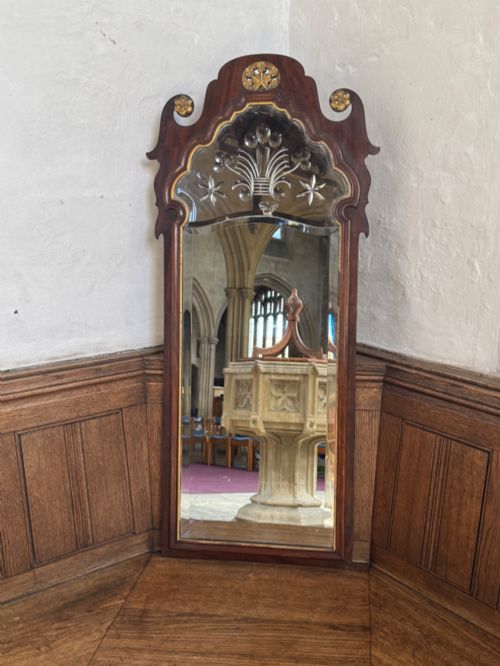
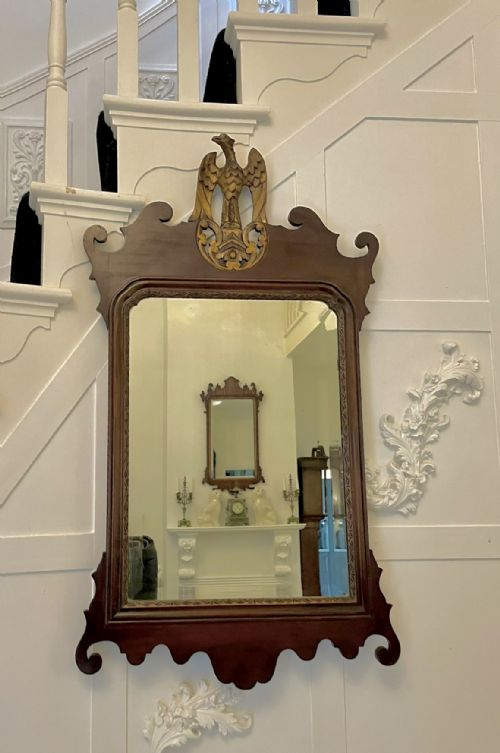


Georgian Fretwork Pier Mirror
A georgian fretwork pier mirror brings architectural rhythm and carved elegance to a room.
Georgian Fretwork Pier Mirror
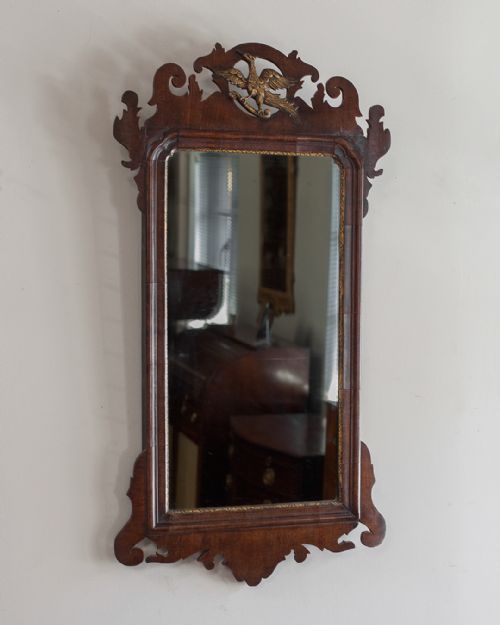
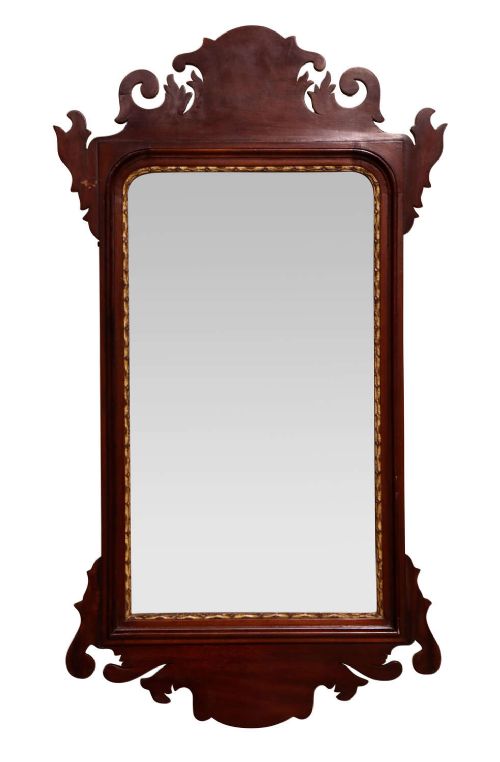
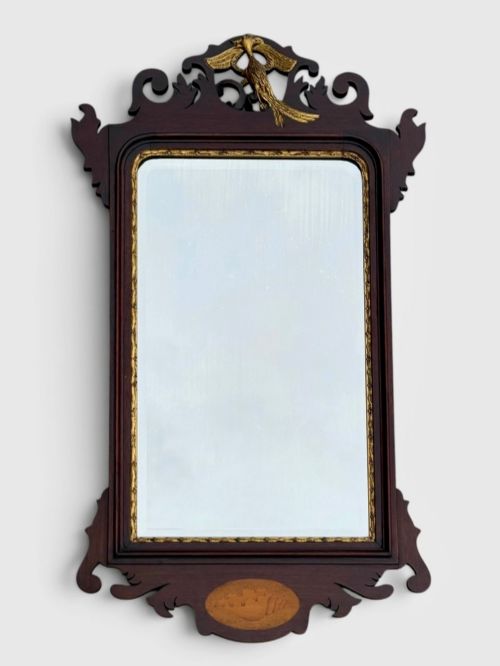
A georgian fretwork pier mirror is a wall-hanging glass plate set within a fretted wooden frame, designed to hang between windows or above mantelpieces. These plates often feature scrolled ears, pierced silhouettes, and gilded crestings.
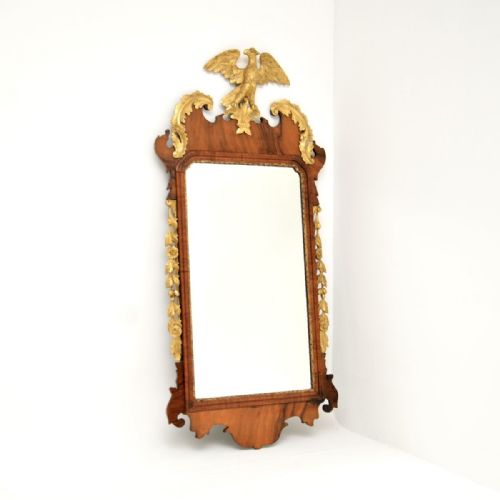
The versions most commonly met range from 18th century originals in mahogany and walnut to later revival pieces from the Victorian and Edwardian eras. Mahogany and walnut dominate the selection, frequently enhanced with parcel gilt details.
How They Were Made
Cabinetmakers constructed these frames using dense timbers like mahogany, walnut, and sycamore, often applying veneers and intricate fret-cut outlines. The fretwork silhouettes were pierced by hand using fretsaws to create delicate, repeating patterns along the borders.
Gilding was applied as gold leaf or gesso highlights to accentuate carved crests, such as the iconic Ho-Ho bird, and interior slips. Vauxhall mirror plates and reverse cut plates were set into the rebated backs, sometimes retained by original wooden panels.
Materials span mahogany, walnut, burr walnut, sycamore, giltwood, and gesso across the Georgian, Victorian, and Edwardian periods.
What Varies in Quality
The crispness of the fretsawn edges and the depth of the carving dictate the visual impact of the frame. Superior examples display sharply defined scrollwork and balanced proportions rather than flat, machine-cut contours.
The integrity of the materials, from figured burr walnut veneers to untouched original glass plates, separates standard execution from exceptional craftsmanship. Traces of early gilding and original surface patination elevate the standing of a mirror.
The Georgian Fretwork Pier Mirror Glossary
- Fretwork
- Pierced ornamental woodwork cut with a fretsaw to form geometric or scrolling patterns along the frame edges.
- Pier glass
- A tall mirror specifically proportioned to hang on the wall space between two windows.
- Parcel gilt
- Woodwork partially decorated with thin layers of gold leaf applied to carved highlights and mouldings.
- Ho-Ho bird
- A stylized Chinese phoenix motif frequently carved into the cresting of mid-eighteenth-century mirrors.
- Vauxhall plate
- An early mirror glass plate characterised by bevelled edges and subtle distortions within the glass.
Georgian Fretwork Pier Mirror: Frequently Asked Questions
Where should I hang a pier mirror?
These mirrors work best hung on narrow wall spaces between windows or directly above a fireplace mantel.
Their vertical proportions help reflect natural light deeper into a room.
How do I spot an 18th century original?
Look for timber shrinkage, old pine secondary woods, and hand-cut fret edges that show subtle irregularities.
Original mirror plates often display slight oxidation and foxing beneath the glass surface.
What is a parcel gilt frame?
A parcel gilt frame combines exposed polished wood, such as mahogany or walnut, with selective applications of gold leaf.
This technique highlights carved details like inner sight edges and top crests.
What is the Ho-Ho bird?
The Ho-Ho bird is a mythical Chinese phoenix adaptation popular during the Chippendale period.
It typically perches centrally within the scrolled wooden cresting at the very top of the mirror.