



Georgian Folding Stand
A georgian folding stand brings versatile portability and rich timber grain to any room, serving today as a practical table or serving piece.
Georgian Folding Stand
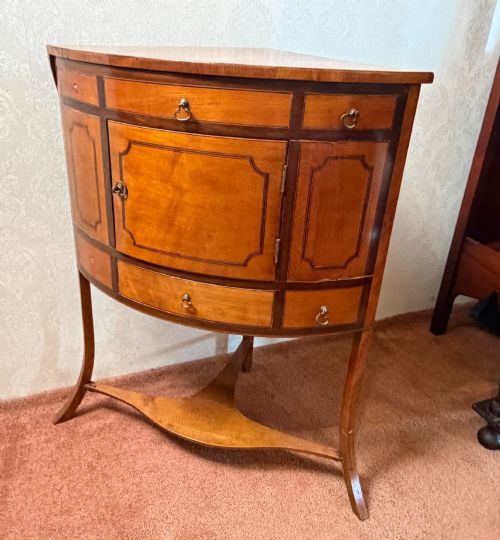
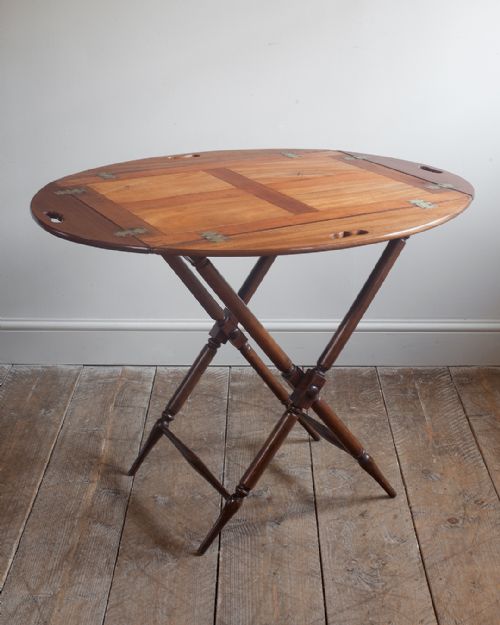
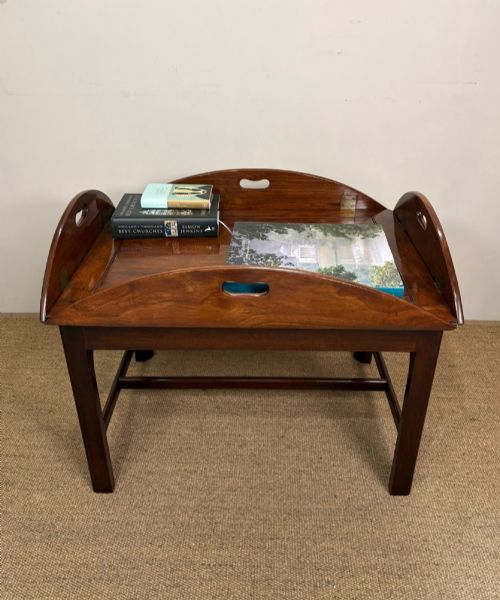
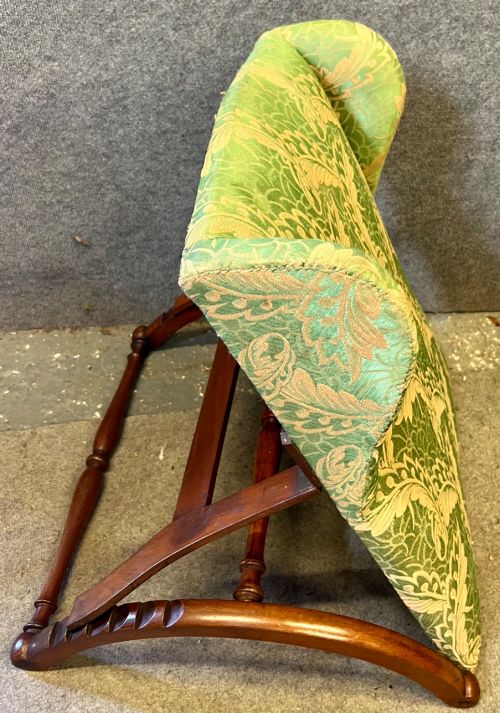
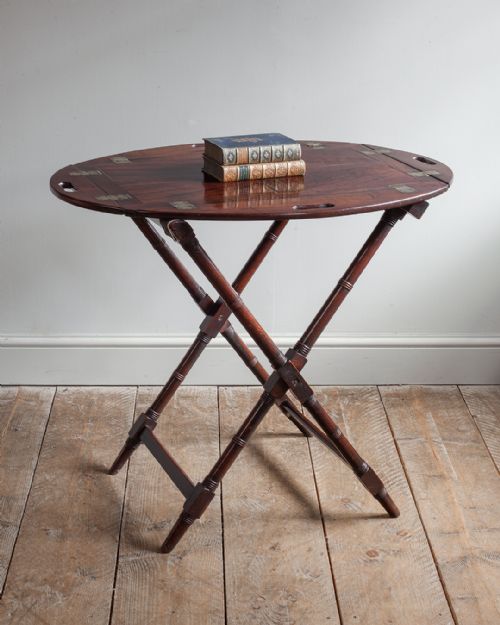
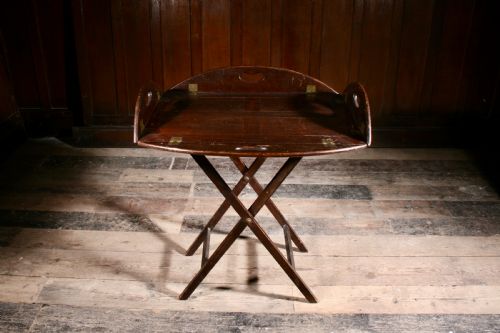
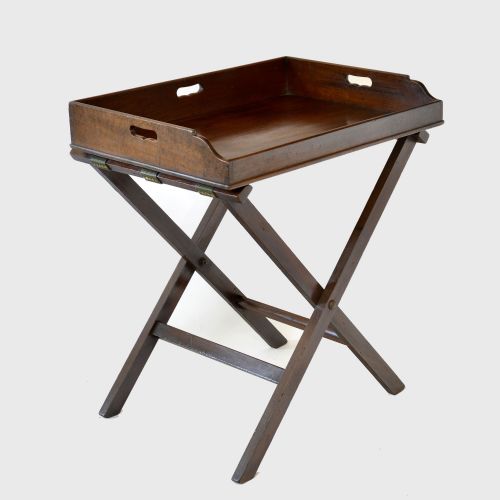
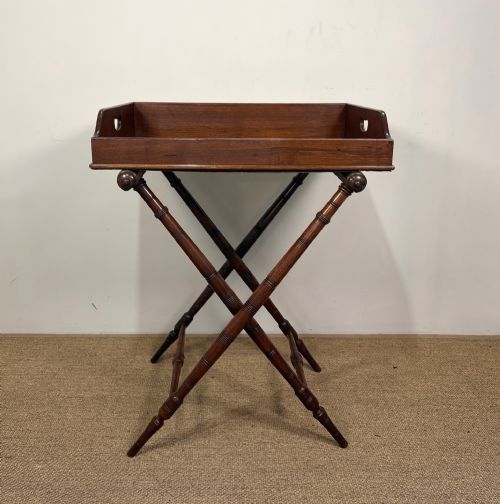
When you search for a georgian folding stand, you encounter pieces designed for utilitarian adaptability and ease of storage in period homes. The selection spans distinct forms, predominantly butler's trays on folding stands, washstands with fold-away elements, and tiered dumb waiters.
The material palette of these pieces relies heavily on rich timbers like mahogany, Cuban mahogany, and satinwood, occasionally accented with boxwood inlay. Most examples date from the Georgian, George III, and Regency eras, though 19th-century and Edwardian interpretations also appear.
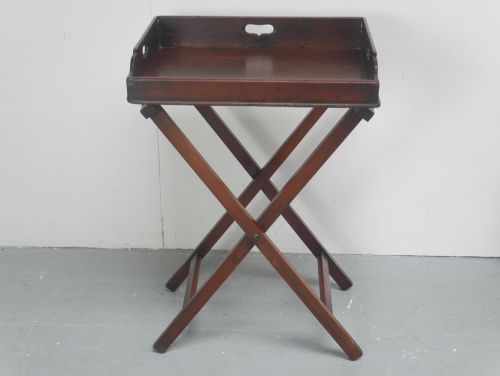
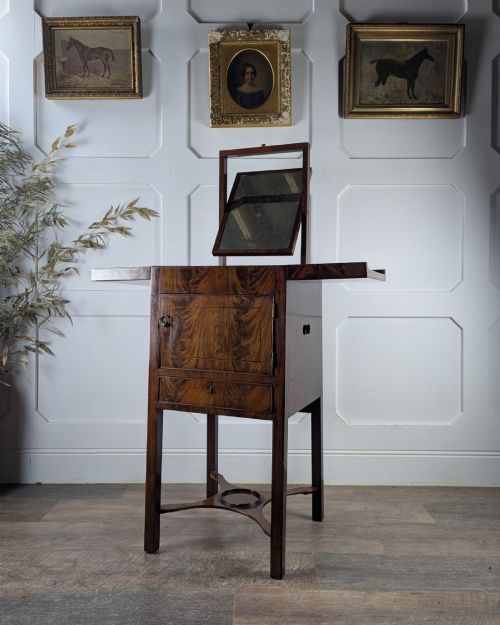
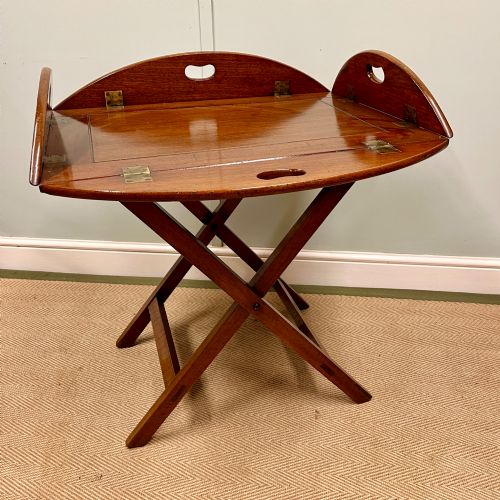
Butler's trays dominate the available forms, often featuring oval or rectangular trays resting upon folding X-frame or trestle bases. Washstands and dumb waiters represent the more complex folding mechanisms found within this group of furniture.
What varies in quality
The grade of timber selection largely dictates the standing of a piece, with figured Cuban mahogany and crisp satinwood inlay marking out superior examples. Plain secondary timbers and heavy, utilitarian construction identify more basic utilitarian items.
The sophistication of the folding mechanism and the preservation of original brass fittings influence the desirability of a stand. Refined edge moulding on trays and precise joinery on the folding bases separate workshops of higher ambition from standard production.
Listings for this phrase feature mahogany most frequently, alongside satinwood, Cuban mahogany, and brass hardware.
Matthew Berge London
The Georgian Folding Stand Glossary
- Butler's tray
- A removable wooden tray with shaped or hinged sides, designed to lift off its folding stand for serving. It forms the primary top surface on many folding tables.
- Dumb waiter
- A tiered serving stand with rotating or folding shelves used to hold dishes. Georgian examples often feature folding drop-leaf tiers.
- Washstand
- A specialised piece of furniture housing basins and washing gear, frequently built with folding tops or corner configurations to save space. Some incorporate mirrors or tambour cabinets.
- Cuban mahogany
- A dense, richly figured tropical timber prized by 18th-century cabinetmakers for its deep colour and durability. It yields a smooth, lustrous finish when polished.
Georgian Folding Stand: Frequently Asked Questions
What is a georgian folding stand used for today?
These pieces function readily as occasional tables, side tables, or coffee tables in modern interiors. Their portable design allows them to move between rooms with ease.
Originally built for specific tasks like serving drinks or personal hygiene, their folding frames now offer flexible surface space in compact modern layouts.
How do I identify a genuine period piece?
Examine the timber species, construction methods, and hardware to determine age. Period pieces typically employ dense mahogany or satinwood with hand-cut joinery.
Look for authentic wear patterns on the folding hinges and undersides of the trays. Original stands retain the subtle irregularities of hand-tooling rather than modern machine production.
Are the trays detachable from the stands?
Most butler's trays lift completely off their folding wooden bases to allow independent transport of food or glassware. The stands themselves collapse flat for compact storage.
Certain washstands and dumb waiters integrate the folding action directly into the frame, meaning the shelves fold down rather than lifting away entirely.
Where should I place a folding stand at home?
Corner washstands fit neatly into unused angles of a bedroom or hallway, echoing their original space-saving purpose. Rectangular butler's tray tables work well as low coffee tables or side tables beside seating.
Keep them away from direct heat sources and strong sunlight to protect the aged mahogany and satinwood surfaces from drying out.