

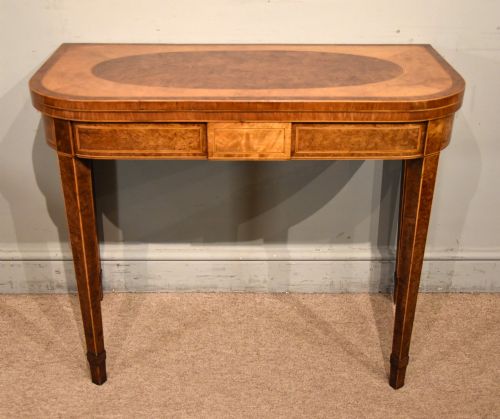
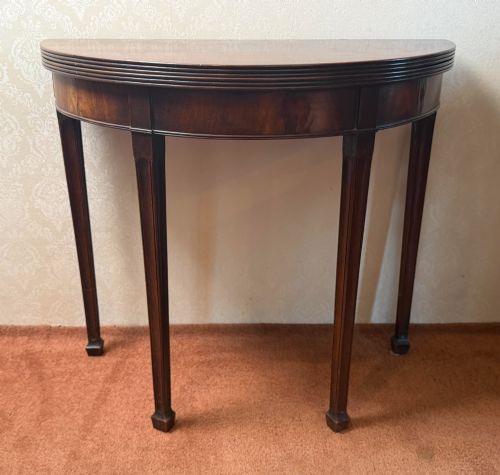
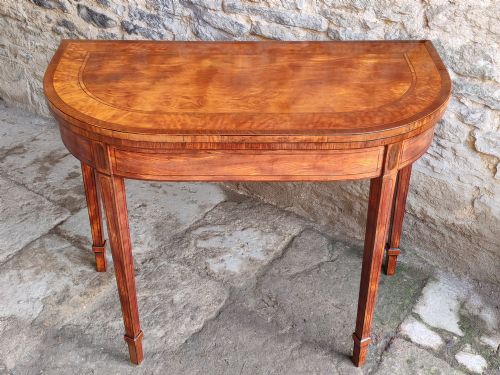
Georgian Fold Over Console
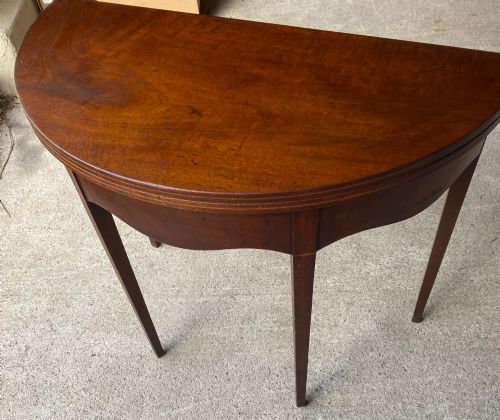
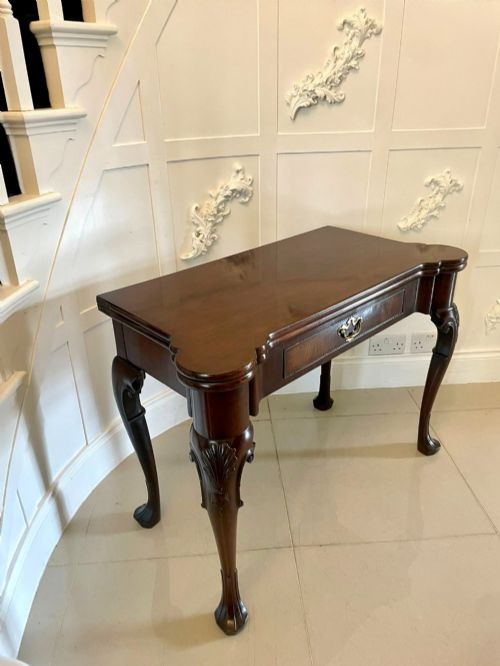
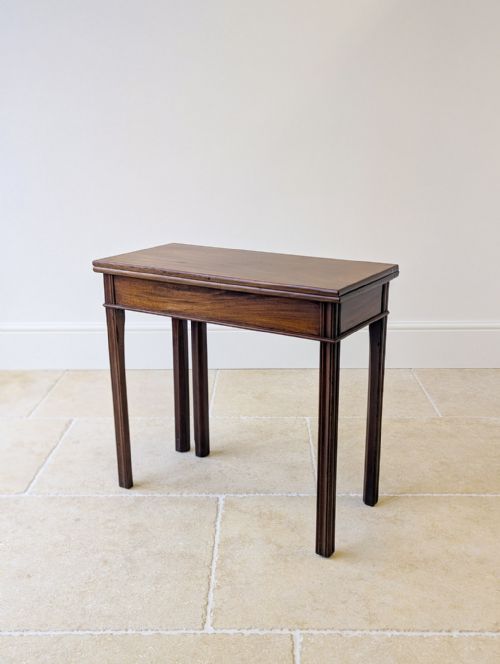
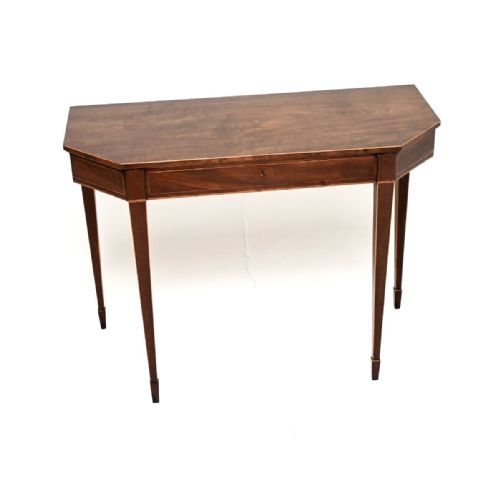
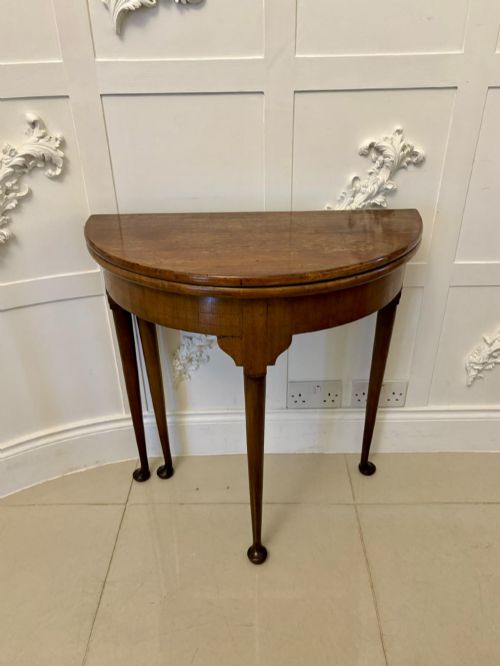
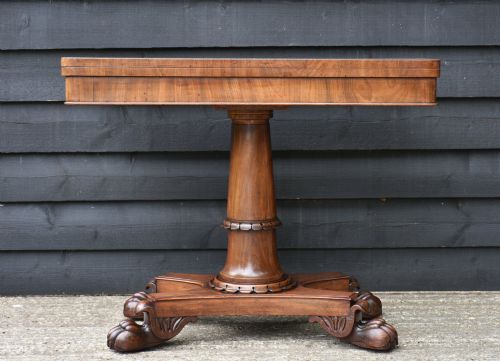
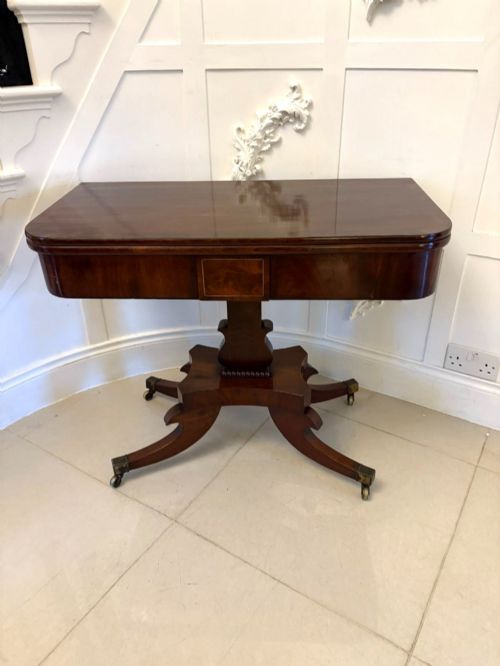
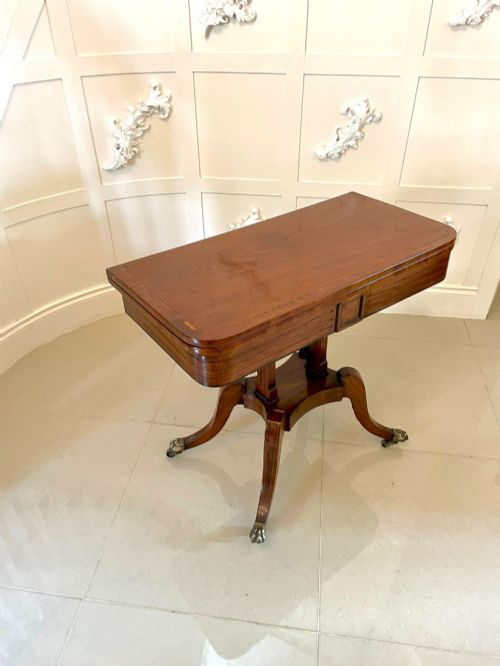
A georgian fold over console is a versatile surface transforming from a slim pier table into a spacious card or tea table.
Georgian Fold Over Console
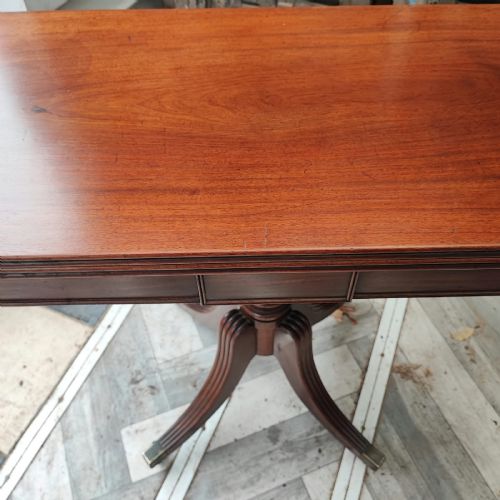
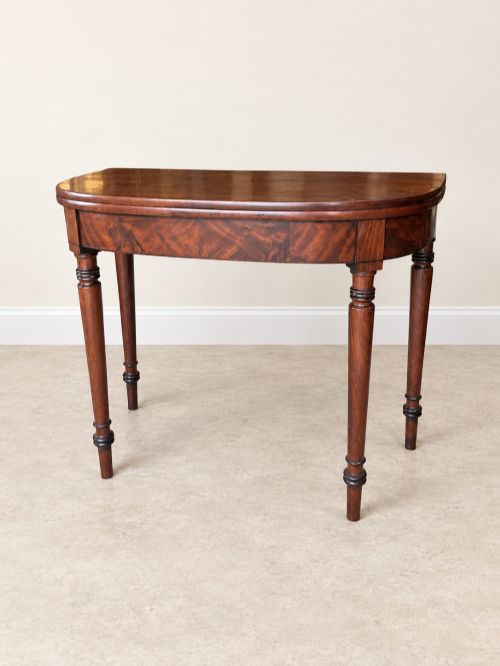
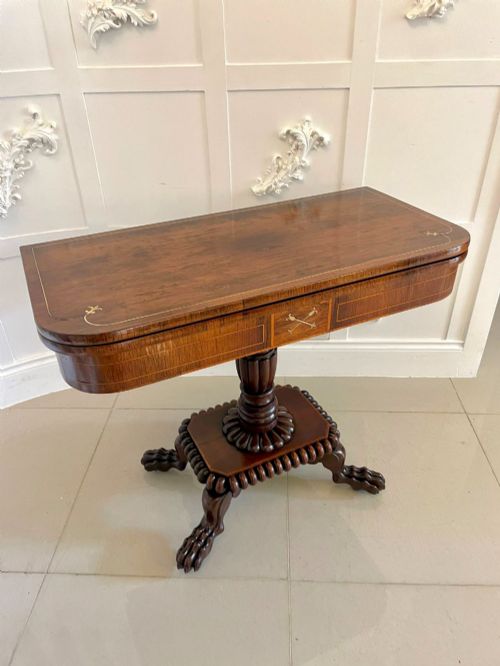
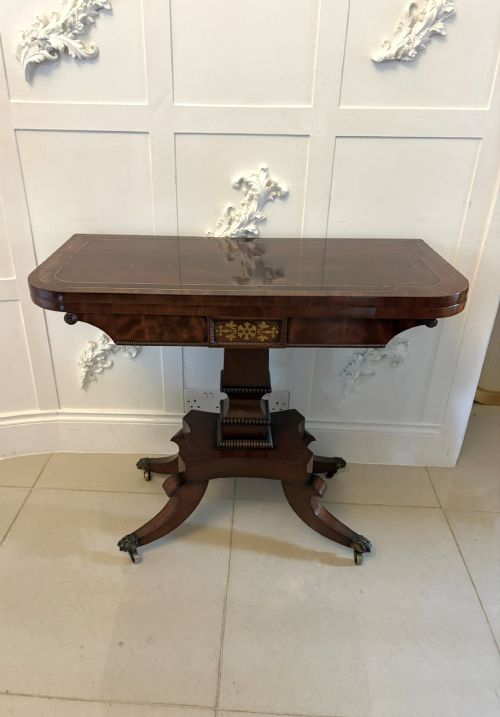
A georgian fold over console typically functions as a dual-purpose piece, serving as a side table against a wall before opening up for gaming or dining. These tables emerge most frequently in mahogany, satinwood, and rosewood, spanning the eighteenth and nineteenth centuries.
The form encompasses demi-lune, rectangular, and serpentine shapes that adapt easily to various rooms. Card tables, tea tables, and games tables dominate the listings, often featuring hinged tops supported by swinging rear legs or concertina actions.
How They Were Made
Cabinet makers utilised solid timber alongside fine veneers, applying flame mahogany, burr yew, and satinwood over stable secondary woods. Crossbanding in tulipwood or kingwood frames the primary panels, set off by delicate stringing in boxwood and ebony.
Structural integrity relies on traditional joinery, with concertina frames and swing legs supporting the heavy folding top leaves. Inlaid brass details and carved decoration such as sabre legs or reeded edges add refinement to the Regency and George III examples.
Hidden interior wells on these tables once kept playing cards and coins safely out of sight between matches.
What Varies in Quality
The grade of timber selection dictates much of the visual impact, with highly figured flame mahogany or burr yew commanding attention. Crispness in stringing inlay and the precision of the concertina mechanism separate standard items from superior commissions.
Original patination and surface colour heavily influence desirability. Tables retaining their authentic polished finish and subtle age-related wear present greater visual harmony than those stripped or overly restored.
Bruce & Burns of Edinburgh
The Georgian Fold Over Console Glossary
- Demi-lune
- A half-moon shape popular for console and card tables designed to sit flush against a wall.
- Concertina action
- An expanding frame mechanism that pulls out to support both halves of a fold-over top evenly.
- Crossbanding
- A strip of veneer applied perpendicularly to the grain of the main surface to create a decorative border.
- Stringing
- Thin inlay lines of contrasting wood such as boxwood or ebony used to outline panels and borders.
- Patina
- The deep gloss and surface texture developed by aged wood through decades of use and polishing.
Georgian Fold Over Console: Frequently Asked Questions
How were georgian fold over consoles used originally?
These tables stood against drawing room walls holding decorative objects when closed. When visitors arrived, the top leaf folded out to create a stable surface for card games or tea service.
Their dual nature made them essential furniture for entertaining in fashionable eighteenth and nineteenth century homes. The clever mechanisms allowed households to maximise floor space without sacrificing functional surfaces.
Where should I place a fold over console today?
A hallway, living room or dining area makes an ideal setting for these versatile pieces. Placed against a wall, they occupy minimal depth while offering a useful display surface.
Opening the top transforms the piece into a functional gaming table or occasional desk. Their compact closed footprint suits modern interiors seeking traditional character without bulk.
How do I tell a george iii table from a regency one?
George III pieces often display cleaner classical lines, straight tapering legs, and restrained satinwood or mahogany veneers. Craftsmen of this era favoured architectural proportions and subtle stringing.
Regency examples frequently introduce bolder elements such as brass inlay, rosewood timbers, and heavy sabre or pillar legs. The decorative vocabulary shifts towards French-influenced opulence during the early nineteenth century.
Why do some tables have concertina frames?
A concertina action allows the rear frame to expand outward alongside the folding top leaf. This provides sturdy support at all four corners when the table is open.
Simpler designs relied on a single swinging leg rather than an expanding frame. Concertina mechanisms represent more complex cabinet making found on higher quality card tables.