

Georgian Flame Mahogany Linen Press
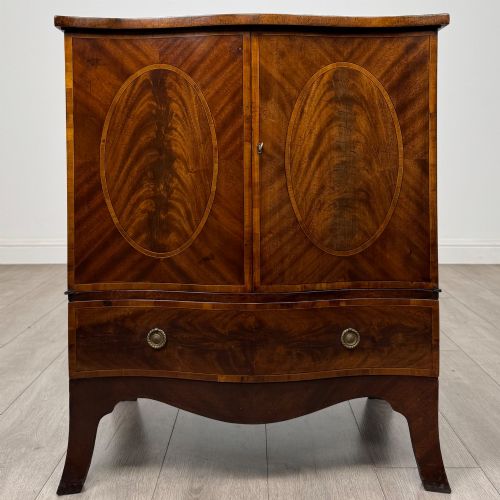
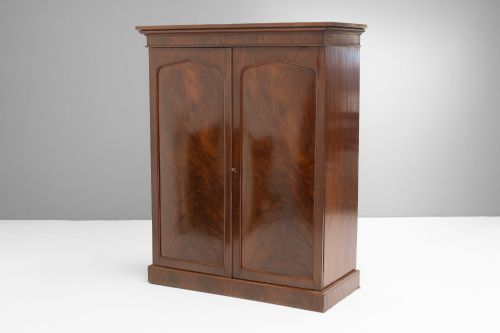
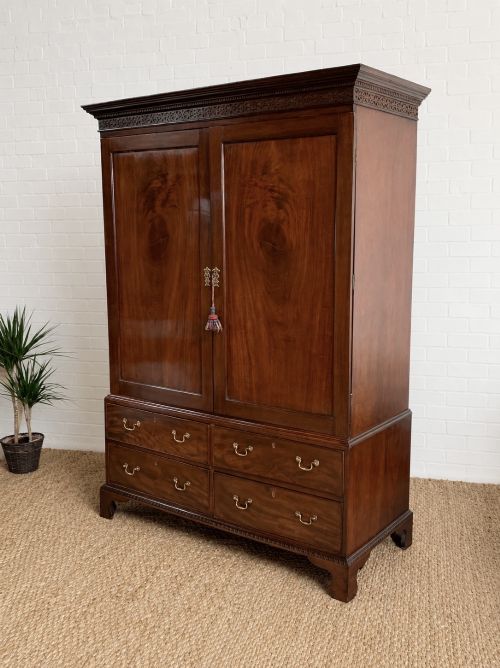
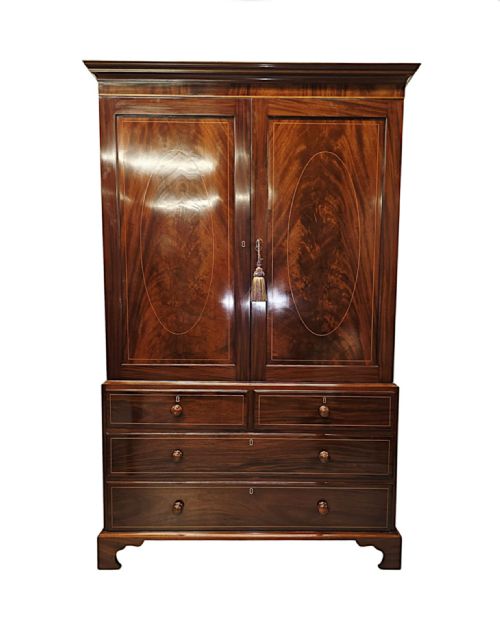
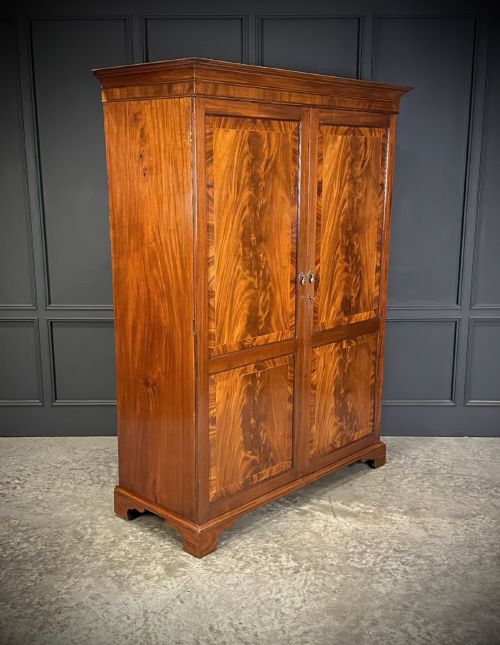
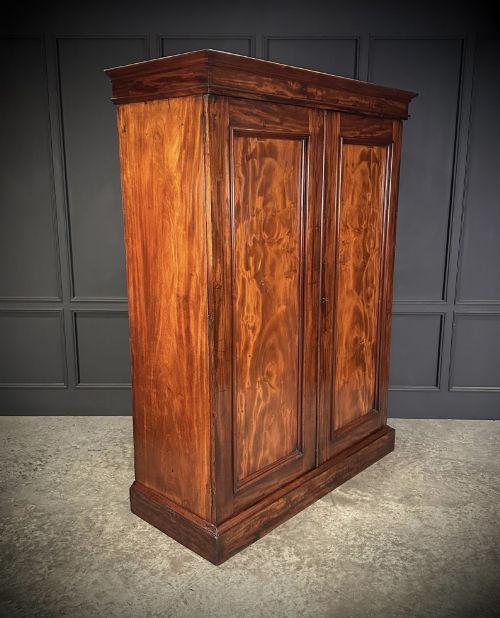
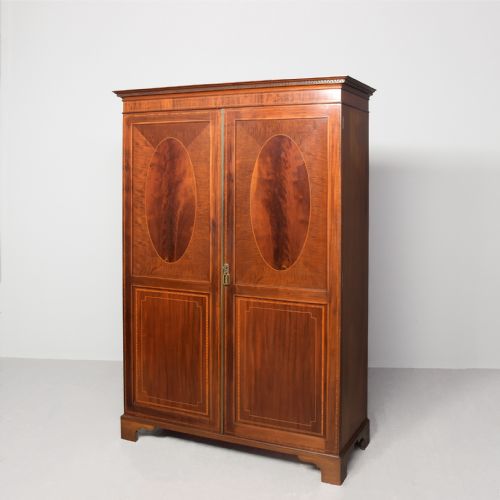
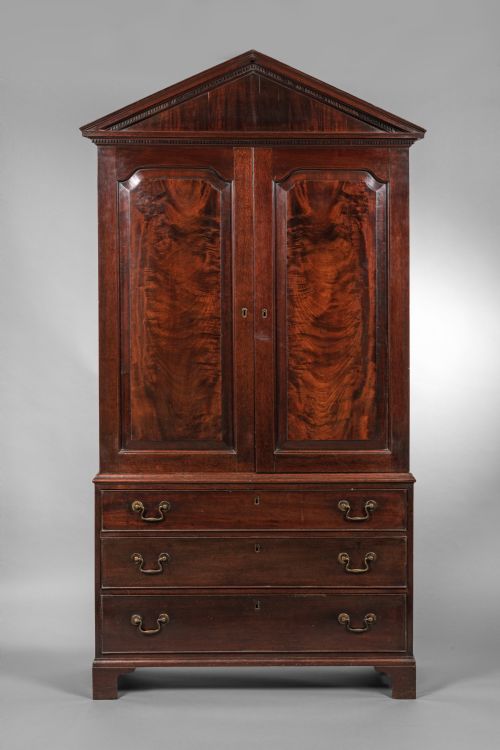
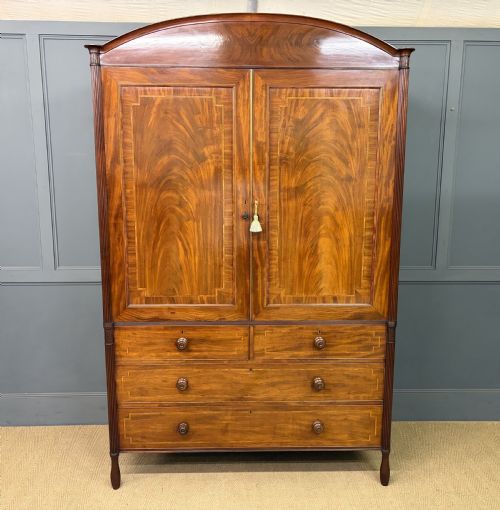
A georgian flame mahogany linen press brings striking figured timber and grand architectural presence into a room.
Georgian Flame Mahogany Linen Press
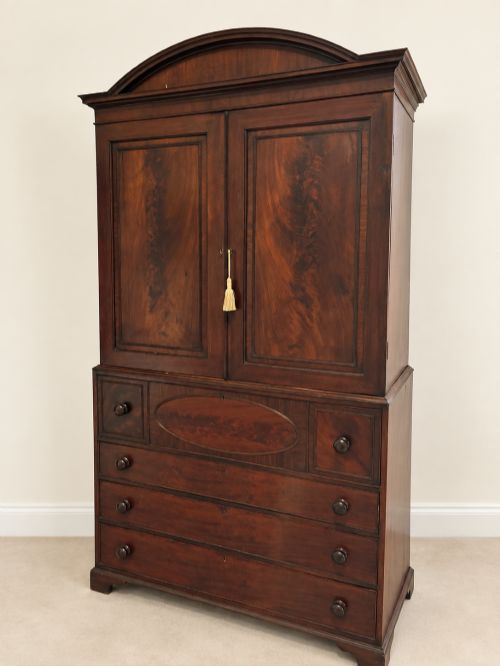
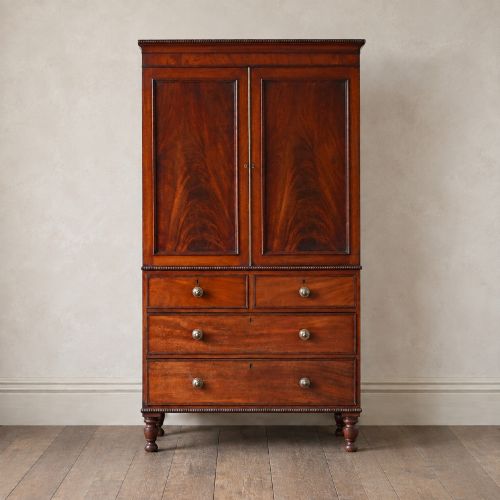
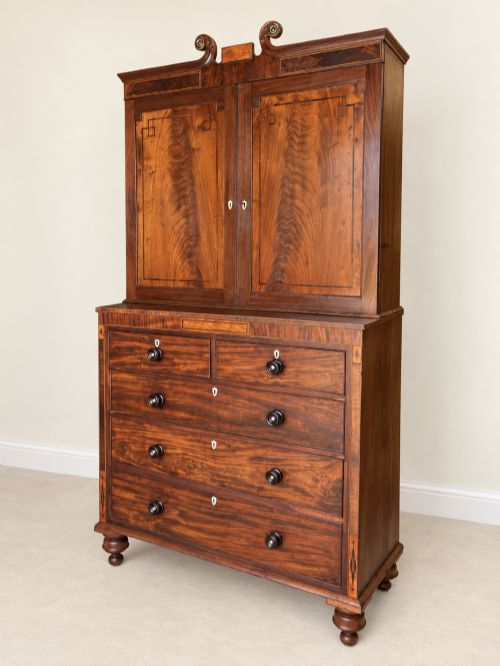
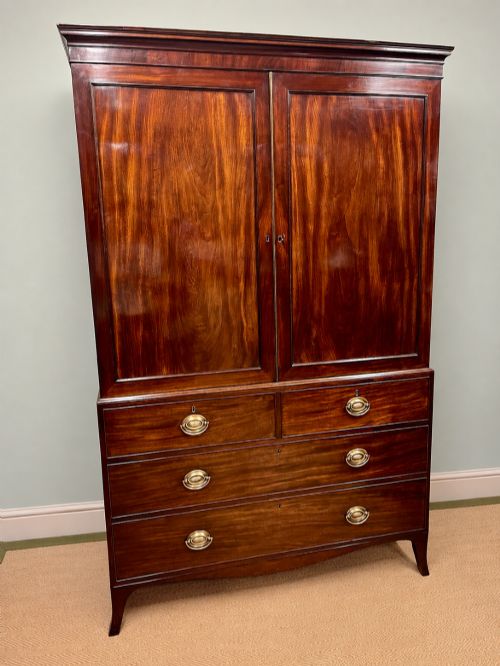
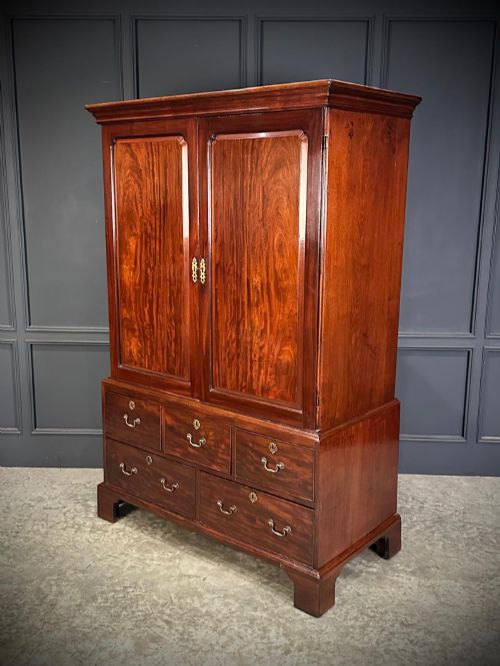
A georgian flame mahogany linen press is a substantial piece of case furniture designed to store textiles, linens and garments. These items typically combine an upper section of panelled doors housing sliding trays or shelves with a lower chest of drawers. The pieces seen here span the eighteenth century, the regency era and later nineteenth-century revivals.
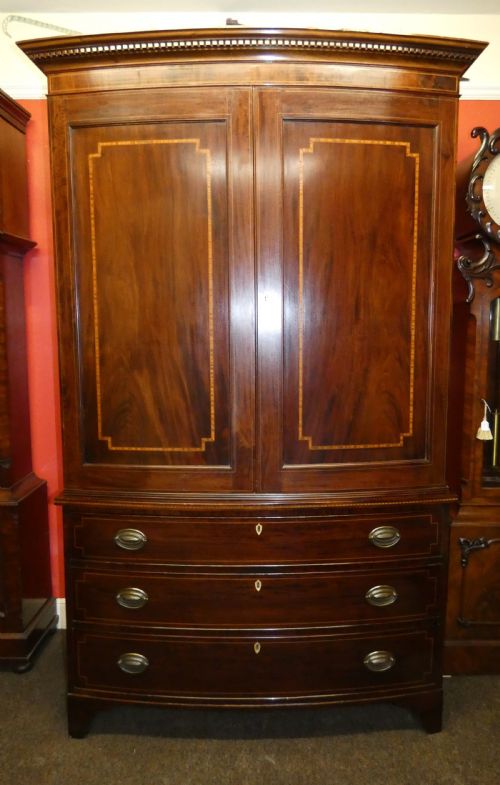
The version you are most likely to encounter on this page is a tall upright cabinet showing strong classical proportions. Many examples feature symmetrical door panels matched with decorative cornices above a chest base. Alongside standard upright forms, bowfront and breakfront variants appear frequently in the listings.
How they were made
Cabinet makers utilised solid timbers such as mahogany and oak for structural carcases and internal framing. Selected sections of flame mahogany veneer were then applied carefully to the primary facade to create dramatic swirling grain patterns. Secondary decorative elements often incorporated contrasting satinwood inlay and boxwood stringing.
Joinery techniques relied on robust dovetailing for drawer construction and panel framing to accommodate seasonal wood movement. Brass hardware, including drop handles and escutcheons, was fitted to secure doors and drawers. Surface finishes were built up using traditional polishing methods to highlight the natural depth of the figured wood.
Dwarf linen cupboards offer the grand presence of a country house press scaled down for surprisingly compact rooms.
What varies in quality
The skill of the cabinet maker dictates the visual harmony of the timber selection across the facade. Superior examples display meticulously matched flame veneers that flow symmetrically from panel to panel, whereas lesser pieces show disjointed grain patterns. Finer construction also appears in the crispness of carved mouldings and blind fretwork details.
Internal execution separates standard production from exceptional workshop output. High-quality items feature solid secondary woods throughout the interior drawers and carefully constructed linen slides. The precision of the drawer dovetails and the weight of the brass fittings further indicate the tier of craftsmanship.
Gillows·Thomas Chippendale·Thomas Bradshaw
The Georgian Flame Mahogany Linen Press Glossary
- Flame mahogany
- A decorative veneer harvested from specific cuts of timber that produce a dramatic, flickering flame pattern. This figured wood forms the primary visual appeal of the upper cabinet doors.
- Linen press
- A tall storage cabinet historically used to store household linens on internal sliding trays. Later adaptations often converted these internal trays into wardrobe hanging space.
- Cornice
- The decorative moulded projection running along the top of the cabinet. Makers often detailed this architectural element with dentil moulding or blind fretwork carving.
- Bowfront
- A curved cabinet front where the central section gently arcs outward. This shape softens the rectilinear mass of large storage furniture.
- Compactum
- A multi-functional wardrobe or press offering specialised internal compartments, drawers and hanging space combined within a single unit.
Georgian Flame Mahogany Linen Press: Frequently Asked Questions
What is inside a linen press?
Most of these pieces contain wooden sliding trays behind the upper doors for flat textile storage. Below these trays sits a chest of drawer space for smaller garments.
Some examples have had the internal trays removed to allow full-length clothes hanging. The interior configuration often reflects whether the piece dates from the eighteenth century or a later revival period.
How do I date a mahogany press?
Dating relies on examining construction methods, timber choices and overall stylistic proportions. Pieces from the eighteenth century typically display hand-cut dovetails and restrained classical mouldings.
Later nineteenth-century and revival pieces often incorporate machine-sawn elements or heavier carved details. The presence of specific inlay styles, such as satinwood stringing, also helps narrow down the period of manufacture.
Are flame mahogany and curl mahogany the same?
Both terms describe highly figured mahogany veneers cut from sections where the branches join the main trunk. This specific grain produces striking, reflective patterns across the front doors of the cabinet.
Cabinet makers used these prized veneers selectively on primary display surfaces to catch the light. The terms are often used interchangeably by dealers to describe the same decorative wood effect.