
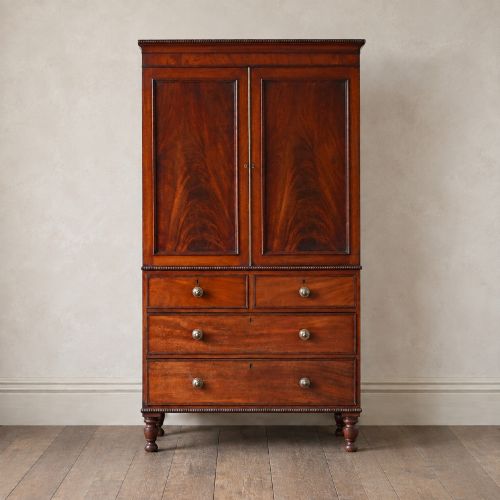
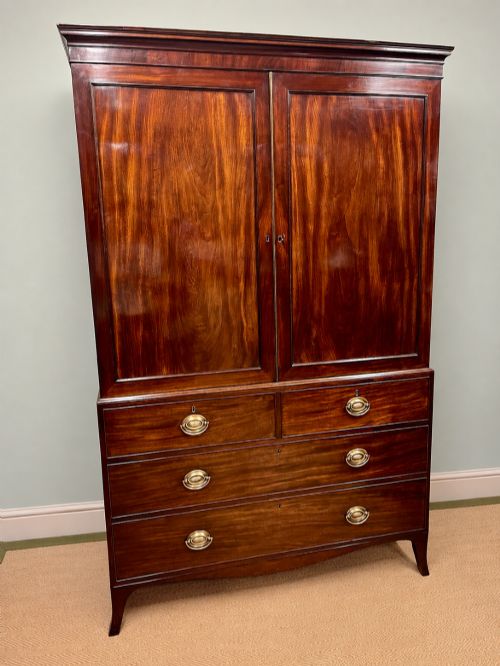
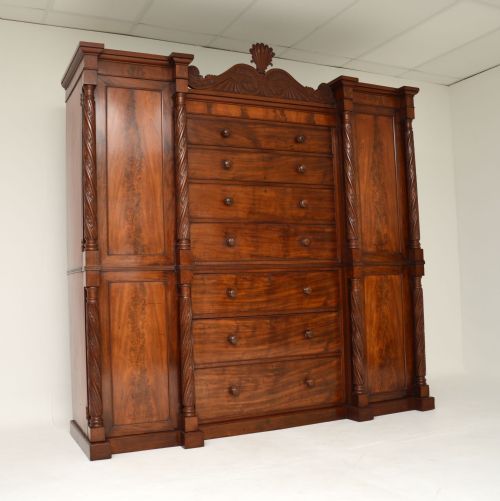
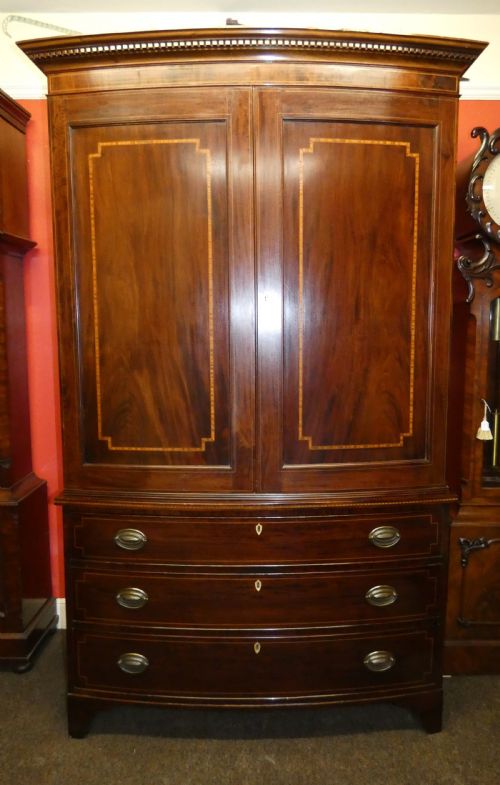
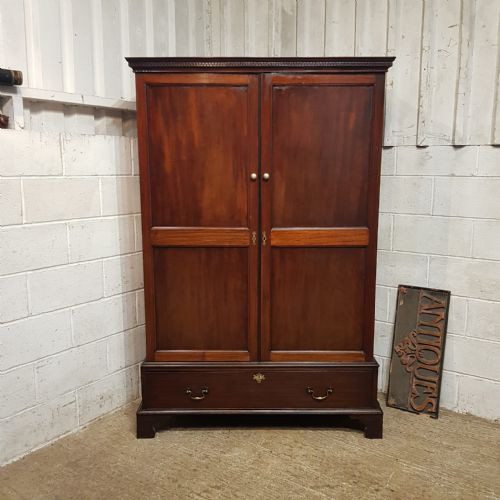


Regency Press Cupboard
A regency press cupboard combines grand architectural presence with practical storage, offering deep drawers and sliding tray interiors designed for the orderly preservation of textiles.
Regency Press Cupboard
The versions most frequently encountered originate from the early nineteenth century, spanning the Georgian, Regency, and William IV eras. While standard proportions predominate, compact dwarf models and breakfront library variations also appear within the selection.
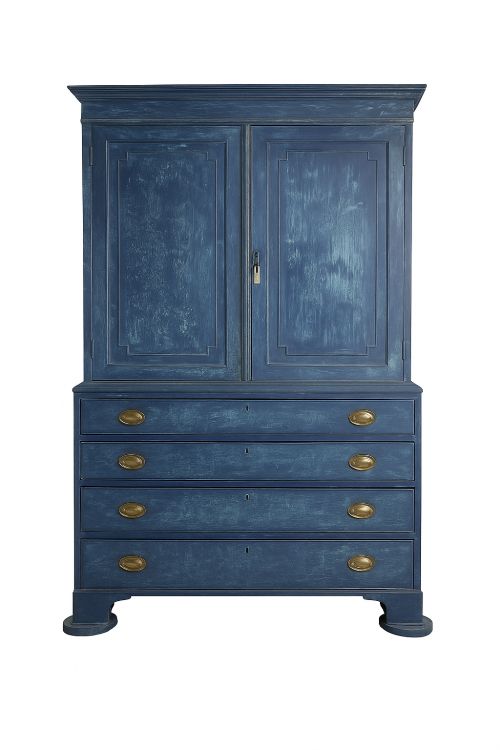
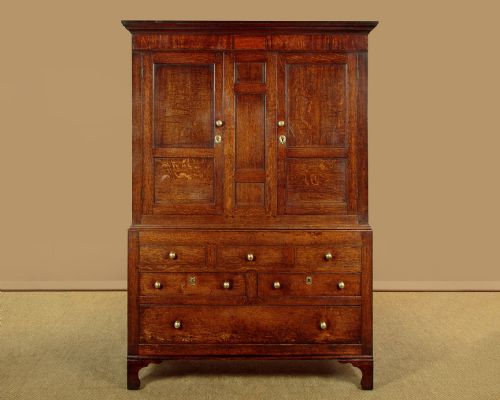
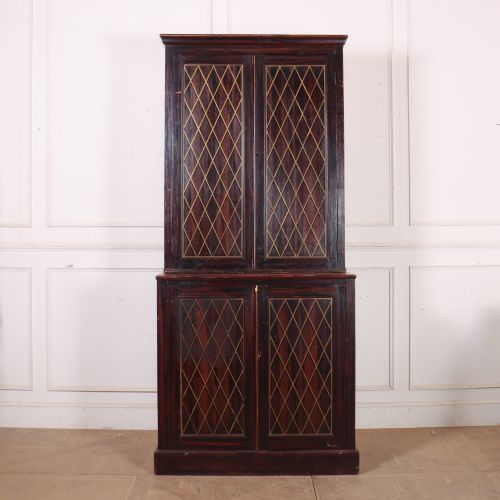
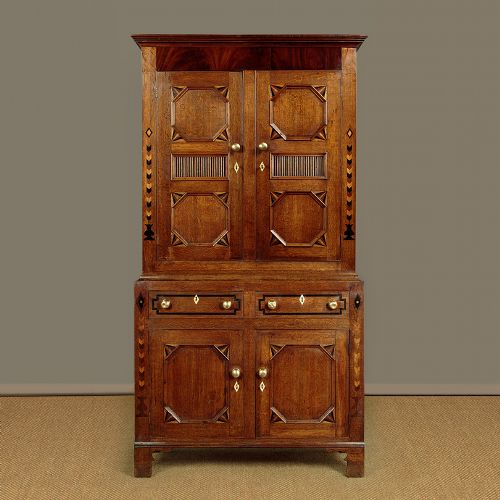
Regional diversity surfaces through Welsh oak tack cupboards and Channel Island hall wardrobes, alongside painted pine interpretations finished in blue or soft neutral tones. Cabinetmakers utilised native and imported timbers to construct functional storage solutions that doubled as formal furniture for bedrooms and dressing rooms.
Materials and Construction
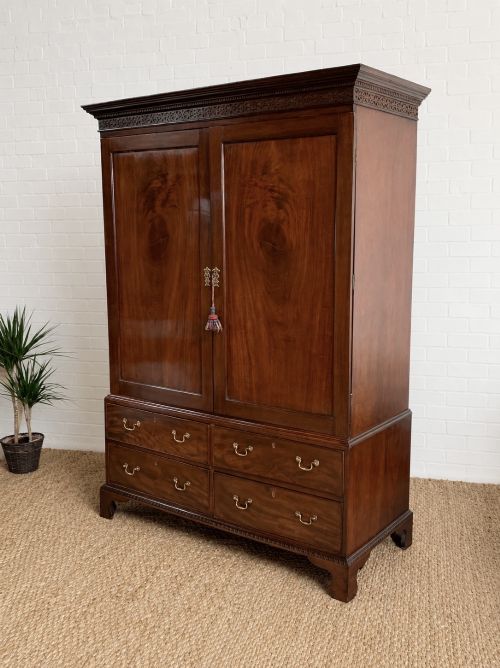
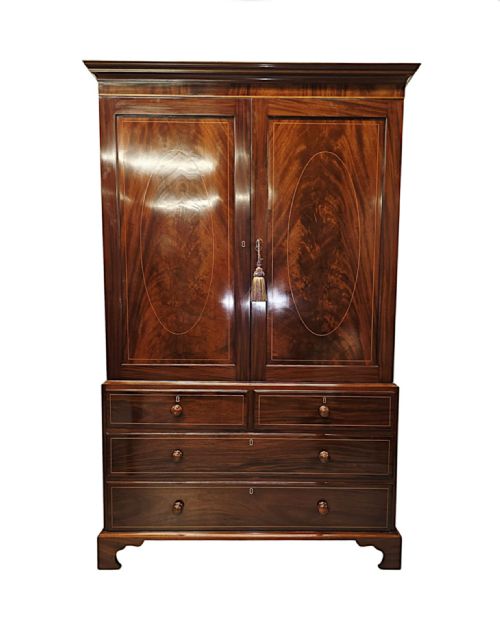
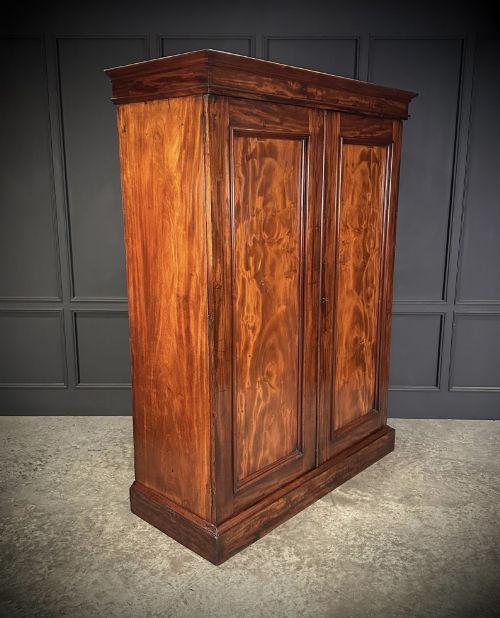
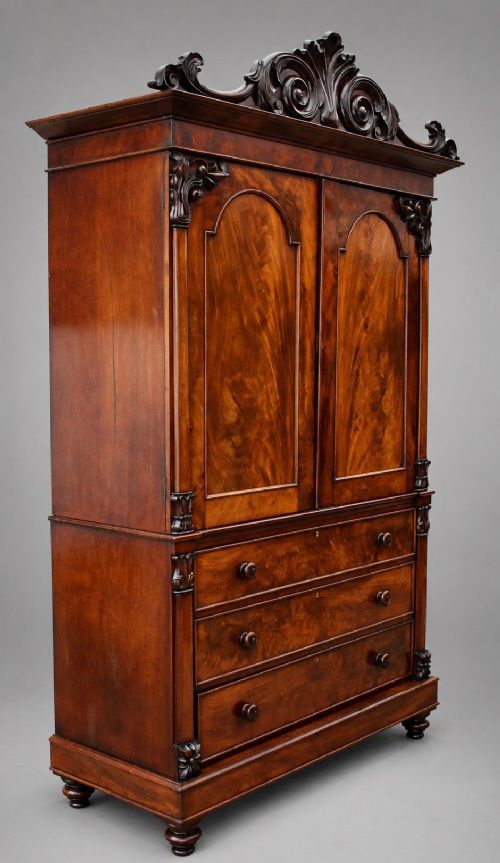
Mahogany serves as the primary timber, often selected for its rich grain and enhanced through flame mahogany veneers or subtle satinwood inlay. Cabinetmakers employed oak for internal drawer linings and structural framing, ensuring durability across large architectural carcases.
Surface ornamentation relied on precision joinery rather than heavy carving, incorporating blind fretwork cornices, brass handles, and contrasting stringing. Painted finishes on pine variants provided an alternative aesthetic, utilising traditional pigments applied directly to the softwood.
Listings feature traditional mahogany, flame mahogany veneer, oak, and painted pine finishes across eighteenth and nineteenth-century forms.
Assessing Quality and Craftsmanship
Superior examples demonstrate careful timber selection, where flame or curl mahogany grain patterns align symmetrically across the panelled doors and drawer fronts. The integration of secondary woods like oak for interiors indicates higher standards of workshop production.
Refinement in proportion and secondary detail distinguishes finer pieces, from crisp blind fretwork cornices to well-executed inlay and original brass hardware. The fluency of the architectural mouldings and the precision with which the sliding trays operate within the upper cabinet reveal the maker's skill.
Gillows
The Regency Press Cupboard Glossary
- Press Cupboard
- A large cabinet featuring upper shelving or sliding trays enclosed by doors, positioned above a chest of drawers. This form evolved specifically for storing folded linens and apparel.
- Flame Mahogany
- A wood veneer cut from the branch junction or fork of the mahogany tree, prized for its distinctive torch-like pattern. Cabinetmakers reserved this decorative wood for principal visible surfaces.
- Cornice
- The decorative moulded projection that crowns the top of the cabinet. Finer pieces incorporate details such as blind fretwork or dentil moulding along this architectural header.
- Dwarf Press
- A shortened variation of the traditional linen press, built lower to the ground. These smaller formats suited dressing rooms or bedrooms with restricted ceiling heights.
- Compactum
- A multi-functional wardrobe combining hanging space, linen slides, and drawers within a single architectural unit. This term denotes a comprehensive approach to domestic storage.
Regency Press Cupboard: Frequently Asked Questions
What is a regency press cupboard?
A regency press cupboard is a large piece of case furniture designed for storing linen and clothing, featuring upper cabinet doors enclosing sliding trays above a chest of drawers.
These pieces date predominantly from the early nineteenth century and reflect the architectural taste of the Regency and late Georgian periods.
How were linen presses used originally?
In historical households, these cupboards stored freshly laundered household linen flat on wooden trays to prevent creasing. The lower drawers held smaller garments and accessories.
Over time, many of these cabinets were adapted with hanging rails to function as modern wardrobes while retaining their external period appearance.
How do I tell Regency from William IV pieces?
Regency pieces often display refined classical proportions, delicate brass inlays, and restrained use of figured veneers reflecting antique Roman and Greek influences. William IV furniture tends to be heavier in scale, featuring bolder carved scrolls, robust feet, and densely grained flame mahogany.
Examining the internal construction and secondary woods like oak often helps clarify the specific decade of manufacture.
Will a press cupboard fit in a modern bedroom?
Because these cabinets are substantial and often separate into upper and lower sections for transport, measuring ceiling height and staircase clearance is essential before installation. Their deep proportions provide exceptional storage capacity that easily replaces modern wardrobe units.
Placing them in rooms with adequate wall space allows the architectural cornices and figured mahogany doors to function as a focal point.