
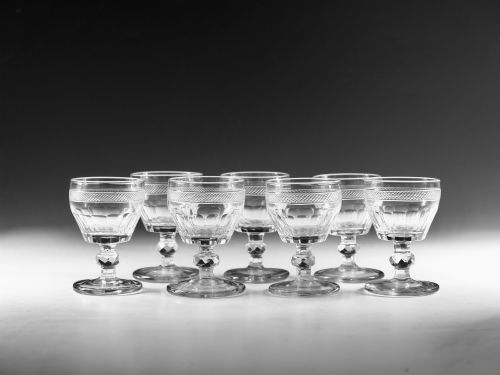


Georgian Faceted Wine Glasses
Georgian faceted wine glasses bring tangible weight and brilliant light to the table, uniting 18th-century craftsmanship with enduring domestic utility.
Georgian Faceted Wine Glasses
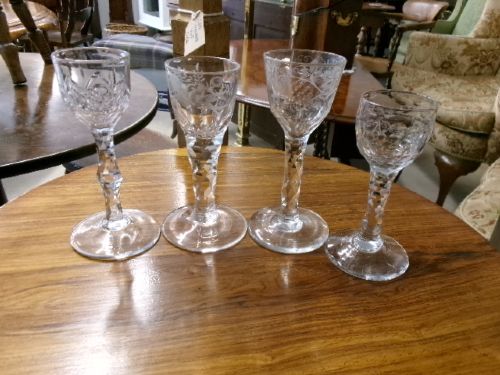
When you search for georgian faceted wine glasses, you are looking at drinking vessels defined by geometric stems and brilliant hand-polished planes. The pieces on this page span the 18th century, 19th century, and Edwardian periods, with many items originating from English workshops around 1770 and 1780.
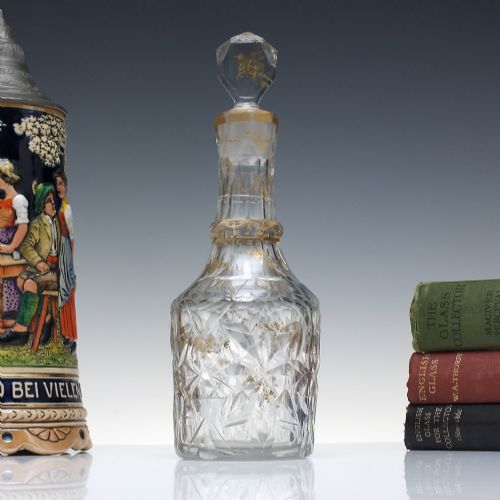
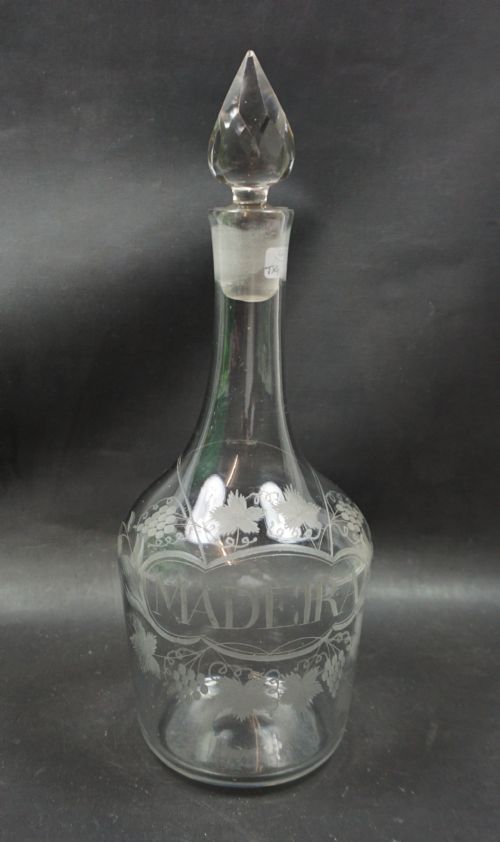
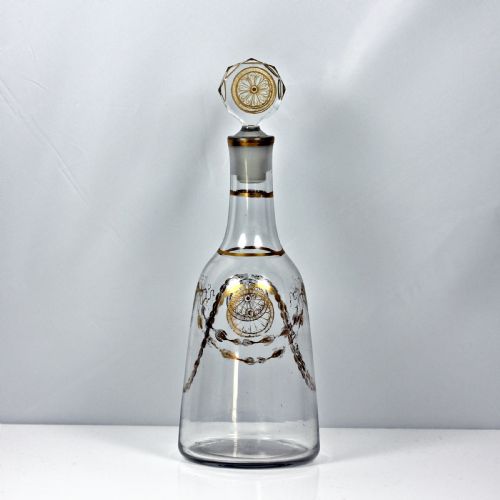
The primary forms you will encounter are stemmed wine glasses, cordials, and port glasses, often featuring decorated bowls paired with wide foot bases. Alongside these drinking vessels, related decanters and larger rummers appear across the listings to complete the glassware range.
Stylistically, these pieces draw on Georgian, George III, Regency, and Victorian traditions. They serve as tangible survivals of historic dining tables, valued both for their decorative presence and their functional history.
Assessing Quality and Execution
Quality rests upon the crispness of the facet cuts and the optical clarity of the metal itself. Superior examples display sharp, cleanly defined geometric angles on the stem that catch the light directly, rather than soft or rounded edges.
The artistry of any accompanying decoration alters the stature of a piece. Delicate hand-engraving or precise gilding separates standard production items from workshop output linked to master decorators like James Giles.
Listings combine 18th-century and 19th-century pieces, incorporating lead crystal, clear glass, and gold leaf elements across various styles.
Atelier of James Giles
The Georgian Faceted Wine Glasses Glossary
- Facet cut
- A surface decorated by grinding flat planes into the glass. This technique increases light refraction and provides a tactile grip.
- Lead glass
- Heavy glass containing lead oxide that adds brilliance and density. It forms the foundation of most 18th-century drinking vessels.
- Rummer
- A large, wide-bowled drinking glass used for ale, wine, or punch. These sturdy vessels were common on Georgian and 19th-century tables.
- Port glass
- A small stemmed glass designed for fortified wine. They reflect the specific drinking habits of the Georgian era.
- Pontil mark
- The rough scar left on the base of glassware where the punty rod was detached. Its presence confirms traditional hand-blown manufacture.
Georgian Faceted Wine Glasses: Frequently Asked Questions
What are georgian faceted wine glasses?
These are historical drinking vessels featuring stems shaped with flat, polished planes rather than smooth curves or baluster profiles.
They emerged during the 18th century as glasshouses adopted heavier lead metal suitable for deep wheel cutting.
How were they used?
They were used primarily for serving wine, cordials, and port at formal dining tables and social gatherings.
Their heavy construction and faceted stems made them durable enough for daily toasts while catching the candlelight.
How do I date a facet cut glass?
Dating relies on combining the stem form, bowl shape, foot profile, and the characteristics of the metal itself.
Pieces from the 18th century often feature specific facet patterns and firing traits distinct from later 19th-century revivals.
Can I use them today?
Yes, many collectors enjoy using these glasses for special occasions or quiet evening drinks to connect with historical dining traditions.
Hand washing in warm water ensures the preservation of the clear lead glass and any delicate surface gilding.