




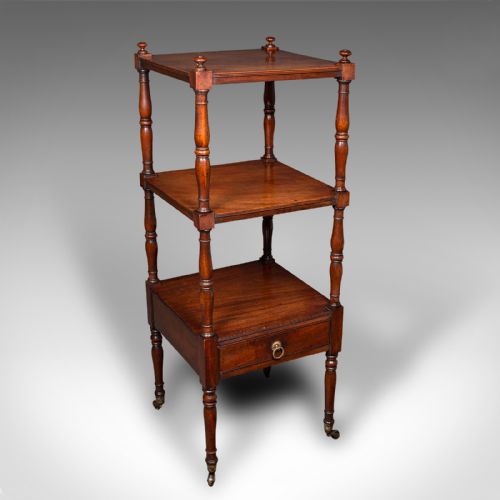
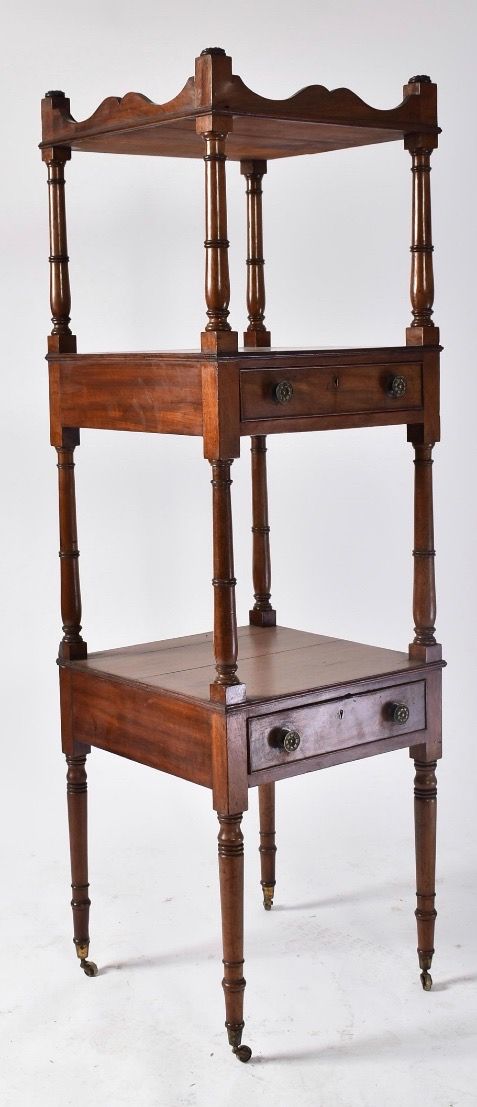

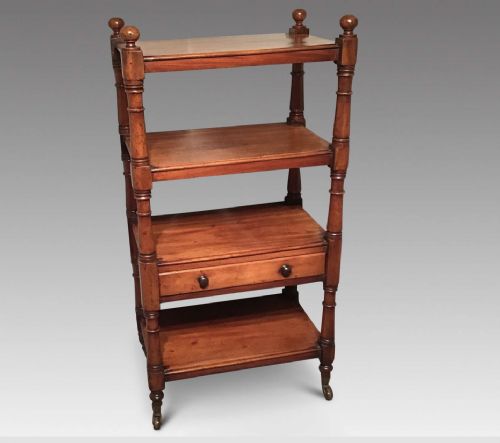

Georgian Etagere Drawer
A georgian etagere drawer brings tiered display and subtle storage together, offering timeless practicality for modern rooms.
Georgian Etagere Drawer
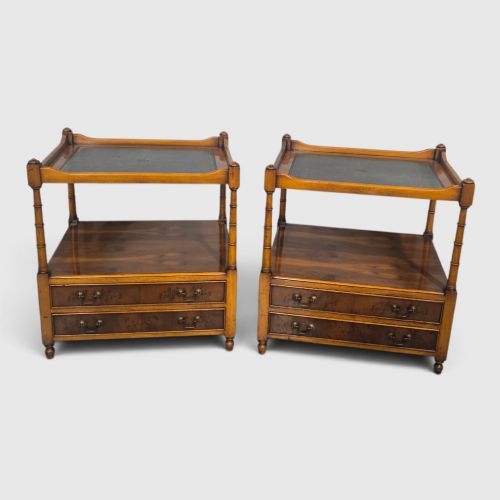
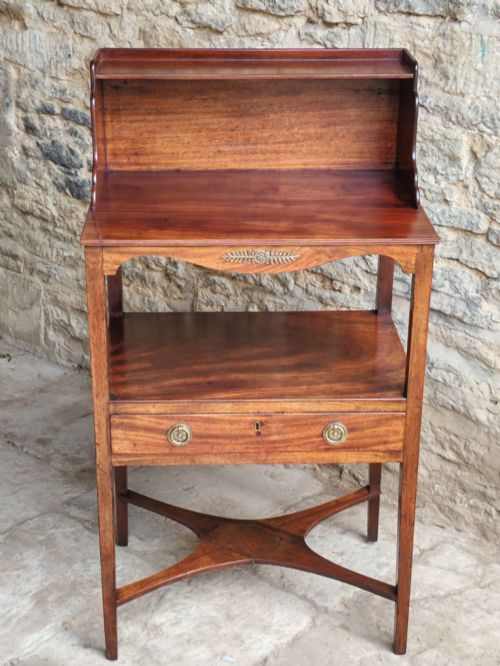
When you search for a georgian etagere drawer, you encounter open shelving stands, lamp tables, and bedside units designed for tiered display and storage.
The pieces listed on this page span the Georgian, Regency, and 19th Century periods, incorporating styles from George III to Grand Regency alongside later twentieth-century iterations.
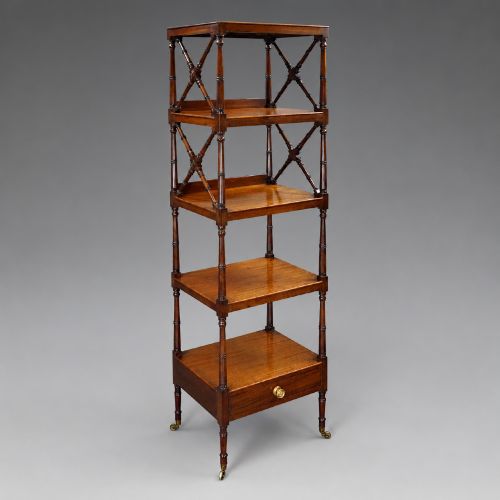
Common forms on display include three and four-tier whatnots, waterfall display shelves, and corner units originating from makers who utilised rich timber veneers.
Materials and construction
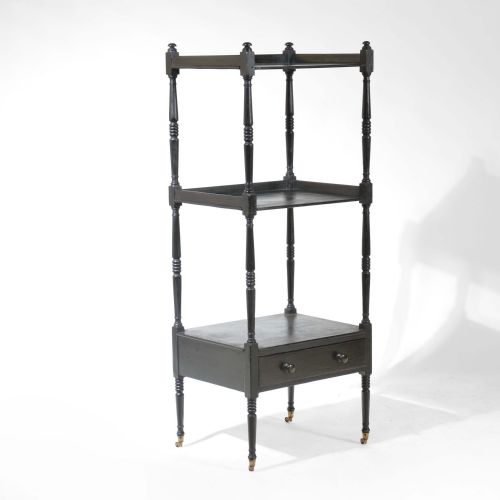
Craftsmen built these tiered pieces primarily using solid mahogany, yew, and rosewood, frequently incorporating wood veneer and ebonised wood for decorative contrast.
Detailing often included brass fittings and leather inserts, combining structural timber work with fine surface finishes suited to open display stands and side tables.
Listings feature pieces spanning the Georgian, Regency, and Victorian periods, constructed from mahogany, yew, rosewood, padouk, and ebonised wood.
Judging quality
Quality in these tiered pieces rests on the choice of timber and the precision of the shelf tiers, distinguishing simpler utility furniture from finer display items.
The selection of woods such as padouk, rosewood, or figured mahogany alongside well-executed brass details elevates a standard whatnot or lamp table into a superior example.
The Georgian Etagere Drawer Glossary
- Etagere
- A set of open shelves for displaying small objects, books, or ornaments. These pieces typically feature multiple stacked tiers.
- Whatnot
- A nineteenth-century multi-tiered shelving unit used for storage and display in principal rooms. They often incorporate a drawer in the lower section.
- Veneer
- A thin layer of superior wood applied to a softer base timber to create a decorative surface. Rosewood and mahogany were frequently applied in this manner.
- Ebonised
- Wood treated with a dark finish to imitate expensive ebony. This technique provided sharp contrast on classical furniture.
Georgian Etagere Drawer: Frequently Asked Questions
What is a georgian etagere drawer used for?
These tiered pieces were originally designed to hold books, china, or decorative items while providing concealed storage in a small drawer.
Today, they function equally well as bedside tables, lamp tables, or open display stands in living spaces.
How do I identify a george iii whatnot?
George III pieces typically date from the late eighteenth century and showcase classical proportions alongside timber such as mahogany.
They often feature graduated tiers supported by turned columns, occasionally topped with a small drawer at the base.
Are these pieces made of solid mahogany?
Many examples utilise solid mahogany or yew for the structural uprights and framing members.
Cabinetmakers also applied fine wood veneers to secondary timbers on larger shelf surfaces to achieve distinct grain patterns.
How do regency pieces differ from georgian ones?
Regency items reflect the early nineteenth-century taste influenced by classical Greek and Roman design.
They frequently incorporate ebonised wood, brass mounts, and rosewood veneers that distinguish them from earlier George III furniture.