





Ebonised Shelving Unit
An ebonised shelving unit brings dark, dramatic presence to a room, offering functional display space through tiered shelves and open bookcases.
Ebonised Shelving Unit
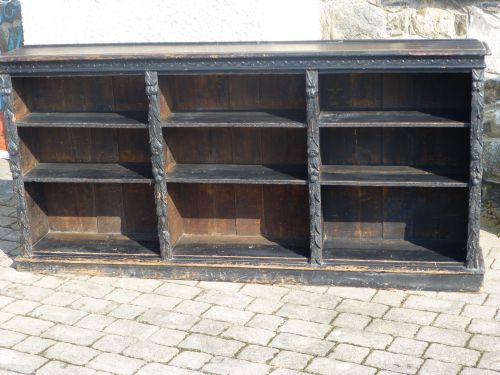
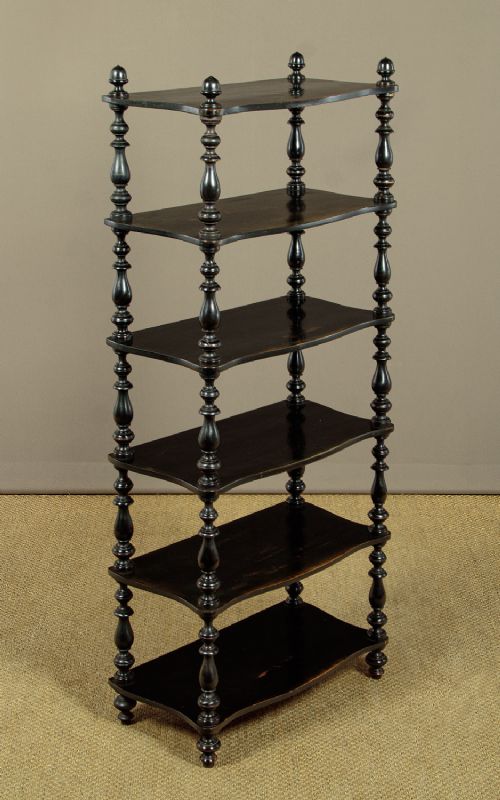
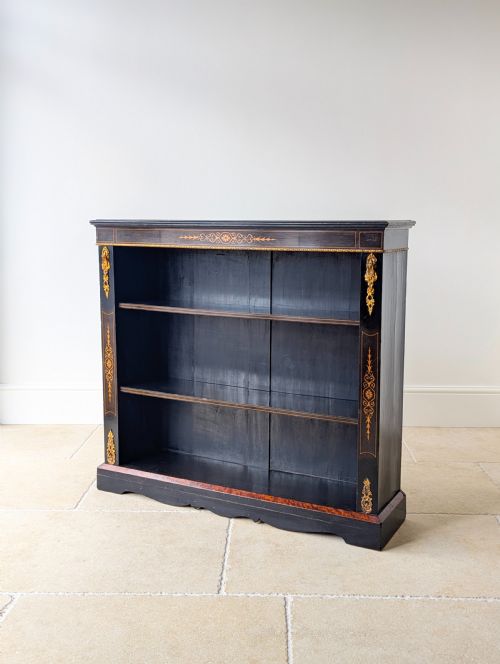
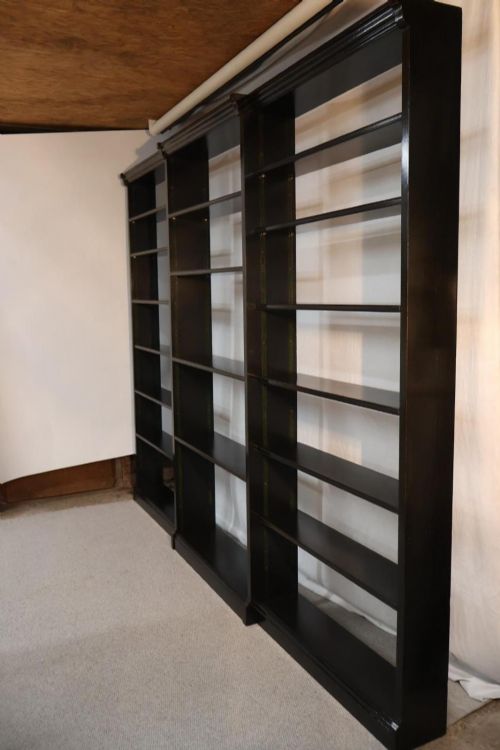
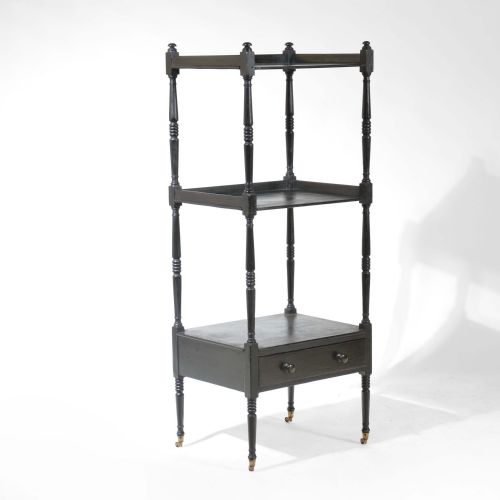
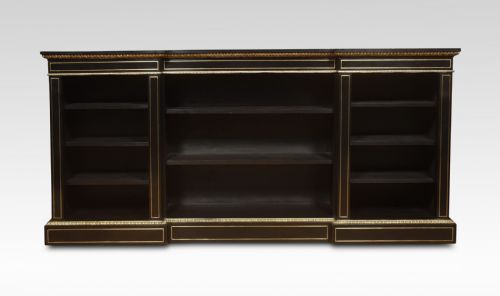
An ebonised shelving unit encompasses open bookcases, tiered etageres, wall shelves, and corner whatnots designed to display books and decorative objects. These pieces span the Georgian, Regency, and Victorian periods, alongside later nineteenth-century French and Aesthetic Movement examples.
The most common forms on this page include open bookcases with adjustable shelves and multi-tiered wall units or corner stands. Makers utilised woods such as oak, cherry, limewood, and mahogany, applying dark finishes to achieve the characteristic ebonised appearance.
Materials and construction
Makers achieved the ebonised finish by treating hardwoods, timber, oak, and limewood with stain or black paint to imitate expensive ebony. Walnut veneer, amboyna, and burr elm frequently appear as contrasting elements within these pieces.
Brass mounts, ormolu, and fine inlay work provide structural and decorative detail, particularly on French Napoleon III examples. Carved details such as green man motifs or geometric patterns enhance the architectural framing of the shelves.
Listings feature pieces spanning from the Georgian period through the Victorian era and into the twentieth century.
Assessing quality
The refinement of the carving and the quality of the timber preparation dictate the distinction between standard and superior pieces. Subtle details such as fine brass mounts, crisp inlay work, and well-executed ebonisation elevate an item's visual weight.
Structural integrity in multi-tiered etageres and open bookcases relies on sound joinery and stable shelving supports. The presence of secondary timbers and the depth of the dark finish indicate the care taken during initial production.
Wedgwood
The Ebonised Shelving Unit Glossary
- Ebonised wood
- Timber treated to resemble ebony through staining or painting. This dark finish gained immense popularity during the Victorian and Aesthetic Movement periods.
- Etagere
- A set of open tiered shelves used for displaying ornaments and small objects. These pieces typically feature three to six levels supported by slender uprights.
- Whatnot
- A multi-tiered piece of freestanding or corner furniture designed for storage and display. They frequently appear in nineteenth-century interiors.
- Ormolu
- Gilded bronze ornamentation applied to furniture mounts and decorative fittings. This technique is prominent on French Napoleon III pieces.
- Breakfront
- A piece of furniture featuring a central section that projects forward from the flanking sides. This architectural arrangement adds depth to large bookcases and shelving units.
Ebonised Shelving Unit: Frequently Asked Questions
What is an ebonised shelving unit?
An ebonised shelving unit is a piece of dark-finished wooden furniture designed for displaying books and ornaments.
These pieces include open bookcases, tiered etageres, and wall-mounted corner shelves.
How do I date an ebonised shelf?
Dating relies on observing stylistic markers, construction methods, and secondary timbers used in the piece.
Victorian, Georgian, and Regency examples each display distinct decorative motifs and proportions.
Where should I place an etagere?
An etagere suits corners or living spaces where vertical display is required without blocking light.
Open shelving units work effectively against plain walls to highlight books and decorative objects.
What woods are beneath the ebonising?
Makers used various hardwoods including oak, cherry, limewood, and mahogany beneath the dark finish.
Some pieces incorporate walnut veneer, amboyna, or burr elm within the design.