




Georgian Accent Shelf
A georgian accent shelf brings architectural proportion and useful tiers to a room, offering display space without clutter.
Georgian Accent Shelf
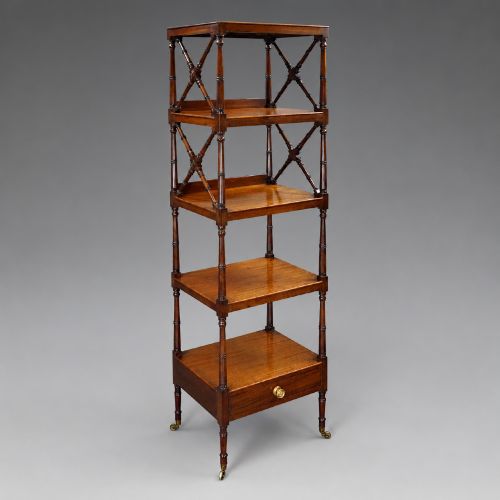
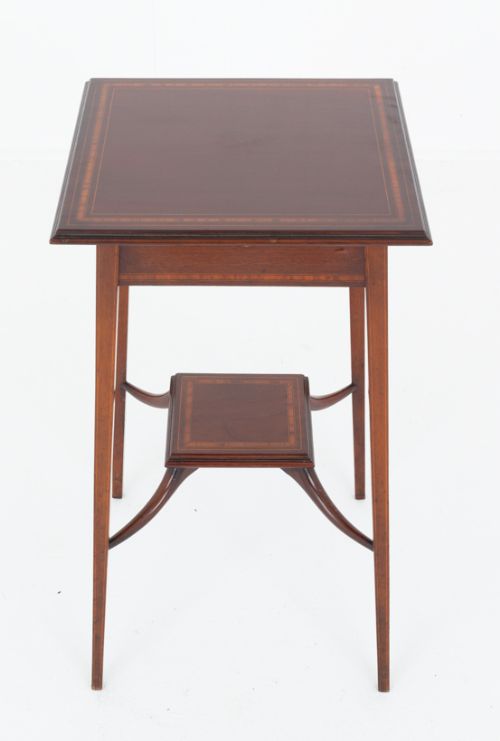
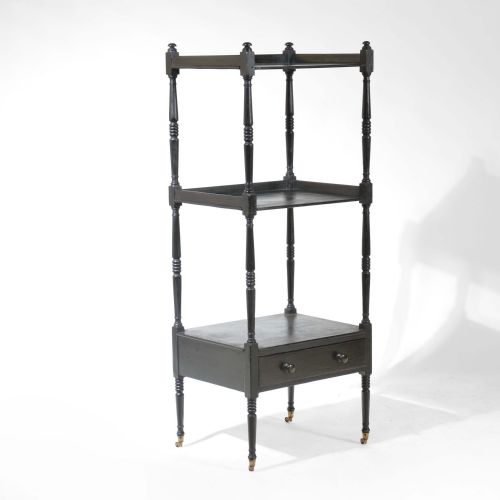
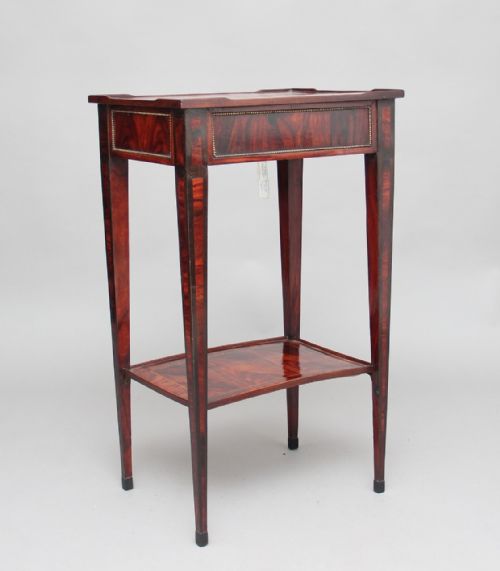
A georgian accent shelf typically refers to tiered pieces such as whatnots, étagères, and occasional tables with display shelf stretchers. These items provide multiple levels for books, ornaments, and small objects within a domestic interior.
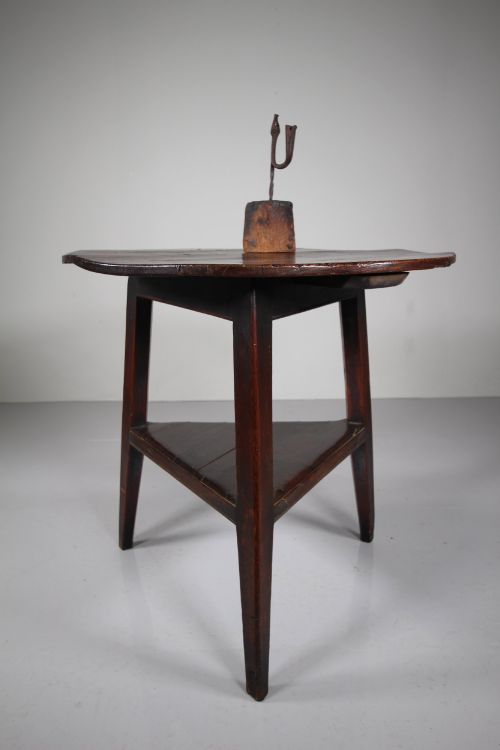
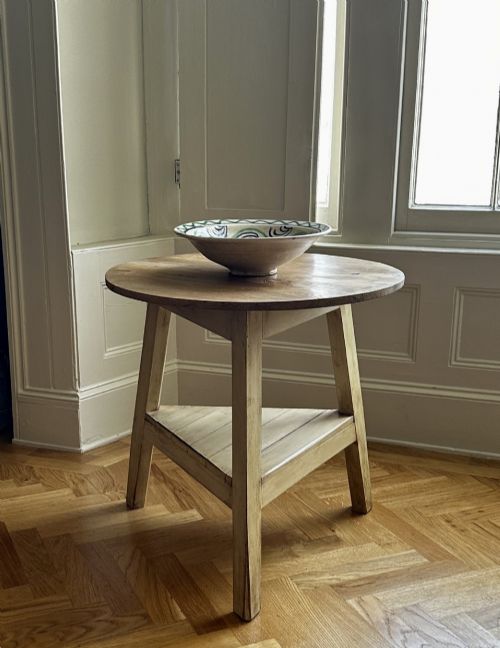
The pieces appearing on this page span from the eighteenth century through the nineteenth century and into later revival periods. Forms range from utilitarian cricket tables to architectural multi-tier whatnots in mahogany, oak, and elm.
Buyers most frequently encounter tall three-tier whatnots alongside smaller side tables and occasional tables featuring lower display shelves. These items suit sitting rooms and halls where vertical surface area is useful.
How they were made
Cabinetmakers utilised timber such as mahogany, oak, and elm, often pairing denser hardwoods with lighter details like satinwood inlay. Brass components appear on select pieces as fittings or castors.
Construction methods rely on traditional joinery suited to tiered structures and small tables. Wood surfaces receive polished finishes that highlight the natural grain and colour of the timber.
One listed whatnot carries an attribution to Gillows, proving that even humble shelves occasionally wore high-society tailoring.
What varies in quality
Quality in these pieces rests upon the choice of timber and the crispness of the joinery connecting the tiers and supports. Finer examples show thoughtful proportion and careful attention to the grain of the wood.
Simpler vernacular pieces, such as cricket tables in elm or oak, rely on sturdy construction and honest materials rather than decorative inlay or refined cabinetwork.
Gillows
The Georgian Accent Shelf Glossary
- Whatnot
- An open set of tiered shelves used for displaying ornaments and books. These pieces became popular during the late eighteenth century.
- Étagère
- A French term for a freestanding piece of furniture with multiple display shelves. It functions similarly to the English whatnot.
- Cricket table
- A small, lightweight three-legged table with a round top, often associated with English country vernacular furniture. The design provides stability on uneven floors.
- Pembroke table
- A small rectangular table with hinged flaps on either side that can be raised or lowered. Some examples incorporate a lower shelf between the legs.
- Satinwood
- A durable, yellowish timber often used for decorative stringing and inlay work. It contrasts sharply with darker woods like mahogany.
Georgian Accent Shelf: Frequently Asked Questions
What is the difference between a whatnot and an étagère?
A whatnot is typically an English term for a tiered open shelving unit used for books and ornaments. An étagère is the French equivalent, though both terms describe similar multi-level display furniture.
In practical terms, makers and dealers used both names interchangeably across the eighteenth and nineteenth centuries depending on regional preference and style.
How were multi-tier shelves used in period homes?
Tiered display shelves provided additional surface area in parlours and drawing rooms for holding small porcelain pieces, books, and decorative objects. They kept items accessible without crowding the main tables.
In larger houses, these pieces stood against walls or in corners to make use of vertical space in reception rooms.
What woods were used for these shelves?
Cabinetmakers primarily worked with mahogany, oak, and elm, depending on the period and the regional workshop. Finer pieces sometimes incorporated satinwood inlay for decorative contrast.
Softer woods like ebonised timber also appear on select nineteenth-century examples designed to imitate more expensive materials.