
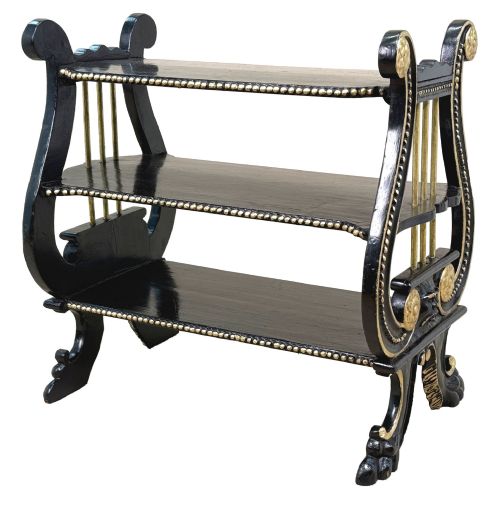
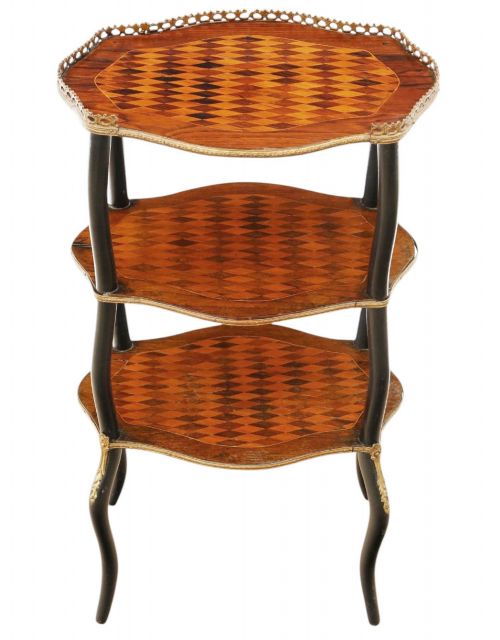
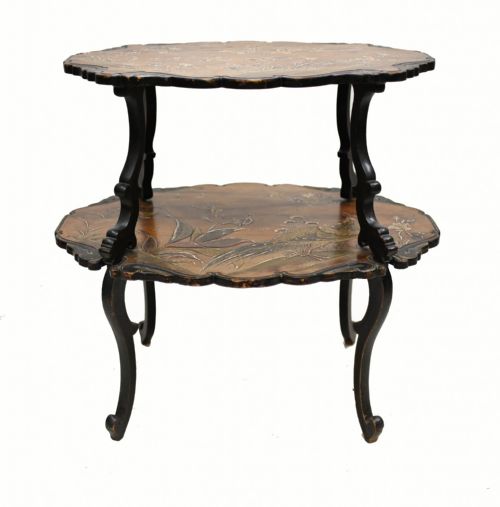


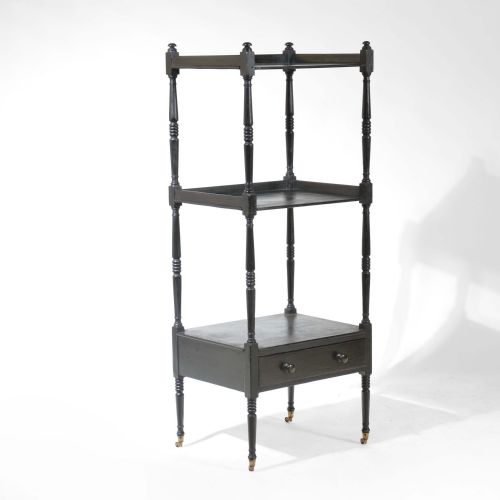


Antique Ebonised Whatnot
These antique ebonised whatnot pieces offer tiered display shelving crafted in dark finishes, bringing practical elegance to any room.
Antique Ebonised Whatnot
An antique ebonised whatnot is a tiered shelving unit designed for displaying decorative objects, commonly appearing in Victorian, Edwardian, and Georgian periods. These pieces serve as functional display shelves or etagere tables within period interiors, offering multiple levels for ornaments.
The most common versions met on this page include Victorian and French styles, often featuring three tiers. Such pieces take the form of corner whatnots, side tables, and display stands constructed with dark ebonised surfaces.
Makers of these tier stands utilised varied influences, ranging from French Napoleon III and Japonisme to Aesthetic Movement and Gothic designs. Buyers encounter these versatile stands in forms varying from oval display shelves to rectangular etageres.
Materials and construction
Makers constructed these tiered stands primarily from ebonised wood, sometimes combining mixed timber parquetry and marquetry inlay. Walnut, amboyna, burr elm, and mahogany also form the foundational timber bodies beneath the dark finishes.
Craftsmen enriched the appearance of these pieces using brass mounts, ormolu, parcel gilding, and japanning techniques. Decorative detailing on these etageres often includes intricate inlaid patterns and carved elements across the multiple tiers.
The inventory includes diverse forms such as corner whatnots, etageres, and oval display shelves with ormolu mounts.
Separating the ordinary from the exceptional
The distinction between standard production and superior craftsmanship lies in the refinement of the parquetry inlay, the crispness of the carved elements, and the quality of the ormolu mounts. Finer pieces demonstrate precise joinery across multiple tiers and sophisticated surface treatments.
Material selection further defines the hierarchy, with exceptional examples incorporating rich mixed timber marquetry or delicate parcel gilding upon the ebonised wood. The integration of specialised decorative techniques like japanning elevates the visual depth of the display shelves.
The Antique Ebonised Whatnot Glossary
- Ebonised
- Wood finished to resemble ebony through staining or painting. This dark treatment became particularly popular during the Victorian era for display furniture.
- Etagere
- A piece of furniture consisting of a set of open shelves for displaying small articles. These tiered stands date predominantly from the nineteenth and early twentieth centuries.
- Japanning
- A type of European finish that emulates East Asian lacquerware. This technique often appears on decorative furniture from the late nineteenth century.
- Ormolu
- Gilded bronze applications used as decorative mounts on furniture. High-quality examples exhibit finely chased surface details.
- Parquetry
- Geometric mosaic woodwork used for decorative surfaces. Craftsmen applied this technique to the tops and shelves of fine tables.
Antique Ebonised Whatnot: Frequently Asked Questions
What is an antique ebonised whatnot used for?
These tiered units were originally designed to hold ornaments, books, and decorative ceramics in nineteenth-century drawing rooms. Today, they serve a similar display function in modern homes.
Collectors utilise the multiple tiers to showcase small collections without taking up excessive floor space.
How do I identify a Victorian ebonised whatnot?
Victorian examples typically feature dark ebonised wood finishes combined with turned supports and multiple display tiers. They often reflect revival styles popular during the nineteenth century.
Examination of the timber and construction methods helps distinguish these pieces from later reproductions.
What is the difference between a whatnot and an etagere?
While both terms describe tiered shelving units, etagere often denotes pieces with a French influence, such as those in the Louis XV style. Whatnot is a traditional British term for similar multi-shelf display furniture.
Both forms prioritize open display over enclosed storage.
Where should I place an antique whatnot in my home?
These versatile stands fit well in corners, against blank walls, or beside seating furniture as side tables. Corner whatnots make efficient use of unused angles in a room.
The open tiers allow light to pass through, keeping the furniture from feeling heavy in smaller spaces.