
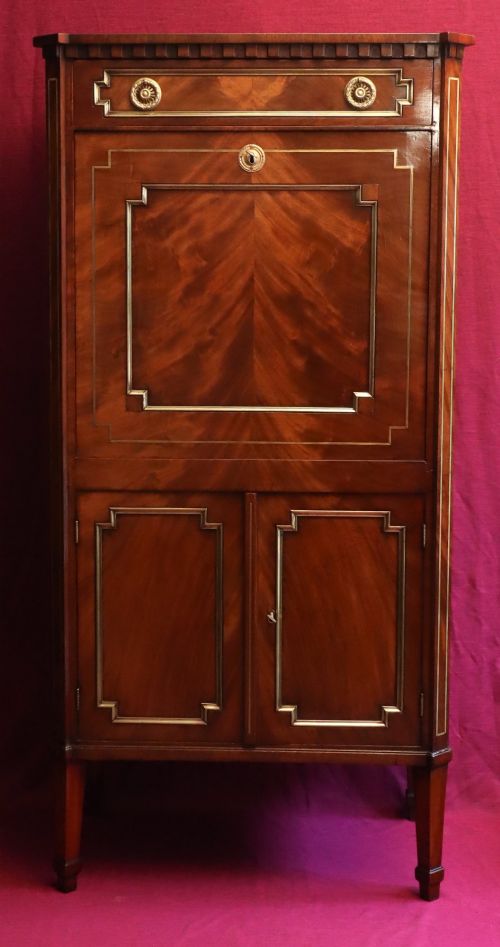


Georgian Escritoire Desk
A georgian escritoire desk offers a drop-front writing surface paired with internal drawers, bringing architectural form and practical storage to a room.
Georgian Escritoire Desk
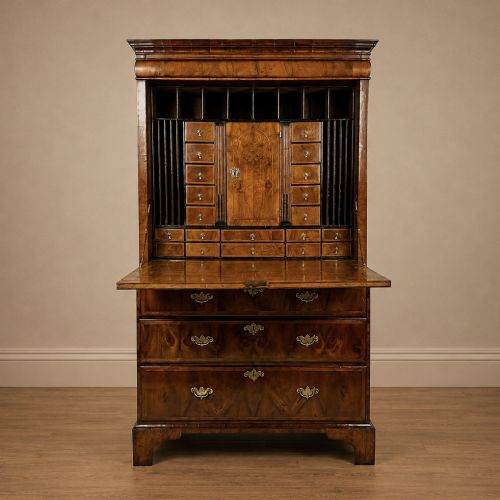
A georgian escritoire desk is a piece of case furniture designed primarily for correspondence and paperwork, featuring a hinged writing flap that conceals a fitted interior of small drawers and pigeonholes. These cabinets combine the structural presence of a tall chest with the functional workspace of a bureau, originating in domestic interiors where secure storage of letters and documents was paramount.
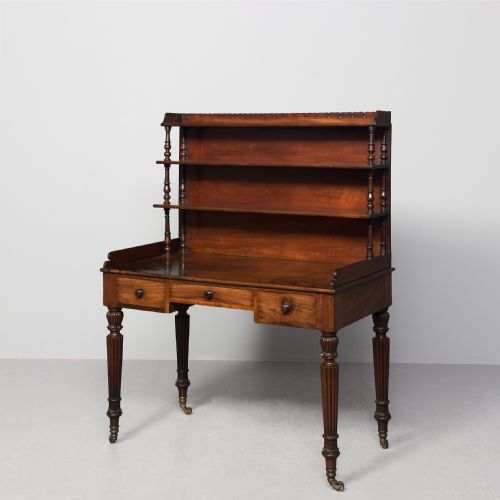
The pieces listed here span the eighteenth and nineteenth centuries, encompassing early walnut examples alongside later mahogany and rosewood variants. Forms range from compact writing cabinets and bureau bookcases to tall secretaire chests and smaller cylinder desks reflecting evolving tastes across the Georgian and Regency periods.
Makers and workshops of the era employed traditional cabinet-making techniques to house complex interior compartments behind secure fall-front lids or doors. Buyers encounter both plain timber surfaces and highly decorated examples incorporating marquetry or brass inlay.
Materials and construction methods
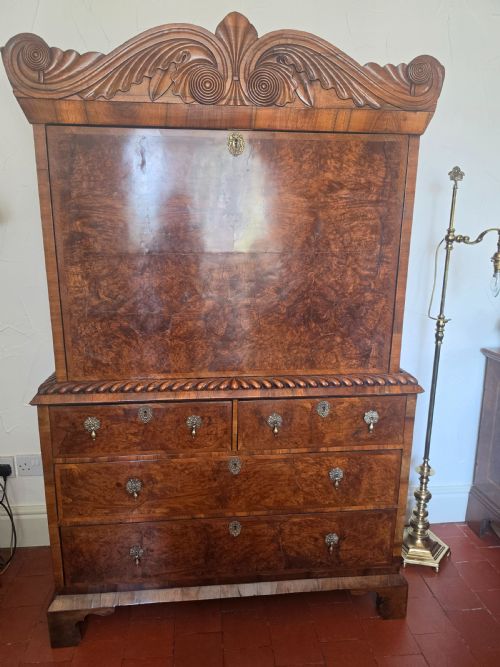
Cabinet-makers constructed these desks using native and imported hardwoods such as walnut, mahogany, oak, and rosewood, often applying burr walnut or satinwood veneers to prominent exterior surfaces. Solid oak frequently served for internal drawer linings and secondary framing to ensure stability.
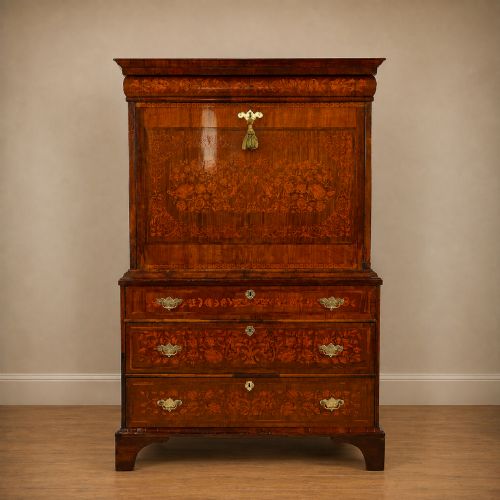
Decorative techniques recorded in the evidence include floral marquetry work and brass inlay, which ornament the primary facades of early walnut and Regency rosewood pieces. Construction relied on traditional joinery methods, housing fitted internal compartments behind structured fall-front writing flaps and heavy carcases.
Some early walnut examples hide secret compartments behind dummy drawer fronts, built to outsmart nosy household staff.
Factors determining quality
Quality in a georgian escritoire desk rests upon the selection and figure of the timber, particularly where burr walnut or figured mahogany veneers cover the primary facade. Grain continuity across drawer fronts and the precision of marquetry or brass inlay distinguish more ambitious examples from simpler utilitarian pieces.
The architectural complexity of the internal fitments - such as secret compartments, shaped pigeonholes, and small veneered drawers - demonstrates the skill invested by the original cabinet-maker. The condition of the primary hinges, locks, and structural carcase timber further marks the distinction between standard production and superior workshop output.
James Mein of Kelso
The Georgian Escritoire Desk Glossary
- Escritoire
- A writing cabinet or desk featuring a fall-front flap that conceals drawers and pigeonholes. The term derives from the French word for writing.
- Secretaire
- A piece of furniture containing a writing drawer or fold-down writing flap. It often appears interchangeably with escritoire in period descriptions.
- Marquetry
- The art of applying pieces of veneer to a structure to form decorative patterns and pictures. Floral designs are frequently seen on early walnut pieces.
- Burl
- A woody growth on a tree that results in distorted grain, highly prized for veneer. Burr walnut surfaces provide intense patterning on eighteenth-century facades.
- Bonheur du jour
- A small, light lady's writing desk with drawers and shelves above the top. Examples appear in later nineteenth-century and early twentieth-century contexts.
Georgian Escritoire Desk: Frequently Asked Questions
What is an escritoire desk?
An escritoire desk is a tall cabinet with a drop-front writing flap that opens to reveal a fitted interior of small drawers and compartments. This form evolved to provide both secure document storage and a private writing surface.
In period interiors, these pieces served as functional writing centres that could be closed and locked when not in use, concealing the papers within.
How do I date a walnut escritoire?
Dating relies on examining the construction methods, timber choice, and decorative vocabulary such as marquetry or brass inlay. Early eighteenth-century pieces often display figured walnut veneers and specific internal configurations characteristic of the Queen Anne and George II periods. Nail types, secondary woods like oak, and the style of the brass hardware provide further physical evidence for determining the decade of manufacture.
Where should I place a writing cabinet?
These desks suit studies, libraries, or living rooms where their vertical proportions fit well against a substantial wall. Because the fall-front drops down for writing, ensure there is adequate floor space in front of the cabinet for a chair. Keep the timber away from direct heat sources and strong sunlight to protect the fragile walnut, mahogany, or rosewood veneers from drying out.